Custom Streetwear, Casualwear & Denim Manufacturer•MOQ 50 pcs•Denim MOQ 100 pcs•7-Day Sample Available

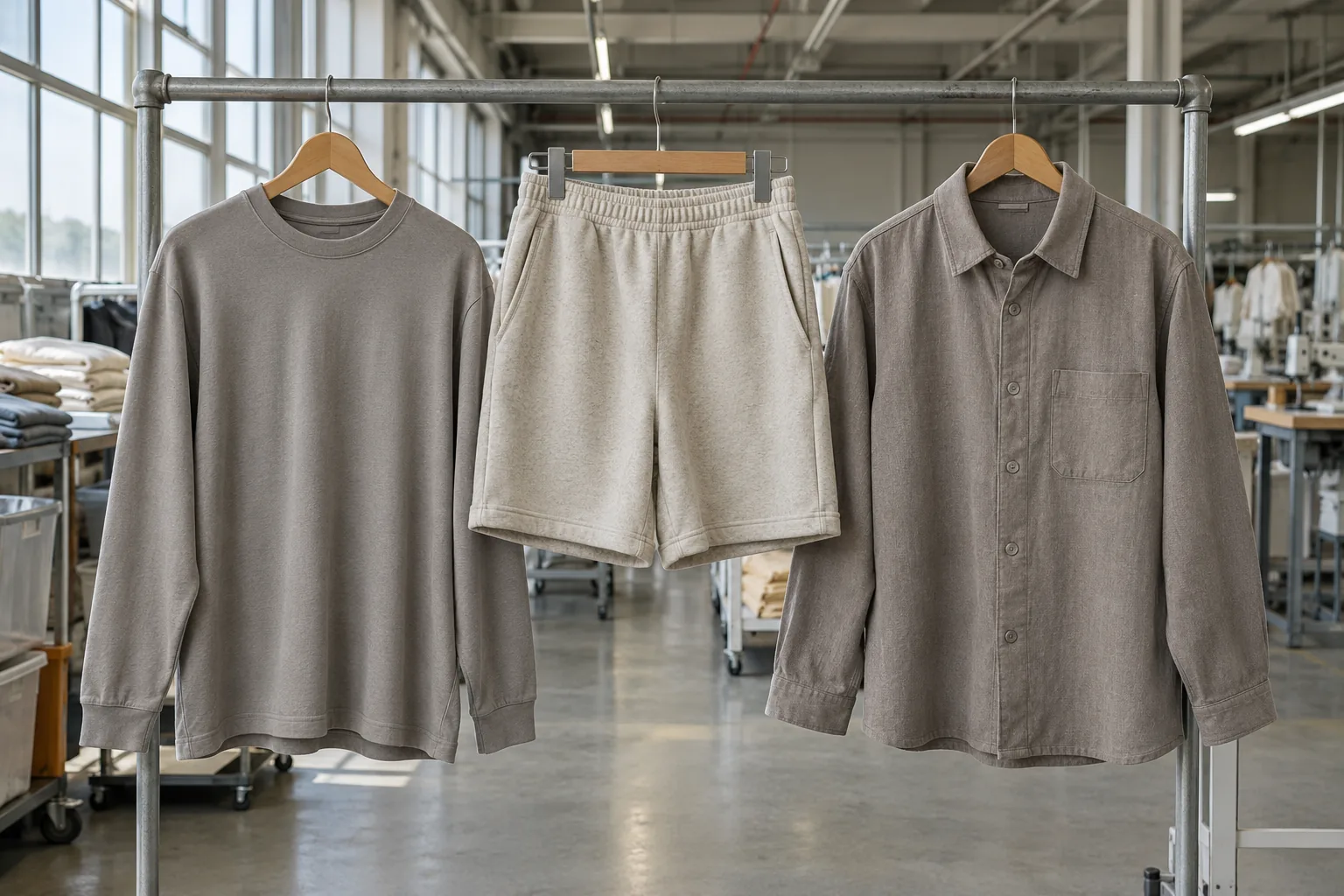
How to Price a Private Label Collection
Price a private label collection by connecting product cost, brand position, and assortment depth instead of guessing from competitor retail prices alone.

Pricing a private label collection starts with a purchasing decision: which supplier quotation actually covers the collection you intend to sell? A low garment rate can look attractive until you discover that labels, testing, packaging, or an essential finishing operation sit outside the offer. Comparing those numbers directly gives you a misleading basis for retail pricing.
Use a quote comparison sheet to connect each style’s specification, order quantity, and delivery scope to its commercial role. The aim is to choose a production offer you can explain, fund, and repeat, then build selling prices around its complete cost.
Give every bidder the same collection basket
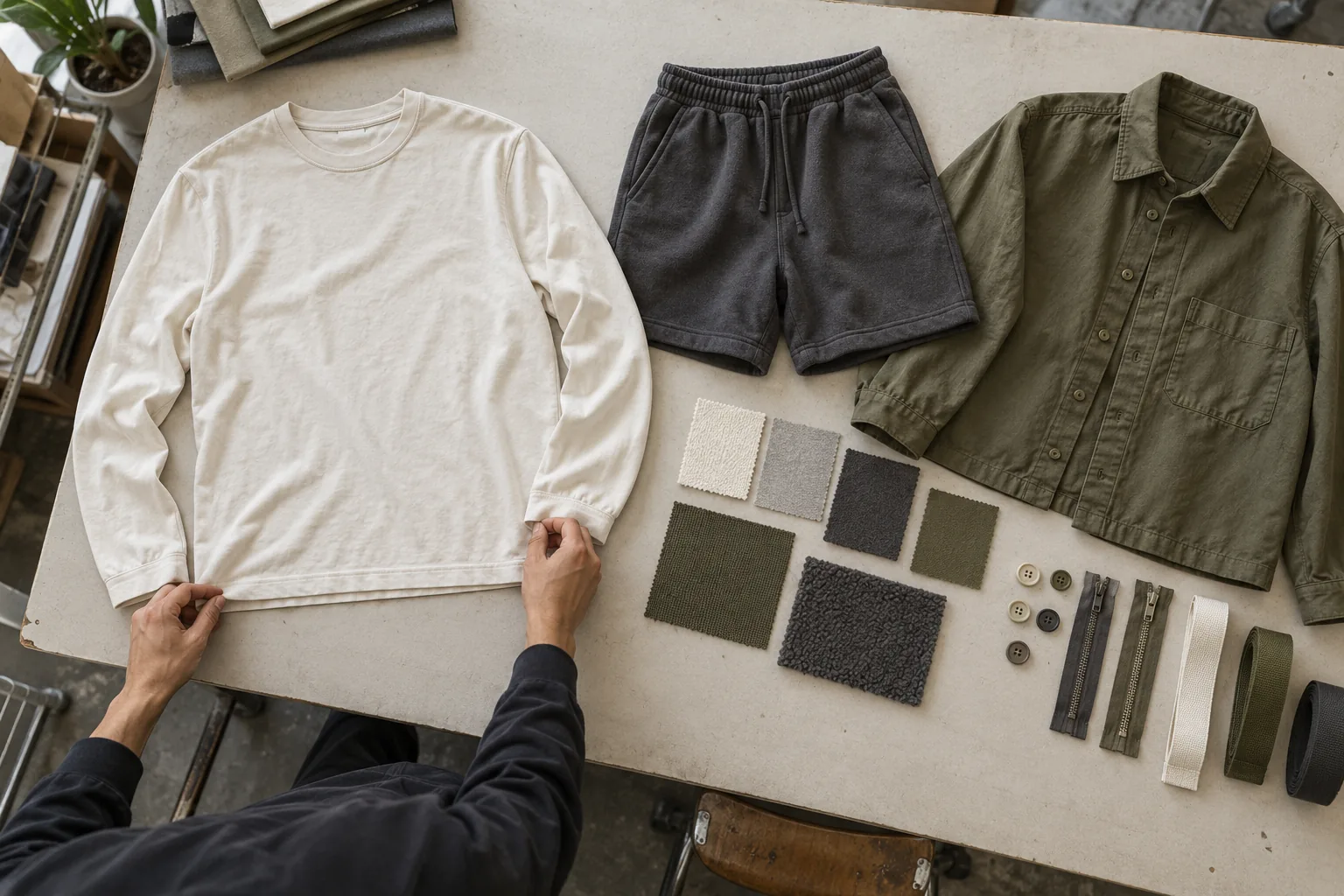
Start with a defined basket rather than an open request for “premium basics.” For example, compare a jersey long-sleeve top, a brushed-fleece short, and a woven overshirt at stated quantities. Each item needs its own construction brief, size breakdown, color split, branding method, and packing requirement. Give the brief a revision date so everyone quotes the same version.
Separate requirements from options. A reinforced pocket opening might be mandatory, while an embroidered sleeve motif could be an optional addition. Ask suppliers to price options separately rather than quietly remove them to reach your target. That makes a cheaper offer traceable to a deliberate design choice.
Keep quantities identical across bids. If one factory quotes a larger run, request a matching-quantity alternative or identify that offer as a different purchasing scenario. A lower unit rate attached to more inventory is a different commitment.
Translate each offer into the same cost boundary
A useful comparison records what the quoted amount buys and where the supplier’s responsibility ends. Confirm the currency, quotation validity, named delivery point, and applicable shipping terms. Do not assume two offers include identical transport or customs obligations because both mention delivery.
| Comparison line | Information to reconcile |
|---|---|
| Garment specification | Fabric composition, weight, construction, wash, and trims |
| Branding and packing | Labels, decoration, individual packing, and cartons |
| Development charges | Samples, revisions, setup, and any credit conditions |
| Delivery scope | Freight, insurance, clearance, duties, and destination handling |
| Commercial terms | Payment stages, validity period, and quantity assumptions |
Mark unclear entries as unresolved, not zero. Request written confirmation for exclusions and conditional charges. Where you need an external freight or duty estimate, label it provisional and confirm it for the destination and shipment before committing.
Separate assortment savings from surplus stock
Collection pricing can hide an expensive imbalance: one high-volume item makes the average look healthy while a slow-selling style ties up cash. Review each style independently before calculating the collection total. Compare the total order outlay, expected sales, and cash remaining for launch activity under each quantity proposal.
StitchQuote’s MOQ for most categories starts from 50 pieces per style; denim starts from 100 pieces per style. These starting points do not establish every color, material, or trim minimum. Confirm the proposed allocation and any sourcing constraints for the specific project.
Ask whether shared fabric or trims across styles change the quotation, but do not count that saving until it is confirmed. Two garments that look similar may need different fabric performance or finishing. If a quantity discount requires extra stock, evaluate it against a conservative sales forecast rather than treating the discount as automatic margin.
Use samples to test the assumptions behind the number
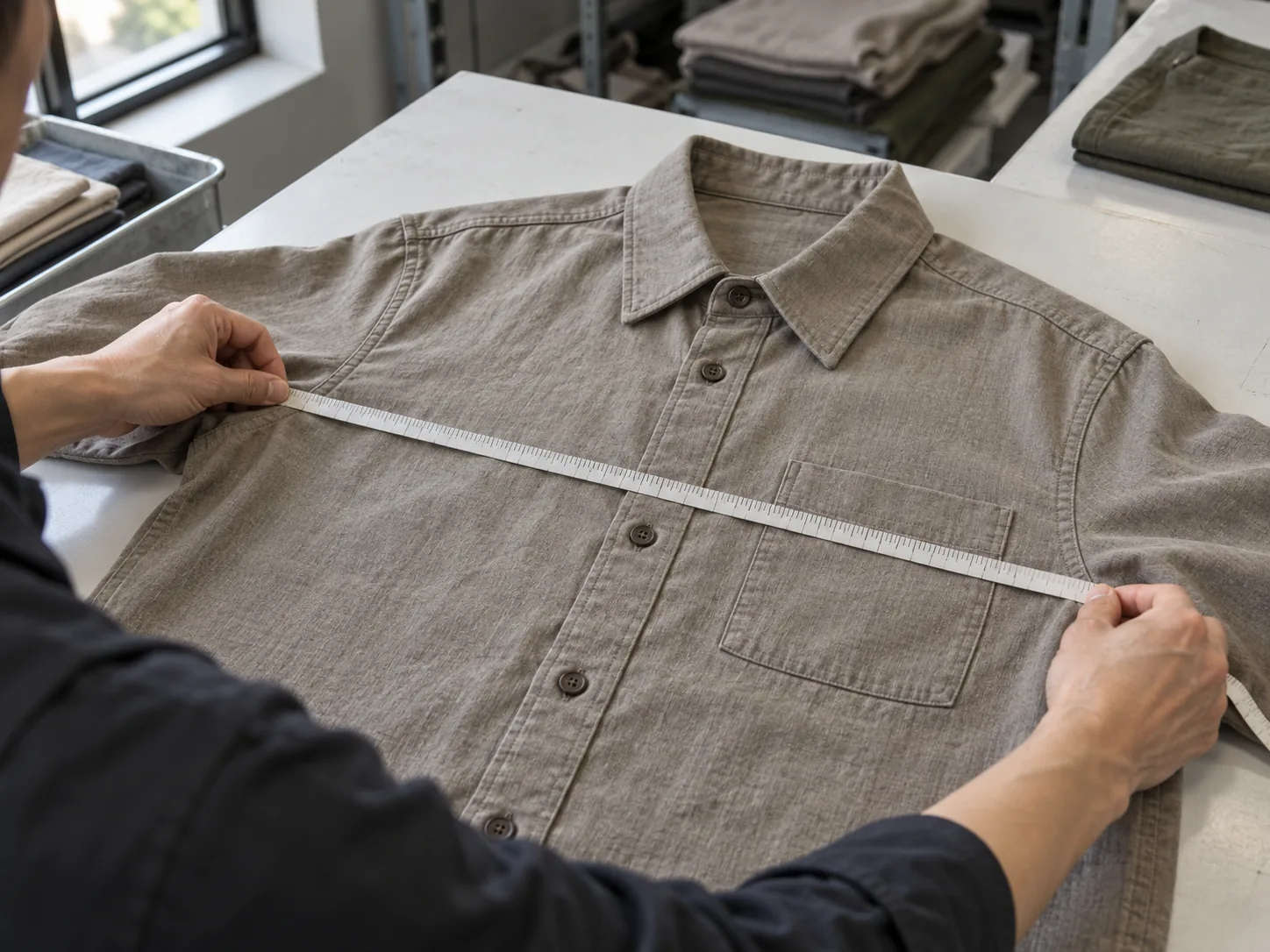
A quotation based on an unapproved fabric or decoration method remains a proposal. During sampling, track which assumptions become confirmed and which change. If the overshirt needs a heavier interlining to hold its collar shape, ask for the resulting cost revision before approving the sample.
Use this checklist when reconciling the sample with the offer:
- Confirm fabric composition, weight, hand feel, and agreed shrinkage expectations.
- Measure key fit points against the specification and agreed tolerances.
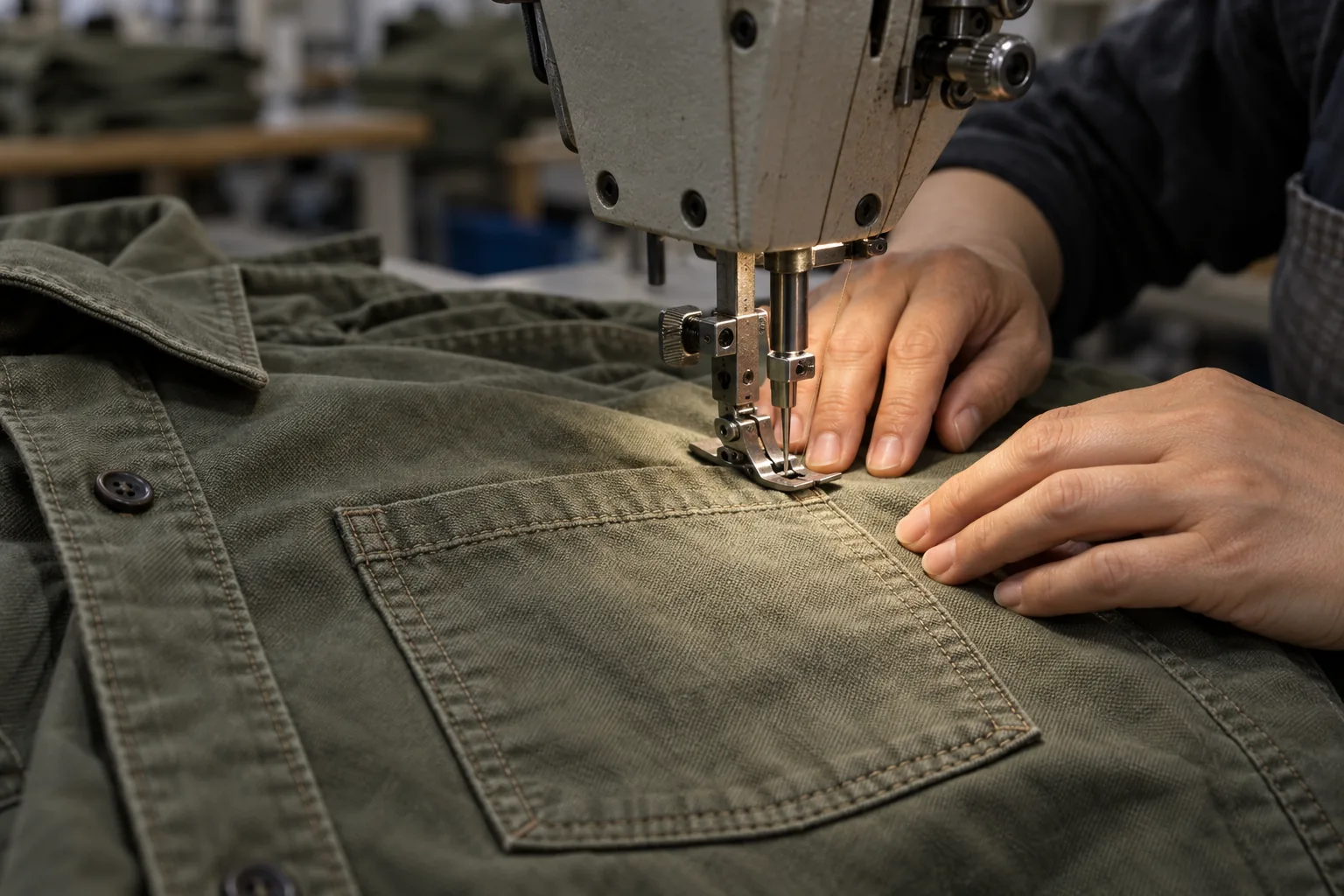
- Check seam construction, pocket reinforcement, fasteners, and decoration placement.
- Verify label content, attachment, packing method, and any required testing scope.
- Record corrections, inspection criteria, and who approves the final reference sample.
StitchQuote provides sampling, fabric and trim sourcing, cut-and-sew, private label services, woven labels, prints, embroidery, and QC before packing. A 7-day sample is available for standard styles with confirmed specifications and available materials. Complex styles, custom washes, and custom-developed fabrics take longer. Confirm your sample scope and schedule rather than assuming every quotation follows that timing.
Make fabric and measurement tolerances part of the bid
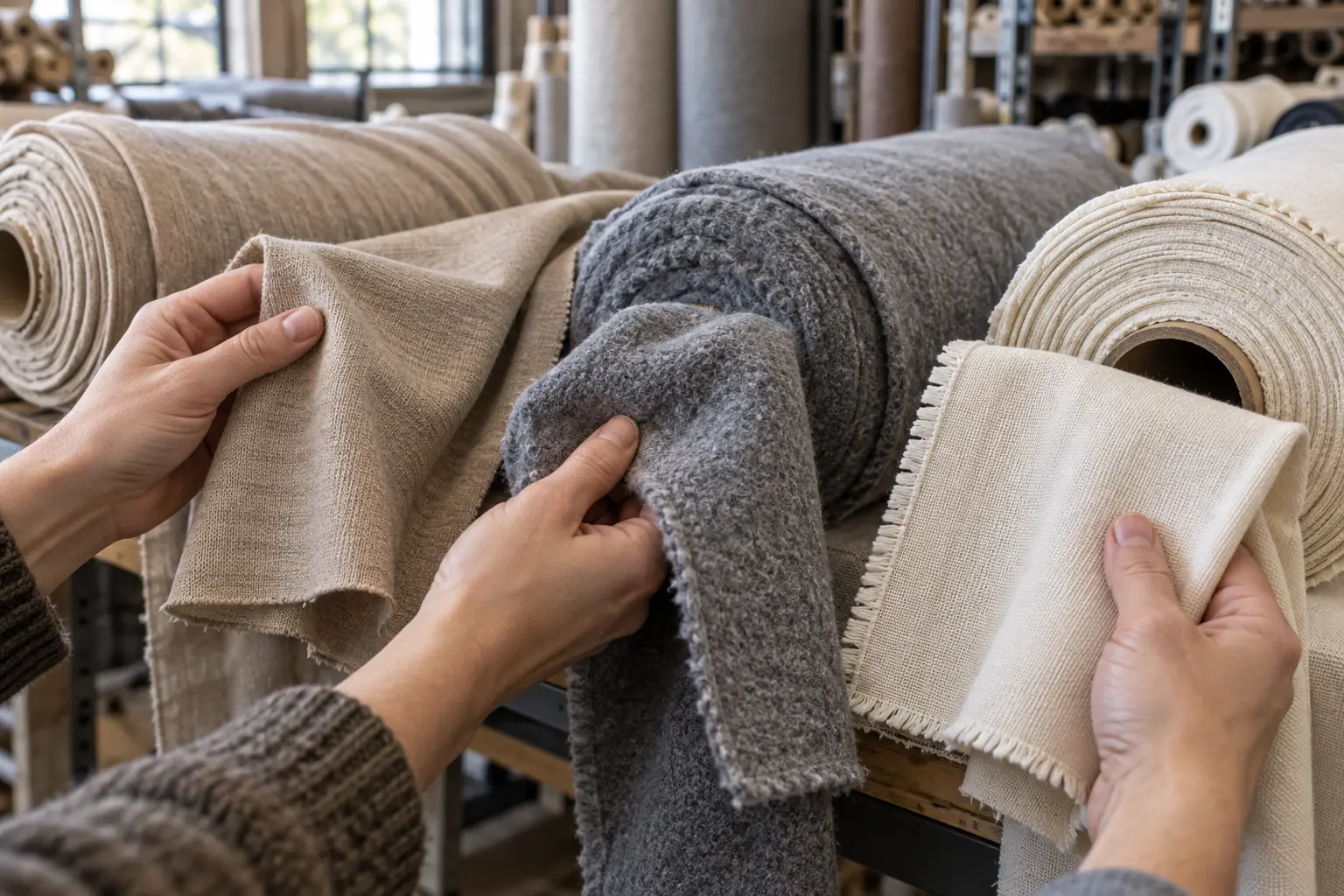
Fabric weight is a specification, not a complete description of quality. An illustrative long-sleeve brief could request 100% cotton single jersey at 200 GSM, with the supplier identifying whether the quoted weight applies before or after finishing. Ask for the proposed weight tolerance and the method used to verify it. A lighter substitute may reduce material consumption while changing opacity, drape, and recovery; record it as an alternative fabric rather than accepting it under the original specification.
For brushed fleece, specify composition, finished GSM, and which face is brushed. Request a swatch showing the intended finish, since brushing affects surface appearance and lint release. For a woven overshirt, identify weave, usable fabric width, and wash treatment. Usable width and shrinkage allowances influence cutting yield, so equal GSM alone does not establish that two fabric offers have equivalent cost assumptions.
Define measurement points with diagrams. On the jersey top, measure half-chest flat at a stated distance below the armhole, body length from the high shoulder point, and sleeve length from the shoulder seam to the cuff edge. Identify whether measurements apply before laundering or after an agreed wash-and-dry procedure. As a buyer-proposed starting point for discussion, a brief might allow plus or minus 1 cm at half-chest and body length, with plus or minus 0.5 cm at a smaller feature such as cuff opening. These are illustrative acceptance limits, not StitchQuote standards; agree limits that suit the garment, material, and fit risk before production.
Reconcile a worked order before releasing production
Consider an illustrative order of 150 jersey tops in one color, allocated as 30 small, 60 medium, 40 large, and 20 extra-large. Have each bidder quote that exact size mix. Ask whether larger sizes affect fabric consumption or unit pricing, and whether the chosen fabric and label quantities introduce separate purchasing minimums. Keep any unused custom material or trim commitment visible alongside the finished-garment total.
Build the comparison as 150 times the confirmed garment rate, plus separately quoted development and branding setup, plus packing and inbound charges that are excluded from that rate. Divide the resulting total by 150 for an initial cost per ordered unit. If your planning scenario reserves five garments for photography and wear trials, separately calculate the launch outlay divided by the remaining 145 saleable units. This shows the cash burden on the selling inventory without inventing a supplier discount or changing the quotation.
Before release, attach the approved sample reference, measurement sheet, fabric approval, and label artwork revision to the order. Specify how QC will record measured sizes, shade differences, skipped stitches, and decoration alignment. Agree the inspection sample size and the correction process for failures; inspecting a few garments does not demonstrate that every unit meets the brief. At packing, reconcile actual size counts against the order and require carton markings that let receiving staff locate each size without opening every box.
Build a retail margin bridge for each style
Once offers share a common scope, calculate landed cost per unit: production plus allocated development, packing, freight, duties, and other applicable inbound costs. Avoid adding an expense twice if the supplier already includes it. Allocate style-specific setup charges to the relevant style; choose and document a reasonable basis for shared costs.
Then connect that cost to expected selling revenue. Gross margin percentage equals net selling revenue minus cost of goods sold, divided by net selling revenue. Keep your accounting treatment consistent. For an illustrative target of 60% gross margin, the corresponding net selling price is cost of goods sold divided by 0.40. That is arithmetic, not a recommended margin for every brand.
Model discounts and returns when estimating net revenue, and assess channel fees, fulfillment, and marketing separately to understand contribution after selling expenses. Wholesale and direct-to-consumer sales need different scenarios. Test a cautious sell-through case as well: unsold units consume cash even when the margin on sold units looks strong.
Resolve the last differences before selecting a quote
Should I reject a supplier whose unit price is higher?
First reconcile specifications and exclusions. A higher price may include an operation or packing component missing elsewhere. If the scope is genuinely equivalent, compare sample results, payment exposure, and confirmed timing before deciding whether the premium has value.
How should I compare a refundable sample charge?
Show the charge as initial cash required and record the credit separately. Confirm the order threshold, eligible styles, and when the credit applies. Do not reduce the expected order cost unless your planned purchase meets those conditions.
What if the final sample changes the collection budget?
Request a revised quotation tied to the approved sample and brief revision. Recalculate the affected style’s margin and collection cash requirement. You can then adjust an optional feature, quantity, or selling price with the consequences visible.
Can I approve only part of a collection quotation?
Ask the supplier to revalidate the remaining styles first. Removing an item may change shared material purchasing, setup allocations, or delivery planning. Approve a revised order scope rather than assuming the original collection rates still apply.
Related reading for your purchasing review
- Prepare a tech pack that supports comparable quotes
- Review sampling and MOQ considerations
- Explore hoodie manufacturing cost components
- Discuss your collection quotation with StitchQuote
Request a manufacturing quote
Share your product type, quantity range, and destination. We usually reply within one business day.