Custom Streetwear, Casualwear & Denim Manufacturer•MOQ 50 pcs•Denim MOQ 100 pcs•7-Day Sample Available
Puff Print vs Screen Print for Streetwear: Which One Fits the Product Better?
Compare puff print vs screen print for streetwear so you can match graphic texture, garment body, artwork scale, and production practicality to the right product direction.

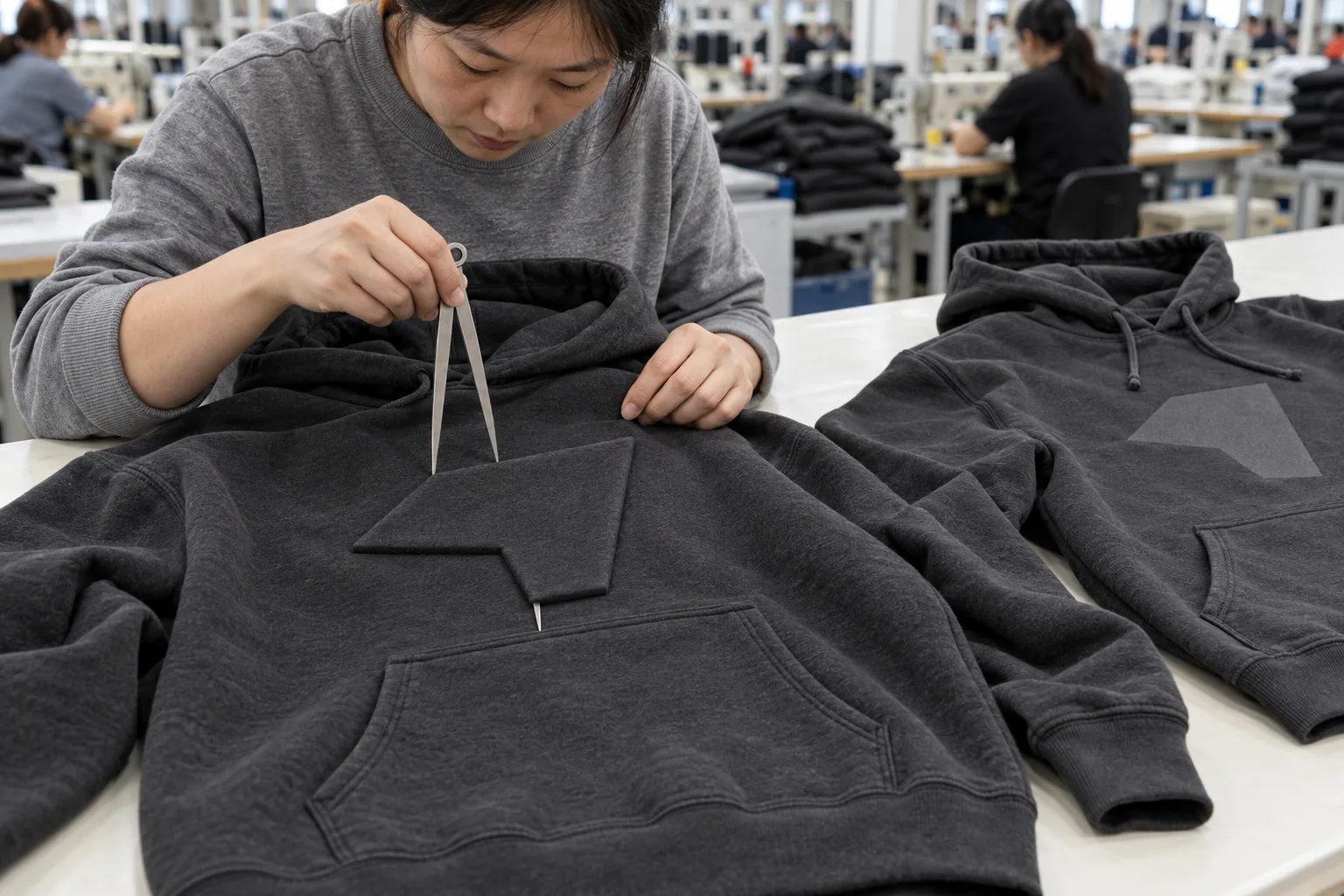
A chest graphic can use the correct ink, color and artwork yet still look wrong because it sits too close to the collar or drifts toward one armhole. For buyers comparing puff print vs screen print for streetwear, placement tolerance is a useful decision point: how much movement can the design accept before the garment stops looking intentional?
Puff is usually produced through screen printing with an ink system that expands during curing. The practical comparison here is raised puff decoration versus conventional flat screen printing. Both require controlled positioning, but raised edges, garment seams and nearby details can make the same placement variation look very different. Set those limits before approving a production sample.
Define the boundary the customer will notice
Placement tolerance is the agreed allowance around a target print position. It is separate from artwork size, color registration and puff height. A graphic can meet its width specification while sitting too low; it can also be correctly centered but rotated. Approving one measurement does not approve the others.
Start with the visual relationship that matters. A small raised emblem beside a pocket needs a convincing gap from that pocket. A large flat back graphic may be judged mainly against the garment centerline. A narrow vertical graphic makes rotation especially visible. Identify that relationship in the brief instead of relying on “standard chest placement.”
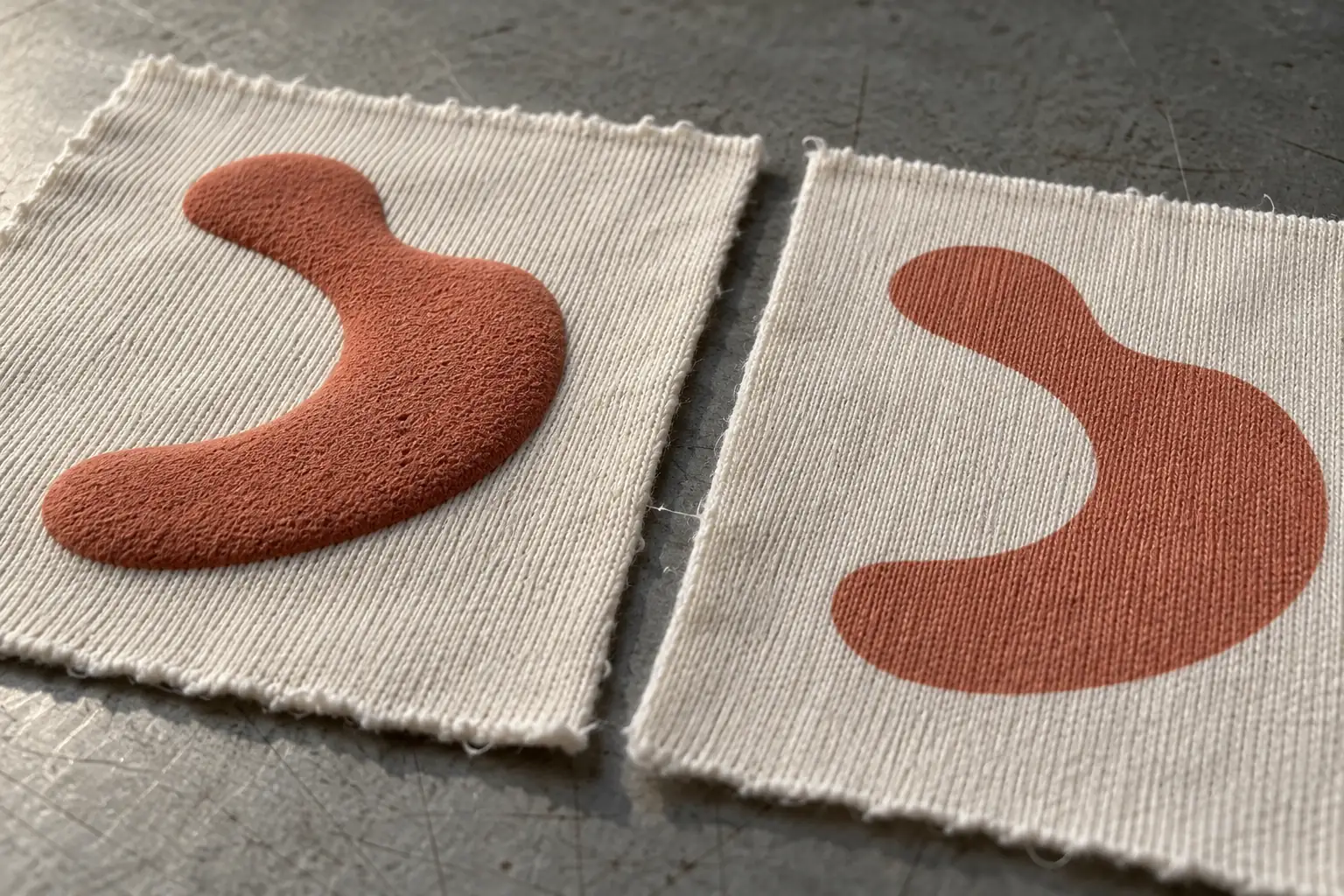
Puff can change the apparent edge as the ink expands. Do not assume the screen artwork boundary will exactly match the cured visual boundary. Check the actual ink, fabric and curing combination on a sample before deciding how close the design can sit to another feature.
Give every position a measurable reference
A placement drawing should name its reference points and measurement condition. Specify whether the garment is laid flat and relaxed, whether measurements follow the fabric surface, and which point on the graphic is being located. “Below neckline” is ambiguous unless it identifies the seam or edge being measured.
For a centered tee graphic, locate the top of the finished print from a defined neckline seam point and its horizontal center from the body centerline. For an offset hoodie motif, show both the body reference and the intended pocket clearance. If those dimensions conflict on a sewn garment, state which relationship has priority and request review.
| Control | Specify in the approval record | Check separately |
|---|---|---|
| Vertical position | Named garment reference to finished graphic top | Distance from collar or hood seam |
| Horizontal position | Graphic center relative to body centerline | Visual balance between armholes |
| Rotation | Graphic baseline relative to a defined garment line | Skew on a relaxed garment |
| Clearance | Minimum finished edge gap to a pocket or seam | Puff expansion and sewing variation |
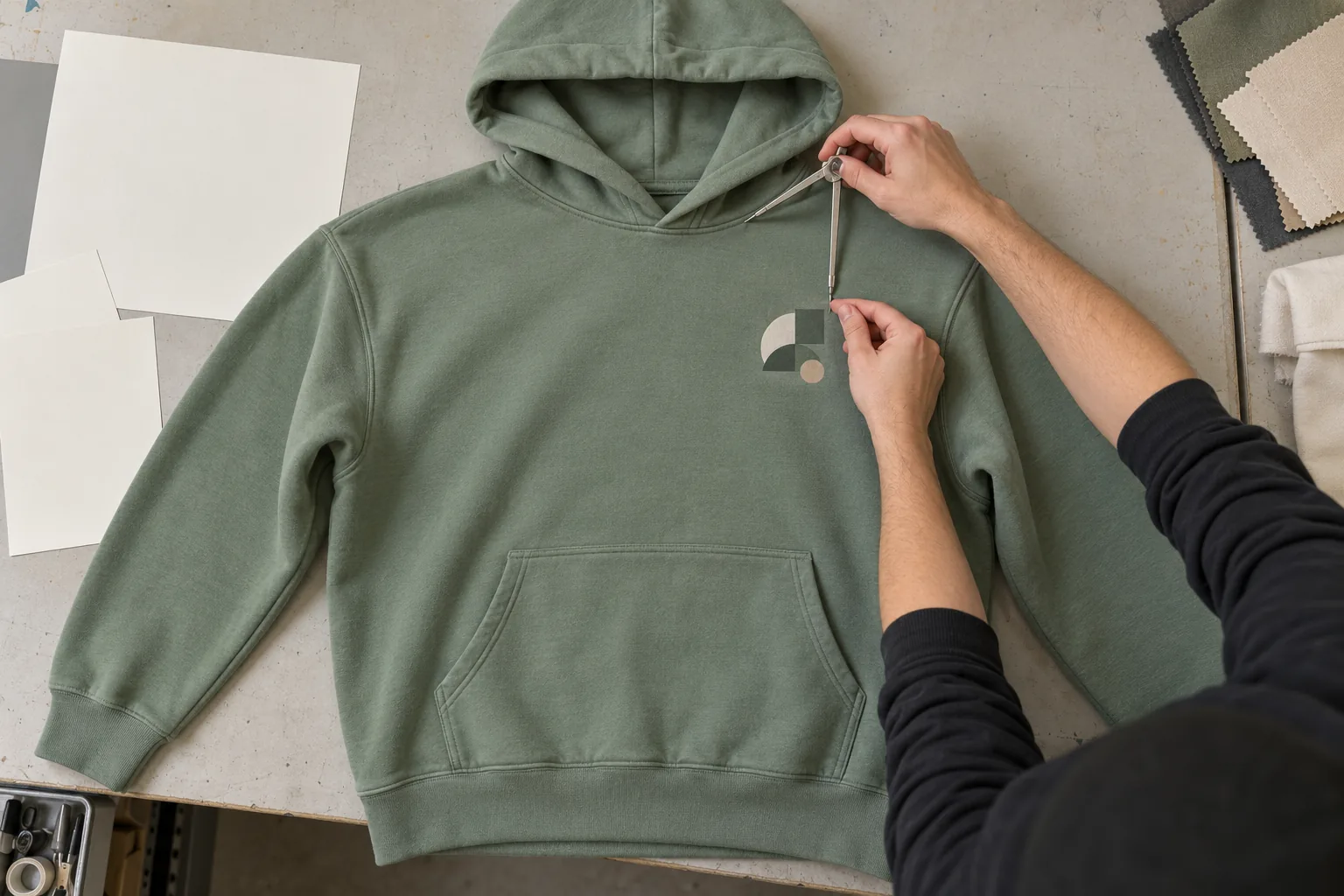
Record target dimensions and agreed tolerances together. There is no single allowance suitable for every graphic, fabric and placement. Any proposed numerical limit should be confirmed for the project through sampling, rather than copied from an unrelated style.
Choose the method around the tightest clearance
Consider a sweatshirt with a compact symbol directly above the kangaroo pocket. With puff, the finished edge and its shadow can make a small gap appear tighter. Pocket sewing variation also affects that gap. Moving the symbol upward or simplifying its outline may create a more forgiving product than trying to enforce an extremely narrow allowance.
Flat printing is often easier to assess where crisp alignment or fine internal gaps are central to the design. It still cannot compensate for inconsistent garment loading or an uneven pocket. If the design must nearly touch a seam, test that exact construction rather than assuming flat ink makes the location straightforward.
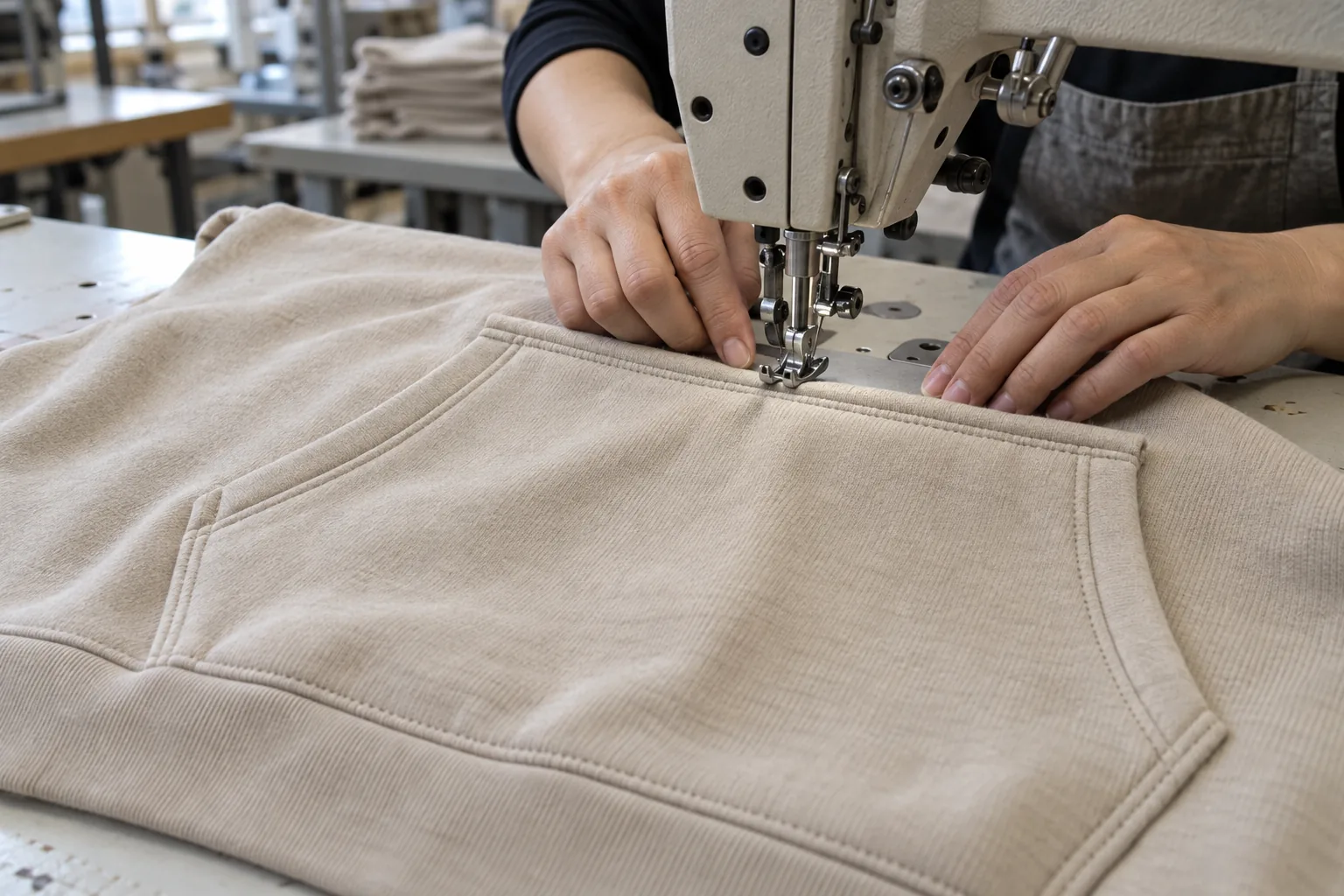
A broad raised shape on an open back panel has a different tolerance problem from a tiny motif framed by stitching. Choose puff where the silhouette has room to expand and remain balanced. Choose flat ink where preserving a clean visual boundary better serves the placement. Neither choice removes the need for an approved reference sample.
Test the smallest and largest sizes before locking coordinates
A single placement coordinate can produce different visual proportions across a size range. Shoulder width, neckline shape and pocket dimensions may change while the print stays the same size. Decide whether the graphic uses one size throughout, changes at selected size breaks, or needs different placement targets.
Review the smallest and largest ordered sizes alongside the base sample. Check a cropped sweatshirt for available vertical space and an oversized tee for horizontal balance. If puff and flat elements share one design, inspect their registration as well as their combined position on the body.
Ask whether decoration is applied to panels or assembled garments. Panel printing requires references that remain meaningful after sewing; assembled printing must account for seams and loading access. Approve the intended production route so that sample placement can be reproduced.
Make placement QC a repeatable inspection
Use the approved cured sample, measurement drawing and agreed limits together. A photograph helps communicate appearance but should not replace physical measurements. For puff, inspect under consistent lighting because shadows can exaggerate an edge or hide a small clearance.
- Lay the garment flat without stretching it and identify the agreed reference points.
- Measure vertical and horizontal position, then check rotation independently.
- Check the finished graphic dimensions and minimum gaps to nearby construction details.
- Inspect puff edges, expansion consistency and surface condition; inspect flat prints for edge definition and coverage.
- Include garments from different sizes and production stages in the agreed inspection plan.
- Assess an agreed wash-test sample for changes in garment shape, print appearance and relative placement.
Separate placement failures from garment asymmetry and print defects in the inspection record. If the pocket itself is skewed, shifting the print may disguise one issue while creating another. Hold affected pieces for review against the agreed criteria instead of changing coordinates informally during production.
Questions to settle before sample approval
Should puff and flat ink share the same tolerance?
They may share a positioning allowance if sampling supports it. Define finished edge clearance separately, since puff expansion can affect the visible gap even when the graphic center stays on target.
Can a digital mockup establish placement approval?
It can establish intent and proposed coordinates. Physical approval is still needed to judge fabric behavior, sewn references and the cured print boundary. Include a relaxed flat view and an on-body review when proportion matters.
What if a centered graphic looks off-center?
Check garment symmetry and the artwork’s visual weight. An asymmetric symbol may need an intentional optical offset. Document that offset as the target rather than leaving operators to adjust it by eye.
Send a placement brief with the sampling request
Provide artwork, fabric details, ordered sizes, reference points and proposed acceptance limits. StitchQuote offers cut-and-sew, private label, sampling, fabric and trim sourcing, branding and QC before packing. MOQ for most categories starts from 50 pieces per style; denim starts from 100. A 7-day sample is available for standard styles with confirmed specs and available materials; complex styles, custom washes and custom-developed fabric take longer.
Related reading and next steps:
- Prepare a tech pack with placement references
- Review sampling and MOQ considerations
- Explore custom hoodie manufacturing
- Contact StitchQuote about your placement brief
Request a manufacturing quote
Share your product type, quantity range, and destination. We usually reply within one business day.