Custom Streetwear, Casualwear & Denim Manufacturer•MOQ 50 pcs•Denim MOQ 100 pcs•7-Day Sample Available

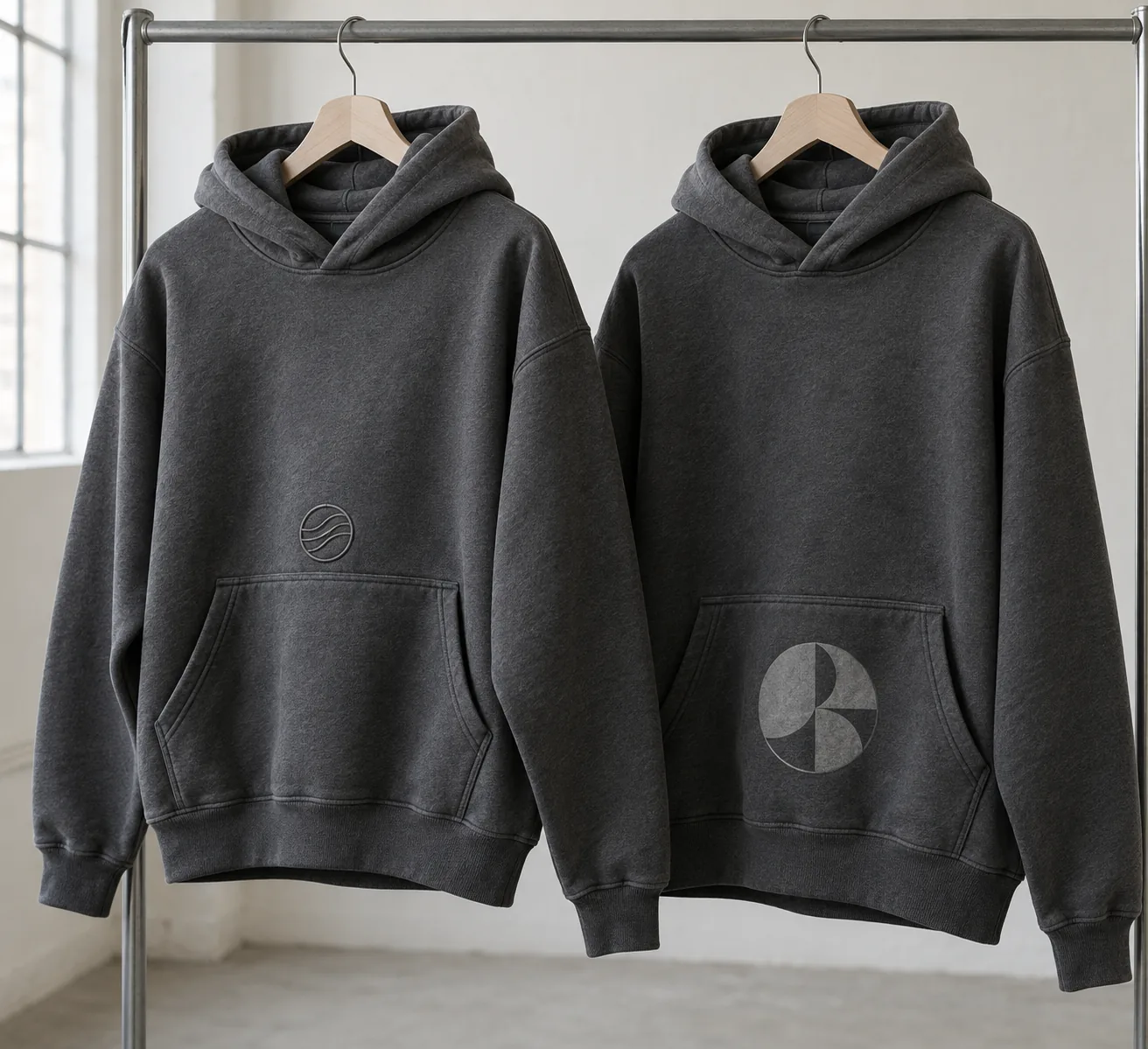
Screen Printed vs Embroidered Hoodies: Premium Feel, Cost, and MOQ
Compare screen print vs embroidery for premium hoodies through hand feel, artwork detail, garment weight, cost, and MOQ trade-offs.

A hoodie graphic can look balanced on a digital front view and still fail when the kangaroo pocket is sewn on. A print may land too close to a raised seam; embroidery may stiffen the pocket opening or leave backing where the wearer’s fingers brush it. For a brand approving its first production sample, pocket placement is a practical starting point for choosing decoration.
The decision behind screen printed vs embroidered hoodies is therefore partly a construction decision. Before comparing premium feel, cost, and minimum quantities, establish where the artwork sits relative to the pocket, how that area moves, and when decoration enters the sewing sequence. Those details make competing sample proposals much easier to judge.
Map the pocket before sizing the graphic
Begin with the pocket pattern, not a logo centered on an empty hoodie outline. Record the pocket’s finished width, upper edge position, opening shape, and relationship to the garment centerline. Then place the artwork against those references. A graphic centered between the neckline and hem may appear too low once a large pocket occupies the lower front.
Specify whether placement measurements refer to the artwork’s outer boundary or its center. For a chest graphic above a kangaroo pocket, show the distance from the artwork’s lowest point to the pocket’s top edge. For a small motif on the pocket itself, reference a stable finished edge rather than the opening’s curved midpoint.
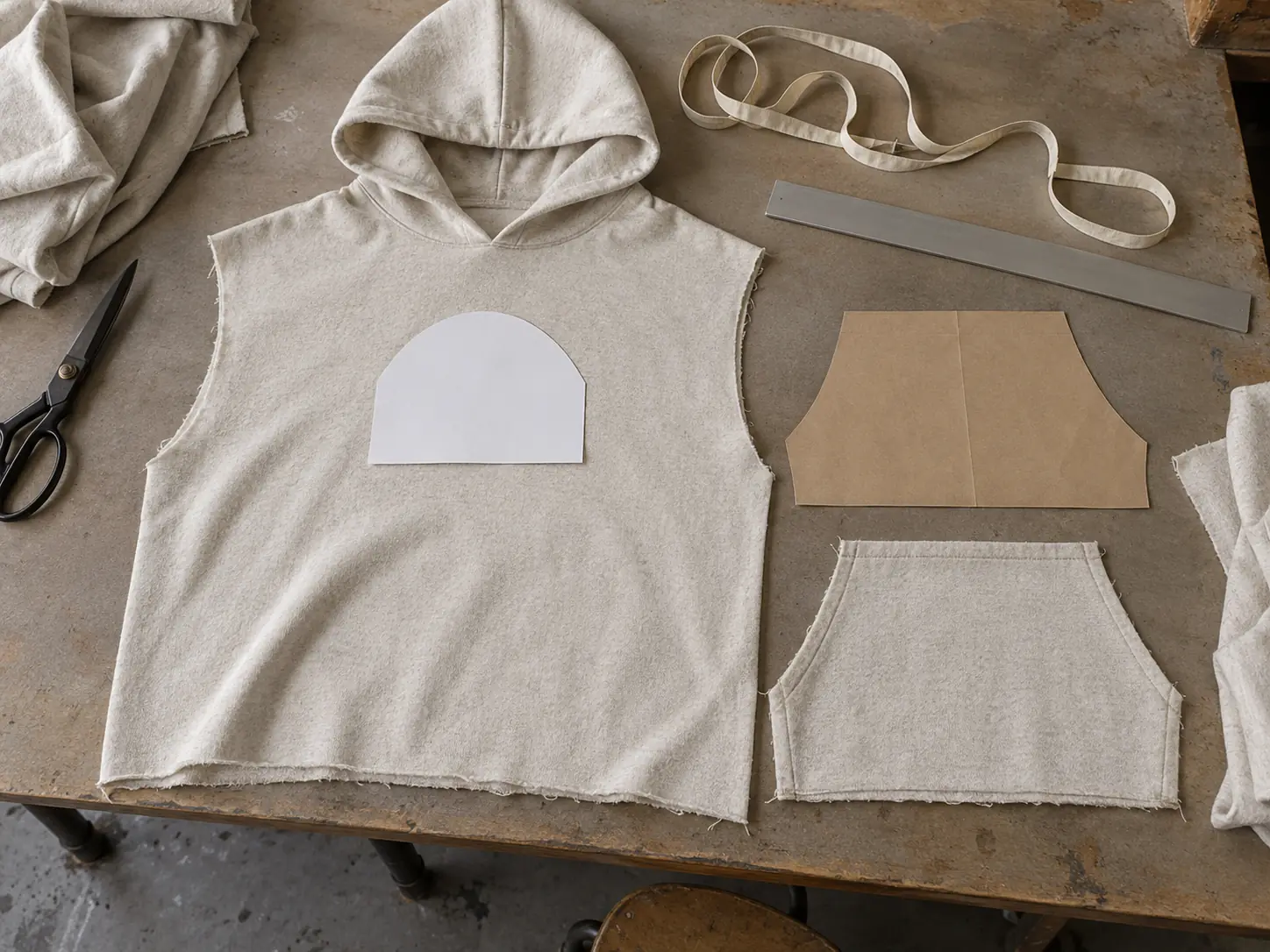
There is no universal clearance that suits every hoodie. The supplier should confirm usable space against seam bulk, printing or hooping access, and the intended size range. Make that clearance an agreed sample detail rather than an assumption hidden in the mockup.
Choose the decoration zone before choosing the technique
Three placements create different production problems: above the pocket, on its face, and across its boundary. A compact embroidered emblem above the pocket may keep texture away from the hands. A flat print on the pocket face can suit a wider illustration, provided the panel can be supported evenly during printing.
| Artwork location | Screen print consideration | Embroidery consideration |
|---|---|---|
| Above pocket | Allow access around the raised pocket seam. | Check fabric distortion and backing against the body. |
| On pocket face | Confirm a flat printing surface and seam allowance clearance. | Decorate without stitching the pocket shut; assess backing inside. |
| Across pocket edge | Seam height can interrupt ink coverage. | Layer changes complicate stitching and can restrict pocket function. |
A continuous illustration crossing the pocket boundary deserves an early feasibility sample. Separate decoration on the body and pocket can introduce alignment variation during assembly. Printing over an assembled seam introduces a different challenge: uneven contact. Neither route should be approved from a flat rendering alone.
Test premium feel with hands inside the pocket
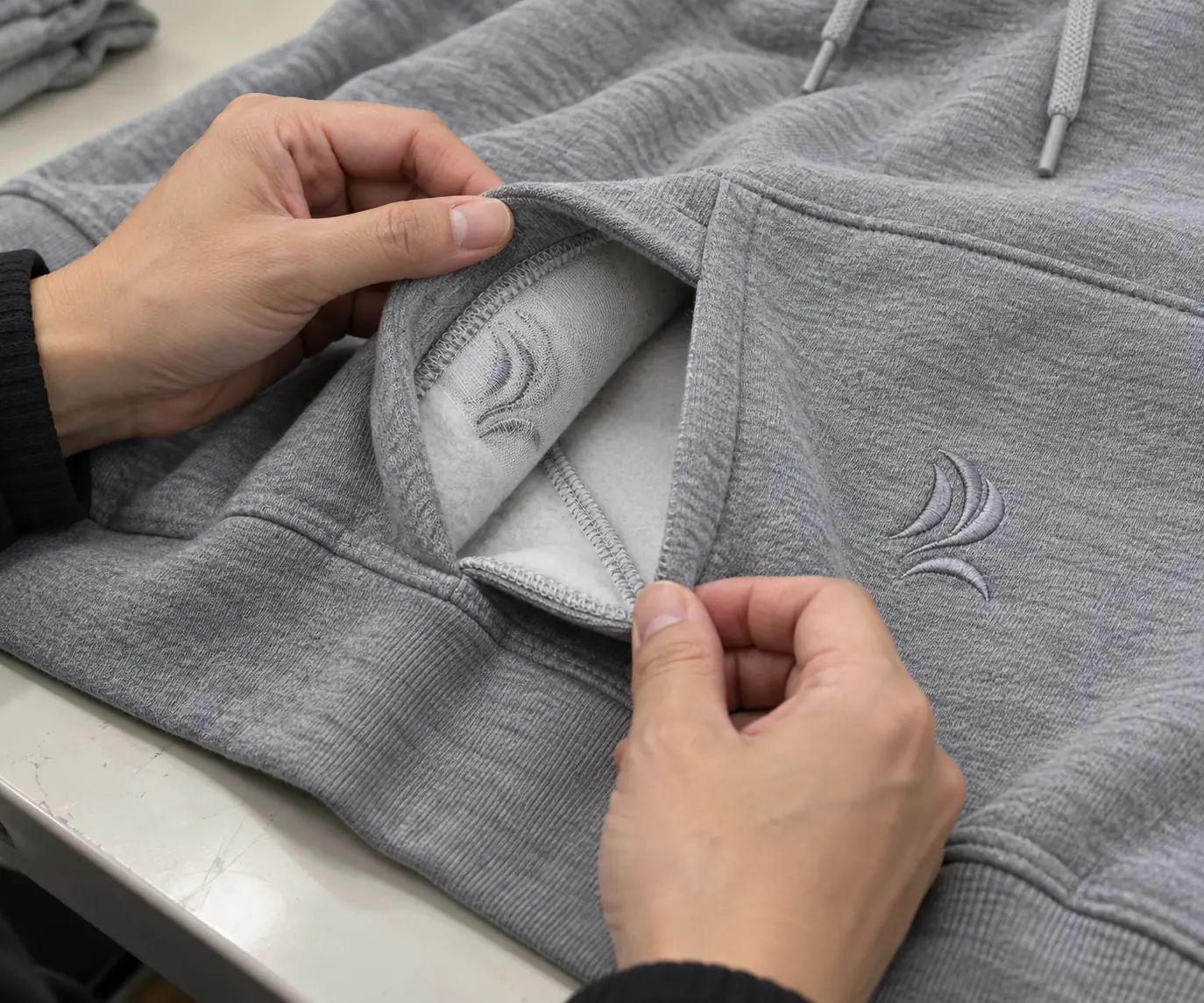
Premium feel includes what happens when someone uses the garment. Put both hands into the sample pocket, sit down, and pull the hoodie on and off. A dense embroidered patch near an opening can resist bending. Rough backing or thread ends inside the pocket can be more noticeable than the same finish on an outer sleeve.
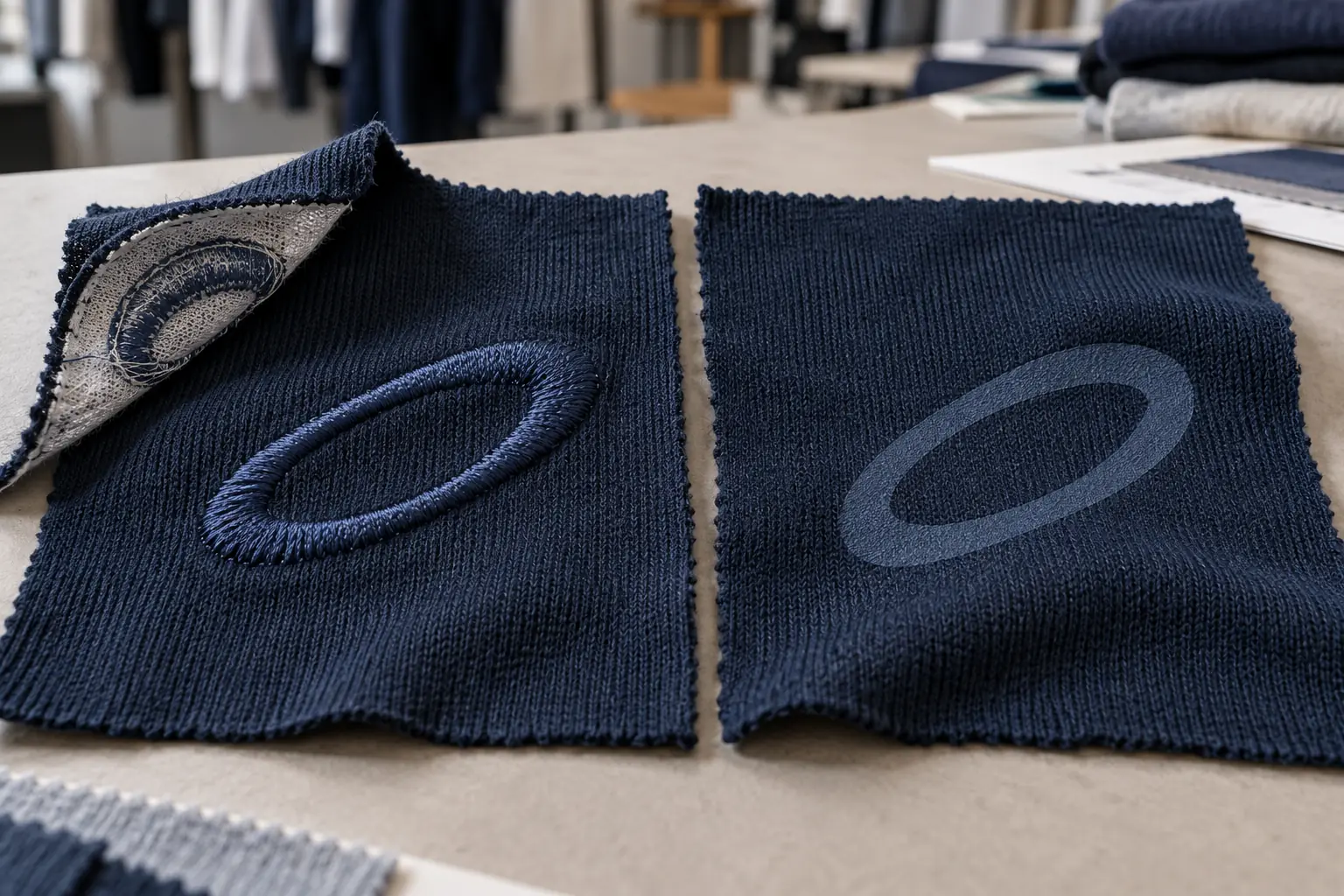
Screen print also needs a touch test. A broad deposit of ink may make a soft pocket face feel firmer, depending on the ink system and coverage. Ask to compare the decorated area with undecorated fabric from the same material. Judge drape, surface feel, and flexibility together.
Fabric weight provides context, but GSM alone does not establish whether embroidery will sit cleanly. Knit stability, stretch, surface texture, and decoration density all matter. A soft brushed fleece and a compact loopback fabric of similar weight can behave differently around a stitched motif.
Quote the pocket assembly route, not just the artwork
For a useful cost comparison, ask the supplier to quote the same garment, artwork dimensions, placement, quantity, and finish in both methods. Identify whether decoration happens on a separate pocket panel, on the body before pocket attachment, or on the assembled hoodie. Each sequence changes access and handling.
Embroidery pricing can reflect digitizing, stitch count, backing, and machine time. Screen printing can involve screen preparation, color separations, ink coverage, and curing. Pocket alignment checks or extra handling may affect either route. Request separate setup and production charges without assuming one method is always cheaper.
StitchQuote’s MOQ for most categories starts from 50 pieces per style. Confirm how that applies to the proposed hoodie, color split, and decoration variants; it does not automatically mean every pocket graphic can be ordered as a separate small batch. A shared body with several motifs still needs a project-specific quotation.
Approve pocket geometry through sampling and QC
Lock the pocket pattern and decoration route before treating the sample as a bulk reference. StitchQuote provides cut-and-sew, private label, sampling, fabric and trim sourcing, branding including prints and embroidery, and QC before packing. Ask which placement checks will be recorded for your order.
- Measure: Record artwork size, pocket position, and artwork-to-pocket clearance using agreed reference points and tolerances.
- Inspect access: Confirm both openings remain usable and no stitching accidentally joins the pocket face to the body.
- Review the surface: Look for print gaps near seams, puckering, registration problems, and distortion around embroidery.
- Check inside: Examine backing, loose threads, and any rough areas where hands contact the pocket.
- Wash and recheck: Follow the intended care instructions, then compare pocket shape, decoration appearance, and placement with the prewash measurements.
- Check size variation: Review the smallest and largest proposed sizes so the pocket does not crowd the graphic or change its visual balance unexpectedly.
Keep an approved sample and annotated photographs as shared references. For standard styles with confirmed specifications and available materials, a 7-day sample is available. Complex styles, custom washes, and custom-developed fabric take longer; confirm timing for the pocket construction and decoration being requested.
Questions buyers ask before locking the pocket layout
Can we embroider a pocket after it has been attached?
Sometimes, but access depends on the opening, motif position, and equipment. Ask the supplier to confirm that the pocket face can be isolated from the body. Decorating the separate panel may be more practical.
Should the logo move when the pocket changes between sizes?
Define the priority: a fixed chest position or a consistent gap above the pocket. Those goals may diverge across sizes. Request a placement diagram by size where one fixed measurement would create crowding.
Can print and embroidery be compared on one sample?
A comparison panel helps assess texture, but final approval needs the intended pocket construction. Use matching fabric for initial trials, then verify the selected method on a complete hoodie with functional openings and finished seams.
Turn the placement sketch into a measurable approval sheet
Measure the hoodie laid flat, with the front smoothed without stretching and the pocket resting naturally. Define the garment centerline and a vertical reference such as the high shoulder point at the neck seam. Record the pocket top position from that reference, then measure the artwork separately. This lets an inspector distinguish a misplaced pocket from a correctly placed graphic that only appears low because the pocket moved.
For example, a buyer might propose a 90 mm wide chest emblem, centered on the front, with its lowest point 40 mm above the pocket top. A draft approval sheet could allow 5 mm of horizontal placement variation and 5 mm of variation in that gap. These are illustrative buyer targets, not StitchQuote tolerances or universal production standards. Have the supplier confirm what is achievable for the selected knit, decoration method, and assembly sequence before approving them.
State whether dimensions apply before washing or after a specified care cycle. Also identify the artwork boundary consistently: embroidery should be measured to the outermost stitched edge, while a print should use a defined visible edge rather than transparent space in the artwork file. Photograph the ruler position on the approved sample so production and inspection teams use the same measurement method.
Build a fabric and decoration trial that answers an order decision
A useful trial brief identifies fiber composition, knit construction, nominal GSM, face texture, and finish. For example, a proposed 320 GSM cotton-polyester brushed fleece should be evaluated as that specific fabric, rather than replaced with any available 320 GSM knit. Ask the supplier to record the agreed composition and weight acceptance range. A smooth face can support fine print detail, while stretch and recovery affect whether embroidery puckers after the hoop is removed.
Use production-intended fabric for decoration trials and retain an undecorated control piece. With polyester-containing fabrics, ask about dye migration into light-colored ink and assess the sample after the agreed observation period. For embroidery, compare the proposed backing and stitch density on the actual fabric. Reducing density or simplifying tiny lettering may improve flexibility, but any artwork adjustment needs buyer approval.
Consider a worked order brief of 100 hoodies in one style and one color, divided into 20 small, 40 medium, and 40 large units. Specify one shared chest motif and request a print option and an embroidery option against the same fabric and size breakdown. Ask each quotation to identify setup, decoration, panel handling, and inspection costs. Approve one method after reviewing the finished sample, and document whether artwork dimensions remain fixed across sizes. This comparison exposes the cost of the decoration choice without mixing it with changes in garment construction or fabric.
Related reading for your sample brief
- Prepare a tech pack with clear placement references
- Review sampling and MOQ planning
- Understand hoodie GSM and fabric weight
- Discuss your pocket layout with StitchQuote
Request a manufacturing quote
Share your product type, quantity range, and destination. We usually reply within one business day.