Custom Streetwear, Casualwear & Denim Manufacturer•MOQ 50 pcs•Denim MOQ 100 pcs•7-Day Sample Available

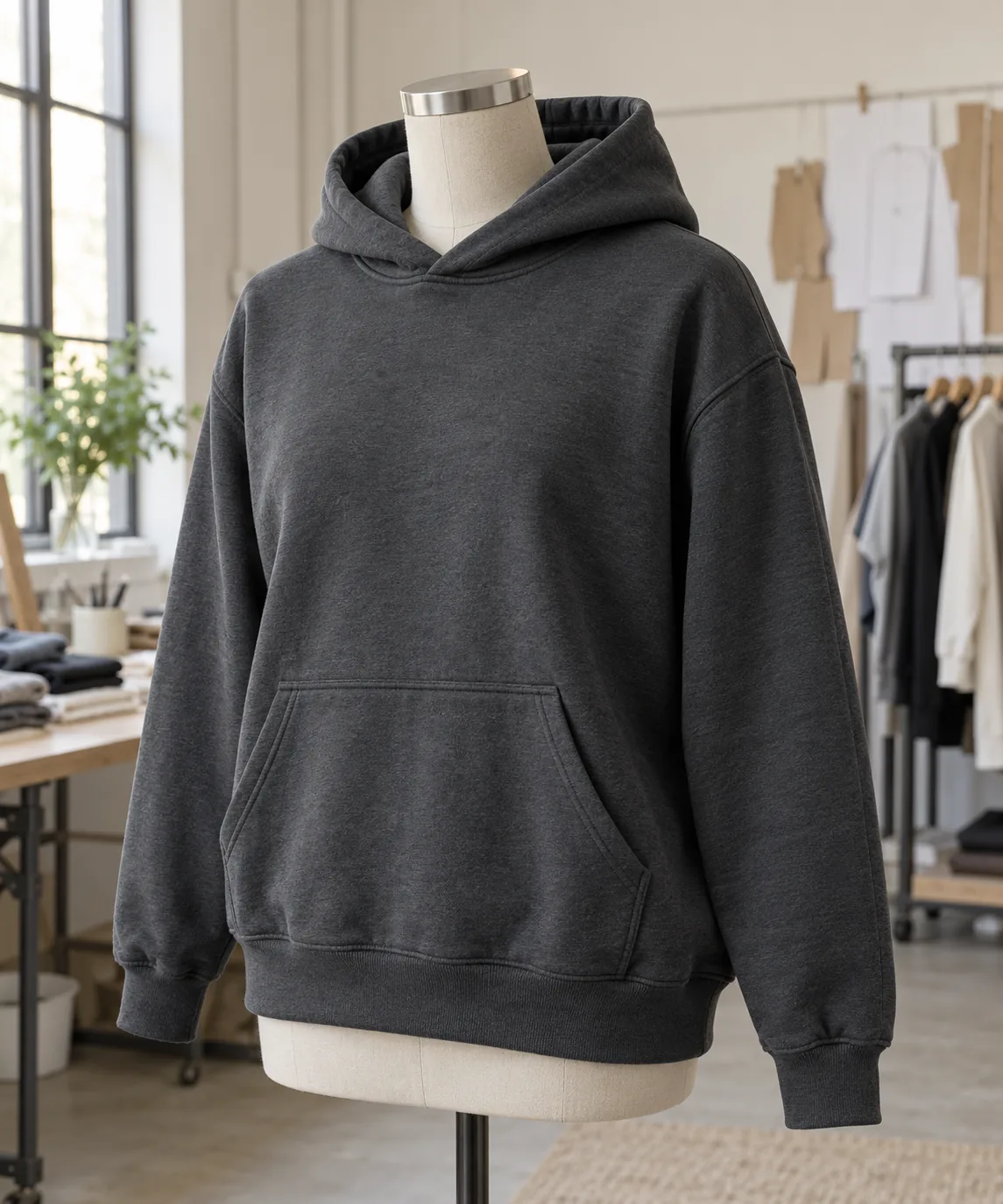
What Makes a Hoodie Feel Premium
See what makes a hoodie feel premium, from fabric and rib to silhouette and finishing, so the product earns its price beyond logo placement alone.

A hoodie can feel substantial in a showroom and lose its appeal after the first wash. Sleeves pull back, the hood tightens around the neck, and the waistband starts lifting the body. For a brand buyer, premium quality includes how reliably the garment keeps its intended proportions through finishing, delivery, and everyday care.
That makes shrinkage a product-development decision, not simply a final test result. Follow the material from fabric relaxation to the customer’s laundry routine, and you can separate temporary softness from lasting comfort before approving bulk production.
Start with the silhouette after laundry
Define the wearing experience you want after washing before choosing a fabric by touch alone. A cropped, wide hoodie needs enough remaining body length to keep its deliberate shape. A longline style needs sleeves and a hem that stay balanced. Both can use substantial fabric, yet require different dimensional decisions.
Set two references: the garment as delivered and the garment after an agreed care cycle. Specify measurement points, tolerances, wash conditions, drying method, and the waiting period before remeasurement. The care conditions should reflect the proposed label. Testing a garment only by air drying offers limited reassurance if its label will permit tumble drying.
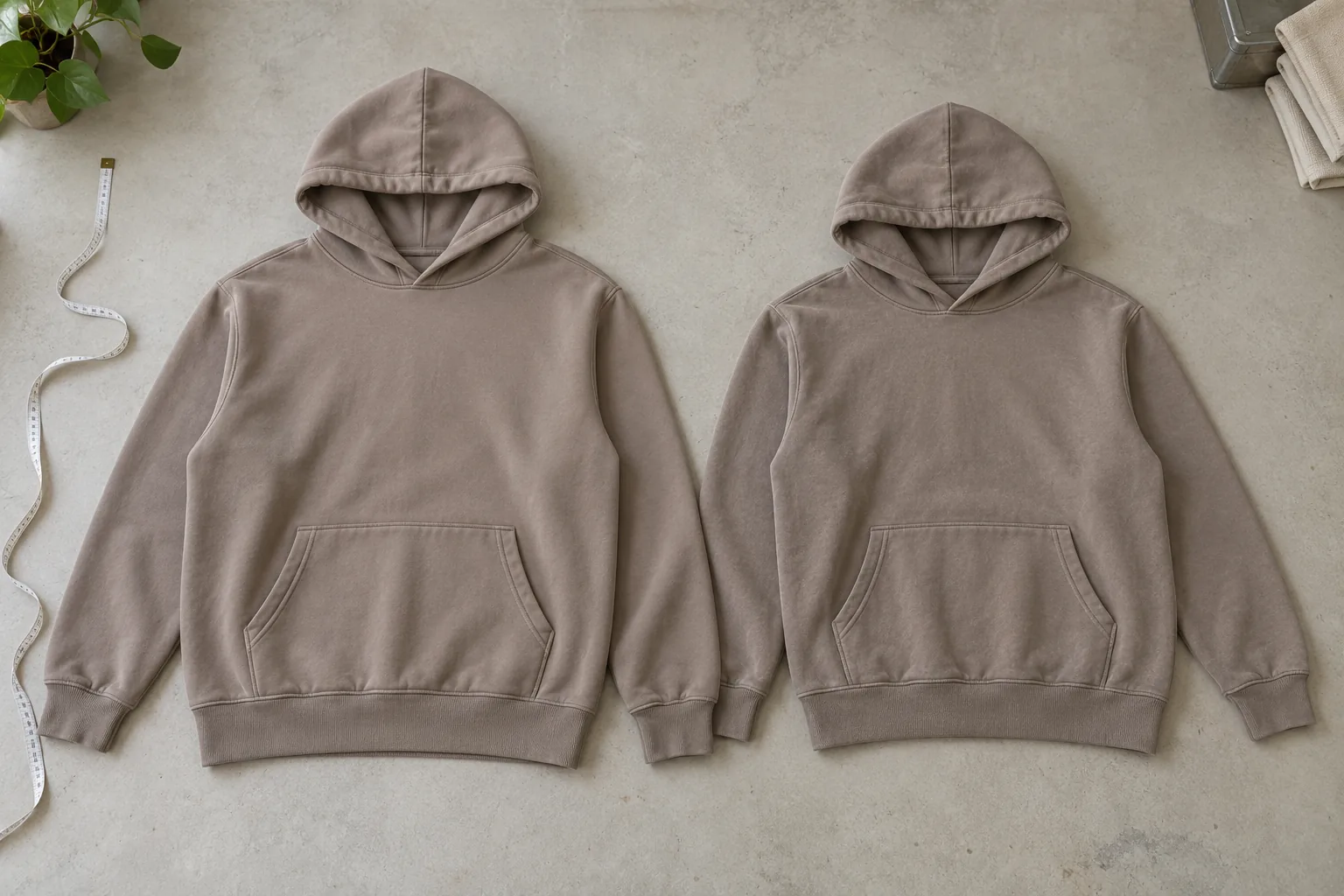
Trace where the fabric releases its tension
Knitted fabric can change dimensions as tension from earlier processing relaxes. Wet treatment, drying, and handling can each affect the result. Fabric that looks flat on a cutting table is not automatically stable, and a soft finish does not demonstrate that dimensional change is under control.
Ask which relaxation or stabilization steps occur before cutting and which happen after sewing. If the design includes a garment wash, evaluate the hoodie after that treatment as well as after home-care testing. A production wash and a consumer wash are separate checkpoints; passing one does not prove the other.
Record fabric identity and processing history with the sample. A replacement material with a similar composition and stated weight may behave differently. Fabric weight also needs context: when area contracts, weight per unit area can increase without adding yarn. A denser washed surface may feel impressive while concealing lost length.
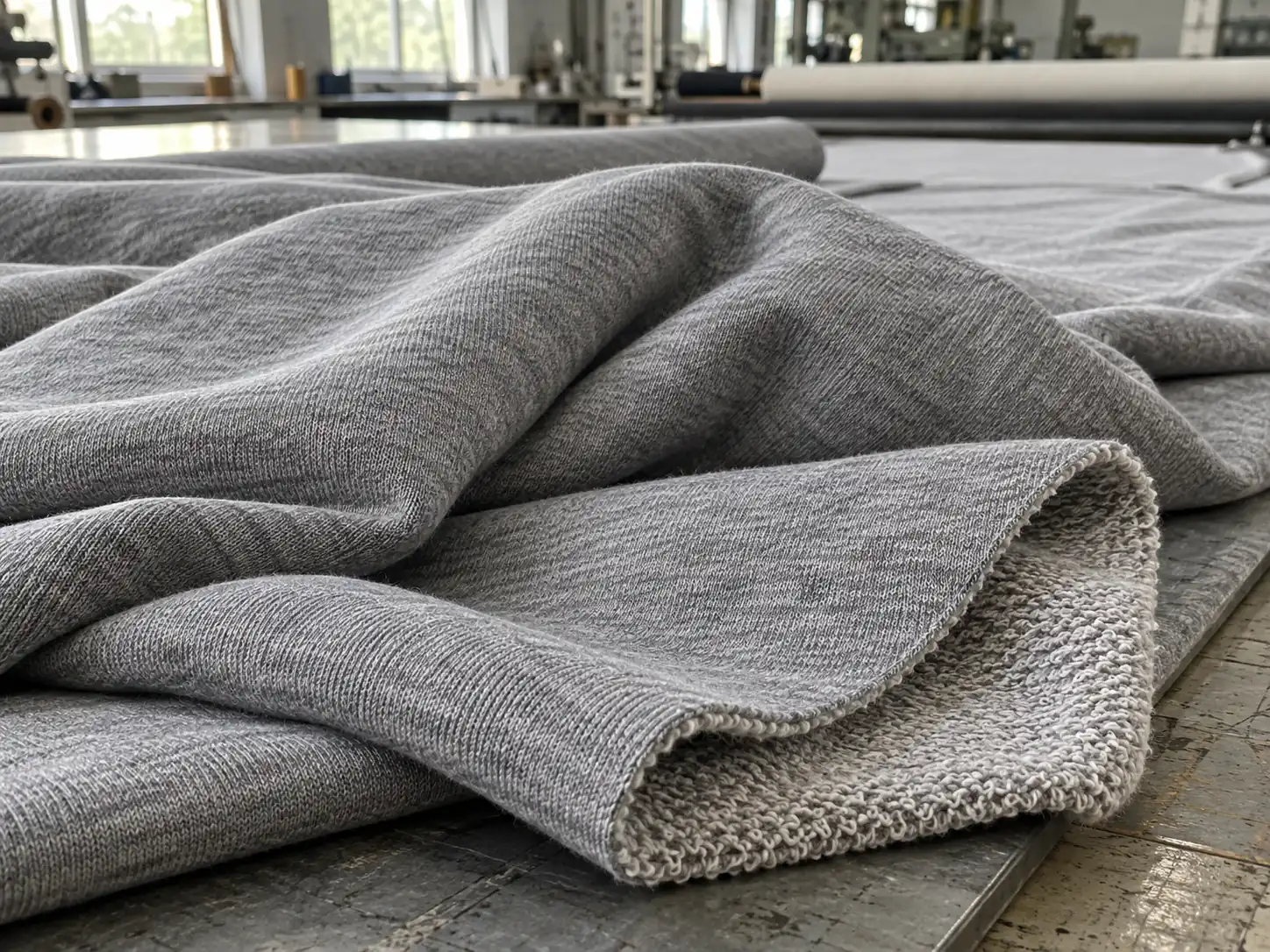
Look for parts that shrink at different rates
The body fabric is only one part of the system. Rib cuffs, a lined hood, pocket panels, sewing thread, and decoration can restrict or respond differently to dimensional movement. Even moderate changes can become visible when adjacent components behave differently.
For example, a roomy pullover may retain its chest width while its waistband contracts enough to create excessive blousing. A double-layer hood may develop a rolling edge if its lining and outer fabric change differently. On a zip hoodie, fabric shortening beside a relatively stable zipper can produce waviness.
Evaluate the complete construction, including planned embroidery or printing. A plain development sample cannot show whether a dense chest embroidery will distort its surrounding fabric after laundering. Keep separate observations for dimensional change, seam appearance, surface feel, and rib recovery; a good measurement result cannot substitute for all four.
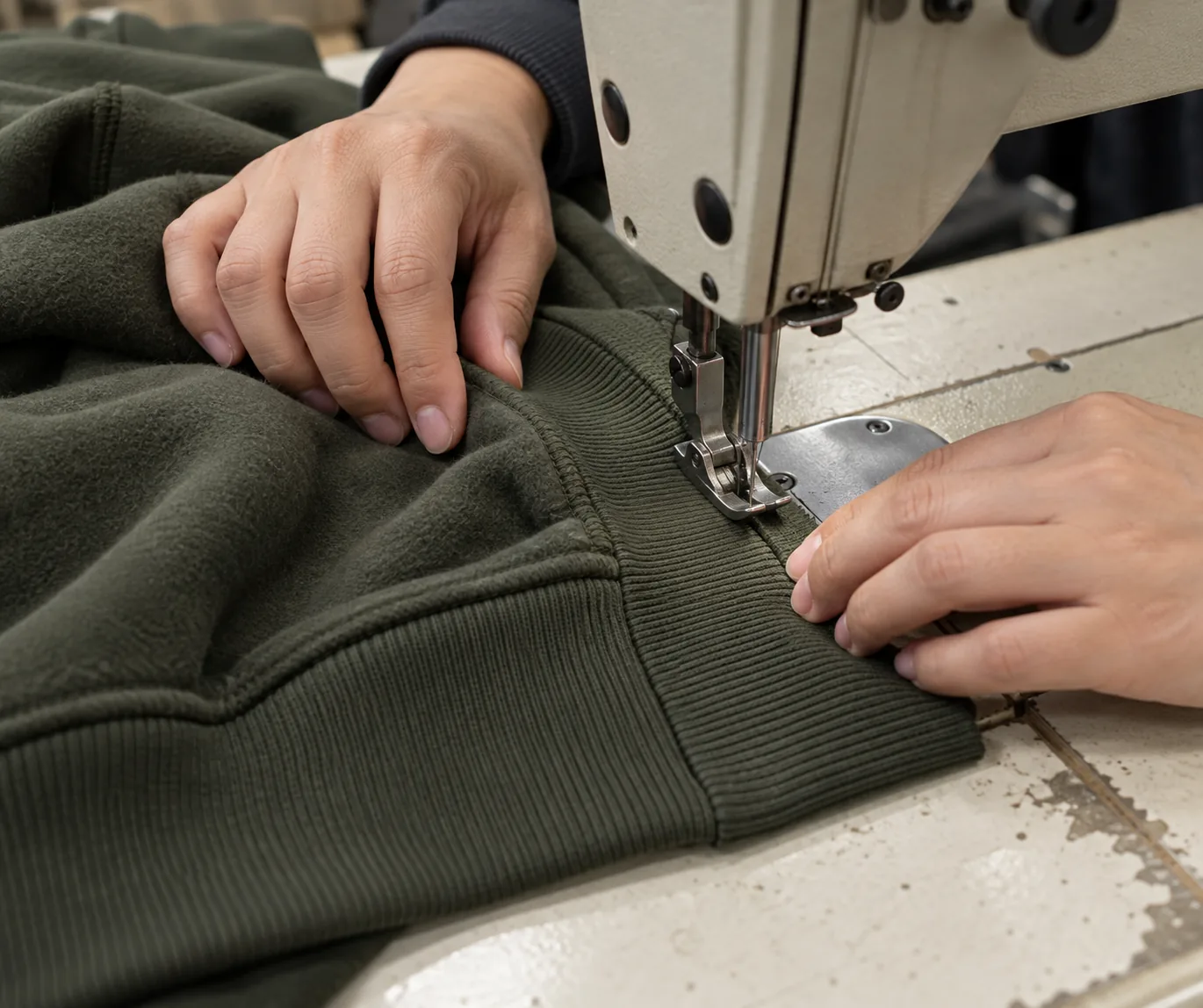
Use paired samples to decide what to change
Keep an unwashed reference and test a matched garment made from the intended materials and construction. Measure both consistently on a flat surface without stretching the rib or forcing seams straight. Photograph the same views so that a change in hood balance or pocket shape remains visible alongside the numbers.
| Checkpoint | Record | Decision it supports |
|---|---|---|
| Before laundering | Body length, chest, sleeve, hem, and hood dimensions | Confirm the starting garment matches the approved specification |
| After agreed care | The same dimensions and visible distortion | Identify where fit or construction loses balance |
| After further agreed cycles | Additional movement, hand feel, and recovery | Check whether the first result remains representative |
Calculate shrinkage for each dimension as the original measurement minus the washed measurement, divided by the original measurement, multiplied by 100. A negative result indicates growth. Do not average body length and chest width into one convenient number: that can hide the direction that actually affects fit.
Choose the correction based on the failure. Unstable material may need a different preparation route or replacement. A consistent, understood change may justify pattern compensation. Simply lengthening every panel can create an awkward delivered fit and will not resolve incompatible rib or seam puckering. Retest the corrected garment before treating the adjustment as approved.
Turn measurement landmarks into a usable tolerance sheet
A measurement name is not enough to reproduce a result. For body length, specify the high shoulder point beside the neck seam down to the bottom edge, including the waistband. For half chest, define a horizontal line a stated distance below the armhole, such as 2.5 cm, with the garment laid flat. For a set-in sleeve, measure from the shoulder seam to the cuff edge; for a dropped shoulder, record shoulder width as well so a shift in the seam does not disguise lost sleeve reach.
List relaxed hem width, cuff opening, and hood height separately. State whether hood height follows a straight line or a curved seam, and use the same method throughout. Measure pocket position from fixed seams rather than from a folded garment edge. These details help distinguish actual shrinkage from differences in how two inspectors position a tape.
Separate sewing tolerances from wash-change limits. As an illustrative starting proposal, a buyer might allow plus or minus 1 cm on delivered body length and half chest, with a tighter plus or minus 0.5 cm on pocket placement. These are negotiation examples, not universal standards or StitchQuote specifications. Agree limits that suit the silhouette and construction, then define the acceptable washed dimensions independently. A garment that starts at the shortest permitted length has less room to shrink before customers notice.
Work through a wash result before committing the order
Consider a hypothetical 50-piece pullover order using a proposed 350 GSM cotton-rich brushed fleece with separate rib cuffs and waistband. Record the exact fiber percentages and whether the stated GSM describes the fabric before or after finishing. Ask for the matching rib composition and construction too; a shared color name does not establish compatible shrinkage or recovery.
Suppose a sample measures 70 cm in body length before care and 67.9 cm afterward. Its length shrinkage is 3%. If half chest changes from 60 cm to 59.4 cm, width shrinkage is 1%. If the buyer requires a washed length of 69 cm, the sample fails that requirement despite its relatively stable width. Assuming repeat testing confirms a consistent 3% length change, a mathematical starting point for compensation is 69 divided by 0.97, approximately 71.1 cm. That calculation is only a development input: review the delivered proportions, adjust affected component relationships, and test the revised sample.
Before releasing the order, identify who supplies wash-test garments and whether they count toward the saleable quantity. Include material preparation, test cycles, sample revisions, decoration trials, and inspection effort in the quotation discussion. A heavier fabric also changes consumption by weight, while cutting width and marker efficiency affect yield. Asking suppliers to separate these cost drivers makes competing proposals easier to compare without assuming that all hoodies with the same GSM require the same production work.
Make wash stability a bulk QC checkpoint
Translate sample findings into a production record that another person can follow. Agree on the sampling plan and acceptance limits before bulk approval; there is no single shrinkage percentage that guarantees a premium result across every silhouette. Keep a retained approved sample available for comparison.
- Material traceability: Confirm shell, rib, lining, and trim identities against the approved sample, including any substitutions.
- Process consistency: Record the agreed relaxation, garment treatment, and drying steps so changes can be investigated.
- Measurement consistency: Use the same landmarks, garment condition, equipment, and handling approach before and after care.
- Appearance checks: Inspect hood edges, pocket corners, zipper lines, side seams, and decorated areas for distortion.
- Wear assessment: Recheck sleeve reach, neck comfort, waistband tension, and surface feel on the washed garment.
- Release decision: Resolve failed checks and document any accepted deviations before packing.
StitchQuote offers cut-and-sew, private label, sampling, fabric and trim sourcing, branding, and QC before packing. Specify the wash-testing requirements in the project brief so the method, sample allocation, and acceptance criteria can be confirmed for the order.
Questions buyers ask before locking the wash standard
Does heavier fabric mean less shrinkage?
No. Weight alone does not establish dimensional stability. Fiber content, knit construction, processing, and care conditions all influence behavior. Compare candidate fabrics through the same agreed testing route, then assess both retained proportions and hand feel.
Should the delivered hoodie be deliberately oversized?
Only where measured results support that choice and the delivered fit remains acceptable. Customers judge the garment before washing too. Unverified extra length or width can compromise the design without solving uneven shrinkage.
Can a seven-day sample settle the wash decision?
A seven-day sample is available from StitchQuote for standard styles with confirmed specifications and available materials. Complex styles, custom washes, and custom-developed fabric take longer. Confirm testing and review time separately; sample availability does not establish that repeated care checks are complete.
What should a small first order preserve from development?
Keep the approved materials, construction, care method, and measurement record together. StitchQuote’s MOQ for most categories starts from 50 pieces per style. Confirm the hoodie project’s requirements, and avoid accepting a material substitution solely to simplify a small run without checking its wash behavior.
Related reading and project planning:
- Document measurements and care requirements in your tech pack
- Plan sampling and minimum order quantities
- Understand hoodie fabric weight
- Discuss your hoodie specification with StitchQuote
Request a manufacturing quote
Share your product type, quantity range, and destination. We usually reply within one business day.