Custom Streetwear, Casualwear & Denim Manufacturer•MOQ 50 pcs•Denim MOQ 100 pcs•7-Day Sample Available

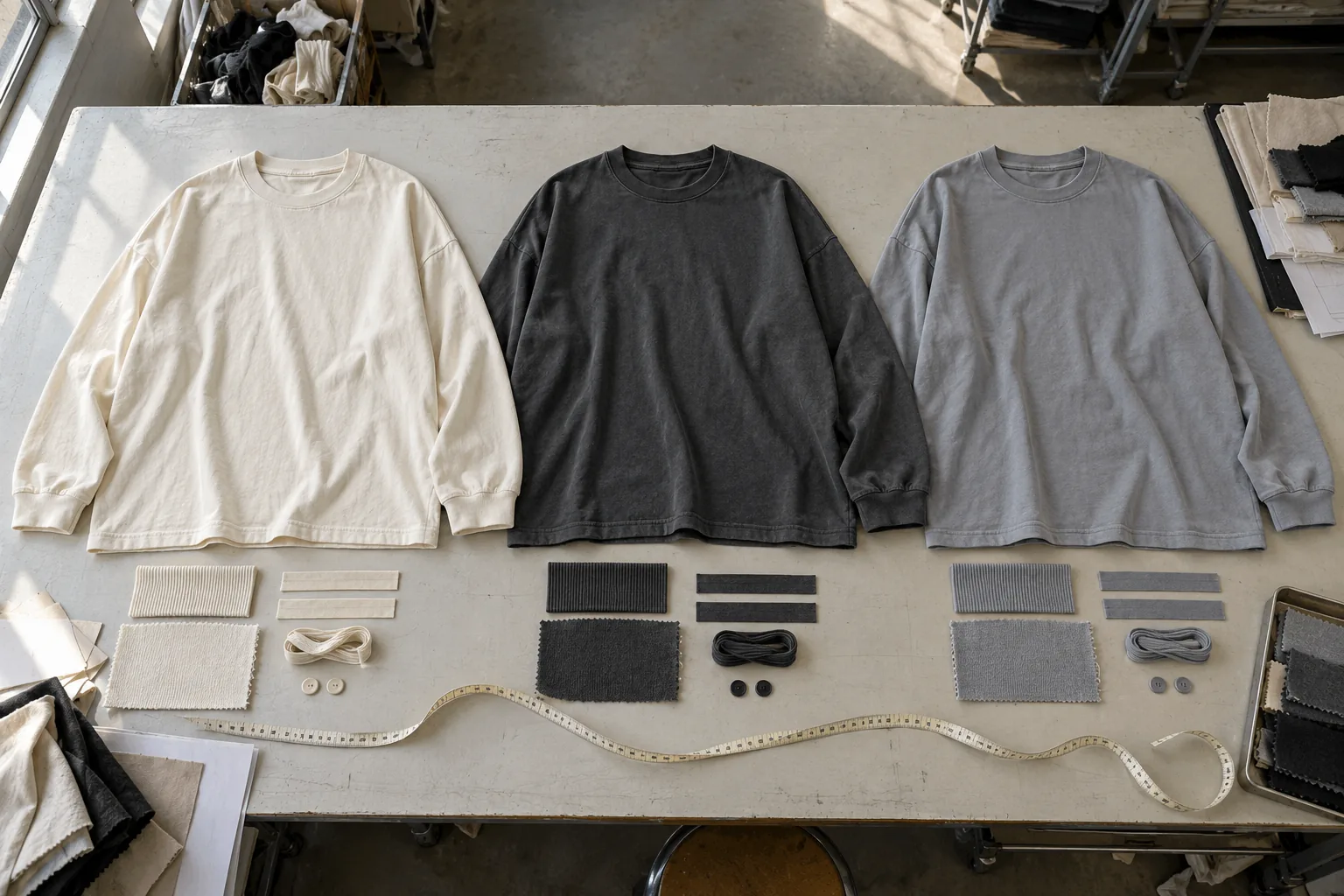
How to Compare China Clothing Suppliers Without Only Looking at Price
Use this factory-side guide to compare china clothing suppliers without only looking at price more clearly across supplier fit, quote scope, approvals, and timing.

Three supplier quotes can describe three different garments even when they share the same product name. One may assume stock jersey, another a heavier custom fabric, and a third may exclude embroidery, labels, or export packing. Ranking those totals immediately rewards the proposal with the most omissions.
To compare China clothing suppliers fairly, treat each quotation as a set of commercial commitments. Your job before selecting a sampling partner is to identify what each price buys, what could change it, and what evidence supports the delivery promise. The following approach helps brand buyers turn inconsistent offers into a decision they can defend.
Build one comparison brief before opening the bids
Start with a single version of the garment specification and send it to every candidate. Include construction details, fabric composition and weight, measurements, color references, decoration dimensions, labels, packing requirements, and the intended size breakdown. Date the brief so later revisions do not quietly enter only one supplier’s offer.
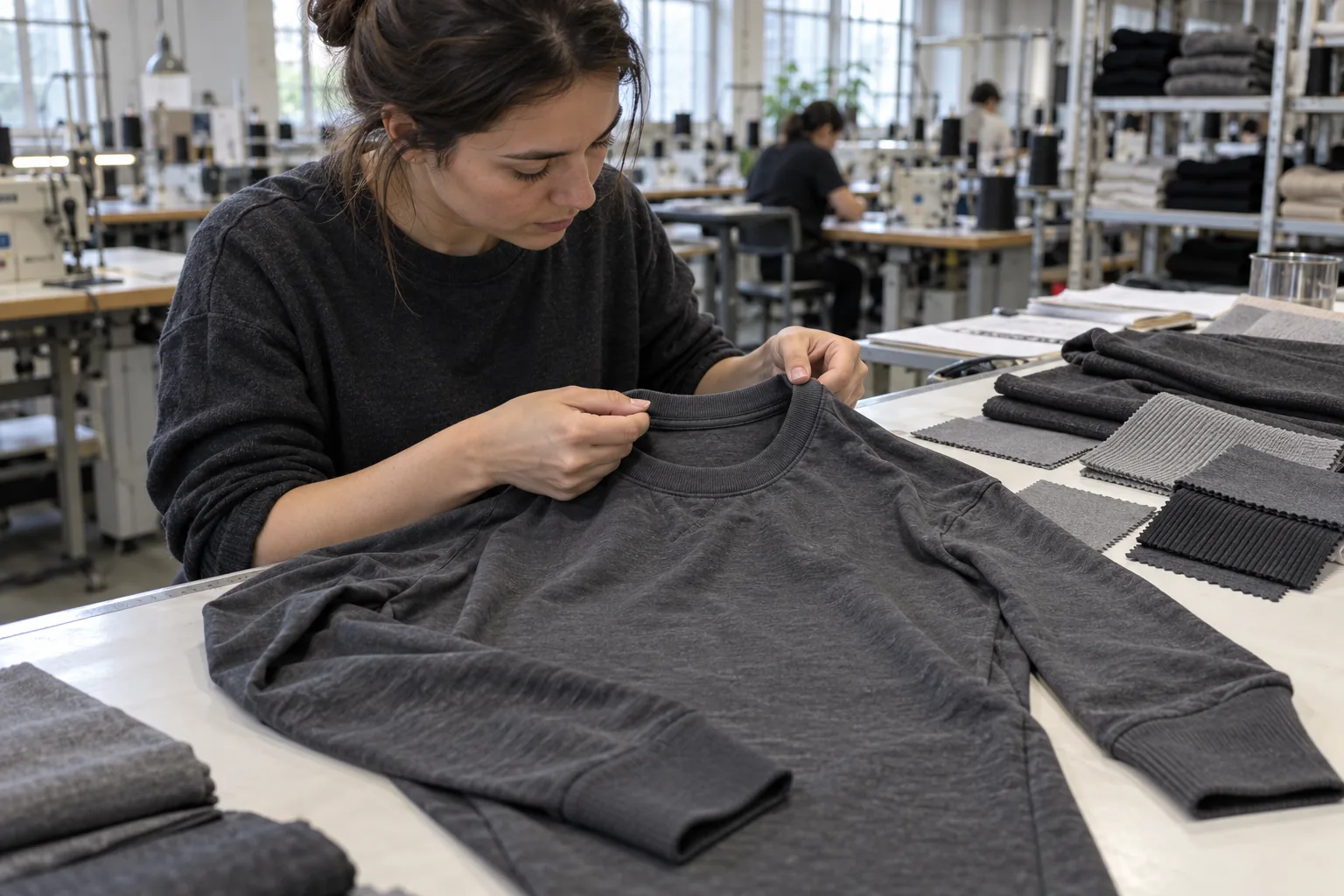
For example, an oversized long-sleeve tee with a dense neck rib is not adequately defined as a “premium cotton top.” Specify the body fabric and rib separately, along with the required fit and decoration. Ask suppliers to flag every assumption instead of filling gaps silently.
Keep the base request fixed. Suppliers may suggest alternatives, but request those as separate options with their own specifications. Otherwise, a useful fabric substitution can look like a price advantage when it actually changes the product.
Translate every quote into the same scope
Create a comparison sheet with one column per supplier and one row per obligation. Record “unconfirmed” wherever an answer is missing; a blank cell should never become an assumed inclusion. Ask for revised written quotations after clarification so the final comparison does not depend on scattered chat messages.
| Quote component | What to align | What can distort the comparison |
|---|---|---|
| Garment specification | Fabric, construction, finish, and decoration | A cheaper material presented as equivalent |
| Development | Sample scope, revisions, and courier responsibility | Unpriced rounds of sample changes |
| Order quantity | Pieces by style, color, and size | A lower rate tied to unwanted inventory |
| Delivery scope | Named shipping term and destination or handover point | Freight or import costs included in only one offer |
| Payment | Deposit, balance trigger, and quote validity | Different cash commitments hidden behind similar totals |
Separate garment manufacturing charges from logistics and destination costs. An ex-factory offer and a delivered offer need additional information before their totals are comparable. Confirm responsibility for transport, insurance, clearance, and duties where applicable, using forwarder estimates separately when the supplier does not quote those services.
Price the order you can sell, including minimums
The lowest unit rate can require the largest cash commitment. Compare the complete order value at your intended quantity, then examine any higher-volume option separately. Do not let a supplier’s preferred production quantity become your sales forecast.
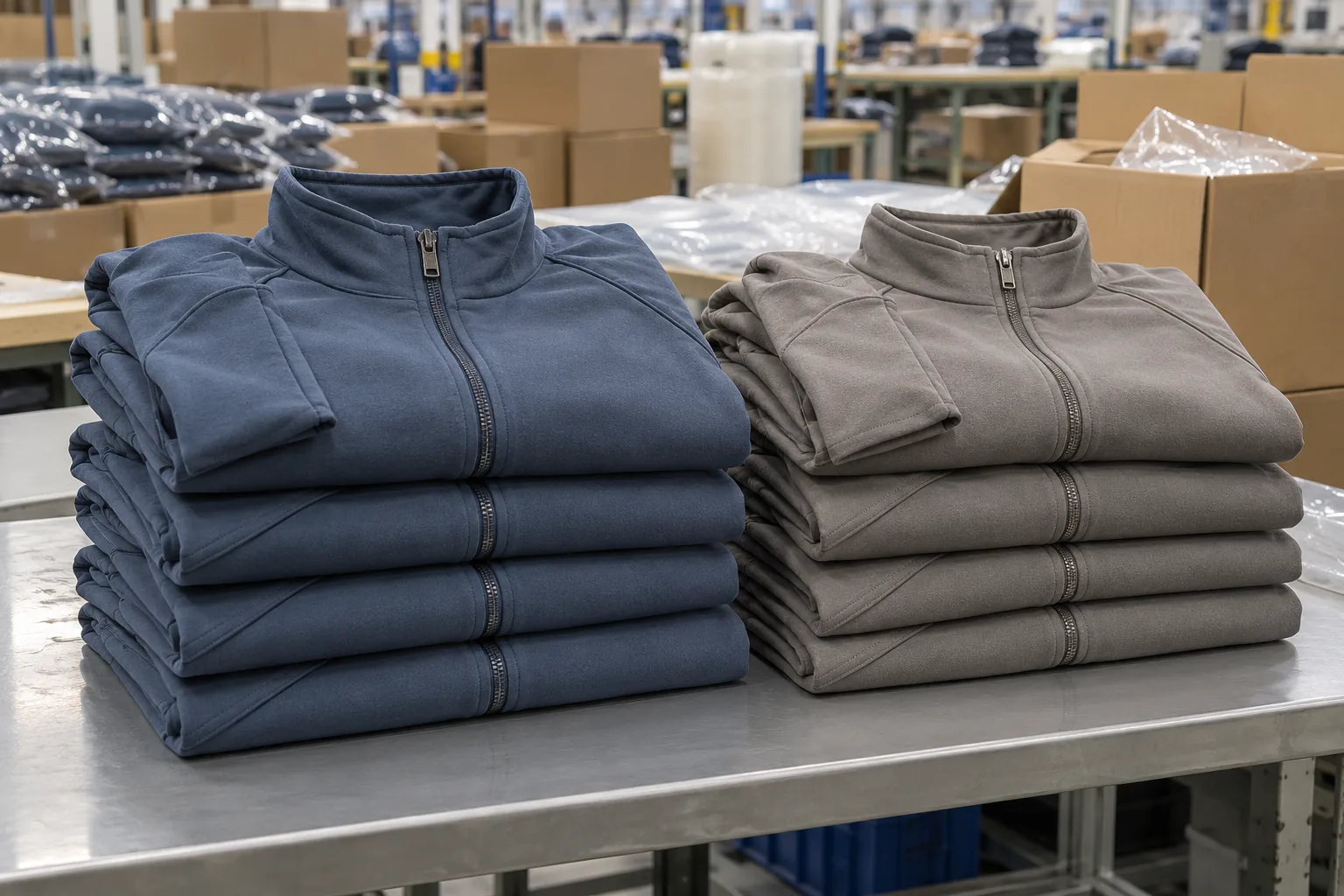
Suppose a launch needs two colors of a zip jacket. An MOQ stated “per style” does not automatically mean you can divide it equally between colors. Ask about color minimums, size allocation, trim minimums, and whether unused custom material must be purchased. These details can alter the cash required without changing the quoted garment rate.
For reference, StitchQuote’s MOQ for most categories starts from 50 pieces per style; denim starts from 100 pieces per style. Confirm the proposed assortment and materials for the specific project. A starting MOQ is a reference point, not confirmation that every combination of fabric, color, and branding is available at that quantity.
Use sampling to test the claims that justify the price
Shortlist suppliers only after resolving major scope differences. Then define what a sample must prove: perhaps collar recovery for a heavyweight tee, pocket alignment on a workwear shirt, or seam bulk on a lined jacket. Request the same evaluation standard from each shortlisted candidate.
A sample made in substitute fabric may demonstrate construction while leaving drape, shrinkage, and color unresolved. Record these limitations explicitly. Paying more for a sample is not automatically better value; the useful question is whether it resolves the uncertainties that matter to the bulk order.
Compare timing from the same starting event. Does the quoted sample lead time begin at payment, specification approval, or material availability? StitchQuote offers a 7-day sample for standard styles with confirmed specifications and available materials. Complex styles, custom washes, and custom-developed fabrics take longer. Separate sample timing from bulk production and transport estimates in every comparison.
Make quality obligations part of the commercial review
A statement such as “strict QC” does not tell a buyer what will be checked or how a failed result will be handled. Before committing to bulk, ask each supplier to confirm a practical inspection checklist tied to the approved sample and measurement specification.
- Measurements: Identify critical points, agreed tolerances, and how garments will be measured.
- Appearance: Define acceptable shade variation, decoration placement, stitch appearance, and visible defects.
- Performance: Agree any relevant wash, shrinkage, colorfastness, or trim-function checks and who pays for them.
- Inspection evidence: Specify the reports or photographs required, inspection timing, and the agreed inspection scope.
- Exceptions: Document who reviews failures, how rework is verified, and how shipment approval is handled.
StitchQuote’s services include QC before packing. Buyers should still confirm the project’s inspection criteria and evidence requirements. Check the same details with every candidate: a general service description does not establish identical inspection coverage across quotations.
Define measurement points and fabric acceptance before sampling
For a jersey tee, give each measurement a repeatable method. Measure half-chest straight across the laid-flat body at a stated distance below the armhole; measure body length from the high shoulder point to the hem; and identify whether sleeve length starts at the shoulder seam or center back neck. Include a sketch for dropped shoulders and curved hems. Measure without stretching the garment and state whether the specification applies before or after washing.
Set tolerances by measurement point rather than applying one allowance everywhere. As a proposed starting specification for supplier review, a buyer might allow plus or minus 1 cm on half-chest and body length, but only plus or minus 0.5 cm on neck opening width. These are illustrative buyer requirements, not universal production tolerances or StitchQuote guarantees. Confirm feasibility for the selected fabric and construction. A 1 cm difference in a laid-flat half-chest measurement represents approximately 2 cm around the garment, which can materially affect a close-fitting style.
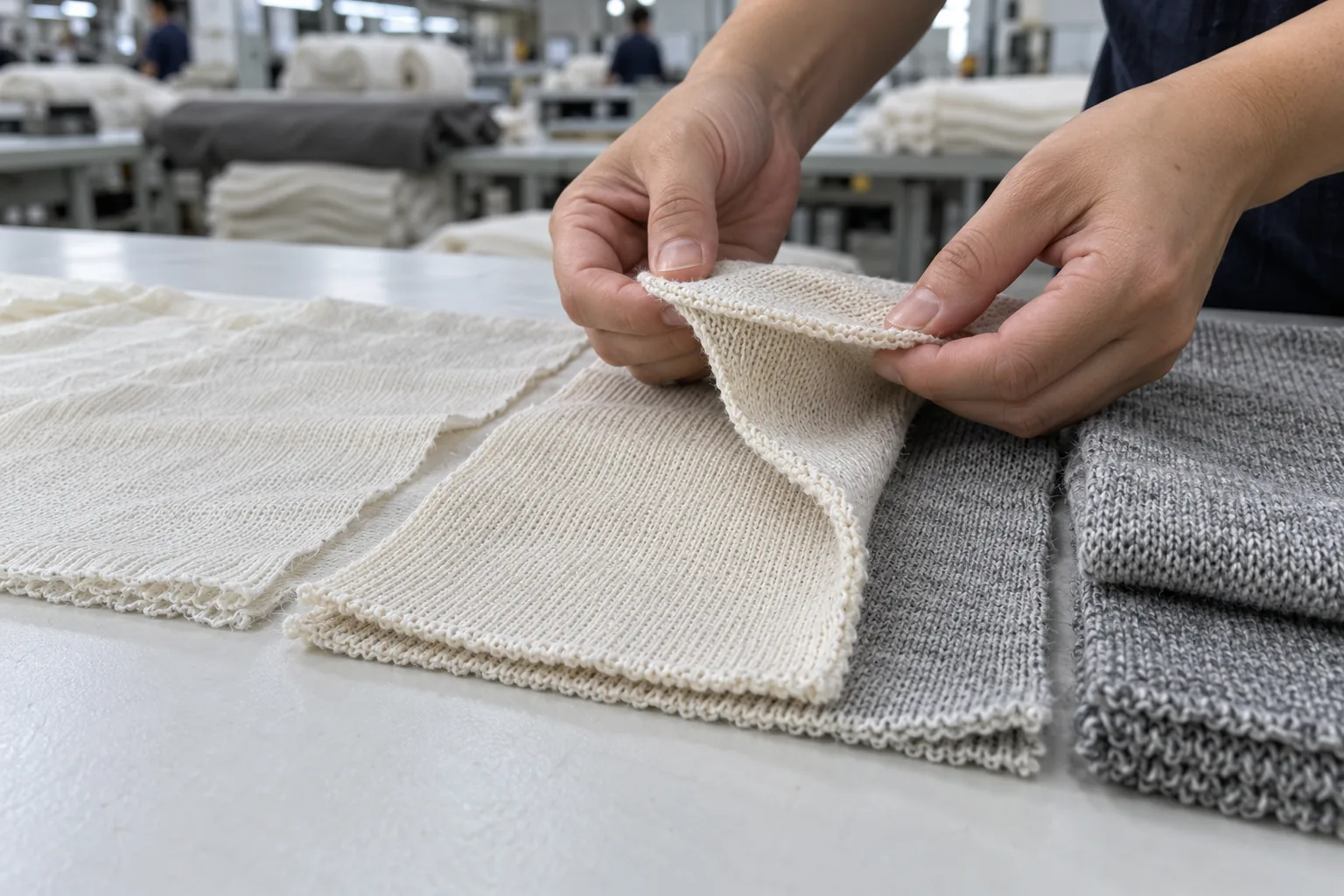
Fabric weight needs an equally clear basis. A hypothetical 240 GSM cotton jersey brief should identify composition, knit structure, finish, and whether weight is assessed on the finished fabric. Ask suppliers to propose an achievable GSM tolerance and document the accepted range. GSM alone does not establish opacity, softness, or durability: yarn choice, knitting density, and finishing can produce different results at the same nominal weight. Retain an approved swatch and compare bulk fabric for hand feel, shade, and surface appearance before cutting.
For a wash check, record the same garment measurements before and after an agreed wash-and-dry procedure. If a 70 cm body length becomes 68.6 cm, the length reduction is 2 percent. Review width separately and inspect twisting, collar distortion, print damage, and seam puckering. Agree acceptable results before testing so neither party has to invent a pass threshold after seeing the sample.
Run a worked order comparison through the approval process
Consider a hypothetical order of 100 tees in one style, with 50 black and 50 white pieces. For each color, the buyer requests 10 small, 20 medium, 15 large, and 5 extra-large garments. The brief specifies 240 GSM cotton jersey, one chest print, a sewn neck label, and individual packing. This is a comparison exercise; the supplier still needs to confirm color allocation, material availability, and branding minimums for the actual order.
Ask each supplier to return the garment charge for that exact breakdown, then identify any separate sample, print setup, label setup, packing, and transport charges. Establish whether setup charges apply once per artwork, once per color, or again on a repeat order. White and black fabric may require different print preparation to achieve the intended appearance. Request confirmation against the artwork instead of assuming identical decoration costs across both colors.
Use staged approvals to limit avoidable rework: confirm the specification, review fabric and trims, assess the fit sample, approve decoration placement, and authorize bulk against the agreed references. Record each revision with a date and a clear replacement instruction. Before packing, reconcile the finished quantity by color and size against the order and check labels against the garments they identify. This catches assortment and labeling errors that a good-looking sample cannot reveal.
Choose against evidence and record the remaining exposure
Set the decision criteria before the final negotiation. First eliminate offers that cannot meet essential product or delivery requirements. Among the remaining candidates, compare total order commitment, sample results, documented quality controls, timing assumptions, and payment terms. Weight these according to the launch’s actual priorities.
Write a short decision note explaining why the selected offer wins and listing unresolved items. If a higher price includes approved fabric, clearly defined decoration, and fewer open charges, identify those benefits specifically. If the lowest offer meets the same requirements with credible evidence, choosing it is reasonable. The aim is a comparable purchase, not a preference for expensive production.
Questions buyers ask when the offers still differ
Should I disclose another supplier’s price to negotiate?
You can communicate your target without forwarding a competitor’s quotation. Ask which specification or quantity changes would reduce cost, and request each option separately. This keeps the negotiation focused on explainable tradeoffs.
How should I handle a quote with several pending charges?
Request fixed amounts or a clearly bounded basis for calculation before ranking it. Keep unresolved charges visible in the comparison. A provisional total should not receive the same confidence as a fully defined offer.
What if the best sample comes from the slowest responder?
Test the approval workflow before awarding bulk: send one consolidated comment sheet and request a clear response covering each point. Strong workmanship matters, but the team also needs dependable handling of revisions and production decisions.
Related reading and next steps:
- Prepare a tech pack for a consistent quote brief
- Review sampling and MOQ considerations
- Explore the components of hoodie manufacturing cost
- Contact StitchQuote to discuss your project
Request a manufacturing quote
Share your product type, quantity range, and destination. We usually reply within one business day.