Custom Streetwear, Casualwear & Denim Manufacturer•MOQ 50 pcs•Denim MOQ 100 pcs•7-Day Sample Available

How to Read the Hidden Cost Behind a Low Clothing Quote
Use this factory-side guide to compare read the hidden cost behind a low clothing quote more clearly across supplier fit, quote scope, approvals, and timing before.

A low clothing quote can be accurate for a production route you would never approve. It may assume stock fabric instead of a custom shade, one decoration placement instead of two, or an order quantity that combines colors your launch plan keeps separate. The problem is not necessarily an undisclosed fee. It is often a minimum order requirement attached to a process rather than to the finished garment.
Before paying for development, separate the sewing minimum from the purchasing and processing minimums behind it. This approach helps a brand decide whether to accept a quote, simplify a specification, or change its opening order without buying inventory merely to preserve an attractive unit price.
Separate the garment minimum from the process minimums
A factory may accept a small order for cutting and sewing while a fabric mill, dyehouse, trim supplier, or decoration operation requires a larger batch. These requirements can use different units: garments per style, fabric by weight or length, labels per design, or washed pieces per treatment. One headline MOQ cannot explain all of them.
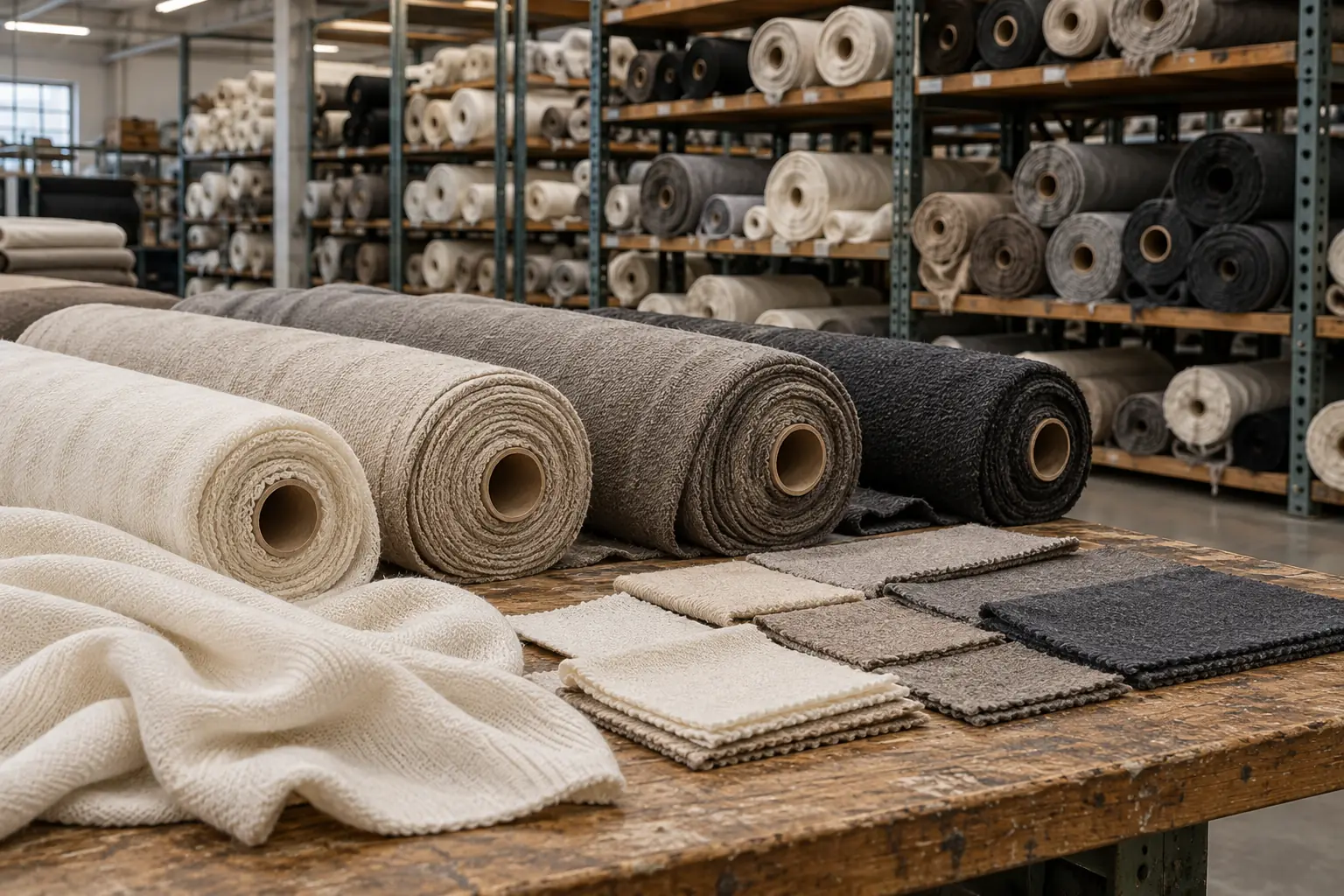
StitchQuote’s MOQ for most categories starts from 50 pieces per style; denim starts from 100 pieces per style. These starting points do not establish the minimum for every custom material or finish. Ask which specification the quoted quantity supports and whether color splits or special processes change the requirement.
| Production layer | Minimum to clarify | Possible extra commitment |
|---|---|---|
| Cutting and sewing | Pieces per style and permitted size split | More finished garments |
| Fabric and dyeing | Quantity per material and color | Unused fabric or a smaller-batch surcharge |
| Decoration and trims | Batch per artwork, component, or color | Setup charges or surplus components |
| Garment finishing | Batch per wash or treatment | Processing charges or a revised finish |
Trace each color back to its fabric purchase
Consider a proposed launch of 80 long-sleeve tops divided among four colors. That is an illustrative buying plan, not a confirmed production option. If the quote assumes available fabric in one color, splitting it into four custom shades changes the material purchase before anyone changes the sewing operation.
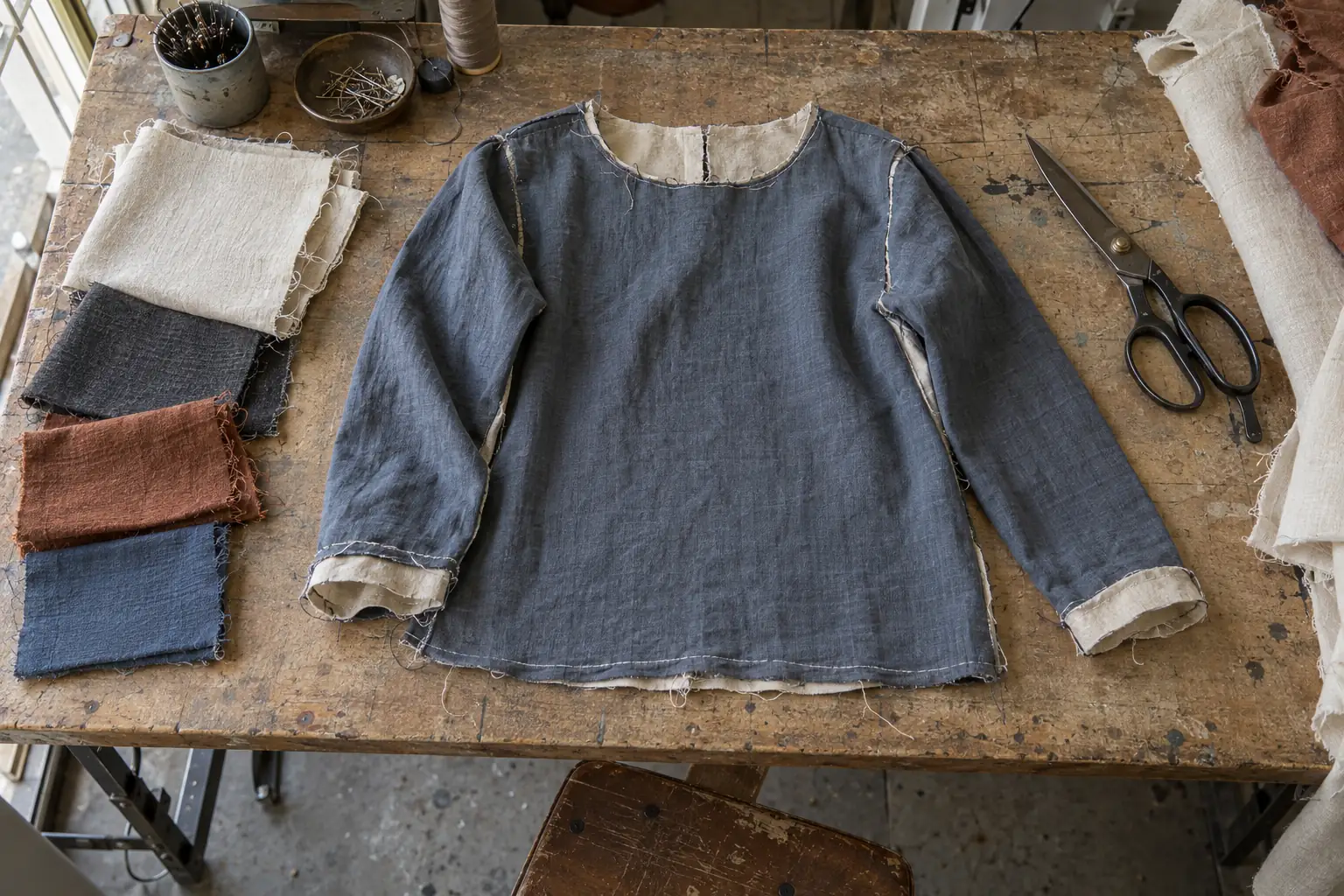
Ask whether each shade is available stock, a replenishable standard color, or a custom dye lot. Then request the minimum purchase for each and an estimate of garment yield after cutting and expected losses. A fabric minimum expressed in weight cannot be compared directly with a garment quantity without that conversion.
If the order leaves unused fabric, establish who pays for it, who owns it, and whether storage is available on agreed terms. Treat a possible reorder as uncertain demand. Paying for surplus material today is a real cash commitment even if it might reduce a later purchase.
Check whether branding changes the batch economics
A small chest embroidery and a large multicolor print do not share the same preparation requirements. Depending on the method, a quote may include artwork preparation, screens, embroidery digitizing, or a minimum processing charge. Request a breakdown showing which costs occur once and which recur with each batch or artwork revision.
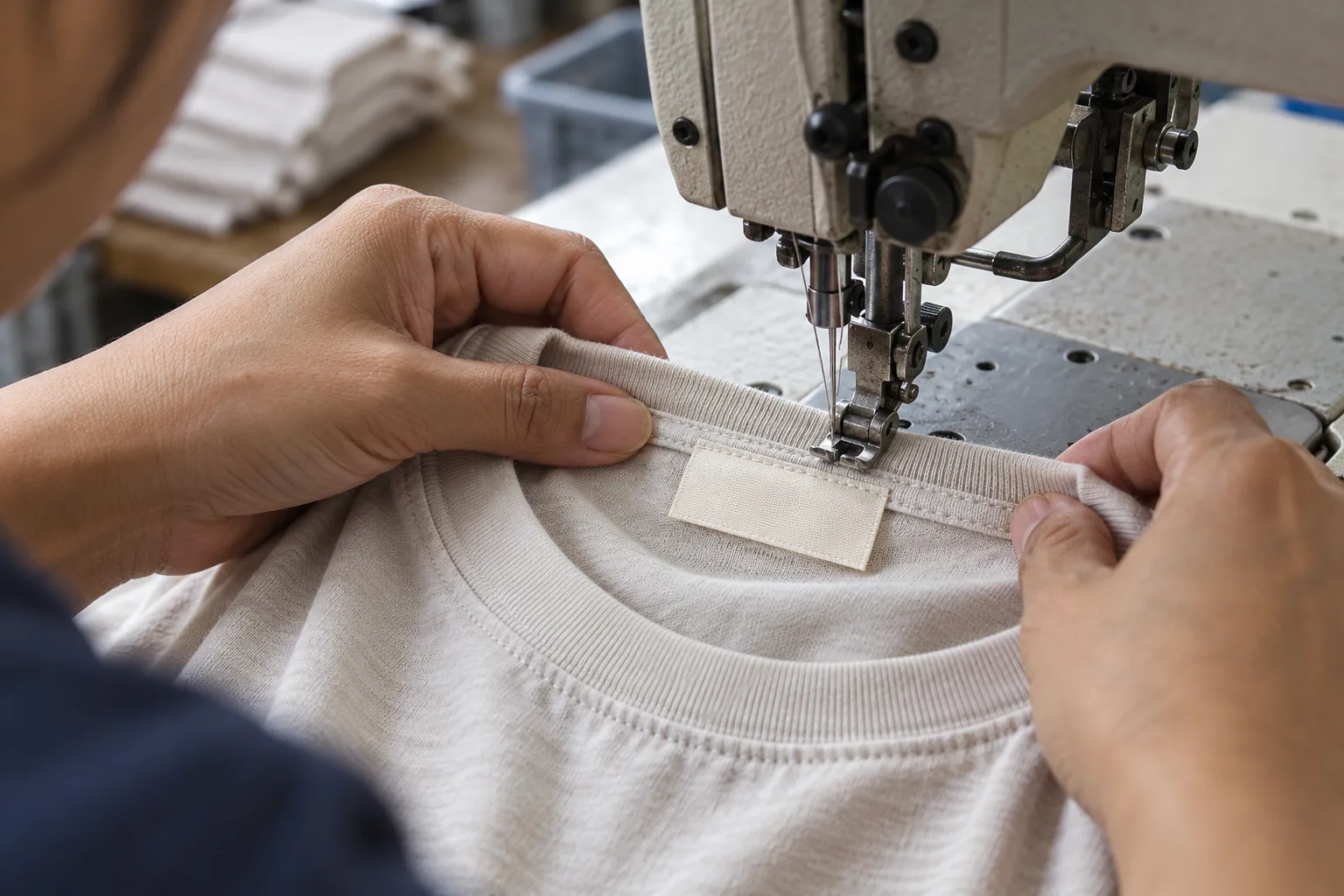
Woven labels, special zip pulls, and custom packaging also deserve separate quantity checks. For example, a capsule using one shared neck label may purchase components differently from a capsule with a distinct label for every design. Confirm whether sharing is technically suitable and commercially accepted; do not assume it automatically pools every minimum.
StitchQuote offers fabric and trim sourcing and branding through woven labels, prints, and embroidery. When requesting those services, identify the exact artwork, dimensions, placement, and component choices so the response covers the intended product.
Give washes and finishing their own approval gate
A denim quotation can look economical when it assumes a straightforward finish. Adding a custom wash introduces a separate development and processing decision. Ask whether the quote covers wash trials, the intended bulk treatment, and any minimum batch charge. Also ask how the process may affect measurements and shade variation.
A development sample establishes an appearance target; it does not by itself prove that a small bulk batch will match under a different processing setup. Request an agreed reference and a practical acceptance standard before authorizing the finish. Confirm whether a revised wash means another trial and a revised delivery estimate.
A 7-day sample is available at StitchQuote for standard styles with confirmed specifications and available materials. Complex styles, custom washes, and custom-developed fabric take longer. Use the timeline for the actual process route when planning a launch.
Compare cash committed at your launch quantity
Ask suppliers to quote the same requested quantity, color split, size breakdown, and specification. Separate garment charges from development, setup, mandatory excess materials, packing, and any other stated charges. Confirm freight, taxes, and delivery terms separately so different commercial scopes do not masquerade as production savings.
A useful comparison is total required production commitment divided by the number of garments you intend to launch. This is a buying metric, not an accounting cost formula. It exposes the effect of purchasing extra trims or fabric even when those items remain usable assets.
Request an alternative using available materials or fewer process variations alongside the original specification. Compare the cash difference with the product features customers will notice. Reject an unnecessary inventory increase if its only justification is reaching a cheaper unit-price tier.
Audit the quote against the approved sample
Before bulk approval, connect every quoted process to a specification or reference. StitchQuote’s services include cut-and-sew, private label, sampling, and QC before packing. Define what needs checking so an inspection can assess the features that justified your purchase.
- Material: Verify composition, weight, shade reference, and whether bulk uses the sampled fabric source.
- Construction: Confirm measurement tolerances, seam details, and any changes made during sampling.
- Decoration: Record approved placement, dimensions, colors, and appearance.
- Finish: Agree on wash appearance and post-treatment measurements where relevant.
- Quantity: Reconcile ordered garments, color and size splits, separately purchased components, and surplus ownership.
- Exceptions: Put proposed substitutions and their price effects in writing before approving them.
If a quotation revision removes a process, update the approval documents too. A lower total is meaningful only when the product being approved matches the product being priced.
Translate fabric weight into a purchase estimate
For a worked planning example, suppose a buyer requests 80 tops in one stock color using 200 GSM single jersey. These are illustrative specifications, not a StitchQuote fabric recommendation or a confirmed order arrangement. GSM means grams per square meter; it does not describe fiber composition, usable width, shrinkage, or how efficiently pattern pieces fit together. Request those details separately before comparing two fabrics described as the same weight.
If the estimated net pattern area averages 1.20 square meters per top across the proposed size mix, the net fabric weight is 1.20 × 200 ÷ 1,000 = 0.24 kilograms per garment. At an illustrative marker utilization of 80%, the cutting requirement becomes 0.24 ÷ 0.80 = 0.30 kilograms per garment, or 24 kilograms for 80 tops. This simplified estimate excludes additional allowances for shrinkage, defects, end losses, and sampling. Ask the supplier to replace the assumptions with a marker-based consumption estimate and identify which allowances are already included, so losses are not counted twice.
Now compare that requirement with the actual purchasing minimum. If a hypothetical fabric offer requires 30 kilograms, the buyer must account for the six-kilogram difference before accepting the garment quote. Request a material reconciliation showing purchased quantity, quantity issued to cutting, usable remainder, and waste. A heavier fabric or a size mix weighted toward larger sizes can change consumption even when the garment count stays fixed.
Make measurement approval repeatable before bulk cutting
Attach a measurement diagram to the approved specification. For a knit top, define half chest measured flat at a stated distance below the armhole, body length from the high shoulder point to the hem, shoulder width between seam points, and sleeve length from the shoulder seam to the cuff edge. State whether measurements are taken relaxed, without stretching, and before or after the agreed wash procedure. Otherwise, two inspectors can obtain different numbers from the same garment.
Assign tolerances by measurement point rather than applying one allowance everywhere. For discussion, a buyer might propose ±1 centimeter for half chest and body length and ±0.5 centimeter for a pocket or logo placement; these are example negotiation targets, not universal standards or StitchQuote guarantees. Confirm achievable limits against the construction and fabric behavior. Keep the size grading increments separate from the tolerances: a tolerance permits manufacturing variation around a target, while grading establishes the target for each size.
Before release, document the approved sample revision, measurement chart, fabric reference, and decoration position together. Agree on how bulk checks will cover sizes and colors, how failed measurements will be recorded, and what correction or reinspection follows. For washed garments, compare dimensions before and after treatment using the same measurement method. This makes shrinkage visible and helps prevent a quote based on unfinished measurements from becoming an unexpected fit problem at packing.
Questions buyers ask before accepting a small batch
Can several styles share one fabric minimum?
Sometimes, if the material specification and purchasing arrangement allow it. Ask about the combined fabric purchase and each style’s sewing minimum separately. Different colors, weights, or finishes may prevent pooling.
Does paying for extra labels guarantee cheaper reorders?
No. Existing labels may reduce one future purchase, but fabric, sewing, and finishing still need fresh confirmation. Record the label balance and storage terms without treating the next garment price as fixed.
Should I approve a sample before every minimum is settled?
Settle the likely production route first. A sample made with a material or finish that exceeds your viable order budget can validate a product you cannot commercially launch.
Related reading and project support:
- Sampling and minimum order planning
- Preparing specifications for a comparable quote
- Understanding hoodie manufacturing costs
- Discuss your quantities and process requirements
Request a manufacturing quote
Share your product type, quantity range, and destination. We usually reply within one business day.