Custom Streetwear, Casualwear & Denim Manufacturer•MOQ 50 pcs•Denim MOQ 100 pcs•7-Day Sample Available

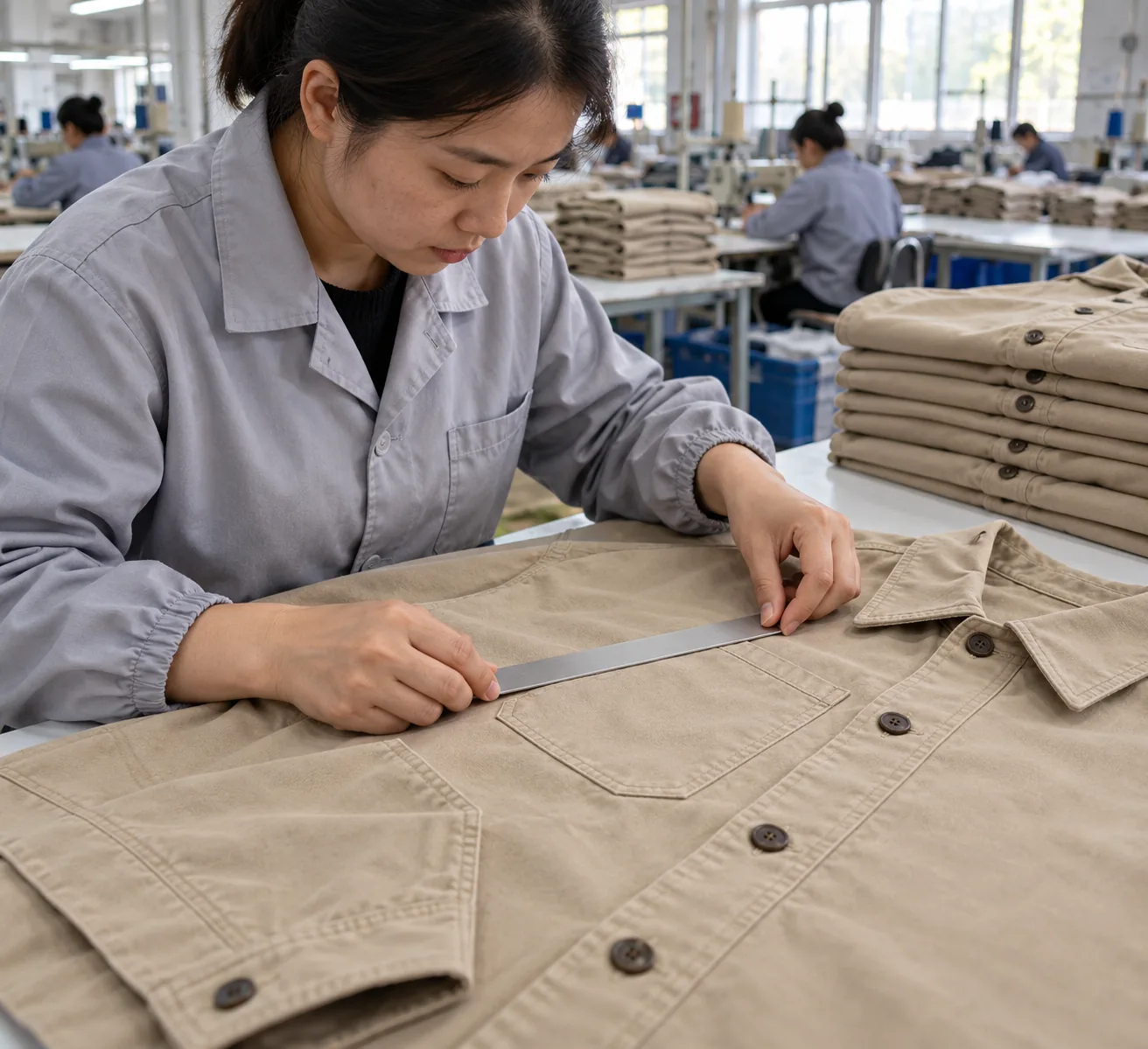
What Information Makes a Factory Quote More Accurate the First Time
Use this factory-side guide to compare what information makes a factory quote more accurate the first time more clearly across supplier fit, quote scope, approvals.

A low quote is useful only when you can explain what it buys. Two factories can price the same overshirt sketch and return very different numbers because one includes garment washing, branded buttons and individual packing while the other assumes untreated fabric, stock buttons and bulk packing.
To get a more accurate first response, prepare your inquiry as a comparison brief. Give every supplier the same product definition, order breakdown and commercial boundary, then require them to identify assumptions. This helps you build a defensible shortlist before paying for samples or negotiating a price that may change once the missing details appear.
Build one reference order that every supplier must price
Start with a single, realistic buying scenario. An inquiry for “100–500 pieces in several colors” leaves too much room for factories to select different costing quantities. Specify the total units per style, units per color and intended size distribution. Ask for any higher-volume alternatives as separate options beneath that baseline.
For example, define an initial run of 120 woven overshirts across two colors, with a size breakdown attached. If the split remains provisional, label it clearly and ask whether changing it would affect price or minimums. A total order quantity alone does not reveal the burden of small dye lots, separate cutting layouts or trim minimums.
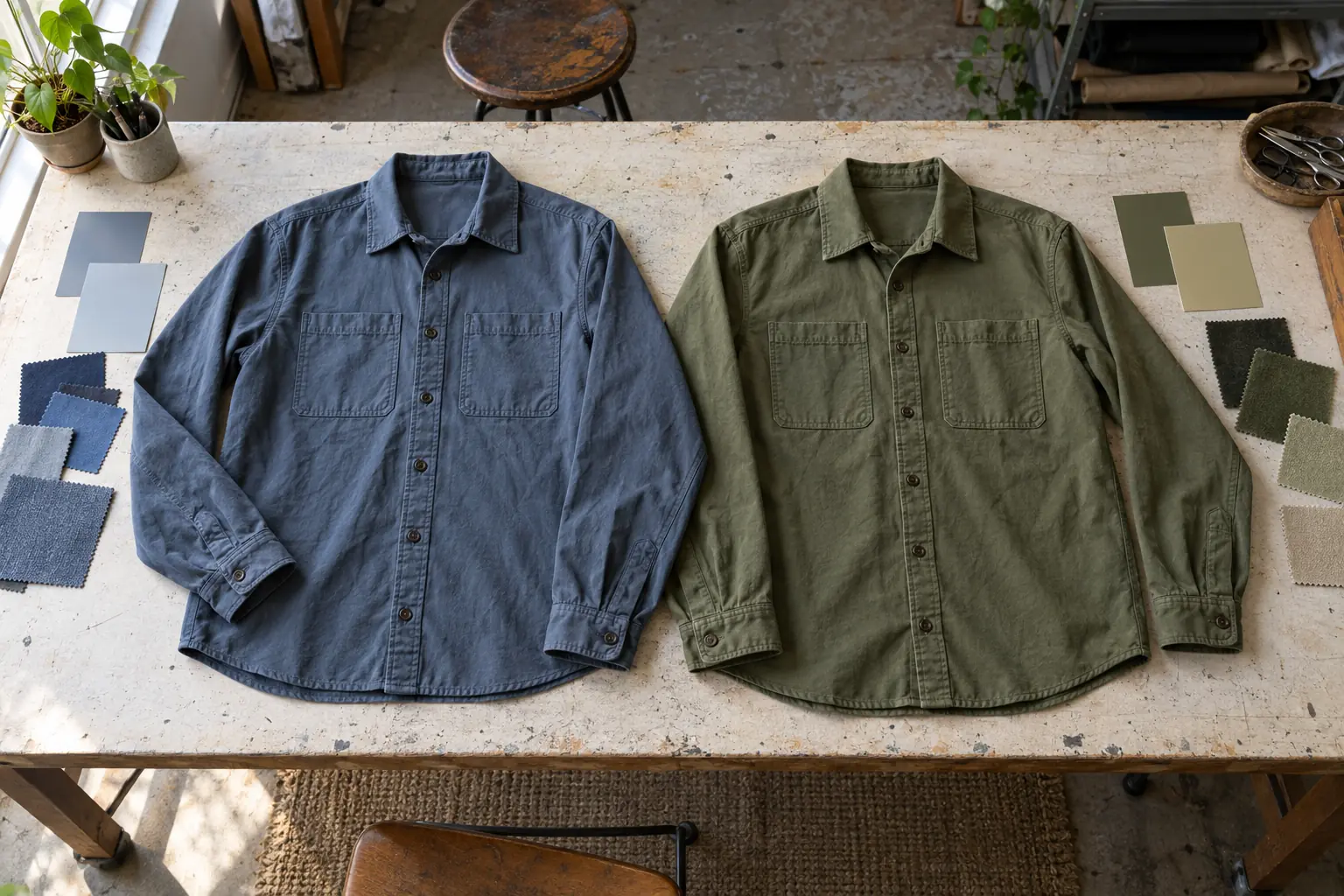
At StitchQuote, MOQ for most categories starts from 50 pieces per style; denim starts from 100 pieces per style. These starting points should not be treated as confirmation that every fabric, color split or custom trim is viable at that quantity. Ask suppliers to state material and trim constraints separately.
Separate fixed product requirements from permitted alternatives
A comparison becomes unreliable when suppliers quietly substitute materials. Identify the characteristics that must remain fixed: fiber composition, fabric construction, target weight, finish, measurements and essential construction details. Attach a dated specification revision so that a later update does not become mixed with an earlier price.
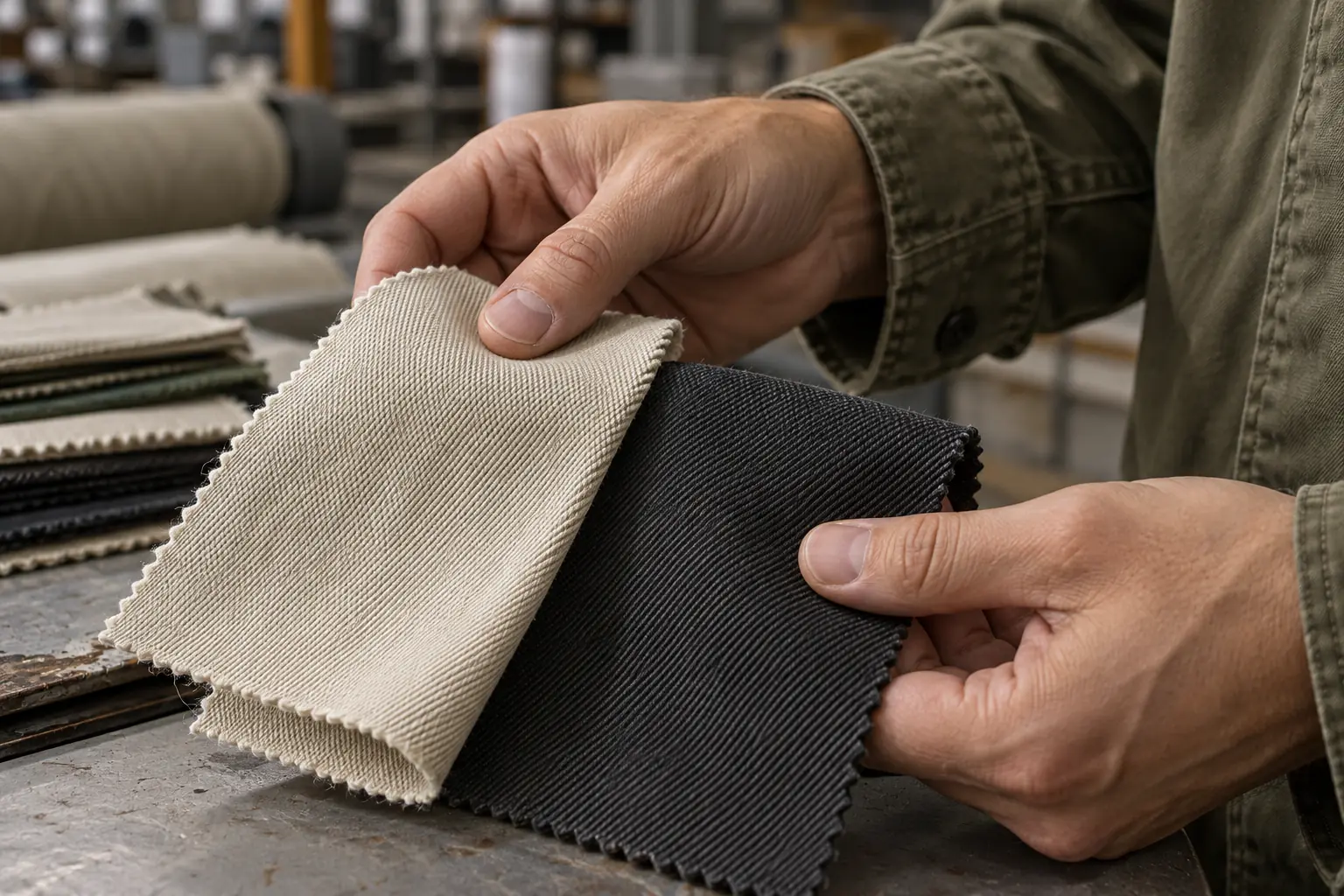
Then list acceptable alternatives. You might require the same cotton twill construction and fit while allowing a stock shade instead of custom dyeing. Ask for two responses: the cost of the specified version and a separately identified alternative. A cheaper fabric is a design decision, not an automatic saving on the same product.
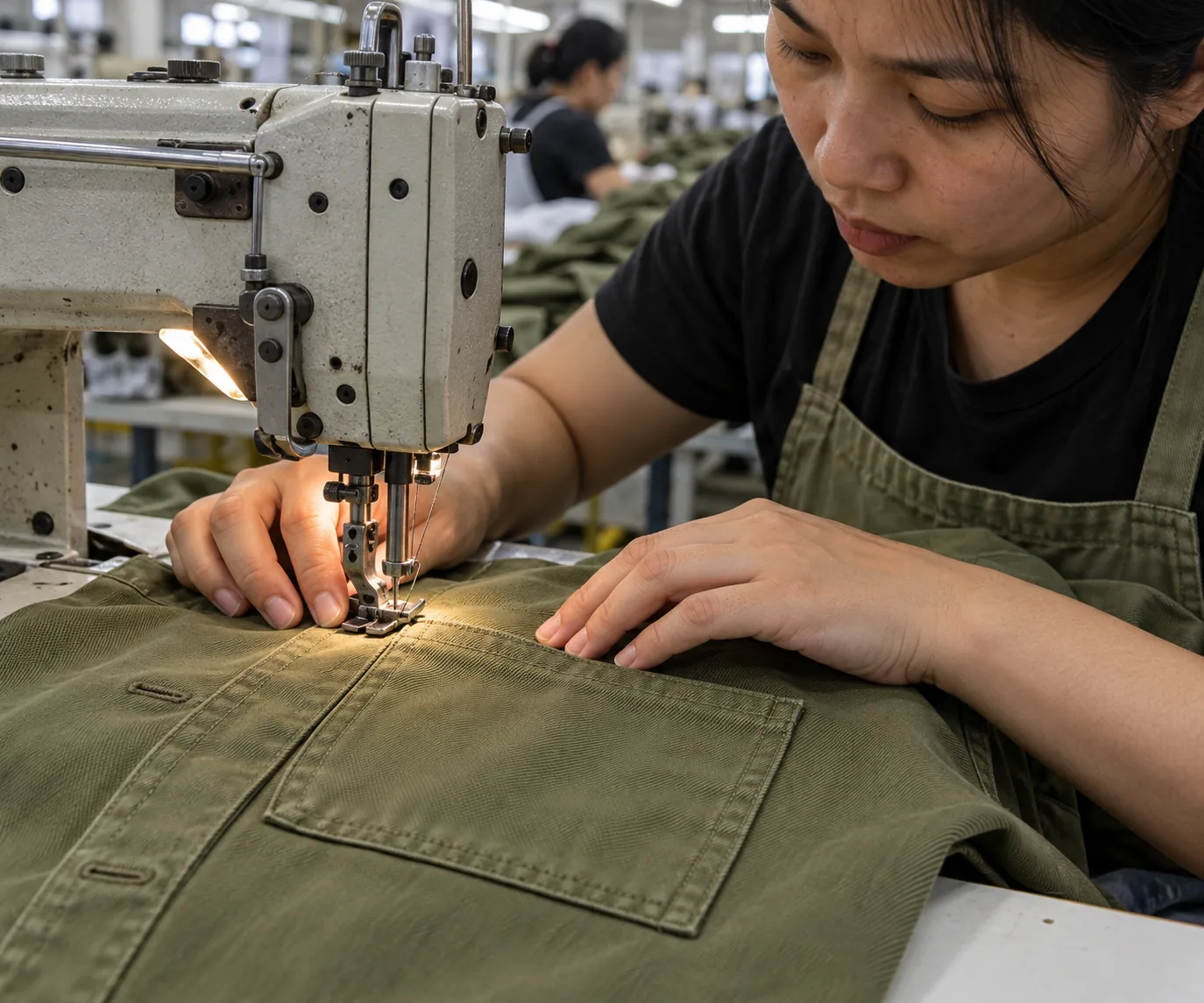
Show details that photographs often hide: pocket dimensions, seam finishing, reinforcement points, button type and label placement. For decoration, provide artwork dimensions, positions and intended technique. “Small chest branding” does not tell a supplier whether to allow for a woven patch, embroidery or print.
Make every quote show the same cost boundary
Give suppliers a short response template alongside the technical brief. The aim is to expose scope differences without demanding disclosure of their internal margins. Each offer should identify what is included, what is charged separately and what still depends on development.
| Comparison field | Information to request | Why it matters |
|---|---|---|
| Garment unit price | Currency, order quantity and specification revision | Prevents comparison across different order scenarios |
| Development charges | Sampling, setup and any stated credit conditions | Separates initial spending from repeat production |
| Finishing and packing | Wash, branding, folding, bags and cartons included | Reveals omissions from the headline price |
| Delivery basis | Trade term, named place and freight exclusions | Clarifies where the supplier’s cost responsibility ends |
| Validity and conditions | Expiry date and unresolved material assumptions | Shows when the offer needs reconfirmation |
Keep factory-scope costs separate from your estimated import and delivery costs. If one offer includes transport and another does not, obtain the missing component before ranking them. Do not fill an unexplained blank with zero.
Compare the conditions behind the promised date
A delivery estimate needs a starting event. Ask whether the production clock begins after a deposit, sample approval, fabric arrival or completion of all three. Give the supplier your required dispatch date and distinguish it from the date goods must reach your warehouse.
Request a separate sample estimate with its own assumptions. StitchQuote offers a 7-day sample for standard styles with confirmed specifications and available materials. Complex styles, custom washes and custom-developed fabric take longer. That sample timing should not be read as a bulk production commitment.
If timing is critical, request a base proposal and an alternative using available materials. Compare the specification changes and delivery assumptions together. A shorter schedule is only meaningful if the resulting garment still meets the requirements that matter to your customers.
Use a quality checklist to test whether the price is complete
Quality requirements influence the work being quoted. Before selecting a supplier, check whether each offer accounts for the same acceptance criteria. Avoid relying on “premium quality,” which leaves both the inspection method and the pass standard undefined.
- Measurements: Provide points of measurement, size specifications and agreed tolerances.
- Appearance: Identify the approved color reference, visible seam expectations and decoration placement limits.
- Performance: State any shrinkage, colorfastness or other testing requirements, with methods and responsibility for charges to be agreed.
- Inspection: Define when checks occur, what records you require and how defects will be handled before packing.
- Packaging: Specify size identification, folding, protective packing and carton requirements.
StitchQuote’s services include cut-and-sew, private label, sampling, fabric and trim sourcing, woven labels, prints, embroidery and QC before packing. Identify which services your order requires. Any requested external testing or additional inspection scope should be confirmed explicitly rather than assumed to be included.
Questions to resolve before choosing the lowest offer
What if a supplier quotes against photos only?
Treat the response as an estimate and request its assumptions in writing. Photos can communicate silhouette and appearance, but they rarely establish fabric specifications, internal construction or measurement tolerances. Compare firm offers only after those details are aligned.
Should I include my target cost in the inquiry?
You can share it as a feasibility target while keeping the baseline specification clear. Ask suppliers to identify any changes needed to reach it. This makes proposed compromises visible instead of allowing the target to silently redefine the garment.
How should I handle a charge that appears in only one quote?
Ask the other suppliers whether that item is included, excluded or unnecessary for their proposed method. A separate setup charge may simply be bundled into another supplier’s unit price. Compare total spending for the reference order once the treatment is clear.
When is a revised quote necessary?
Request one whenever quantity, material, construction, decoration or packing changes. Keep the revision date and approved scope together. Before authorizing development or production, close unresolved assumptions so the selected price has a traceable basis.
Turn fit and fabric requirements into measurable acceptance points
For the reference overshirt, attach a measurement diagram rather than a list of numbers alone. Define half-chest width with the garment buttoned and laid flat, measured at a stated distance below the armhole. Specify body length from the high shoulder point to the hem, shoulder width between the shoulder seams, and sleeve length from the shoulder seam to the cuff edge. Curved hems and dropped shoulders need explicit endpoints because different measuring methods can produce different results on the same sample.
As an illustrative starting proposal for supplier agreement, allow plus or minus 1 cm on half-chest and body length, and plus or minus 0.5 cm on pocket width and pocket placement. These are proposed buyer tolerances, not universal standards or StitchQuote guarantees. Review them against fabric behavior, garment size and the visual importance of each detail. Keep grading increments separate from tolerance: an allowance for production variation must not replace the intended difference between sizes.
A fabric brief might specify 100% cotton woven twill at a target 240 GSM, with a proposed weight tolerance of plus or minus 5%. Confirm whether that weight applies before or after finishing, and agree on the measurement method. Record usable fabric width as well: two fabrics with similar weight and purchase cost can yield different garment costs when their widths change cutting efficiency. Request swatches showing the proposed finish and shade before approving a substitution.
If the overshirt will be garment-washed, distinguish pre-wash cutting allowances from finished garment measurements. Agree on a wash-and-dry procedure for evaluating the sample, record measurements before and after that procedure, and calculate dimensional change as the difference divided by the original measurement. Approval should address both fit after laundering and visible effects such as seam puckering or twisting.
Work through the order split before approving production
Make the 120-piece example actionable by allocating 60 pieces to each of two colors. An illustrative size split per color is 10 small, 20 medium, 20 large and 10 extra-large. Ask the supplier to confirm feasibility for this exact matrix, including fabric availability and any separate trim minimums. A stock button used across both colors may simplify purchasing; two custom button colors can create separate minimums and leftover inventory. Agree who pays for and owns any unused custom materials.
Use a sequence of approvals: confirm the specification revision and sourcing assumptions, review the development sample, document fit corrections, and approve the production reference with its fabric, trims and branding. Ask whether a size set is needed to verify grading before cutting the full run. Each approval should identify the physical sample or dated photographs it refers to, so a corrected sleeve measurement does not accidentally revive an earlier pocket position.
Before packing, request an inspection record tied to the order matrix. Include measured results from selected garments across colors and sizes, checks for button security and buttonhole function, and confirmation that size labels match the garments. Record actual packed quantities by color and size rather than relying on a total carton count. Set the inspection sample size and defect acceptance rules in advance, and agree how reworked garments will be checked again before dispatch.
Related reading for your comparison brief
- Prepare a tech pack that defines the product
- Review sampling and minimum order considerations
- Explore hoodie manufacturing cost factors
- Send StitchQuote your quote comparison brief
Request a manufacturing quote
Share your product type, quantity range, and destination. We usually reply within one business day.