Custom Streetwear, Casualwear & Denim Manufacturer•MOQ 50 pcs•Denim MOQ 100 pcs•7-Day Sample Available

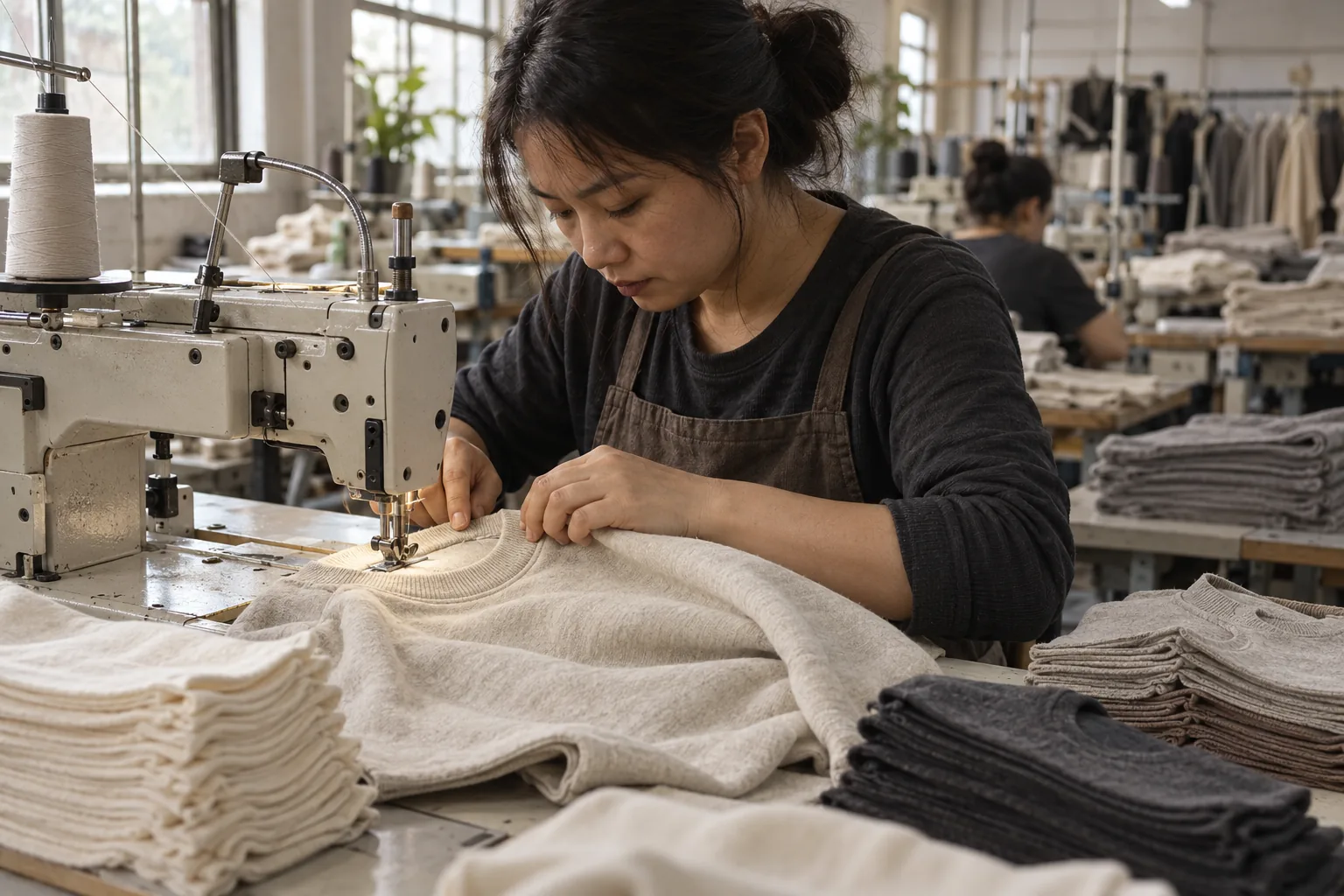
Low MOQ Supplier in China for Premium Basics Programs
Use this factory-side guide to compare low moq supplier in china for premium basics programs more clearly across supplier fit, quote scope, approvals, and timing.

A premium basics launch can meet its factory budget and still miss its margin target. Sampling, fabric commitments, freight, import charges and unusable stock all affect what each garment costs when it is ready to sell. Small orders make these differences especially visible because fixed expenses are spread across fewer pieces.
Choosing a low MOQ supplier in China for premium basics programs therefore starts with a destination-based budget. Before comparing offers, define the garment, the assortment and the delivery point. Then compare the total cash required to receive usable inventory, rather than treating the quoted sewing price as the whole purchase.
Build the budget backwards from sellable inventory
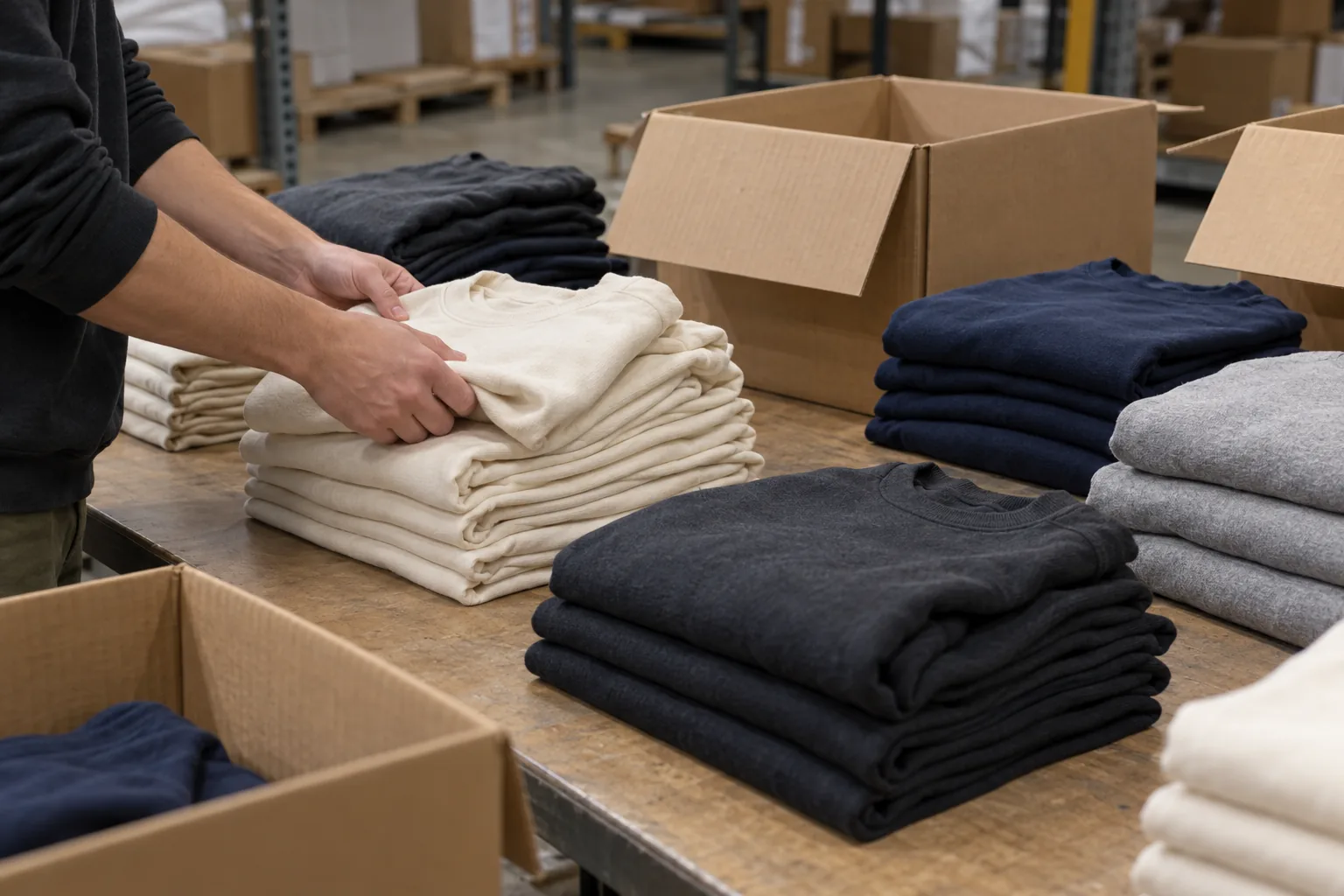
For this buying decision, use a fully loaded landed cost: production plus development, packaging, transport, import charges and receiving costs, divided by the units available for sale. Keep this management calculation separate from any inventory valuation method required by your accountant.
Distinguish one-time development spending from costs that repeat with every shipment. A first launch may carry pattern and sample expenses that a later reorder does not repeat. Nevertheless, those expenses still need funding before the first sale. Show both the first-order result and the expected repeat-order result in your budget.
| Budget layer | What to include or confirm |
|---|---|
| Garment supply | Fabric, sewing, trims, branding and agreed packing |
| Launch investment | Samples, revisions, development and sample delivery |
| Delivery to destination | Freight, insurance where purchased, customs handling and local delivery |
| Import and receipt | Duties, applicable taxes, receiving and any required rework |
For an illustrative planning exercise, if you pay for 100 garments but reserve five for photography and product testing, your commercial budget must recover its costs from 95 sale units. Those reserved pieces are useful business assets, but they are not launch inventory available to customers.
Price the assortment before expanding the color card
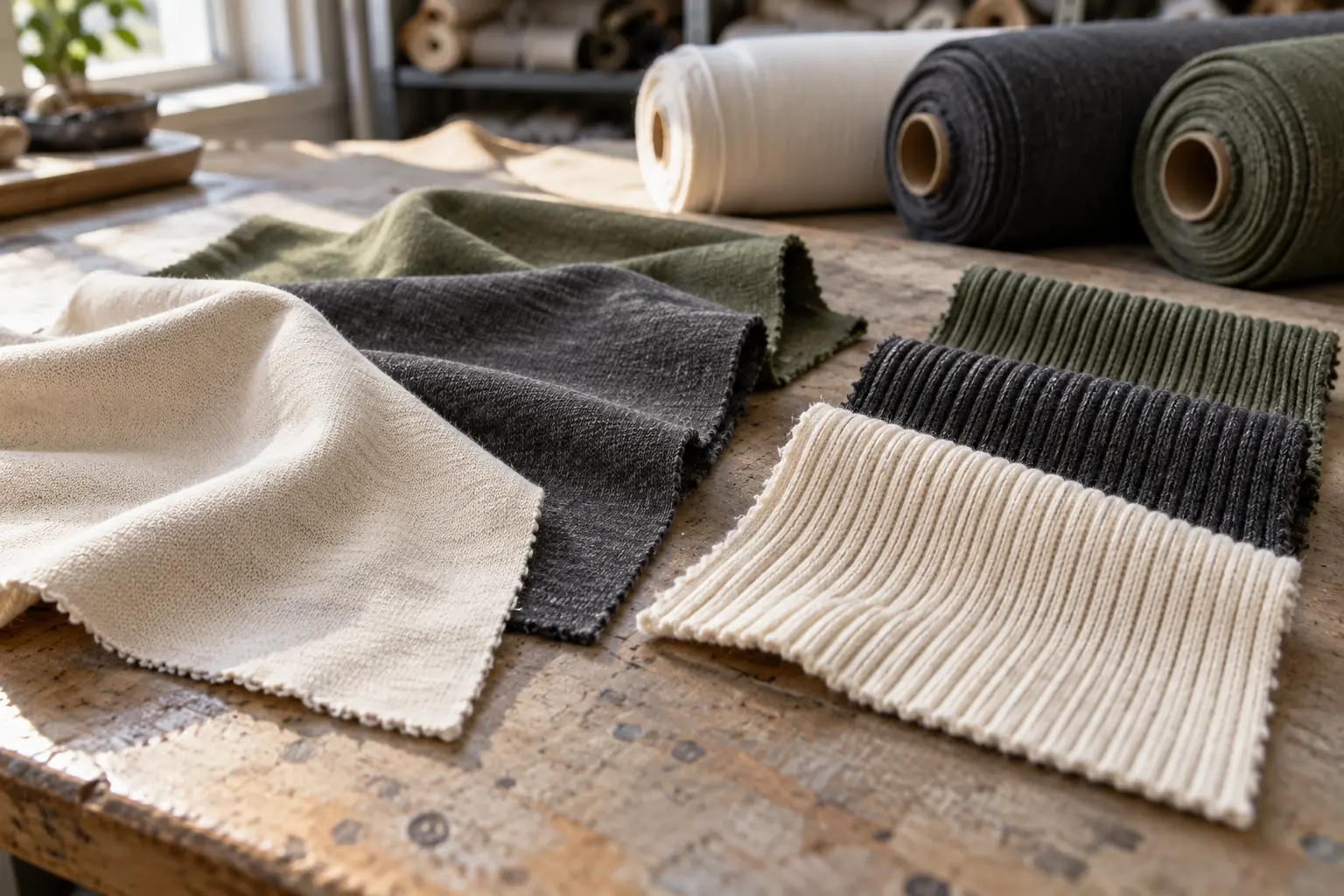
A small minimum order does not automatically make every assortment economical. A heavyweight tee offered in several colors may require separate fabric sourcing decisions, matching neck rib and color approvals. Ask which minimums apply per style, per fabric and per color, and whether your proposed size split changes the offer.
StitchQuote’s MOQ for most categories starts from 50 pieces per style; denim starts from 100 pieces per style. Treat these as starting points for discussion, not confirmation that every custom material or color combination fits the same quantity.
Compare two versions of the same launch: a focused core color with deeper size availability, and a broader palette with fewer pieces in each size. Request the total material commitment for each. If fabric must be purchased beyond immediate consumption, record who owns the remainder, how it will be stored and whether it can actually support a reorder.
A larger order can reduce some costs per piece while increasing cash tied up in slow-selling sizes. Evaluate the saving against that exposure before adding units simply to improve the quoted rate.
Spend sample money on decisions that prevent bulk losses
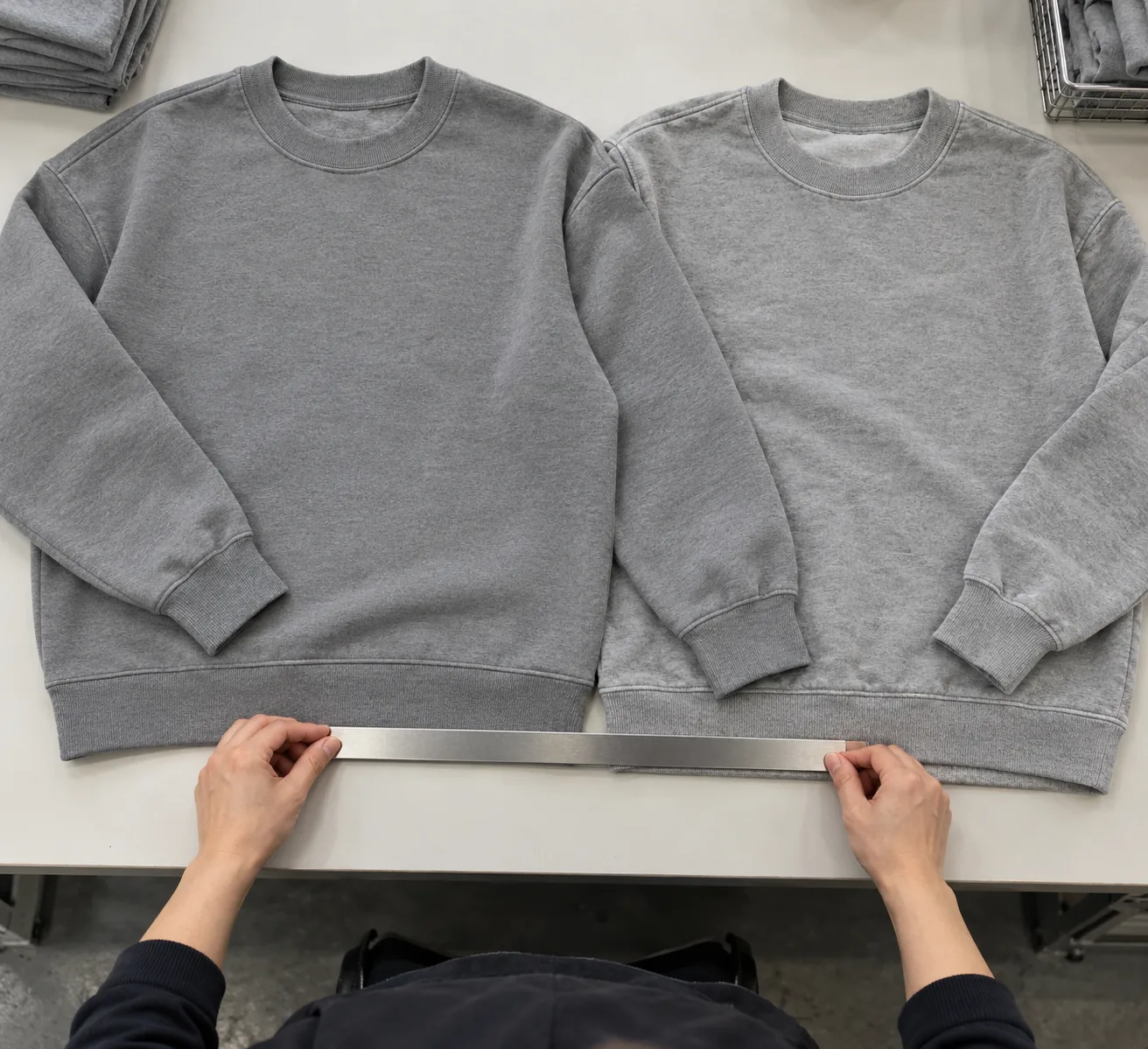
For premium basics, subtle failures can make otherwise simple garments difficult to sell. A collar that distorts, a pale fabric that becomes too transparent or a sweatshirt that changes shape after washing can undermine the intended positioning. Define the relevant acceptance criteria before requesting samples.
Separate fit approval from fabric and finish approval when one sample cannot represent everything. Record garment measurements, agreed tolerances, fabric composition, weight, surface feel, shrinkage expectations and branding placement. Use a retained approved sample as a physical reference alongside the written specification.
StitchQuote offers sampling, fabric and trim sourcing, cut-and-sew, private label and branding through woven labels, prints and embroidery. A seven-day sample is available for standard styles with confirmed specifications and available materials. Complex styles, custom washes and custom-developed fabrics take longer. Confirm the project schedule and sample shipping separately before using that availability to set a launch date.
Make freight and import assumptions visible in every comparison
Two quotations are only comparable when their delivery responsibilities match. Ask for the named trade term and place, then identify which party pays each transport and clearance expense. A factory-side price and a delivered price cannot be ranked by their totals until the missing services are added.
Request estimated packed carton dimensions, gross weight and carton count. Bulky fleece basics may incur freight based on dimensional weight, depending on the service. Individual packaging and extra presentation materials can affect shipping costs as well as the packaging invoice.
Have a freight provider or customs broker confirm the likely tariff classification, duty treatment and destination charges for the actual garments. Tax treatment depends on the importing business and jurisdiction; distinguish recoverable taxes from lasting costs while still allowing for cash due at import.
Run a planned-shipment case and an expedited-shipment case. If a missed approval forces faster transport, the difference shows how much schedule risk the launch budget can absorb.
Use a release checklist to protect the landed-cost calculation
StitchQuote includes QC before packing. Agree on the inspection scope and reporting expectations before bulk production, especially for the features that justify your premium positioning. Inspection findings are most useful while there is still time to resolve them before dispatch.
- Measurements: Check the agreed points and tolerances across the relevant sizes, using the approved measurement method.
- Fabric behavior: Review agreed wash-test results for dimensional change, twisting and appearance where applicable.
- Finish consistency: Check collar recovery, seams, shade variation and branding against approved references.
- Order accuracy: Reconcile style, color and size counts with the purchase order and packing list.
- Packing readiness: Verify labels, protective packing and carton information against destination requirements.
- Exceptions: Record defects, shortages and the agreed resolution before shipment release.
Keep any allowance for unusable units visible in the budget. Do not silently assume every shipped garment becomes a full-price sale, or that an inspection guarantees zero defects.
Questions buyers ask before funding a small run
Should sample costs be charged entirely to the first order?
Show them in the first-order cash requirement. You can also model recovery across future orders, but keep that scenario separate until reorders are credible. An optimistic sales forecast should not hide money needed now.
Is leftover fabric a saving or an extra cost?
It is initially a cash commitment. It becomes useful inventory only if its quantity, condition, shade and ownership are documented and it suits a future order. Confirm storage arrangements and potential charges before treating it as a saving.
Can a cheaper garment quote produce a higher landed cost?
Yes. Missing packaging, different freight responsibilities, extra development rounds or a lower usable yield can outweigh the apparent saving. Compare identical specifications and destination assumptions, with exclusions shown explicitly.
What information makes a landed-cost request actionable?
Provide the specification, style quantities, color and size breakdown, branding, packaging needs, destination and required arrival window. Ask for inclusions, exclusions and material assumptions in writing so each offer can enter the same budget.
Turn premium fit and fabric into measurable buying requirements
A tee specification should identify how each measurement is taken: half chest measured flat at a stated distance below the armhole, body length from the high shoulder point, shoulder width between seam intersections, sleeve length from the shoulder seam and neck opening measured without stretching. State whether measurements apply before or after washing and lay the garment flat without tension. Otherwise, two inspectors can obtain different results from the same piece.
Set tolerances by measurement point instead of applying one allowance everywhere. As an illustrative proposal for supplier review, a buyer might request a half-chest tolerance of plus or minus 1 cm and a neck-opening tolerance of plus or minus 0.5 cm. These are discussion examples, not StitchQuote standards or universal production limits. Review achievable tolerances against fabric stretch, garment construction and the approved fit; a small neckline difference can affect appearance more than the same difference in body length.
Specify fabric weight in grams per square metre (GSM), together with composition, knit structure and finish. A hypothetical 240 GSM cotton jersey brief still leaves decisions about yarn, compacting, surface treatment and matching rib unresolved. GSM alone does not establish opacity, softness or durability. Ask the supplier to identify the proposed material and agree on an acceptable weight range and verification method before authorizing a substitution.
Document a repeatable wash check using the intended care instructions, a stated drying method and the same measurement points before and after laundering. If a sample body length changes from 70 cm to 68.6 cm, the reduction is 2 percent: divide the 1.4 cm difference by the original 70 cm. Record width changes separately, and inspect side-seam twisting and collar distortion as well. Decide whether the result meets the agreed requirement before approving bulk fabric and patterns.
Work through a small order before committing cash
Consider an illustrative order of 100 tees in one style and one color, divided into 20 small, 35 medium, 30 large and 15 extra-large pieces. Give that exact breakdown to the supplier rather than requesting a generic 100-piece price. Confirm the grading between sizes and which sizes will be represented in sample review. The style quantity exceeds the stated starting MOQ for most StitchQuote categories, but material availability and other order conditions still need confirmation.
Build the approval sequence into the purchase plan: confirm the specification and material, review the sample, record corrections, approve branding and packing, then agree on production release and inspection checkpoints. Request written confirmation of whether a sample revision changes the schedule or development charge. A late switch from a stock fabric to a custom color can affect sourcing commitments even when the garment count stays unchanged.
For the budget worksheet, separate total garment supply from sample and development spending, then add the confirmed delivery and import assumptions. Divide that combined amount by the 95 sale units if five pieces are reserved as described earlier. If inspection or receiving identifies three additional pieces that cannot be sold, recalculate using 92 units until a replacement or other resolution is confirmed. This exposes the financial effect of usable yield without inventing a unit price or assuming future supplier credits.
Related reading for your purchasing worksheet
- Prepare specifications that support comparable quotes
- Review sampling and minimum-order planning
- Explore hoodie manufacturing cost inputs
- Discuss your premium basics project with StitchQuote
Request a manufacturing quote
Share your product type, quantity range, and destination. We usually reply within one business day.