Custom Streetwear, Casualwear & Denim Manufacturer•MOQ 50 pcs•Denim MOQ 100 pcs•7-Day Sample Available

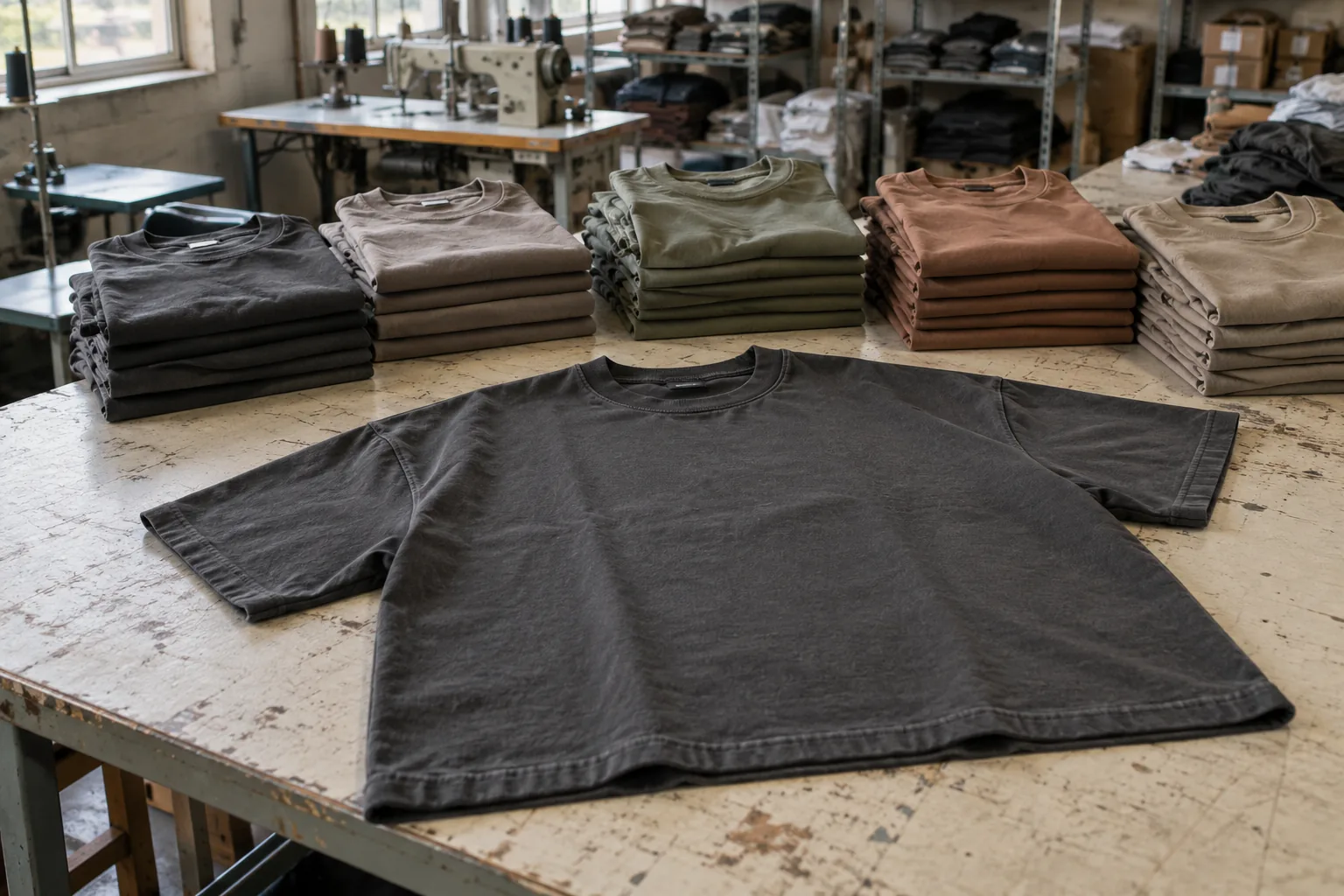
Custom Fabric vs Stock Fabric: Which Changes Cost More
Understand custom fabric vs stock fabric cost with more practical factory-side context around material behavior, product feel, stability, and how the decision.

A fabric quote can look attractive until the required purchase quantity exceeds your entire launch. For a brand comparing custom fabric vs stock fabric, the biggest cost change often comes from the process minimum behind the material, rather than its price per metre alone.
Before choosing a route, separate the garment order from the fabric commitments needed to produce it. Knitting, weaving, dyeing and finishing can each create a different quantity requirement. This guide focuses on that purchasing decision: which process introduces extra material, who pays for it, and whether your collection can actually consume it.
Map the minimum behind each production step
A garment MOQ answers how many finished pieces a manufacturer will accept per style. It does not automatically establish how little fabric a mill will knit, weave or dye. Those quantities may be quoted in kilograms, metres or batch sizes, with separate conditions for each colour and finish.
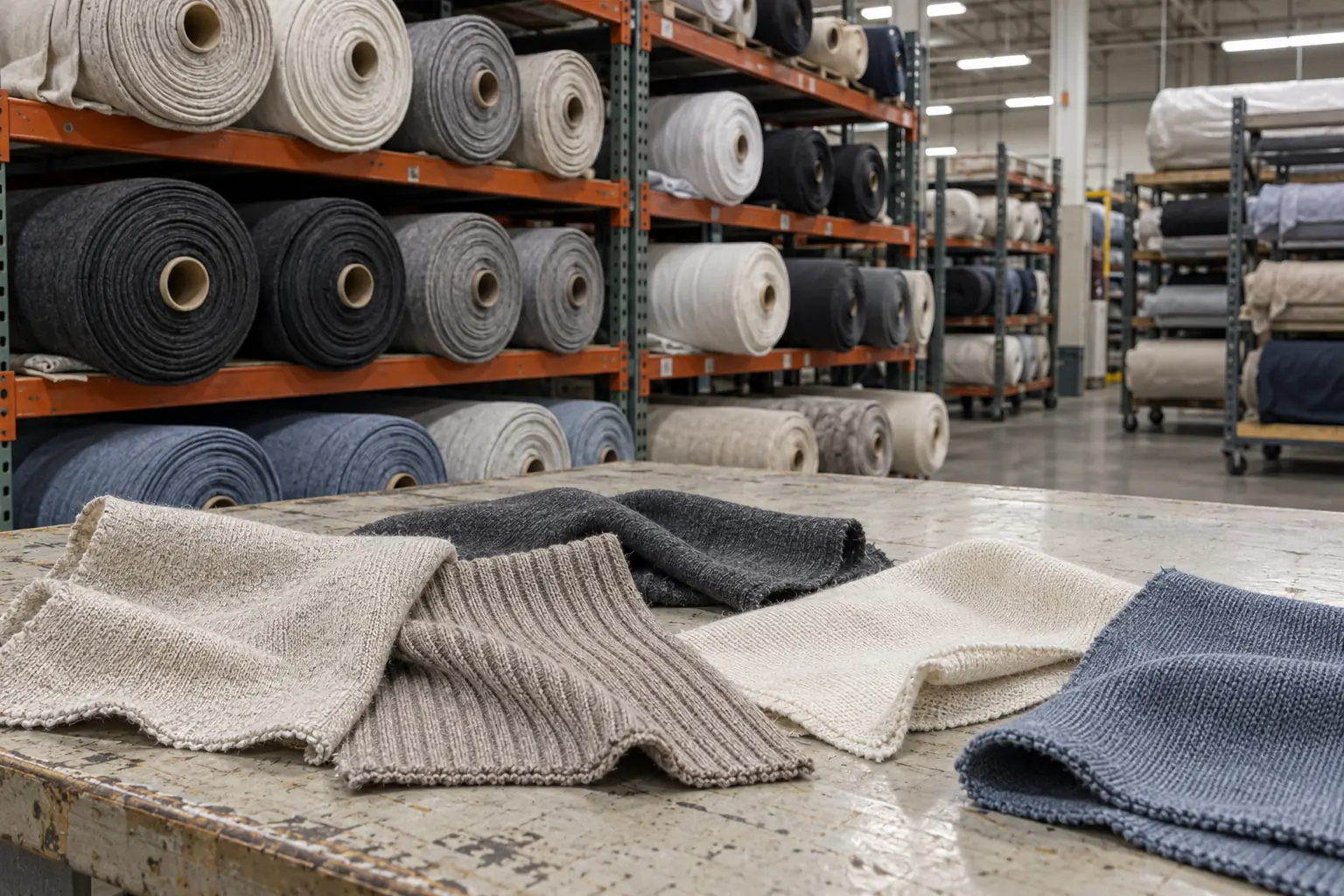
At StitchQuote, MOQ for most categories starts from 50 pieces per style; denim starts from 100 pieces per style. Treat those as garment starting points. A requested custom material still needs its own availability and minimum check before the order scope is settled.
| Material route | Minimum to clarify | Potential cost effect |
|---|---|---|
| Existing finished stock | Supplier cut length or roll purchase | Unused roll balance and limited replenishment |
| Existing base, custom colour | Dye batch per colour | Extra fabric commitment for each shade |
| Custom knit or weave | Construction run and yarn availability | Development plus material beyond launch needs |
| Special fabric finish | Finishing batch and compatible base | Processing charges, trials and possible loss |
These are purchasing distinctions, not fixed supplier thresholds. Ask for the actual conditions applicable to the proposed material.
Stock fabric reduces development, but roll buying still matters
Finished stock generally removes the need to commission a fresh construction or colour batch. That can suit a small first order where the priority is testing fit and demand. It still requires checking usable width, available quantity, shade lots and whether the supplier sells partial rolls.
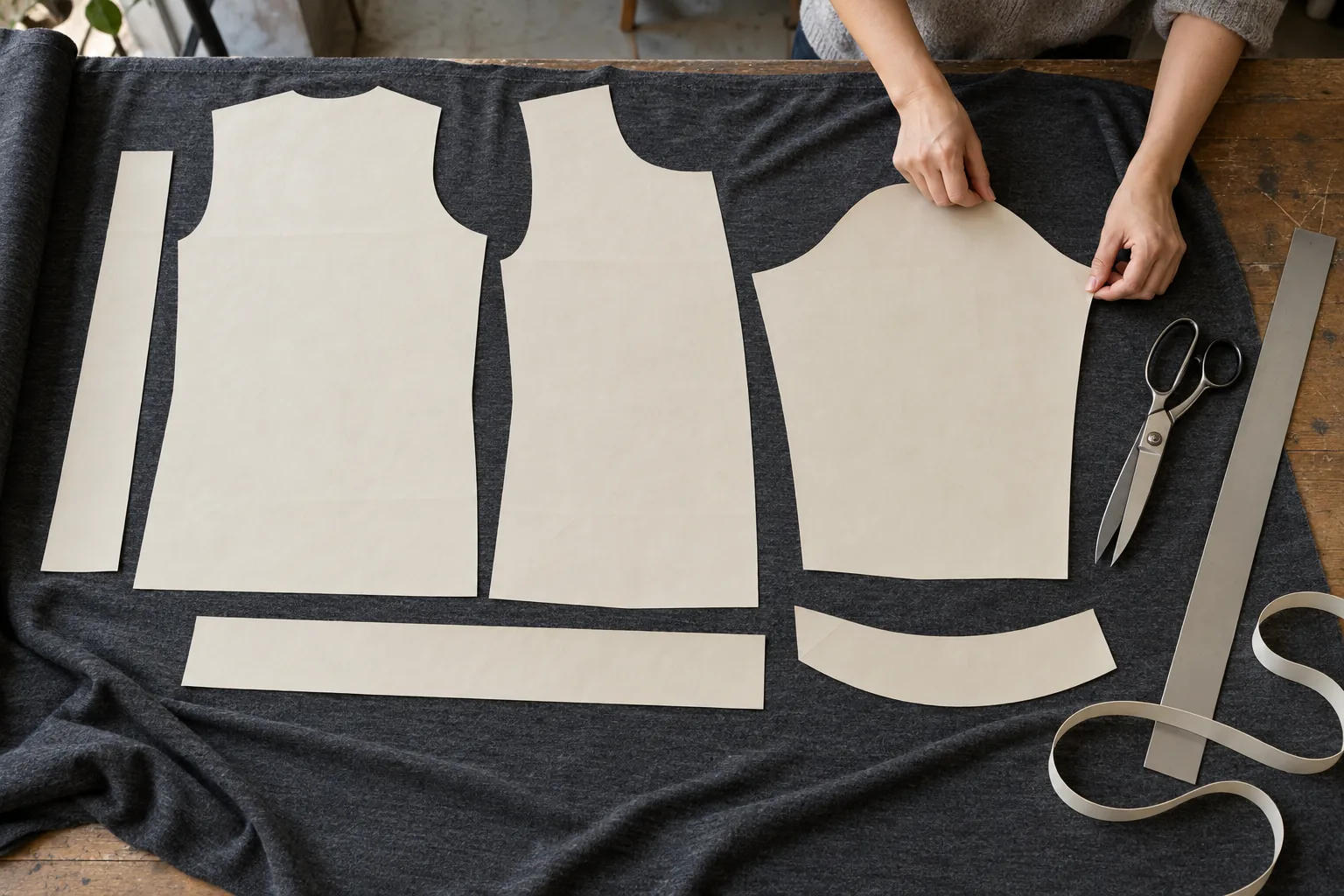
Consider an illustrative launch of 60 boxy tees in one existing charcoal jersey. If the supplier requires whole-roll purchases, the brand may buy more than the cutting requirement. The excess could support replacements or a later order, but only if storage, ownership and future usability are agreed.
Request both the quantity consumed and the quantity purchased. A stock option with poor cutting yield or a compulsory roll balance can lose some of its apparent saving. Also confirm that the bulk material can be reserved; a sample cut from available stock does not guarantee the remaining inventory will still be there after approval.
A custom colour creates a minimum for every shade
Using an existing fabric construction with a new colour is a middle route. It avoids developing the knit or weave, but dyeing can introduce a separate batch commitment. A collection split across several shades may therefore require more total fabric than the same garment quantity in one colour.
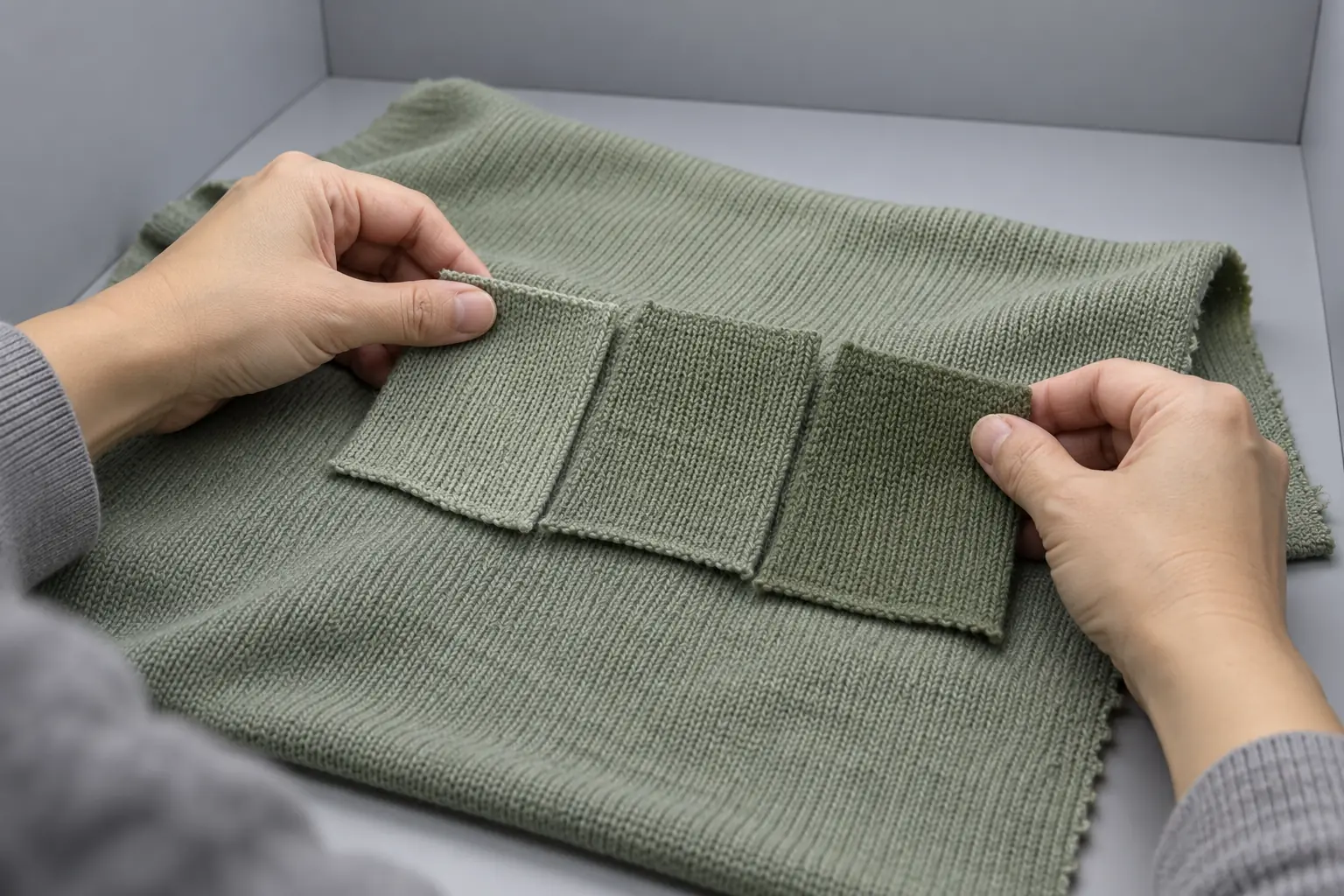
For example, a planned 120-piece sweatshirt launch divided among three custom colours needs three colour-specific checks. Do not assume the total garment quantity satisfies each dye minimum. Ask whether an existing approved colour, fewer launch colours or a shared fabric across compatible styles changes the commitment.
Sharing material only works when composition, construction, weight, finish and colour requirements match. Matching colour names alone is insufficient. Confirm how body fabric and rib will be coordinated, since they may require separate sourcing or dye arrangements.
A new construction adds commitments before cutting begins
A proprietary texture, unusual yarn blend or specific weave can require a new material run. Yarn sourcing, machine setup and development trials may then affect the order before garment sampling starts. Ask which costs are one-time development charges and which apply again on a repeat order.
Special finishing adds another decision. Brushing, compacting or other treatments can change hand feel, width and shrinkage, so the approved unfinished base is not enough to establish final consumption. Request the minimum and expected usable output after the specified treatment.
Custom development makes commercial sense when the material delivers a feature the customer values and the brand can support the purchase commitment. An existing heavyweight jersey may be sufficient for an initial oversized tee; a distinctive surface texture central to the product identity may justify development. Tie that choice to a measurable requirement instead of requesting “premium custom fabric” without a specification.
Compare cash committed against the launch quantity
Ask for two comparable quotes using the same garment construction, size split, branding and packing requirements. Change only the material route initially. Otherwise, a different trim package or decoration method can obscure what the fabric decision actually costs.
Compare total material purchased, development and processing charges, and finished garment quantity together. Keep unused fabric visible as a separate commitment rather than treating it as free inventory. Clarify whether each charge is already included in the garment quote to avoid counting it twice.
A forecast reorder should not automatically absorb today’s surplus on paper. Ask whether the remaining material can be stored, for how long, under whose ownership, and whether a future dye lot will match. If the launch sells slowly, the initial order still carries that cash commitment.
Release the fabric only after these checks
Before authorizing bulk cutting, establish an approval record covering the actual material route. StitchQuote provides sampling, fabric and trim sourcing, cut-and-sew, private label, branding through woven labels, prints and embroidery, and QC before packing. Agree on project-specific material checks separately.
- Specification: record composition, construction, target weight, usable width, colour and finish, with agreed tolerances.
- Performance: confirm shrinkage, twisting and appearance after the intended care treatment on representative material.
- Compatibility: check the proposed print, embroidery, seams and rib against the selected fabric.
- Bulk identity: link the approved sample to the supplied lot and review shade variation before cutting.
- Quantity: reconcile purchased fabric, planned consumption, cutting allowance and ownership of the balance.
Turn fabric preferences into measurable approval points
A buyer specification should distinguish fabric weight from garment weight. For example, an illustrative tee brief might request 100% cotton single jersey at 220 GSM, meaning 220 grams per square metre, measured on the finished fabric. Record usable cutting width separately from total roll width: selvedges, curled edges and damaged margins cannot automatically be included in the marker. Two fabrics with the same GSM can produce different costs per garment when their usable widths differ.
Agree acceptance limits before approving the material. A proposed weight tolerance of plus or minus 5% around 220 GSM would produce an acceptance range of 209–231 GSM; this is an example for negotiation, not a StitchQuote specification or a universal industry requirement. Specify the conditioning and measurement method so results from a sample swatch and bulk inspection are comparable. Ask for weight and width checks across representative rolls, rather than relying on one swatch to describe the entire delivery.
Use garment measurements to connect fabric performance to fit. On a tee, define half-chest width at a stated distance below the armhole, body length from the high shoulder point, shoulder width and sleeve opening. Record the measurement method and tolerance for each point in the tech pack. Measure a sample before and after the agreed wash and drying cycle; calculate dimensional change as the difference divided by the original measurement. A body length that falls from 70 cm to 67.9 cm has shortened by 3%. Decide whether that result is acceptable before finalizing pattern allowances, and check twisting and neckline recovery alongside the numbers.
Work through a roll-purchase example before approving the quote
Suppose an illustrative order contains 60 tees in one fabric and colour. A marker prepared for the actual size ratio and usable width shows consumption of 0.85 metres per tee, giving 51 metres for the order. If the agreed additional cutting and defect allowance is 8%, the planning requirement becomes 55.08 metres. These figures are assumptions for demonstrating the calculation; consumption and allowances must come from the proposed pattern, fabric and production plan.
If that stock supplier sells only 30-metre rolls, the buyer would purchase 60 metres. The 4.92-metre difference is the planned balance above the requirement including its allowance, not a guaranteed usable leftover. Actual defects, end pieces and cutting results determine what remains. Ask whether the quoted consumption already includes any loss allowance before adding another percentage, and keep development yardage separate if it has not been included.
For a custom-colour alternative, replace the roll rule with the quoted dye minimum and repeat the calculation for each shade. Where the minimum is in kilograms, use finished width and GSM to estimate a comparable quantity: metres multiplied by width in metres multiplied by GSM, divided by 1,000, gives theoretical kilograms. Confirm whether the supplier quotes input weight or finished output because processing losses can change the purchase requirement. This comparison exposes how much cash goes into fabric that the launch will consume and how much goes into a balance requiring storage or another production run.
Questions buyers ask before committing to a fabric batch
Can several styles use one fabric minimum?
Potentially, if they use the same material specification and the supplier accepts the combined requirement. This does not automatically combine garment MOQs. Confirm both the shared fabric purchase and each style’s production quantity.
Does a standard sample prove custom fabric timing?
No. A 7-day sample is available for standard styles with confirmed specs and available materials. Complex styles, custom washes and custom-developed fabric take longer. A sample made in substitute stock can help assess fit, but cannot approve the final material’s behaviour.
Should leftover fabric be allocated to the next collection?
Only after checking its quantity, condition and suitability. Future styles may need a different width, weight or colour. Show the surplus separately in the purchasing decision until there is a credible use for it.
Related reading and project enquiries:
- Prepare a tech pack with clear material specifications
- Review sampling and MOQ considerations
- Understand the wider cost of manufacturing a hoodie
- Contact StitchQuote to compare fabric routes for your order
Request a manufacturing quote
Share your product type, quantity range, and destination. We usually reply within one business day.