Custom Streetwear, Casualwear & Denim Manufacturer•MOQ 50 pcs•Denim MOQ 100 pcs•7-Day Sample Available

Apparel MOQ and Price Per Piece: How Buyers Compare Factory Quotes
Understand how apparel MOQ changes price per piece, development cost, trim complexity, and quote logic so you can compare factories more accurately.

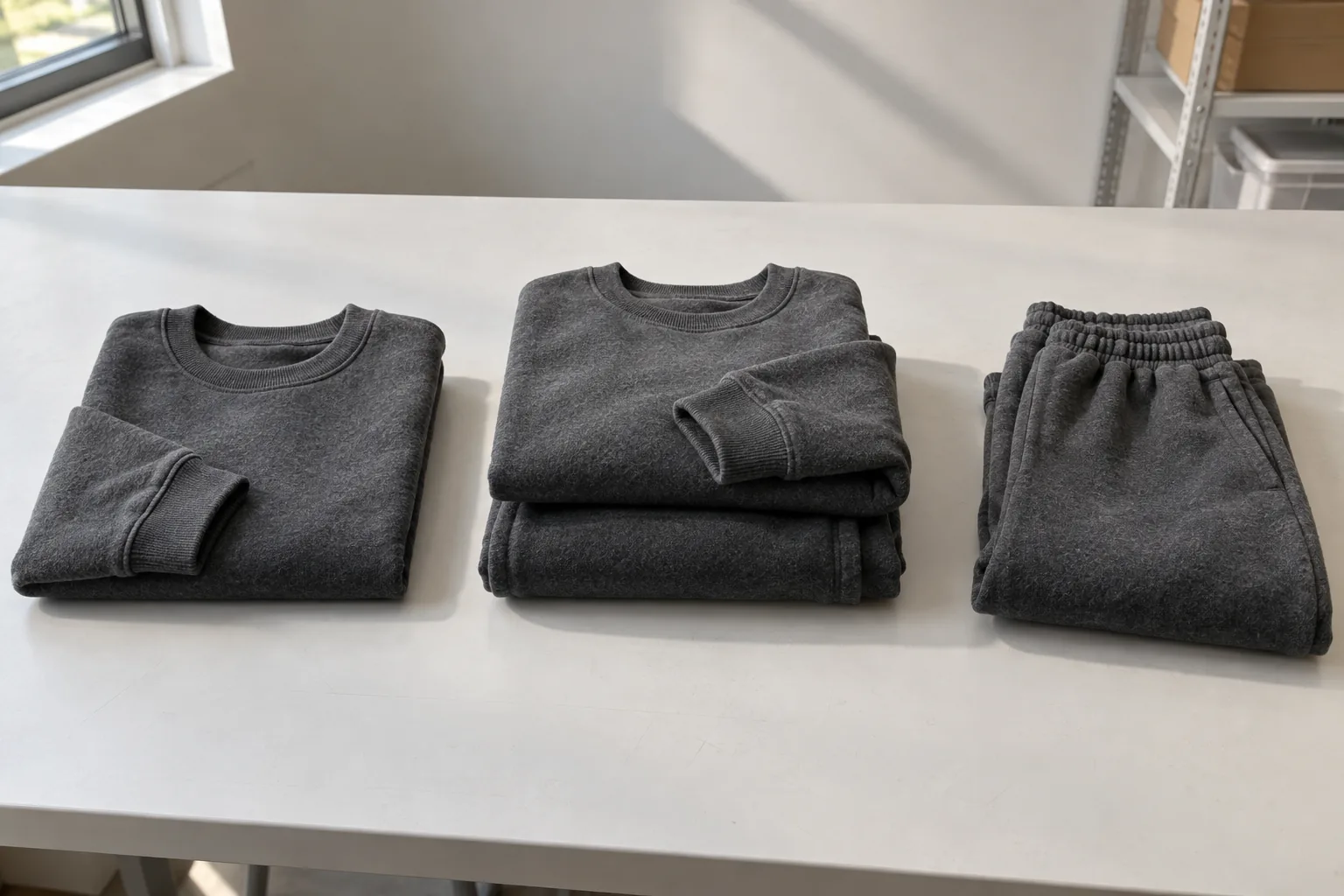
A matching sweatshirt and jogger can look like one product on your storefront while behaving like two styles in production. That distinction changes how you compare apparel MOQ and price per piece: a quotation for 100 garments is not equivalent to a quotation for 100 complete outfits.
Before choosing the lower unit rate, decide whether you are buying coordinated separates or a fixed set. The useful comparison is the cost and quantity of inventory you can actually sell in the intended format. Start with that commercial decision, then translate it into component quantities, material requirements, sample approvals, and packing instructions.
Define the sellable unit before requesting a rate
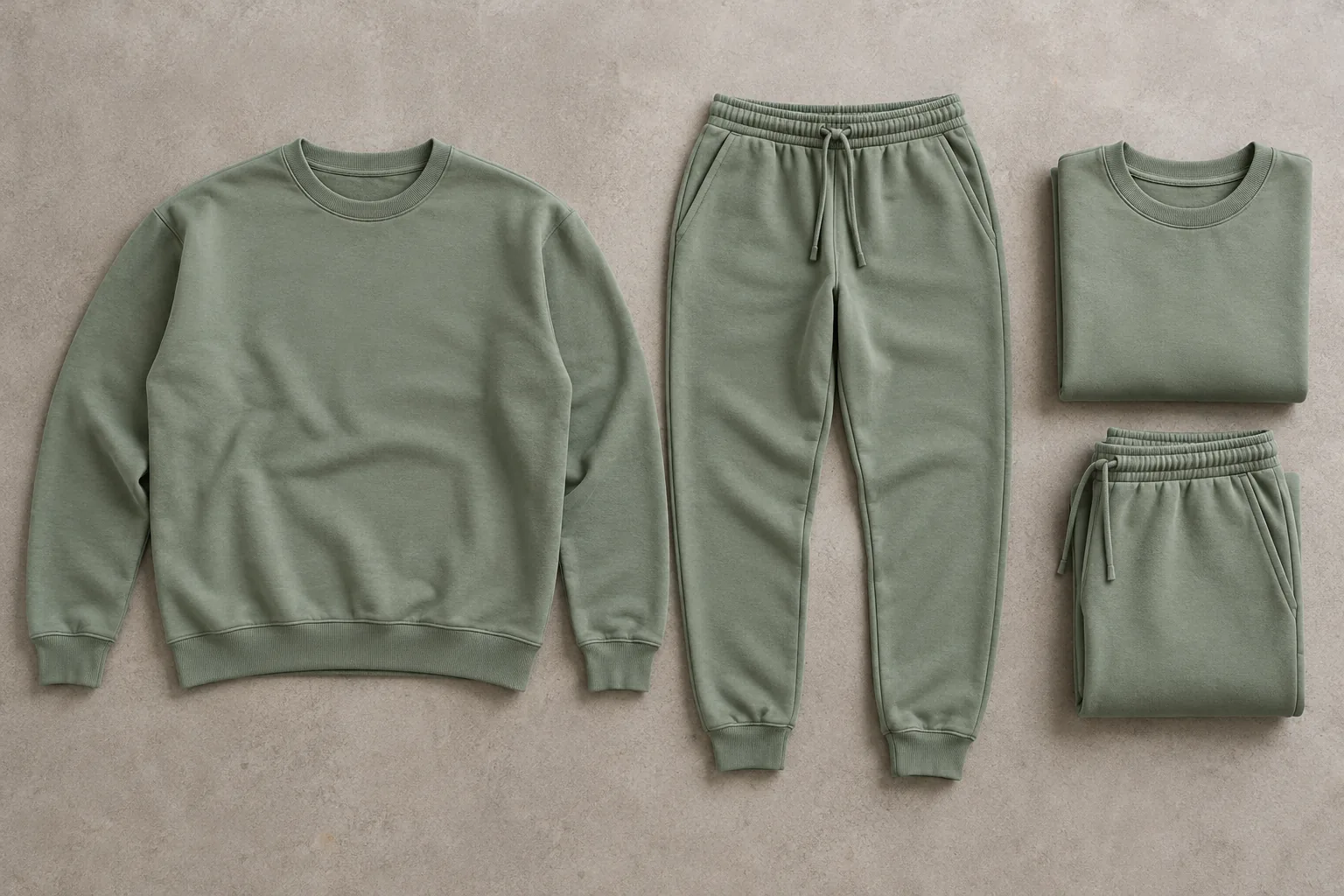
For a fixed two-piece set, one sellable unit contains one top and one bottom. An order for 80 sets therefore requires 80 tops and 80 bottoms: 160 garments. Ask the supplier to state both the garment count and the set count. Specify whether the quoted unit means an individual garment, a complete set, or a packed retail bundle.
At StitchQuote, MOQ for most categories starts from 50 pieces per style; denim starts from 100 pieces per style. A coordinated appearance does not establish that two components count as one style. Have the proposed top and bottom assessed separately, including their color and size splits. Minimums for a particular material, decoration, or trim still need confirmation for the project.
For separates, the commercial unit remains each garment even if campaign photography shows them together. You might order 100 tops and 60 bottoms because expected demand differs. That can be sensible, but the order creates at most 60 complete outfits before accounting for size availability. Keep that distinction visible in your purchasing sheet.
Compare three order shapes using the same specification
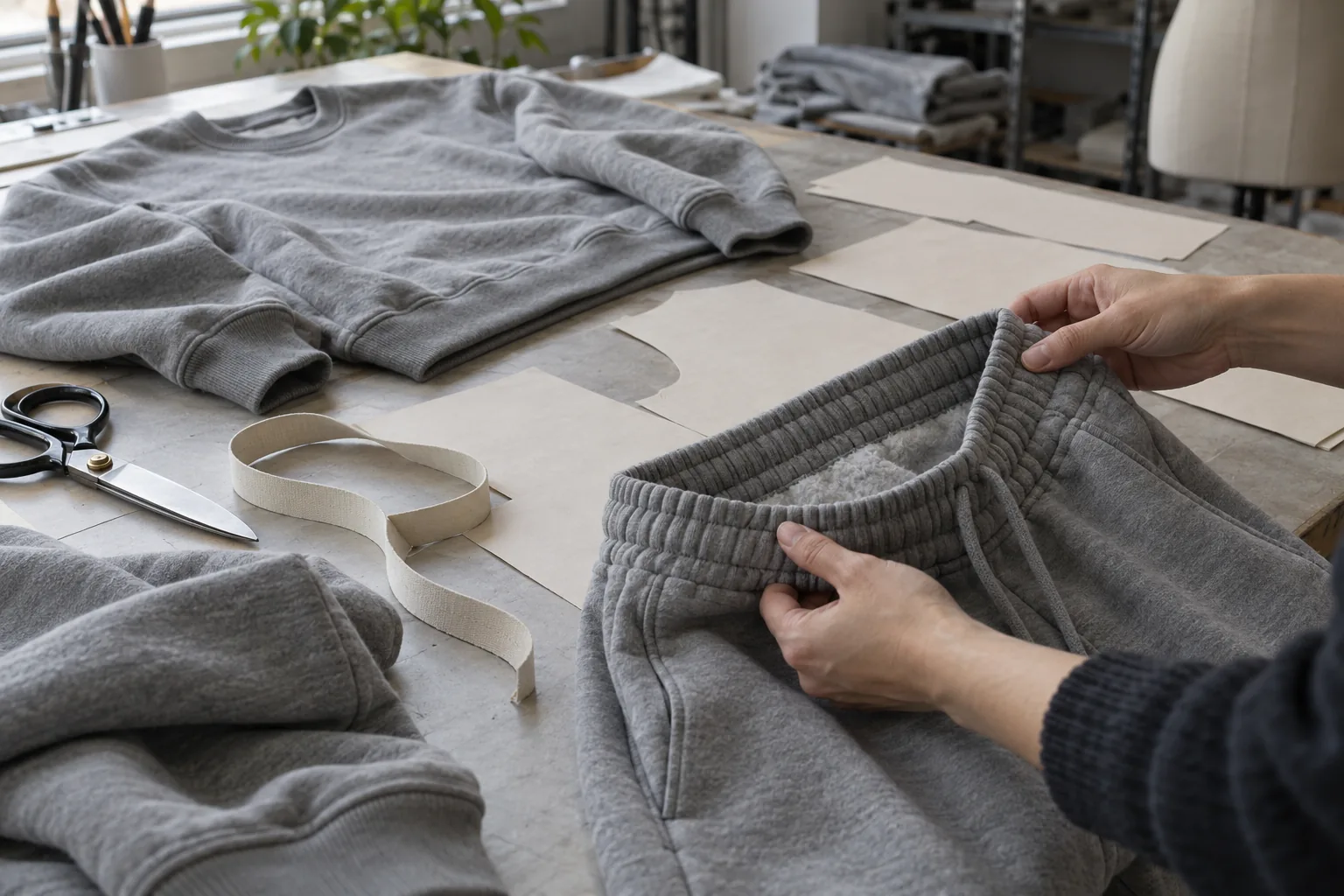
Request alternatives that answer a buying decision: launch one style, launch paired quantities, or launch unequal quantities as separates. Avoid changing fabric weight, decoration, and order structure simultaneously. Otherwise, you cannot tell whether a lower price comes from quantity efficiency or a different garment.
| Illustrative order | Production quantity | What the buyer should compare |
|---|---|---|
| Single sweatshirt | 100 tops | Cost per finished top and total commitment |
| Fixed two-piece set | 100 tops plus 100 bottoms | Combined cost per complete packed set |
| Coordinated separates | 100 tops plus 60 bottoms | Each component rate and unmatched stock exposure |
These quantities illustrate quotation formats, not confirmed production eligibility. For every alternative, request the same fabric composition, target weight, measurement chart, seam construction, branding method, and delivery basis. Record sampling charges, packing, transport, and any other exclusions separately instead of assuming the garment rate includes them.
For a complete set, add the top rate, bottom rate, and any separately quoted pairing or packing charge. Then divide order-level charges by the number of complete sets when estimating your purchasing cost per set. Do not divide those charges by all garments and label the result a set cost. Keep this factory comparison separate from a landed-cost calculation that includes freight and applicable import charges.
Separate shared fabric savings from component work
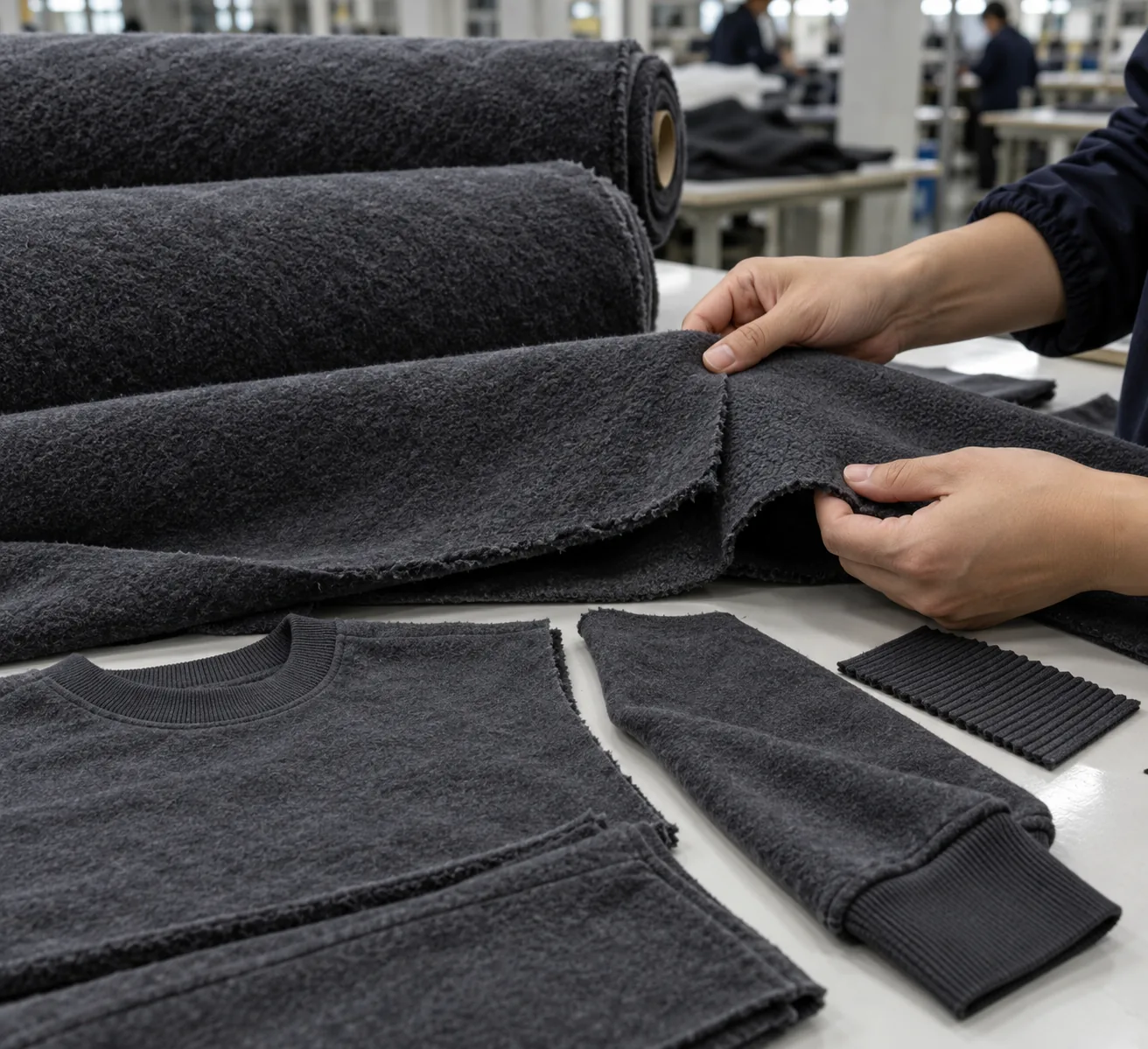
Using one fabric across both components may consolidate purchasing, but it does not make their manufacturing work identical. A sweatshirt needs its own pattern, grading, cutting layout, and sewing sequence. Joggers add a waistband, elastic, pockets, and leg construction. Shared cloth does not remove these operations.
Consider a proposed set in 320 gsm cotton-rich brushed fleece with rib cuffs and a rib sweatshirt hem. Confirm the actual composition, acceptable weight variation, finish, and shrinkage target before pricing. The jogger waistband may use self-fabric with internal elastic while the sweatshirt relies on separate rib. Those supporting materials require their own specifications and purchasing checks.
Ask which materials are genuinely pooled and which are purchased independently. Even with a common body fabric, garment consumption differs because patterns, sizes, and cutting layouts differ. A wider trouser leg can change fabric usage without changing the top. Request component-level explanations when a revision affects only one rate.
Color coordination also needs a written standard. If the garments must match closely, request a common approved shade reference and confirmation of the proposed dye-lot allocation. A shared color name does not guarantee a visual match, especially where rib, fleece, thread, and elastic have different fiber compositions.
Build a size matrix that preserves complete outfits
A total of 100 tops and 100 bottoms does not automatically produce 100 usable fixed sets. Suppose the tops contain 20 small, 40 medium, and 40 large, while the bottoms contain 30 small, 40 medium, and 30 large. Same-size pairing produces only 90 complete sets, leaving ten large tops and ten small bottoms unmatched.
For fixed same-size sets, issue identical component size quantities and define the pairing rule in the purchase order. For mix-and-match sets, specify the actual combinations, such as medium top with large bottom, rather than sending two unrelated size totals. The packing team needs a pairing matrix, not an assumption about customer preferences.
If customers choose each component independently, quote and manage the garments as separates. Budget for different replenishment patterns: bottoms can sell through in a size while matching tops remain available. Ask whether a later component-only reorder can use the same fabric specification and how a new dye lot would be reviewed. Do not assume a future order inherits the original combined-volume rate or an exact shade match.
Approve the sample pair as a coordinated product
Separate fit approval remains necessary, but a set also needs a joint review. Check whether the top length meets the waistband as intended, whether pocket bulk changes the silhouette, and whether the two fabrics appear consistent under the agreed lighting. Review the outfit in the intended wearing position, including sitting and arm movement.
For example, a cropped sweatshirt may expose more of the waistband than expected when the wearer raises their arms. Extending the body affects the top specification and possibly material consumption; raising the jogger rise affects a different pattern. Resolve the styling issue explicitly rather than sending the vague instruction “make the set fit better.”
Wash both components using the proposed care method before final approval. Record measurements before and after laundering at agreed points, including top body length, chest width, trouser waist, and inseam. Define shrinkage limits per material and measurement; a single percentage without a test method is difficult to enforce.
StitchQuote provides sampling, fabric and trim sourcing, cut-and-sew, private label, and branding including woven labels, prints, and embroidery. A 7-day sample is available for standard styles with confirmed specifications and available materials. Complex styles, custom washes, and custom-developed fabrics take longer. Confirm the sampling scope and schedule for both components before planning the launch.
Release the order against a set-specific QC checklist
StitchQuote performs QC before packing. For a coordinated order, the buyer should agree on component checks and pairing checks before bulk production. Passing individual garment inspection does not establish that every retail bundle contains the right combination.
- Measurements: Identify each point of measure and its tolerance. An illustrative proposal is ±1 cm for sweatshirt half-chest and jogger inseam; confirm suitability by construction and size rather than applying it to every measurement.
- Appearance: Compare top and bottom against the approved shade reference under agreed lighting. Check fabric face, nap direction, rib contrast, and visible wash differences.
- Branding: Give each component its own artwork dimensions and placement reference. Specify placement from a stable seam or edge, with an agreed tolerance.
- Function: Check pocket openings, waistband recovery, drawcord attachment, and seam integrity using the agreed inspection method.
- Pairing: Verify style, color, and size combinations against the packing matrix. Reconcile component counts with complete-set counts before carton closure.
Agree how unmatched or rejected components will be handled. One rejected bottom can prevent an otherwise acceptable top from shipping as a complete set. Any replacement or spare-component arrangement needs an explicit quantity and cost; it should not be assumed to be included.
Questions buyers ask before committing to a set
Can 50 tops and 50 bottoms qualify as 100 pieces of one style?
Do not assume so. Present them as two components with separate quantities and ask the factory to confirm the style classification. StitchQuote’s starting MOQ is per style, so the aggregate garment count alone cannot establish eligibility.
Should a single-style launch come before a matching bottom?
It can reduce initial inventory exposure when demand for the outfit is unproven. Balance that benefit against later sampling, separate material purchasing, and shade coordination. Compare total commitments for both launch sequences, not only the first top quotation.
Is shared fabric enough to justify a set discount?
No fixed discount follows from that choice. Shared purchasing may help, while separate cutting, sewing, trims, and pairing still require work. Ask the supplier to identify which costs change with the combined order and which remain specific to each component.
What should accompany the first quote request?
Send specifications for both garments, the intended selling format, quantities by color and size, the pairing matrix where relevant, and packing requirements. Request separate component rates plus a complete-set total so later revisions remain easy to trace.
Related reading and next steps
- Prepare the component tech packs
- Review sampling and MOQ requirements
- Explore hoodie manufacturing cost factors
- Request a quote for your set or single style
Request a manufacturing quote
Share your product type, quantity range, and destination. We usually reply within one business day.