Custom Streetwear, Casualwear & Denim Manufacturer•MOQ 50 pcs•Denim MOQ 100 pcs•7-Day Sample Available

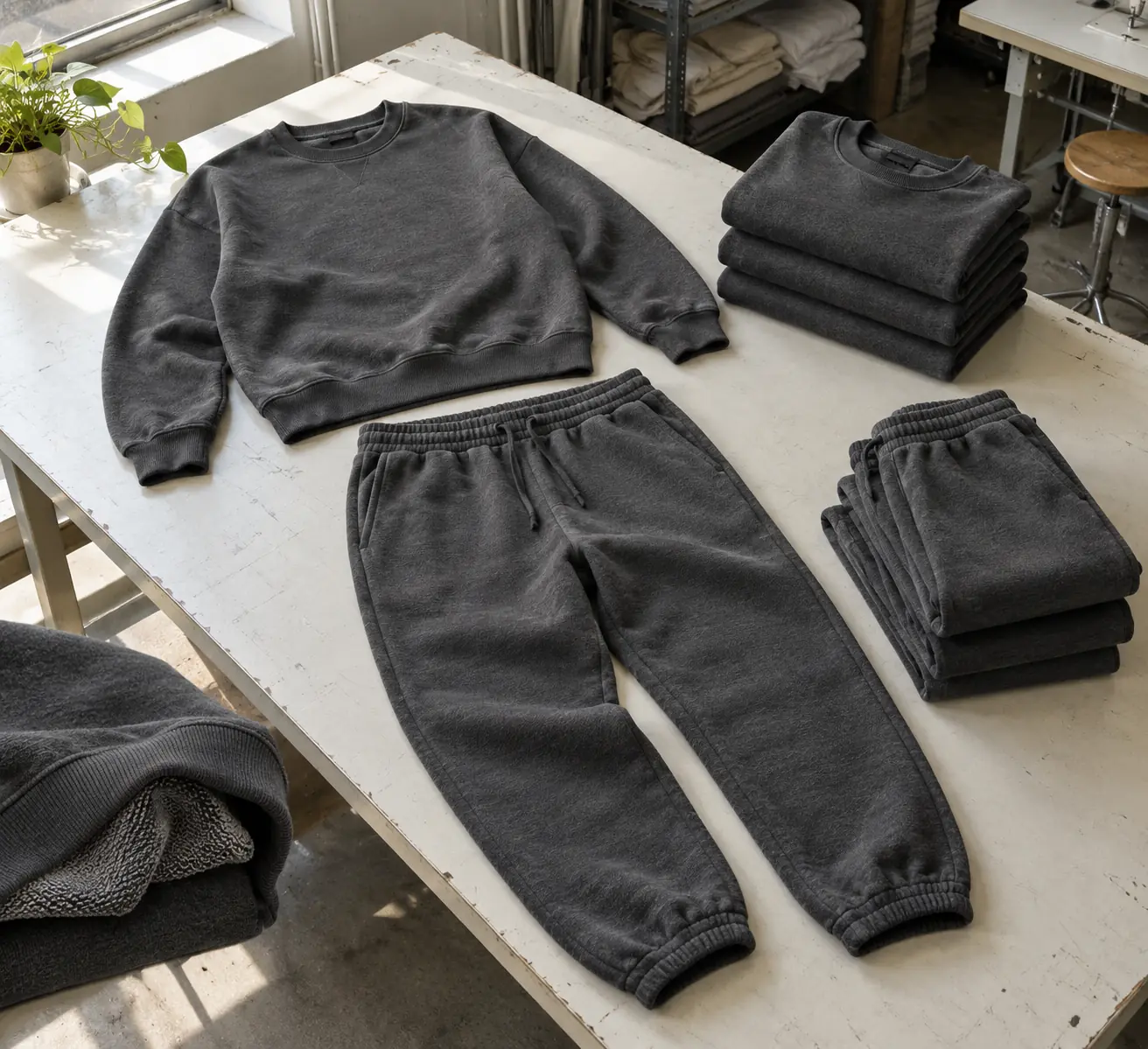
How to Build a Small Matching Set Collection Without Overcomplicating MOQ
Understand small matching set collection MOQ through fit, fabric, decoration, and production logic so streetwear and premium basics buyers can make cleaner.

A sweatshirt and jogger can look like one product on a collection page while behaving like two separate styles in production. Each needs its own pattern, size breakdown, sewing operations and inspection criteria. Selling the garments together does not automatically combine their minimum order quantities. The useful starting point is therefore a buying decision: do customers need a fixed pair, or should each piece earn its place as a standalone item?
For a small matching set collection, plan the relationship between the pieces before adding colors or decoration. A shared fabric can simplify purchasing, but it cannot remove differences in fit or demand. The approach below compares a paired launch with a single-style launch, then shows how to preserve the coordinated look without creating unnecessary stock commitments.
Choose whether the pair is a product or a styling option
A fixed set gives the customer one purchase containing two garments. That works best when shoppers accept the same labeled size on both pieces and demand is reasonably balanced. Separates let someone buy a medium top with a large bottom, replace one worn piece, or purchase only the garment they want. Both models can use identical garments; their inventory and packing requirements differ.
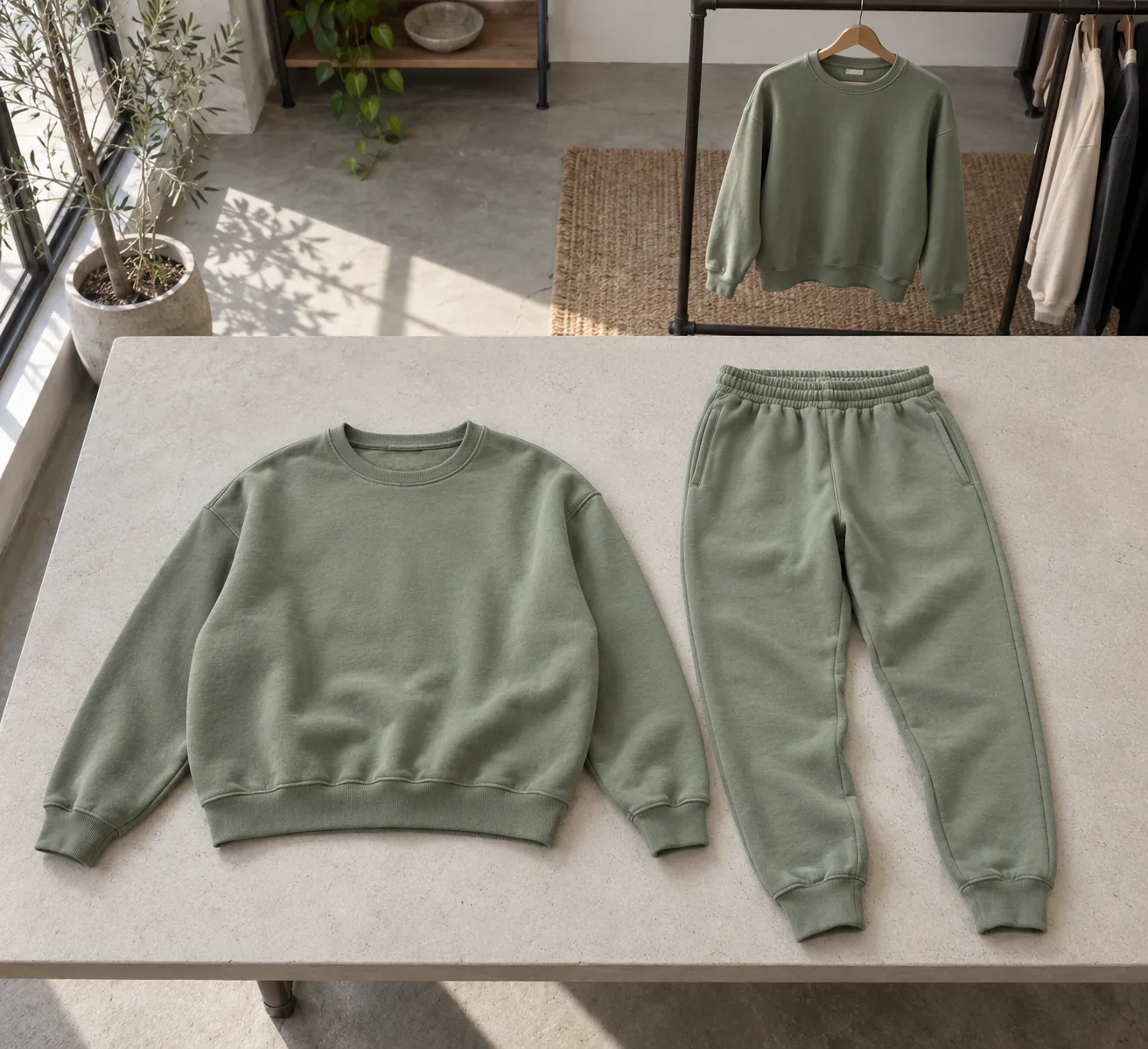
Consider a boxy crewneck with a tapered jogger. If the crewneck is the proven seller and the jogger is new, a single-style launch may be the stronger first commitment. Develop the companion later using the approved fabric reference, while recognizing that a later dye lot may not match exactly. If the complete outfit is the main proposition, sample both pieces together and budget for two independently workable production quantities.
Count garments by style before counting outfits
At StitchQuote, MOQ for most categories starts from 50 pcs per style; denim starts from 100 pcs per style. These are starting points, not confirmation that every fabric, color or decoration split is feasible. Ask how the factory defines each style and whether the proposed variation changes that definition.
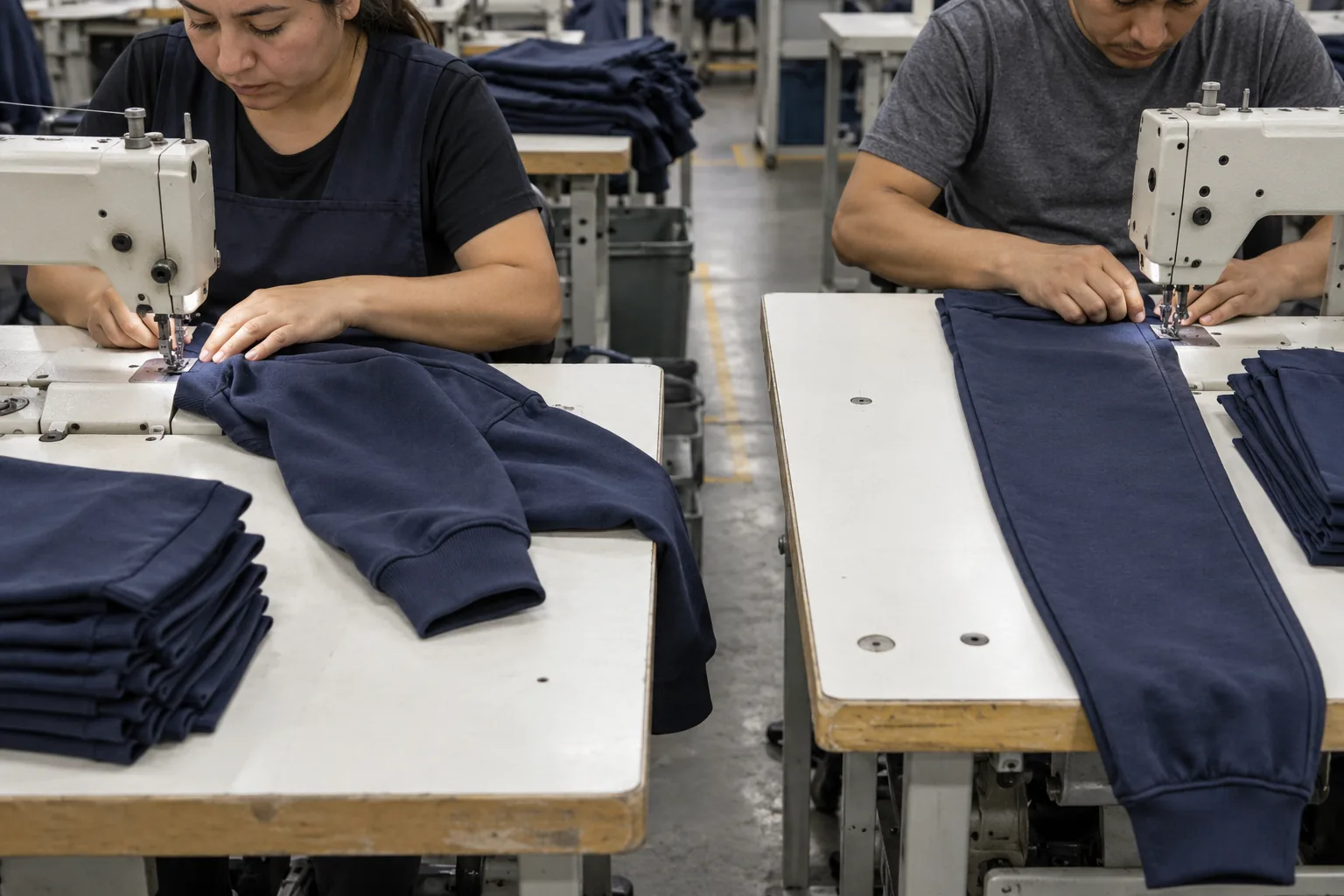
The following comparison uses one crewneck and one jogger, each in one color. Quantities illustrate the arithmetic using the stated starting MOQ; they are not a project approval.
| Launch plan | Garment order | Inventory implication |
|---|---|---|
| Crewneck only | 50 tops | One style to fit, inspect and sell |
| Equal paired launch | 50 tops plus 50 bottoms | 100 garments; up to 50 pairs if size splits align |
| Top-led separates | 80 tops plus 50 bottoms | 130 garments; 30 tops remain beyond an equal pairing |
Do not describe 25 tops plus 25 bottoms as a “50-piece set order” and assume it meets a 50-piece minimum for each style. Similarly, 50 pairs means 100 garments. Write both garment quantities and potential pair quantities in the inquiry. Ask separately about minimums for fabric dyeing, rib, drawcords and decoration, because a workable sewing quantity can still encounter a material purchasing constraint.
Share material decisions without forcing identical construction
The biggest opportunity for coordination is often a common main fabric specification. For example, propose both pieces in the same 320 gsm cotton-rich French terry, with identical composition, finish and approved shade. This is an illustrative specification, not a StitchQuote stock-fabric claim. Confirm availability and suitability before treating it as the production basis.
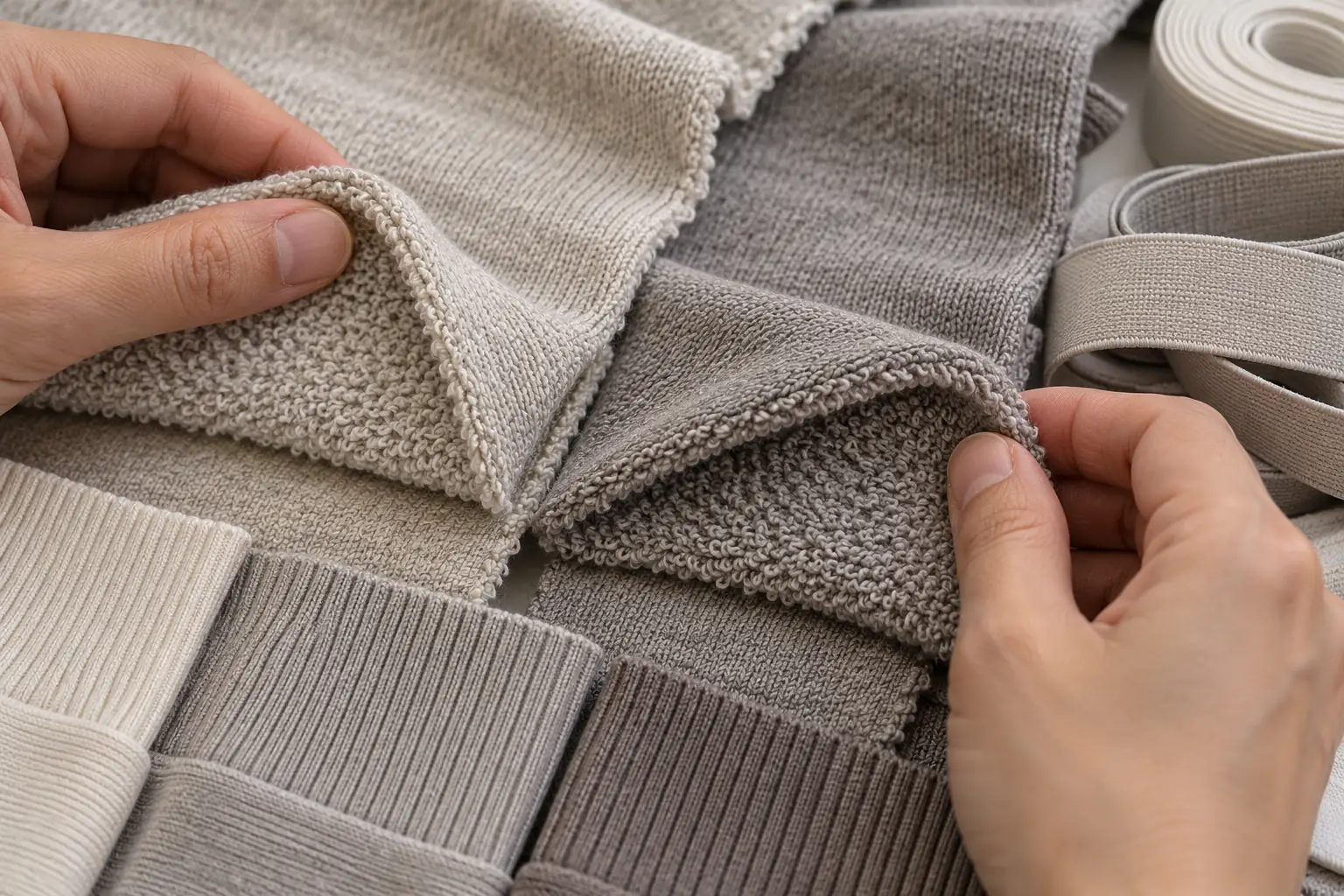
Ask whether both styles can draw from the same approved fabric lot and how rolls will be allocated. Shared cloth may improve purchasing efficiency, but fabric consumption is different for each garment. A wide crewneck body and long jogger legs create different cutting layouts. Request consumption by style and size mix, with allowances for shrinkage and cutting loss explained, rather than dividing one fabric total equally.
Keep construction appropriate to the garment. A jogger waistband needs elastic recovery and secure attachment; a crewneck hem may need a softer rib. Specify which components must match visually and which may differ functionally. Adding a new contrast panel, custom drawcord or separate garment-dye treatment introduces another approval or purchasing dependency. For a first run, judge each addition against its contribution to the complete outfit.
Build the size split around bodies, not equal columns
Ordering equal size quantities for the top and bottom feels tidy but may miss customer needs. An oversized top has a different fit relationship from a close-fitting hip and thigh. Use available sales data or structured fit feedback to allocate each style, and avoid presenting an untested distribution as a reliable demand forecast.
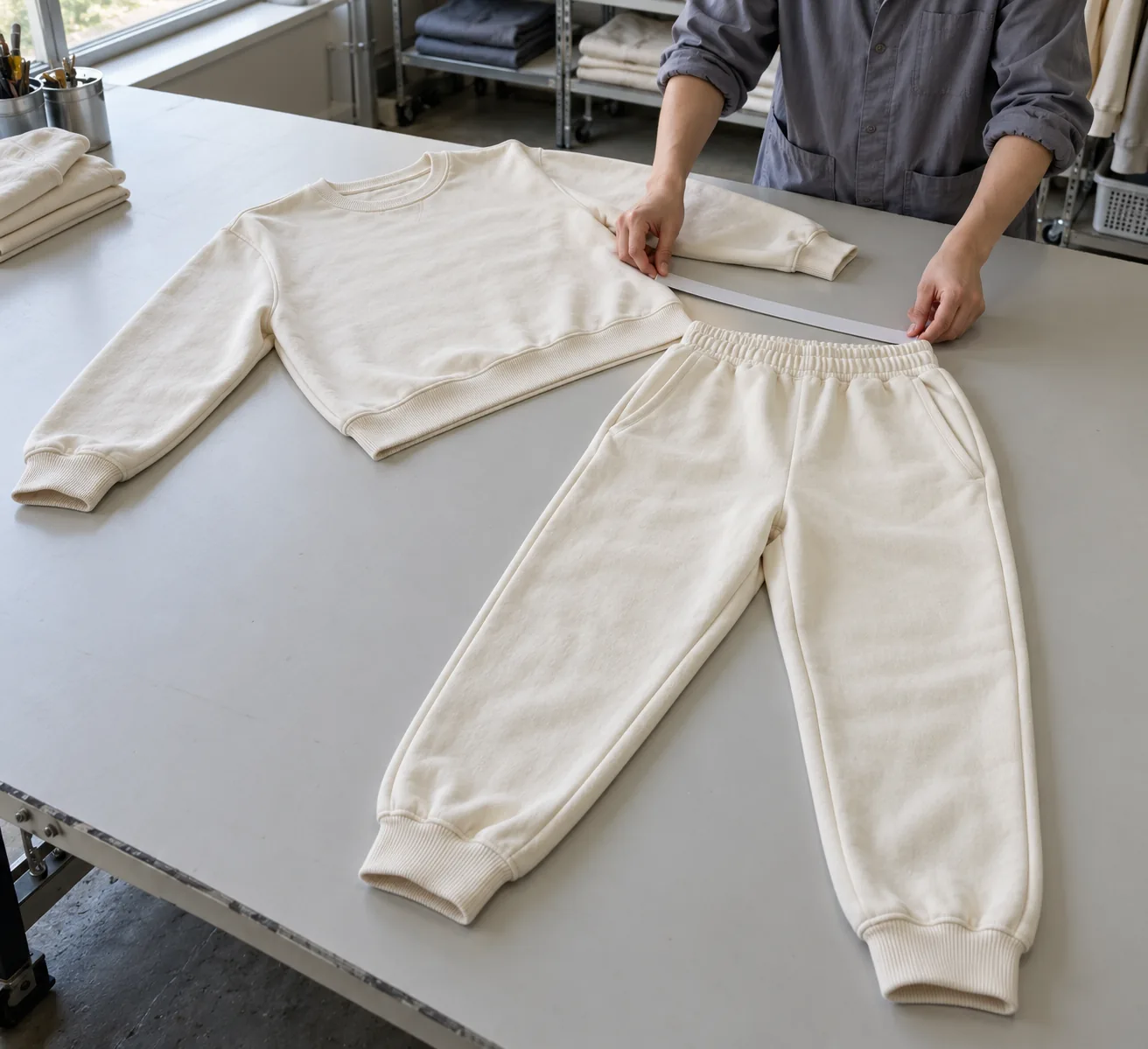
Suppose 50 tops are split S/M/L as 10/25/15, while 50 bottoms are split 15/20/15. There are only 45 same-size pairs: 10 small, 20 medium and 15 large. Five medium tops and five small bottoms remain. That may be acceptable for separates, but it matters if the launch promises only fixed same-size sets.
Create separate measurement sheets and grading instructions. Record top chest width, body length and sleeve length; for bottoms, record relaxed and stretched waist, hip, rise, thigh and inseam. Then assess the outfit on a wearer: does the top conceal the waistband detail, or does its hem collide with bulky pockets? Approve the paired appearance without using it as a substitute for individual fit approval.
Compare the total commitment, including leftover pieces
Request separate quote lines for the top and bottom, plus clearly identified sampling, decoration and packing items where applicable. A combined set price alone can hide which component drives cost. If affordability requires a change, separate lines help you compare removing a pocket construction with reducing embroidery coverage, rather than altering both pieces blindly.
Compare the full launch commitment: garment quantities multiplied by their quoted unit costs, plus applicable development, packaging and logistics charges. Then consider the stock that cannot form a sellable pair under your chosen size rules. A lower average garment cost can still require more cash if the order adds a weak second style or unnecessary colors.
Define packing before accepting the quote. Individually packed separates support mixed sizes; bundled sets need an exact top-to-bottom pairing rule and a method for checking it. Ask whether shared materials create any actual saving and which costs remain separate. Do not assume that sharing a color eliminates pattern development, sewing setup or inspection work for the second garment.
Inspect the relationship between the pieces as well as each garment
A set can pass two individual inspections and still look wrong together. Approve a paired reference sample and document the viewing conditions and measurement methods. StitchQuote includes QC before packing; agree on project-specific acceptance criteria rather than assuming “matching” communicates enough.
- Shade: Lay the top and bottom adjacent under agreed lighting. Compare body panels, rib and pocket fabric. Check garments drawn from different production bundles, not only the first pair.
- Dimensions: Set tolerances by measurement point. An illustrative discussion target might be ±1 cm for flat chest width and inseam, but suitability must be confirmed for the fabric and construction.
- Wash response: Measure both pieces before and after the agreed wash-and-dry procedure. Record dimensional change separately; matching initial lengths do not prove compatible shrinkage.
- Decoration: Define placement from a named seam or centerline on each style. Use approved artwork dimensions and assess the visual balance of the paired garments.
- Pairing and function: Check size labels against the packing instruction, then test waist recovery, pocket openings and seam integrity. A correctly bundled outfit still needs usable individual garments.
Record a pass, correction or rejection for each issue. If a bottom sample changes after approval, recheck it beside the top before releasing the revision. Otherwise, improving one garment can quietly change the proportions that made the outfit work.
Questions to settle before ordering both styles
Can two different garments share one style minimum?
Do not assume they can. A top and bottom usually involve separate patterns and operations. Submit the exact style quantities and ask for confirmation. Sharing a fabric may help material purchasing without combining the garment minimums.
Should the first sample request include the whole outfit?
Yes, if the pair is the core selling proposition. StitchQuote offers a 7-day sample for standard styles with confirmed specs and available materials. Complex styles, custom washes and custom-developed fabric take longer; confirm the schedule for both components.
What if the bottom sells out before the top?
Reorder the bottom according to its own demand, subject to confirmed minimums and material availability. Check the new shade against retained top references before promising an exact match. Separates give more selling flexibility, but repeat production still needs color control.
What should accompany the first inquiry?
Send front and back drawings for each style, individual quantities and size splits, shared fabric requirements, decoration details and the intended packing model. State whether you can launch one style if the paired commitment is too large. That gives the manufacturer a concrete alternative to evaluate.
Related reading and next steps:
- Discuss your top-and-bottom order plan
- Prepare the specifications for each garment
- Review sampling and MOQ considerations
- Understand hoodie manufacturing cost inputs
Request a manufacturing quote
Share your product type, quantity range, and destination. We usually reply within one business day.