Custom Streetwear, Casualwear & Denim Manufacturer•MOQ 50 pcs•Denim MOQ 100 pcs•7-Day Sample Available
Embroidery vs Chenille Patch for Hoodies and Varsity Programs
Understand embroidery vs chenille patch hoodie through fit, fabric, decoration, and production logic so streetwear and premium basics buyers can make cleaner.

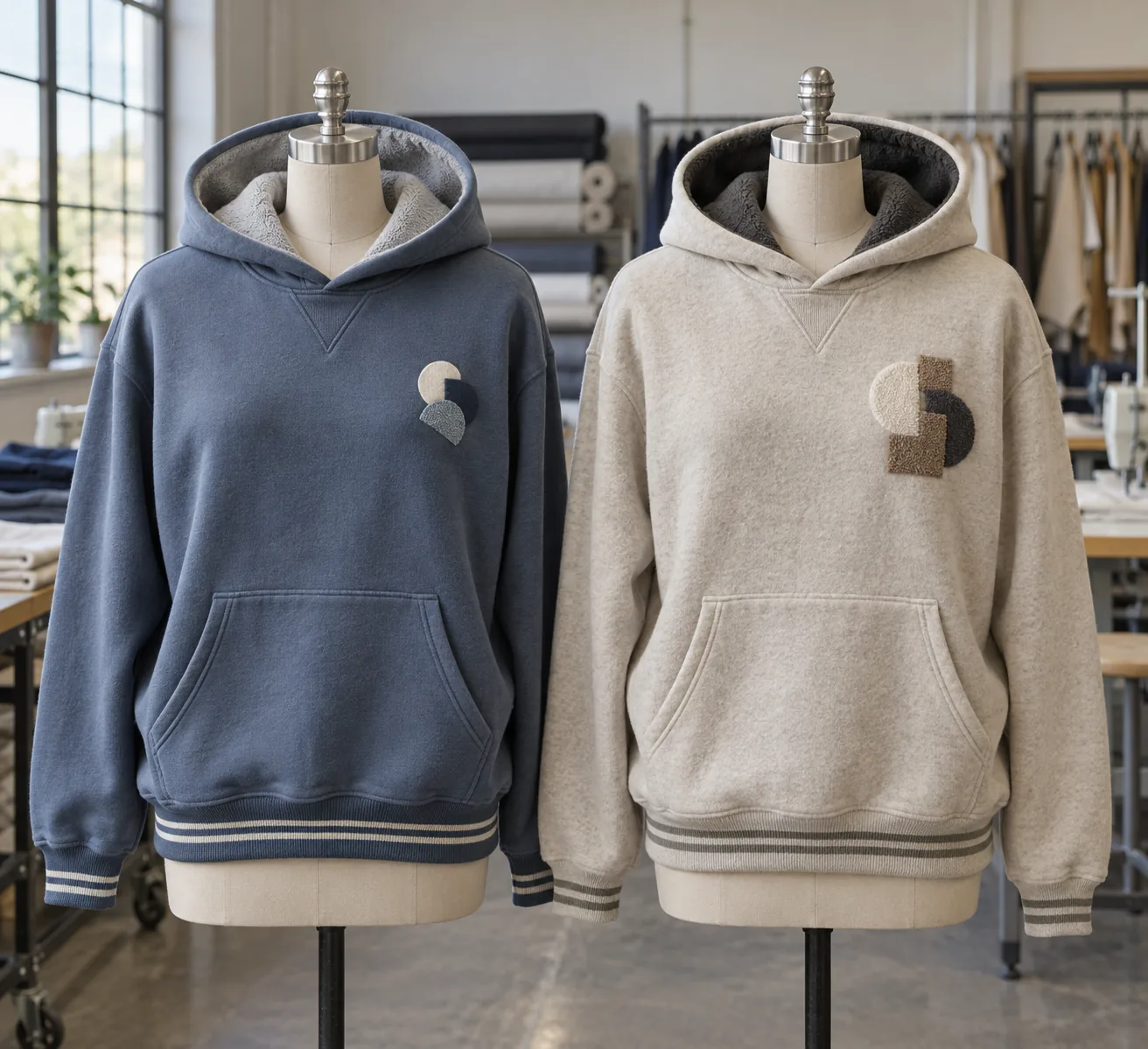
A varsity letter can look balanced on one hoodie and pull another hoodie out of shape, even when both garments have the same fabric weight. The difference may sit behind the face: exposed French terry loops or a brushed fleece interior. For buyers choosing embroidery or a chenille patch, that construction changes how the decoration is supported, how the reverse feels against the body, and what needs approval before production.
This guide focuses on approving decoration for French terry versus fleece hoodies in varsity programs. Start with the actual base fabric, then compare a stitched design and a patch on that material. A loose badge sample or a photograph of embroidery cannot show whether the finished chest panel will hang correctly after washing.
Choose the interior construction before the varsity treatment
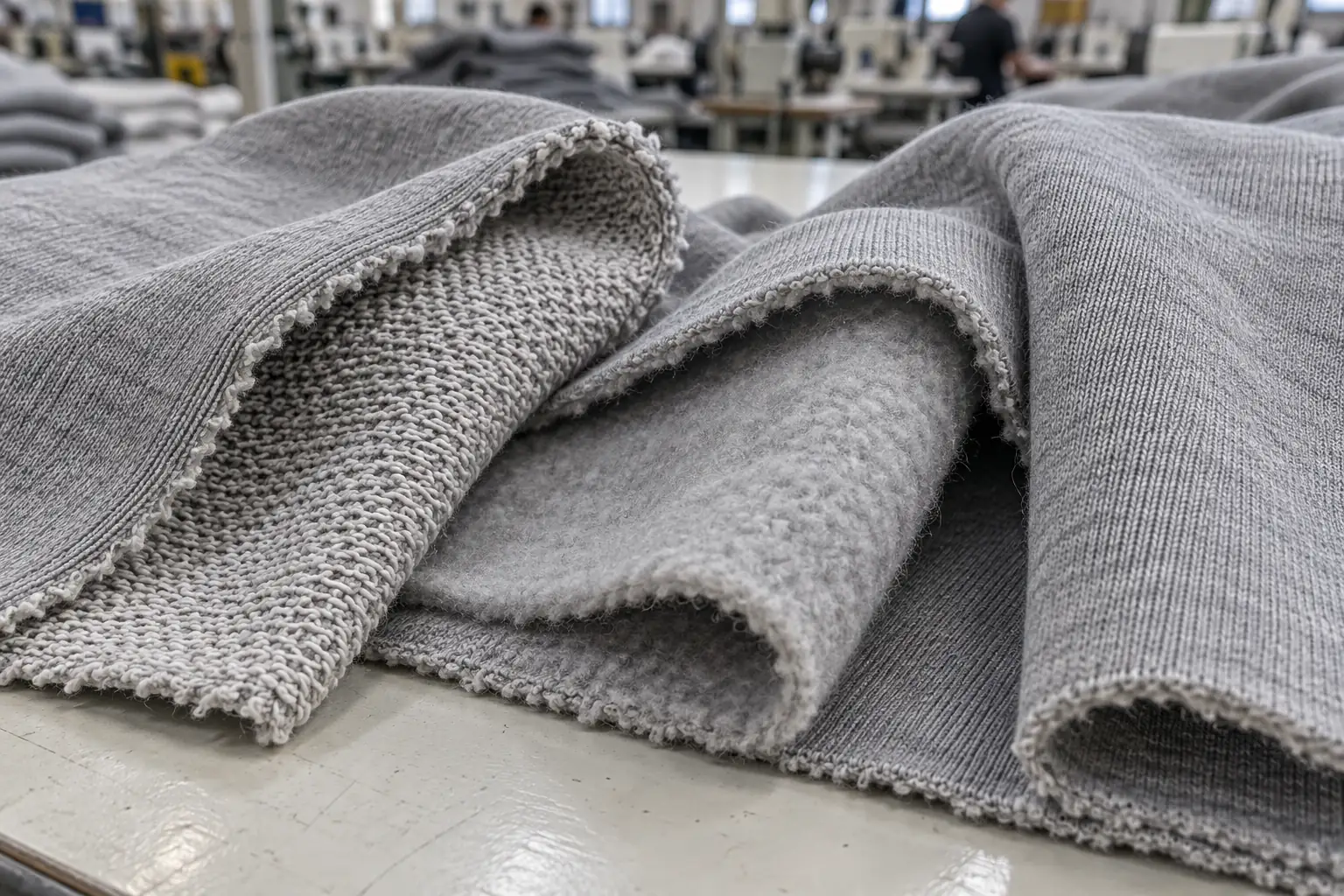
French terry has loops on the reverse and an unbrushed interior. Sweatshirt fleece has a brushed reverse that creates a soft, raised surface. Both can have a relatively smooth outer face, so neither construction automatically rules out direct embroidery or chenille. Surface stability, stretch, thickness, and finishing matter more than the fabric name alone.
For an indicative sampling comparison, consider a 330 GSM French terry and a 330 GSM brushed fleece with similar fiber content. They may still differ in compressibility and drape. A tightly knitted terry can hold a small embroidered crest neatly; a softer fleece may compress beneath stitches and need different stabilization. These are sample hypotheses, not universal performance rankings.
Ask for composition, finished weight, stretch direction, finishing sequence, and shrinkage results with each swatch. Confirm whether the stated weight is measured after brushing and finishing. Otherwise, two apparently equivalent fabric offers may represent different production stages.
Separate needle coverage from patch weight on each fabric
Direct embroidery builds the artwork into the garment through repeated needle penetrations. Dense fill areas restrict stretch locally, so a large filled shield can create a rigid island in a flexible chest panel. On French terry, inspect the loop side for trapped loops and rough backing edges. On fleece, inspect compression around the design and whether the reverse remains comfortable after backing is trimmed.
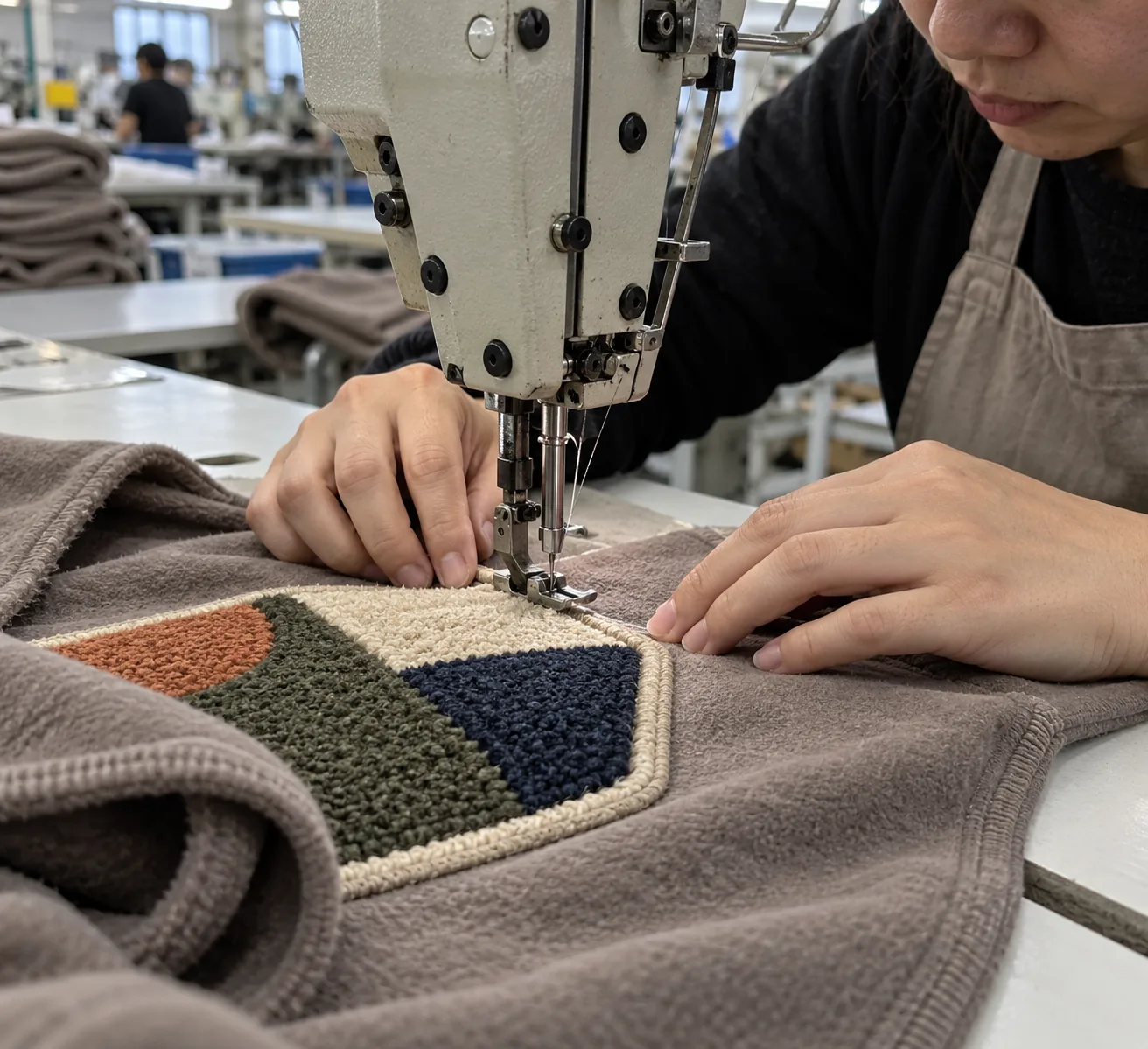
Chenille typically builds a raised yarn surface on a separate patch foundation, often with a felt border. The finished patch adds thickness and weight, while its attachment concentrates stress around the perimeter. A wide letter may therefore tilt or ripple a lightweight panel even when the attachment stitches are clean. Heat-applied versions also require material-specific trials; adhesive alone should not be assumed suitable for repeated laundering.
Compare proposals using dimensions and construction rather than the labels “premium” or “varsity.” Request embroidered fill coverage, backing type, patch foundation, border width, and attachment method. A narrow outline crest and a solid chenille letter with the same overall width impose very different loads.
| Base fabric behavior | Direct embroidery trial | Chenille trial |
|---|---|---|
| Stable French terry with limited stretch | Check fill density and reverse-side comfort | Check perimeter rippling and panel drape |
| Soft, compressible brushed fleece | Check stitch compression and backing support | Check attachment tension and any pressing marks |
| Stretchy terry or fleece | Check distortion after release from the hoop | Check strain where the rigid patch meets the knit |
Use matched panels to expose terry and fleece differences
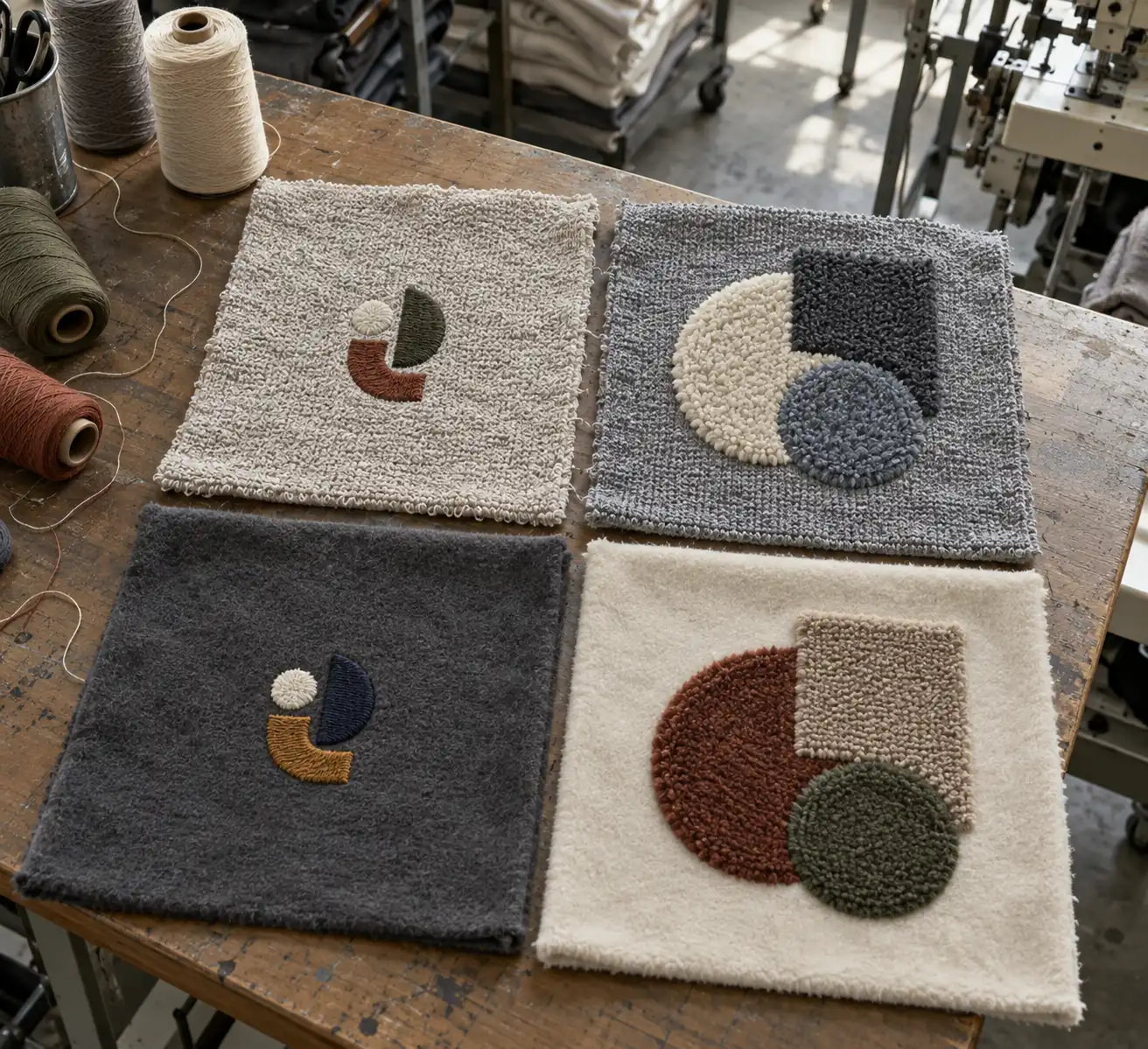
Before ordering complete samples, build a comparison set from the intended production fabrics. Use four panels: embroidery on terry, embroidery on fleece, chenille on terry, and chenille on fleece. Keep artwork size and position consistent across each decoration method. If a chenille version needs simplified details, approve that adaptation separately instead of quietly changing the design during sampling.
A useful trial could pair a 65 mm embroidered crest with a 140 mm chenille letter intended for different products in the same collection. Those are illustrative dimensions, not minimum or maximum capabilities. Evaluate each at its intended size; shrinking a patch to make it easier to sew defeats the purpose of the trial.
Record backing, thread, needle setup, stitch density, patch thickness, and pressing conditions for each approved panel. Let panels relax after hooping or pressing before judging flatness. Then sew the preferred option into a complete hoodie: the hood, pocket, and garment seams influence how the decorated chest hangs when worn.
Account for fleece loft and terry drape in placement
Placement should reference fixed garment points. Specify the design center relative to center front and the top edge relative to the high shoulder point, then state whether measurements apply to a relaxed garment before or after washing. Avoid instructions such as “standard left chest,” which leave the factory to interpret both height and distance from the armhole.
On a compact terry hoodie, a large letter can bridge the chest and interfere with natural folds above the kangaroo pocket. On a lofty fleece hoodie, the same letter may sit proud of the surface and look heavier from the side. Check both front and profile views on the smallest and largest planned sizes.
Decide whether the artwork stays one size across the range. Keeping it constant simplifies decoration sourcing, but its visual scale changes with garment size. For a youth-to-adult varsity program, request a separate placement review rather than copying adult coordinates onto every size. Also verify that attachment access does not accidentally catch a pocket bag or another garment layer.
Make laundering the decision gate for both interiors
Wash decorated samples using the proposed care instructions, with an undecorated control panel from each fabric for comparison. Measure garment dimensions and decoration width and height before washing and after drying and relaxation. A patch foundation, embroidery thread, backing, and knit base can respond differently; the resulting mismatch may cause puckering even when the original sewing looks tidy.
One wash is a useful screening step, while repeated cycles help reveal progressive edge lifting, chenille matting, or backing discomfort. Agree the cycle count and drying method before approval. Do not compare a line-dried terry sample with a tumble-dried fleece sample and attribute every difference to construction.
Check color transfer as well as shape. A dark hoodie with a pale chenille letter deserves particular attention at the patch border and on the raised yarn. Photograph washed and unwashed references under consistent lighting. If the collection includes garment washing or special finishes, confirm whether decoration happens before or after those treatments and test that exact sequence.
Set a QC release checklist around the approved fabric
The approved sample should identify the precise terry or fleece quality, decoration recipe, and care method. Substituting a softer fleece or a stretchier terry can invalidate earlier stitch and attachment approvals. Use measurable limits for placement and dimensions, plus physical references for appearance and hand feel.
- Placement: An illustrative starting proposal is ±5 mm from agreed reference points, subject to factory confirmation and design sensitivity.
- Fabric condition: Reject holes, needle cuts, trapped layers, and visible scorch marks; compare hoop marks after relaxation with the approved reference.
- Decoration finish: Inspect thread breaks, exposed foundations, uneven borders, loose chenille yarn, and gaps in attachment stitching.
- Reverse comfort: Feel the backing edge and attachment area from inside the hoodie; check for sharp trimmed corners and excessive stiffness.
- Post-wash behavior: Compare puckering, color transfer, patch lift, and garment distortion against agreed acceptance references.
StitchQuote provides cut-and-sew, private label, sampling, fabric and trim sourcing, branding including woven labels, prints and embroidery, and QC before packing. For a chenille proposal, confirm the patch construction and attachment requirements during project review. MOQ for most categories starts from 50 pieces per style; confirm how fabric and decoration variants affect the order breakdown.
Questions buyers ask before releasing terry or fleece hoodies
Does brushed fleece require a different embroidery backing?
Possibly, but brushing alone does not determine the answer. Knit stability, stretch, artwork coverage, and desired interior comfort guide the choice. Approve backing on the actual fleece and inspect the washed reverse, rather than copying a specification from another hoodie.
Can one chenille patch specification serve both fabrics?
The patch itself may remain the same while attachment settings change. Compare panel support, perimeter tension, and finished drape on both bases. Keep separate approved construction records if the terry and fleece versions need different sewing or pressing conditions.
Should heavier GSM settle the decoration choice?
No. Weight does not fully describe stretch, compressibility, or stitch support. A heavier but loosely constructed knit can distort more than a lighter, tighter one. Treat GSM as one specification alongside the matched-panel and laundering results.
Can this comparison fit a seven-day sample request?
A seven-day sample is available for standard styles with confirmed specs and available materials. Complex styles, custom washes, and custom-developed fabrics take longer. Confirm whether patch development and wash evaluation fit the proposed schedule before setting the collection approval date.
Related reading and project support:
- Document fabric and decoration requirements in your tech pack
- Plan sampling and minimum order quantities
- Understand hoodie GSM and fabric weight
- Discuss your hoodie fabric and decoration brief
Request a manufacturing quote
Share your product type, quantity range, and destination. We usually reply within one business day.