Custom Streetwear, Casualwear & Denim Manufacturer•MOQ 50 pcs•Denim MOQ 100 pcs•7-Day Sample Available

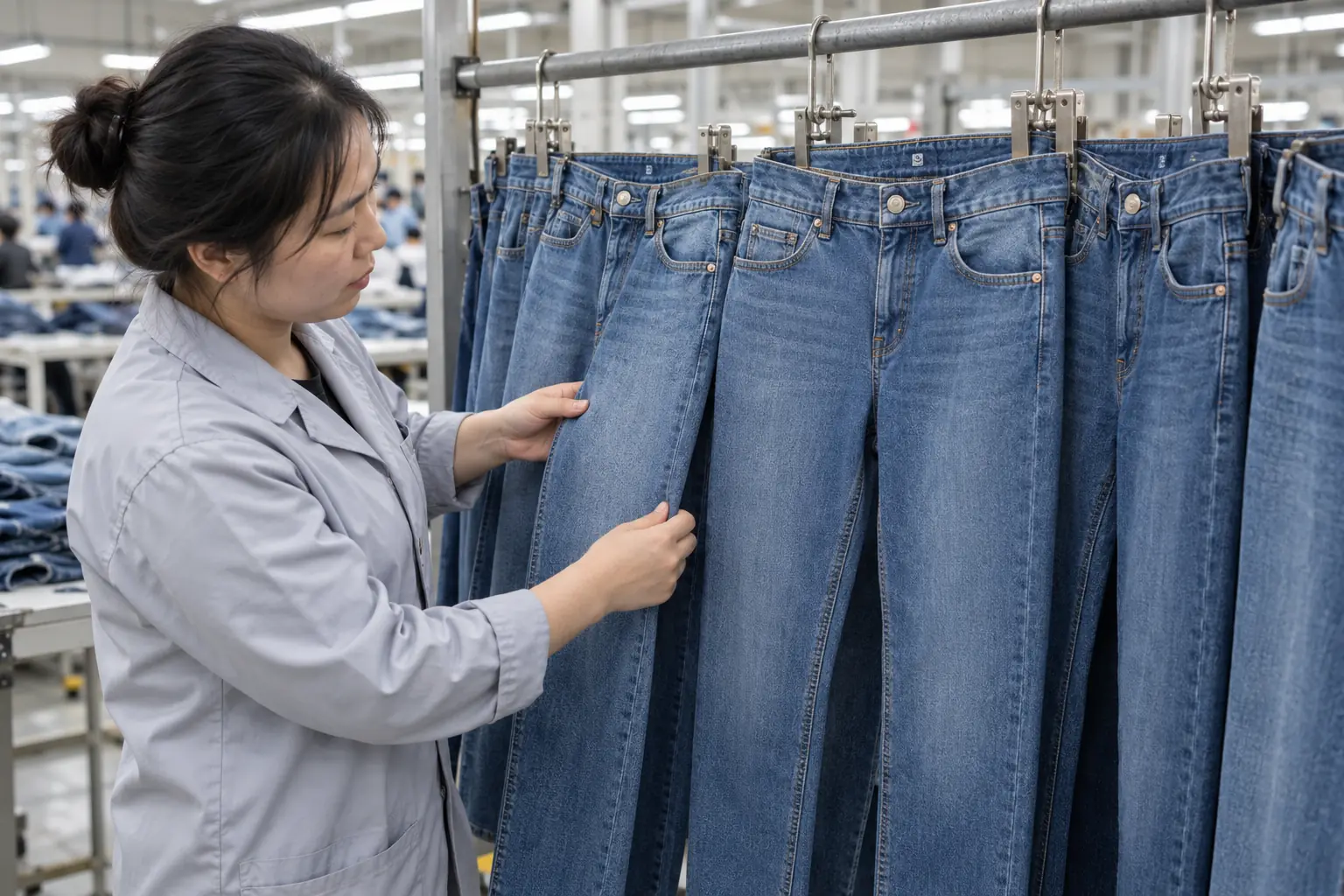
What Makes Denim Sampling More Expensive Than Buyers Expect
Use this factory-side guide to compare denim sampling more expensive than buyers expect more clearly across supplier fit, quote scope, approvals, and timing before.

A denim sample can fit perfectly and still leave the most expensive production question unanswered: can the approved shade be repeated across the fabric that will actually become your order? Buyers often budget for one garment, while development must also establish which fabric lots can share a wash recipe and what variation the brand will accept.
This is why denim sampling can cost more than the first brief suggests. A pale blue reference is a visual target, not proof that different rolls will finish alike. Treat shade lot control as part of sample scope, and you can separate useful trials from avoidable repeats before committing to bulk fabric.
The hidden deliverable is a repeatable shade window
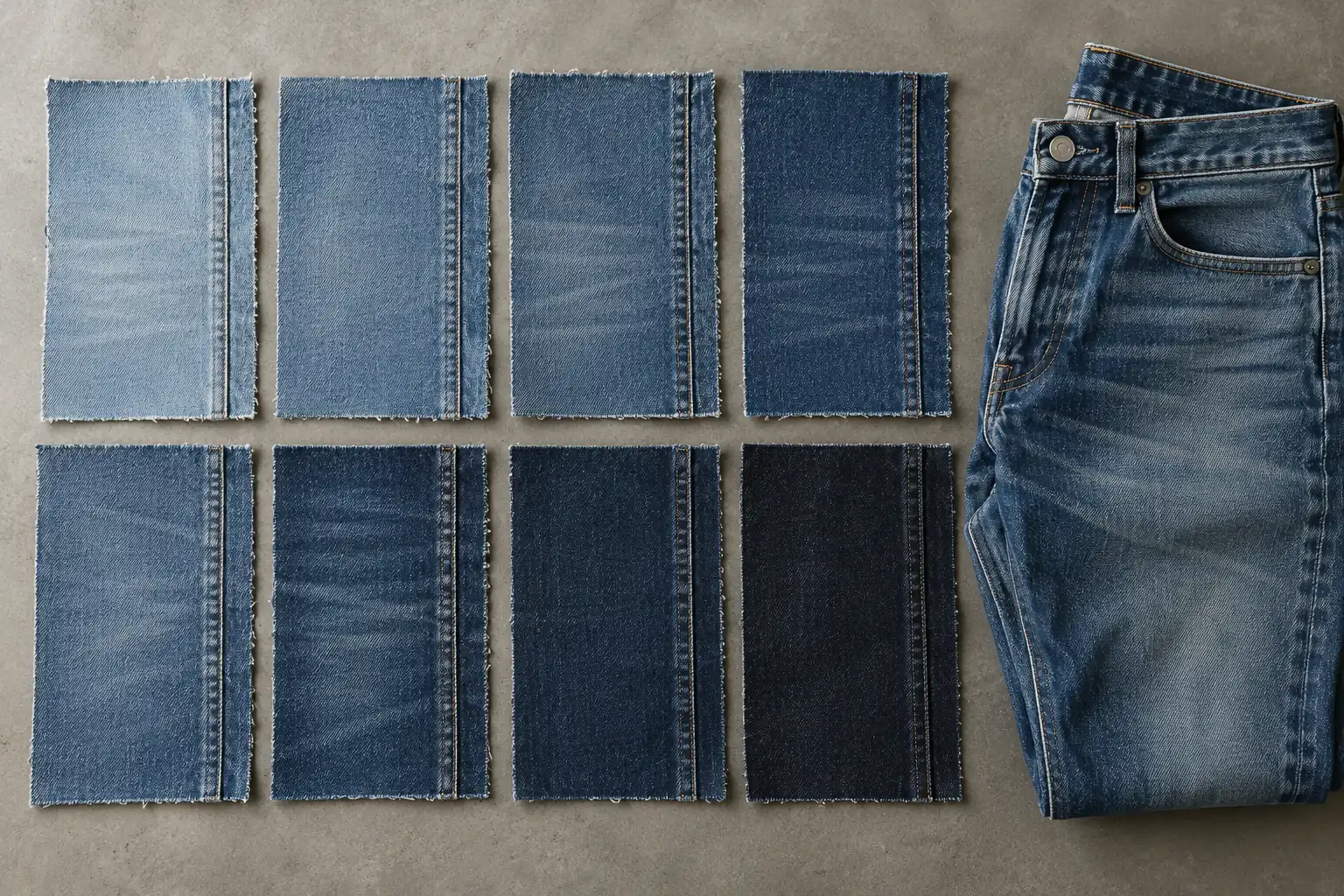
One attractive sample establishes a point of preference. Production needs a window: an approved target plus acceptable lighter, darker, or differently cast boundaries. A greenish blue and a reddish blue may look equally dark yet create an obvious mismatch when jeans hang together. Overall darkness alone cannot describe acceptance.
Consider a straight-leg jean with an even mid-blue wash. The buyer might accept modest variation between complete garments but reject a visibly darker waistband or opposite leg. Those are separate requirements. Write them separately so a factory does not interpret approval of garment-to-garment variation as permission for mismatched panels within one garment.
Developing boundary references takes material, processing, comparison, and buyer review. That work can increase the sampling charge, but its deliverable is concrete: a basis for deciding whether later pieces can ship. Ask whether the quotation includes only a target sample or also the shade references needed for production release.
Trace the sample back to the fabric you will buy
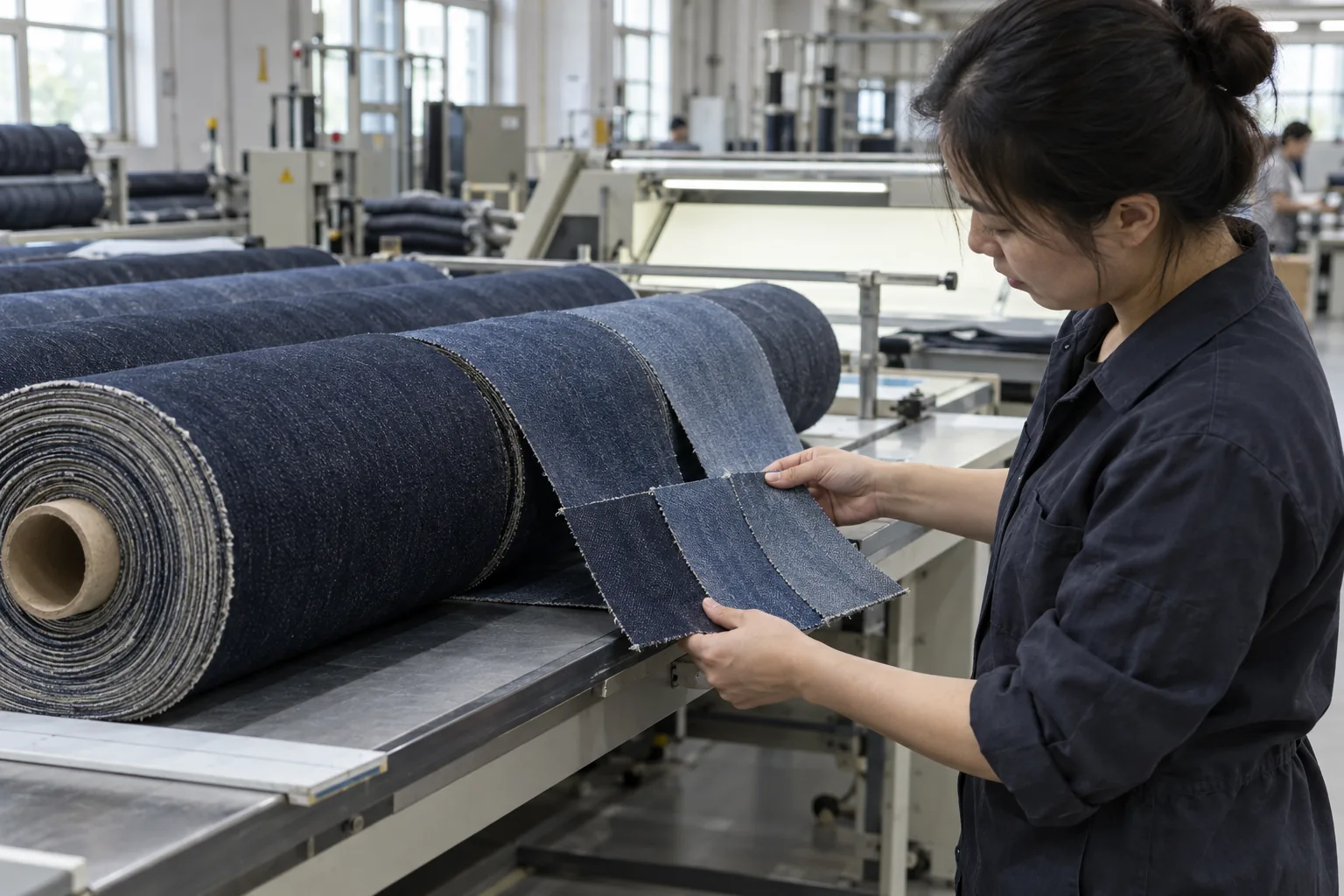
Start with fabric composition, construction, weight, finish, supplier reference, and lot identity. Two fabrics described as the same weight and cotton content can respond differently to washing because their yarns, indigo dyeing, or finishing differ. An approved development sample made from available stock does not automatically validate a later bulk delivery.
Ask the supplier to preserve the connection between each test panel and its parent roll. For a proposed bulk allocation, agree which rolls and positions need sampling, then compare those specimens after the intended wash. Unwashed swatches alone may conceal differences that become visible after color removal.
If trials reveal distinct shade groups, the next decision is commercial as well as technical: reserve a more consistent allocation, process groups separately, or accept documented variation. Each option can change material use, handling, and timing. Do not pay for repeated garment samples while the underlying fabric allocation keeps changing.
For example, a buyer developing matching denim jackets and trousers should request comparison using fabric intended for both products. Approving each item independently can leave a coordinated set visibly mismatched even when each garment satisfies its own reference.
Buy the smallest trial that answers the next question
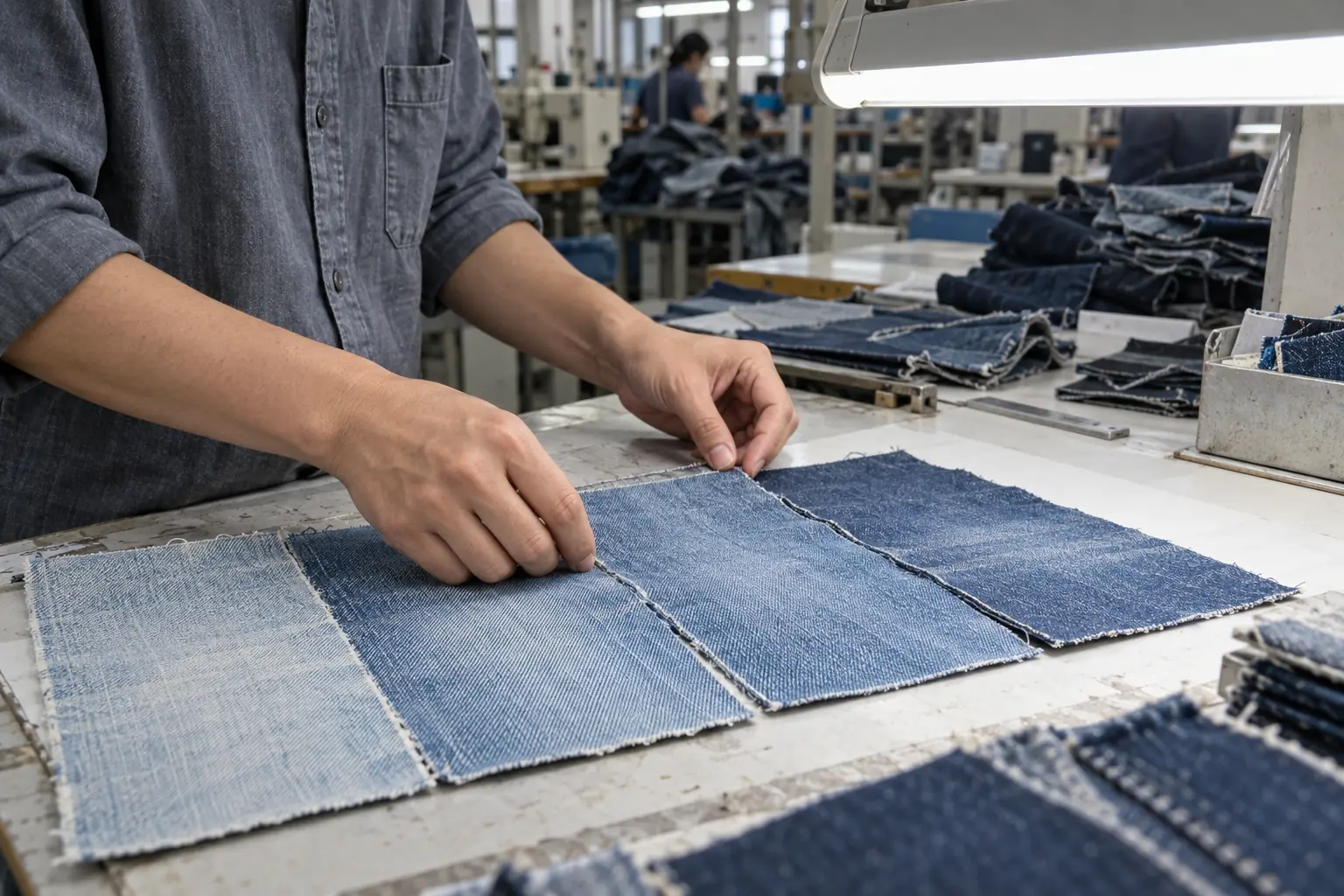
Not every shade decision requires another sewn jean. Flat panels can screen fabric response and narrow a wash direction. They cannot fully predict abrasion at seams, pocket edges, and folded areas, so a garment trial still has a purpose. The saving comes from sequencing these tests, not substituting a panel for every approval.
| Trial | Question it answers | What remains open |
|---|---|---|
| Washed panels from identified rolls | Which fabric groups respond similarly? | Seam contrast and garment appearance |
| Complete sample garment | Does the chosen direction work with construction? | Repeatability under bulk processing conditions |
| Trial using intended production conditions | Does the result stay within approved boundaries? | Ongoing checks across later batches |
Request a quote that distinguishes sewing, fabric consumption, wash development, and additional shade trials. Ask what triggers a new charge: replacing fabric, changing the target cast, adding a wash direction, or requesting duplicate approval pieces. A single bundled fee makes it harder to tell whether an extra round solves a new problem or repeats an unresolved one.
At StitchQuote, denim starts from 100 pieces per style. That minimum does not specify how many shade-development rounds are included. Agree the sample scope separately, especially when a small order contains several wash colors requiring their own references.
Freeze the variables that make a shade approval meaningful
A useful approval identifies the physical sample, fabric lot, wash version, and comparison conditions. Record what was approved: base shade, localized fading, seam contrast, and any acceptable cast difference. Comments such as “slightly cleaner blue” invite another interpretation unless paired with a physical reference or a clearly marked comparison.
Evaluate dry, conditioned samples under agreed lighting. Use a controlled daylight viewing source and, where relevant, a second light representative of retail conditions. Keep orientation consistent because denim texture changes the way light reflects. Phone photographs are helpful for pointing out locations, but automatic exposure and white balance make them unreliable as the sole color standard.
Where instrumental color readings are useful, agree the instrument method, measurement locations, and acceptance limit with the supplier. There is no universal numerical tolerance that guarantees a pleasing result on textured, unevenly washed denim. Combine measurements with visual assessment, and avoid measuring a faded thigh on one garment against a dark seat on another.
Changing resin effects, abrasion placement, or fabric after approval can invalidate the shade decision. StitchQuote offers a seven-day sample for standard styles with confirmed specifications and available materials; custom washes, complex styles, and custom-developed fabric take longer. Build the schedule around the actual development variables.
Make the QC handoff protect panel matching
Shade control can fail between approval and packing even when the wash direction is correct. Cutting needs a roll-group plan, sewing needs traceable bundles, and washing needs batch identities. Otherwise, a pocket or waistband from another group can enter a garment and reveal the mismatch only after finishing.
Use the following checklist as a release discussion with the supplier. Assign an owner to each item and specify what happens when a result falls outside the approved range. “Check color” is not an actionable inspection instruction.
- Before cutting: Confirm the approved fabric allocation, shade groups, and rules for keeping visible components together. Identify how replacement panels will be matched.
- During sewing: Maintain bundle identity through waistband, pocket, and repair operations. Review whether mixing components could create visible contrast after washing.
- After washing: Compare fully dry garments against the retained target and boundaries. Inspect front, back, waistband, and paired legs under consistent lighting.
- Across batches: Check specimens from each wash batch against the original reference, rather than accepting gradual drift from the previous batch.
- Before packing: Segregate failures, record the affected batch, and agree disposition. For coordinated sets, check the pieces together as well as individually.
StitchQuote provides QC before packing. For a shade-sensitive order, specify the comparison method and coverage during development so that the final inspection has a usable standard. If reprocessing is proposed, review a trial first: further washing can also change dimensions, handle, and garment strength.
Questions to resolve before paying for another sample
Should I approve a sample made from a different fabric lot?
You can approve its design direction while keeping bulk shade approval open. State that limitation in writing. Once production fabric is allocated, request an appropriate comparison trial rather than assuming the original recipe will reproduce the result. This separates a useful creative approval from evidence of production readiness.
Can every garment be identical if I pay for more trials?
More trials can improve understanding and process control, but they do not guarantee identical denim. Define which differences affect saleability: panel mismatch, cast shifts, or excessive darkness variation. Paying to establish realistic boundaries is more useful than requesting an undefined “perfect match” repeatedly.
Does separating shade groups always reduce the total cost?
No. Separate groups may require more handling and smaller processing batches. Their value is avoiding visible inconsistencies or rejected goods. Ask the supplier to compare the implications of segregation with reserving a more uniform fabric allocation, then decide using the order quantity and the product’s presentation requirements.
What should the next sample request actually say?
Name one unresolved question, identify the fabric and reference, and state the approval criteria. For example: verify that the allocated trouser fabric matches the approved jacket within the agreed shade boundaries after washing. Request the trial scope, charge basis, and expected timing before authorizing work. That turns another sample into a defined buying decision.
Related reading
- Document fabric and shade requirements in your tech pack
- Review sampling and minimum order planning
- Understand the denim wash approval process
- Discuss your denim sample scope with StitchQuote
Request a manufacturing quote
Share your product type, quantity range, and destination. We usually reply within one business day.