Custom Streetwear, Casualwear & Denim Manufacturer•MOQ 50 pcs•Denim MOQ 100 pcs•7-Day Sample Available


What Fabric Testing Matters Most for Small Production Runs
Understand fabric testing small production runs with more practical factory-side context around material behavior, product feel, stability, and how the decision.

A small clothing launch can lose its intended fit after the first wash or look tired after a few wears, even when the fabric felt excellent at approval. Shrinkage and pilling deserve early attention because they change two things buyers immediately notice: how the garment fits and whether its surface still looks worth the purchase.
For a limited production run, useful fabric testing connects a specific material lot to a clear release decision. Start with the care routine you expect customers to follow, measure dimensional change, and compare surface durability under an agreed method. Then check whether those results still hold when the material becomes a sewn, decorated garment.
Spend the test budget where a failure changes the product
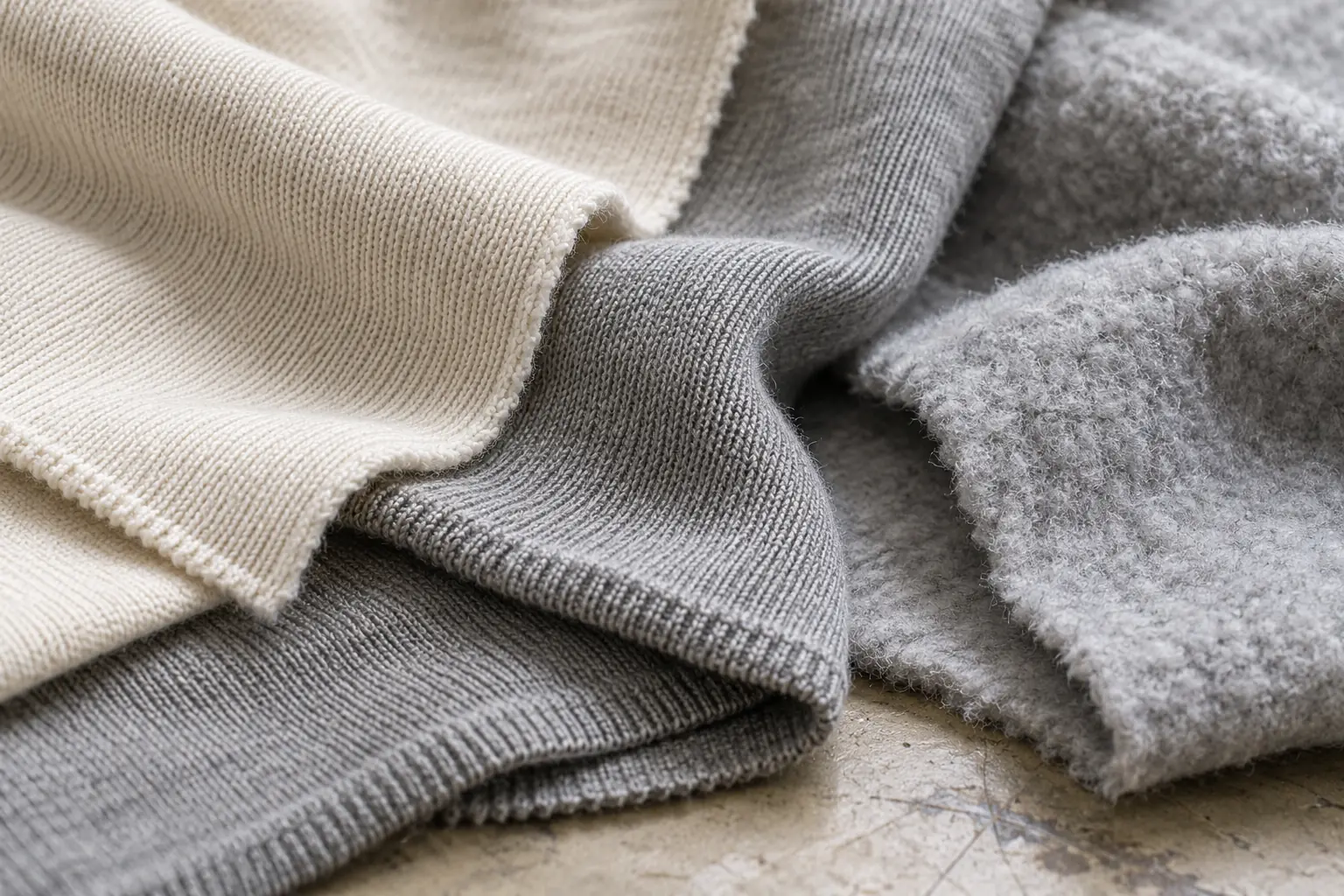
Choose priorities by construction and use, rather than ordering every available test. A compact cotton jersey tee needs close attention to length loss and twisting. A brushed fleece sweatshirt also needs surface assessment because loose fibers can form pills under repeated rubbing. A cotton-rich blend may retain dimensions well yet develop persistent pills; composition alone does not predict the result.
Write down the failure that would force a change. For a short, boxy tee, further body-length loss may break the silhouette. For sweatpants, pilling between the thighs may become the main appearance complaint. These observations determine where to measure, where to inspect, and which material alternatives are worth sampling.
Weight is useful context, but heavier fabric does not automatically shrink less or resist pilling better. Yarn, knitting, finishing, and laundering all matter. Shrinkage and pilling are the focus here, but they do not replace other necessary checks: a dark garment may still need colorfastness evaluation, and a product subject to specific legal requirements needs the relevant compliance review.
Turn the care instructions into a repeatable shrinkage trial
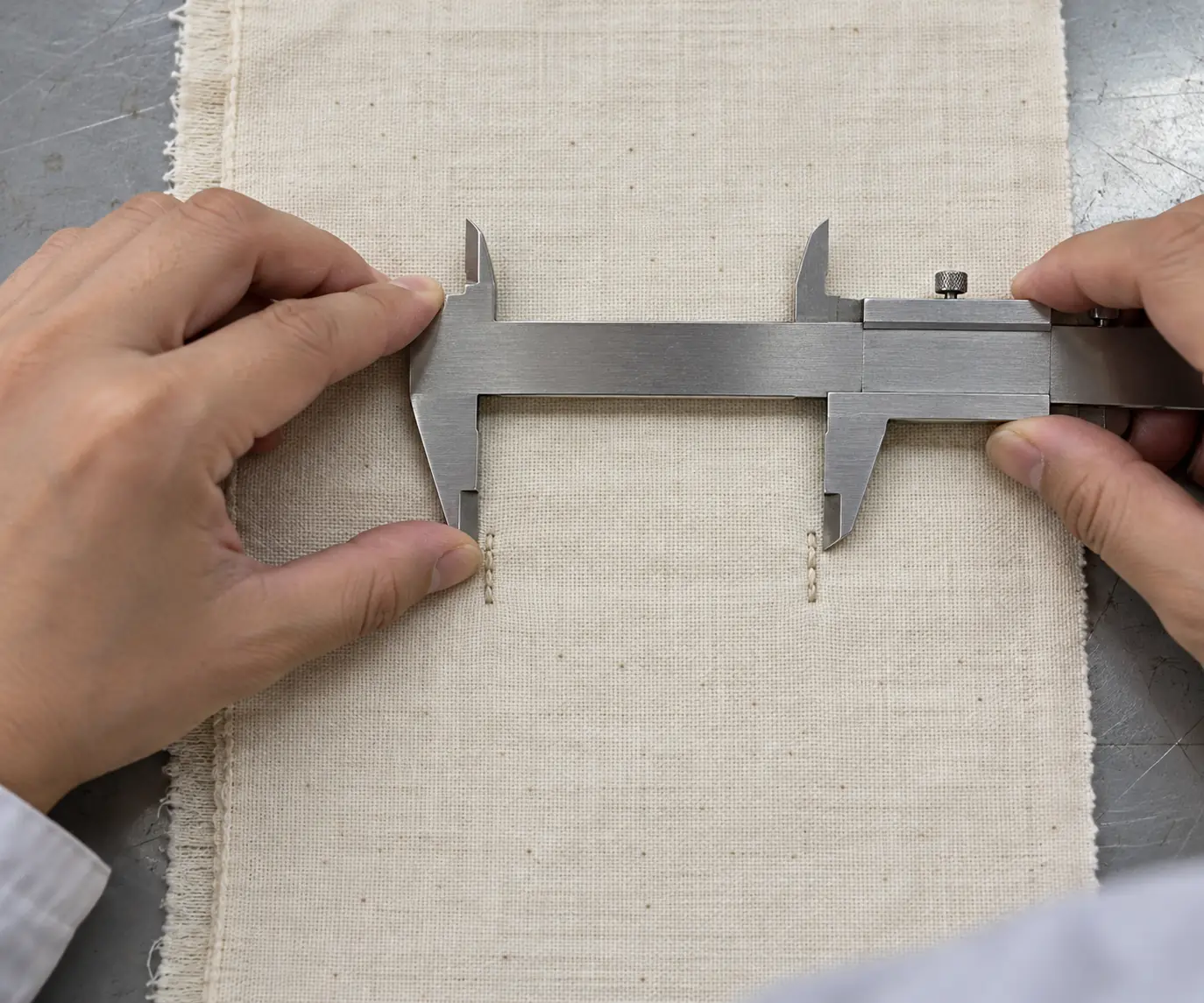
Before testing, agree on washing temperature, cycle, detergent, load conditions, and drying method. A line-dried result cannot support a tumble-dry claim. Ask the laboratory or supplier to record the procedure used, including any applicable standard and deviations. An informal wash trial can screen materials, but it should not be described as a standardized laboratory result.
Condition specimens before initial measurement and again after laundering under the selected procedure. Mark reference distances within the fabric, away from unstable cut edges, and measure lengthwise and widthwise separately. Use multiple specimens from representative positions in the proposed lot; one tiny swatch cannot reveal variation across a roll or between rolls.
Calculate dimensional change as (after measurement minus before measurement) / before measurement × 100. A marked distance that falls from 400 mm to 388 mm has changed by −3%. Record the sign convention so a negative value is clearly understood as shrinkage. Keep raw measurements alongside percentages to make the calculation auditable.
For development, comparing results after one and three wash-and-dry cycles can reveal whether movement is continuing. This is an example screening plan, not a universal requirement. Agree on cycles and limits before testing, then inspect twisting, puckering, and hand feel as well as dimensions.
Translate percentages into the fit your buyer will receive
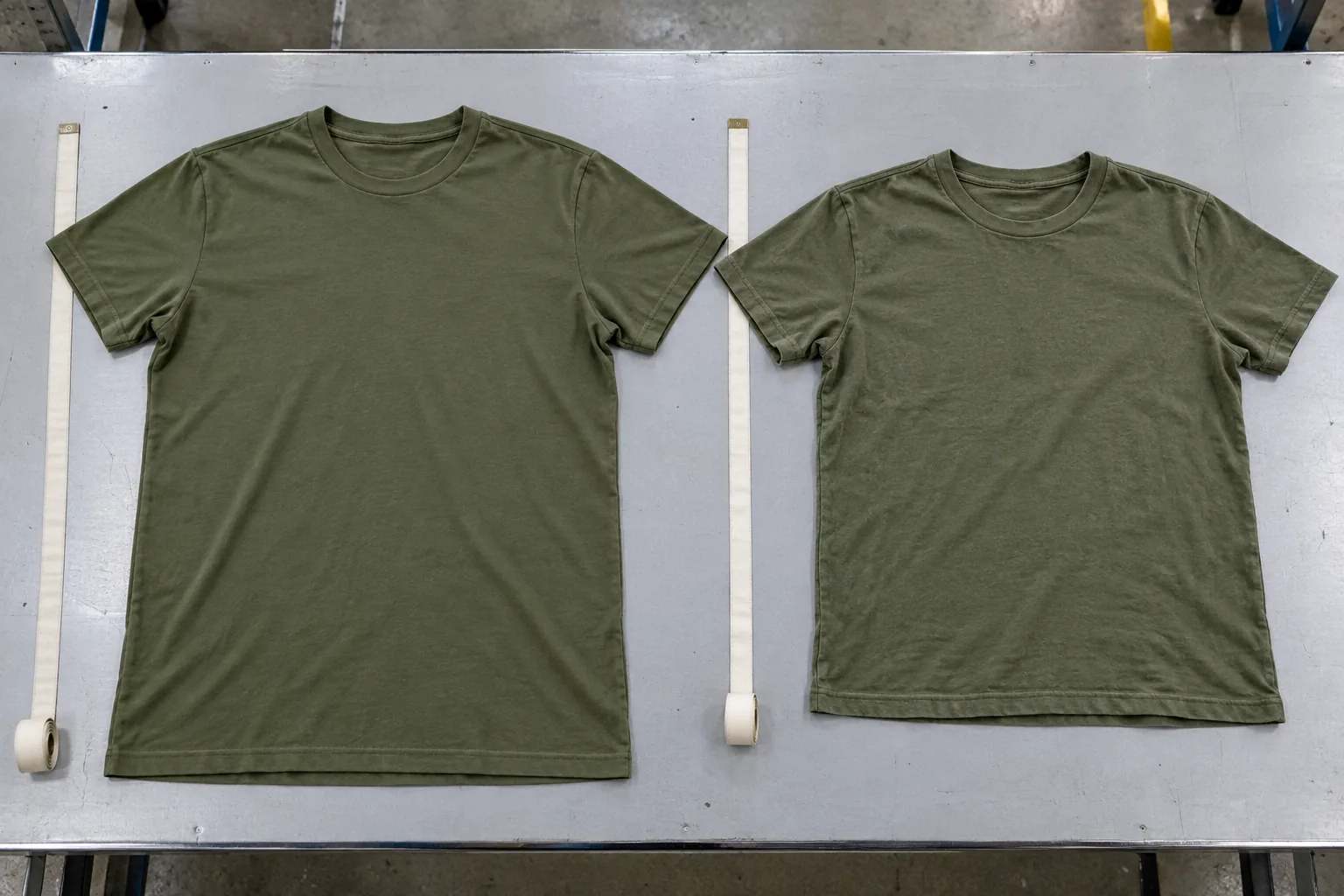
A percentage becomes meaningful when applied to a garment measurement. If a tee has a 70 cm body length and loses 4% in that direction, the indicative loss is 2.8 cm. That can exceed the visual room available in a cropped design. Fabric results provide a warning; a garment wash trial is still needed because seams, rib, and decoration can constrain movement differently.
Set separate requirements for sewing accuracy and laundering performance. A prewash measurement tolerance does not automatically define acceptable postwash fit. The following figures are hypothetical buyer specifications to discuss per project, not StitchQuote standards or universal industry limits.
| Checkpoint | Example agreement | Decision supported |
|---|---|---|
| Prewash body length | 70 cm, tolerance ±1 cm | Confirm sewing matches the approved size specification |
| Lengthwise dimensional change | No more than 3% loss after the agreed three-cycle routine | Assess whether the material preserves intended length |
| Postwash garment fit | Review body length, chest width, neck opening, and twisting against agreed limits | Confirm that the assembled product remains wearable as intended |
Avoid adding a blanket allowance to every pattern piece. Length and width may behave differently, while a rib cuff may shrink differently from the sleeve. First investigate a more stable material or finishing route. If pattern compensation is appropriate, validate it through another sewn sample and wash trial before releasing bulk cutting.
Make pilling approval a controlled comparison
Pilling tests simulate surface rubbing, but results depend on the method, exposure, and assessment conditions. Request the method name, test duration or cycle count, specimen preparation, and grading scale. On common five-grade scales, grade 5 indicates the best appearance and grade 1 the worst; verify the scale on the actual report.
A request for “grade 4” is incomplete without a method and endpoint. Results from different instruments or exposure levels should not be treated as interchangeable. Agree on the procedure and pass criterion with the test provider, then compare candidates tested under the same conditions. Keep a physical approved reference where practical.
Inspect more than pill count. Fuzzing, matting, or loss of a brushed finish may alter appearance before obvious pills form. Assess specimens under consistent lighting and viewing conditions. Photographs help document change but can hide texture, especially on dark fleece, so they should support the physical assessment.
For example, compare two sweatshirt fabrics of similar weight: one with a heavily raised face and one with a tighter, less hairy surface. Test both instead of assuming the softer option will wear better. A brief wear trial can add feedback about underarm and side-body friction, but it does not replace a controlled comparison.
Close the gap between a passing swatch and bulk cutting
Identify every test specimen by fabric code, composition, color, finish, and lot or roll reference where available. A passing development swatch does not automatically approve a later delivery. If the material source, dyeing route, or finish changes, ask whether the earlier evidence still represents the fabric being cut.
Run a finished sample through the intended care sequence with its actual rib, sewing thread, and decoration. A stable body fabric can still develop a puckered neckline when attached components move differently. Embroidery may distort the surrounding panel, and a printed area may respond differently from undecorated fabric. Measure relevant points and compare appearance before and after care.
For planning, StitchQuote offers sampling, fabric and trim sourcing, cut-and-sew, private label, and branding including woven labels, prints, and embroidery. MOQ for most categories starts from 50 pieces per style; denim starts from 100. A seven-day sample is available for standard styles with confirmed specifications and available materials. Complex styles, custom washes, and custom-developed fabrics take longer. Agree separately on time for testing and any resulting revisions.
Use a release checklist that preserves the evidence
Keep the approval record short enough to use at the cutting decision. The purpose is to connect the supplied material, test result, and accepted garment, rather than collecting reports with no clear disposition.
- Material identity: Match delivered fabric references to the tested specimens and flag substitutions.
- Care procedure: Record wash, drying, conditioning, and cycle details so repeat checks use the same conditions.
- Dimensions: Retain before-and-after measurements in both directions, plus finished garment fit observations.
- Surface appearance: Save the pilling method, endpoint, grade, and approved comparison specimen or assessment record.
- Disposition: State pass, hold, or revise, with a named approver and the scope of any accepted exception.
- Bulk verification: Agree which rolls or garments will be checked and what happens if results differ from approval.
StitchQuote provides QC before packing. However, packing-stage inspection cannot recover fabric already cut with an unresolved shrinkage issue. Place material approval before cutting, then use agreed bulk checks to verify consistency. If a result fails, hold the affected material while the buyer and supplier decide on replacement, reprocessing with retesting, or a documented specification revision.
Questions buyers ask before approving the material
Can a home wash trial replace a pilling test?
No. Washing can reveal dimensional movement and some surface changes, but it does not reproduce controlled rubbing exposure. Use it for care and fit screening, then commission a defined pilling assessment when surface durability is a significant product risk.
Should every color share one shrinkage approval?
Only when there is a justified basis for treating them as equivalent. Different dyeing or finishing conditions can change behavior. Ask the supplier or laboratory to propose representative coverage, and test separately when a color uses a different process or shows inconsistent results.
Does prewashing guarantee the garment will stop shrinking?
No. Prewashing may reduce residual movement, but its effectiveness depends on the process and later customer care. Verify the finished result through the agreed repeated-care trial instead of treating “prewashed” as a measurable performance specification.
What should accompany a request to replace a failing fabric?
Send the failed measurement or appearance result, the exact test conditions, and the fit or surface requirement that must be preserved. Include constraints such as weight, stretch, and hand feel so alternatives solve the failure without changing the product unintentionally.
Related reading and project support
- Document measurements and material requirements in your tech pack
- Review sampling and minimum order planning
- Understand hoodie fabric weight before comparing candidates
- Discuss your material and testing requirements with StitchQuote
Request a manufacturing quote
Share your product type, quantity range, and destination. We usually reply within one business day.