Custom Streetwear, Casualwear & Denim Manufacturer•MOQ 50 pcs•Denim MOQ 100 pcs•7-Day Sample Available
Hoodie Tech Pack Checklist for Low MOQ Production
A practical hoodie tech pack checklist for low MOQ apparel production, covering measurements, fabric, trims, artwork, sample approvals, and quoting details.

A low MOQ hoodie order can move quickly only when the garment decisions are already clear. The problem is that many first-time buyers send a mood board, a logo file, and a target price, then expect the factory to fill in the missing product details. That creates slow quoting, uneven samples, and avoidable revision rounds.
For hoodie-specific quoting and production planning, review our custom hoodie manufacturer page.
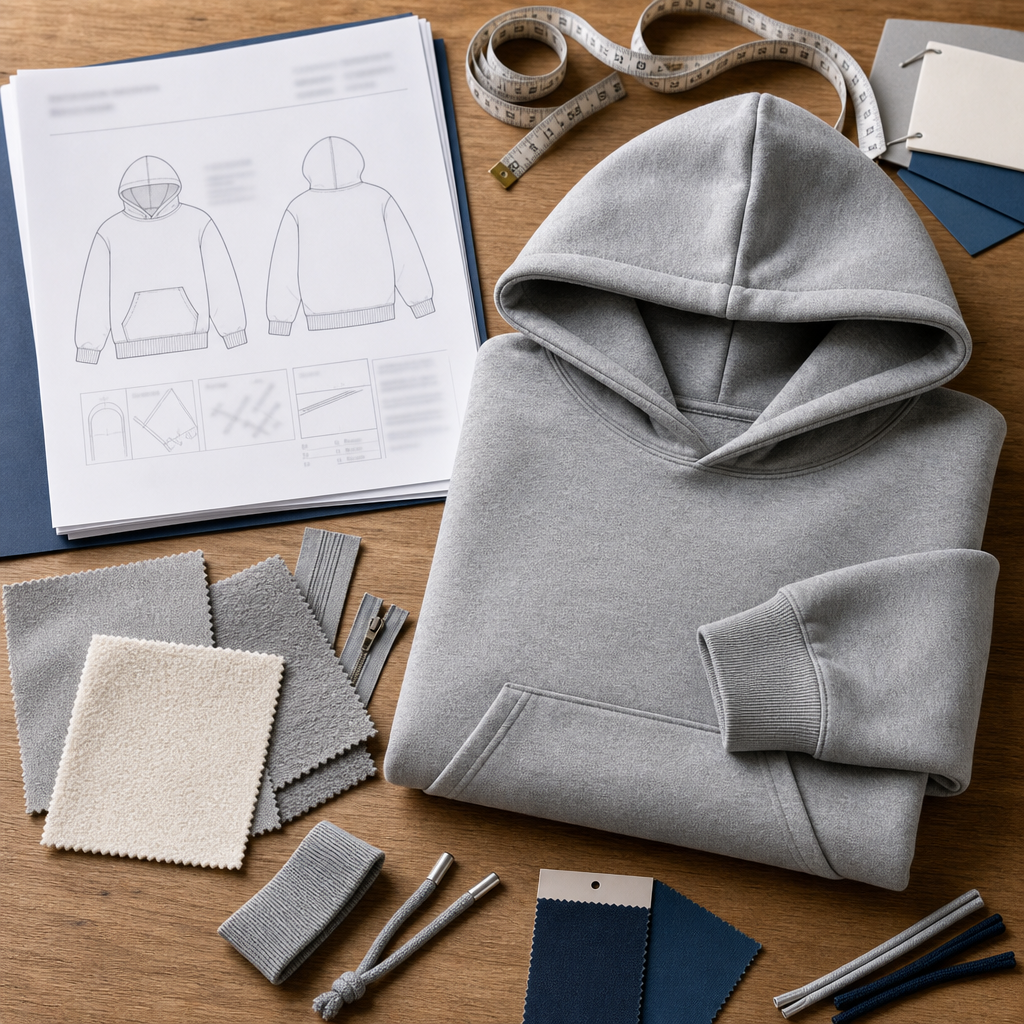
A hoodie tech pack does not need to be overly complex, but it does need to answer the questions a pattern maker, merchandiser, sample room, and bulk production team will ask before cutting fabric. For brands comparing a low MOQ clothing manufacturer, a clear tech pack also helps separate real production constraints from vague pricing guesses.
What a Hoodie Tech Pack Has to Do
The purpose of a tech pack is not to look impressive. It is to reduce interpretation. A useful hoodie tech pack tells the manufacturer what the garment is, how it should fit, what materials should be used, where decoration should sit, and what needs to be checked before bulk production.
For low MOQ production, this matters even more because the margin for trial-and-error is smaller. If the first sample is built from unclear information, the buyer may spend the entire sampling budget correcting basic decisions that could have been defined earlier.
Start With the Hoodie Type and Fit Direction
Before measurements, fabric, or artwork, define the hoodie type. A pullover hoodie, zip hoodie, cropped hoodie, boxy hoodie, and oversized drop-shoulder hoodie each need different pattern logic. A simple description such as “oversized hoodie” is not enough because oversize can come from body width, shoulder drop, sleeve volume, length, or all of them together.
Your tech pack should state:
- Hoodie construction: pullover, full zip, half zip, cropped, raglan, or drop shoulder.
- Fit intention: regular, relaxed, oversized, boxy, cropped, or longline.
- Target wearer and size range.
- Reference fit notes, such as shorter body with wide chest or standard body with dropped shoulder.
- Any non-negotiable proportions, such as sleeve length or hood volume.
If you already have a favorite sample, measure it and explain what should change. If you do not, the factory can help develop a base fit, but the first sample will be more exploratory. That is acceptable as long as both sides understand it before quoting.
Include a Measurement Spec That Can Be Checked
A hoodie measurement spec should include more than chest width and length. The factory needs enough points of measure to build the silhouette consistently and the buyer needs the same points to review the sample objectively.
Common hoodie points of measure include:
- Chest width.
- Body length from high shoulder point.
- Across shoulder or shoulder drop.
- Sleeve length.
- Bicep width.
- Cuff opening.
- Hem width.
- Hood height and hood opening.
- Kangaroo pocket width, height, and placement.
- Zipper length for zip hoodies.
Add a tolerance for each measurement. A tolerance is the allowed variation between the approved spec and the physical garment. Without tolerances, every small difference can become an argument even when the sample is within normal sewing variation.
Define Fabric in Production Terms
Fabric language is where many hoodie projects become vague. Buyers may ask for “premium fleece” or “heavyweight cotton,” but those terms do not tell the mill or cutting team enough. A better fabric line includes fiber content, fabric structure, approximate weight, handfeel, stretch expectation, and finishing direction.
For example, instead of writing “heavy fleece,” write something closer to “cotton-rich brushed fleece, approximately 420 GSM, soft handfeel, stable recovery, suitable for oversized streetwear hoodie.” If exact fabric is still open, say that clearly and ask the supplier to recommend two or three options with swatches.
For more fabric context, StitchQuote has a separate guide on choosing French terry for cleaner premium hoodies. French terry and brushed fleece can both work, but they create different weight, drape, warmth, and surface feel.
Specify Rib, Drawcord, Zipper, Eyelets, and Other Trims
Trim choices affect perceived quality more than many buyers expect. A hoodie with good body fabric can still feel cheap if the rib collapses, the drawcord looks generic, or the zipper does not match the garment weight.
Your tech pack should list each trim separately:
- Rib: fiber content, structure, width, stretch, and color match.
- Drawcord: round or flat, cotton or polyester, color, tip style, and length.
- Eyelets: metal, embroidered, hidden, or no eyelets.
- Zipper: metal, nylon, resin, two-way, puller style, and color.
- Labels: main label, size label, care label, and placement.
- Packaging: polybag, hangtag, barcode, or deferred packaging details.
Low MOQ buyers should decide which trims must be custom and which can stay standard for the first order. Custom metal hardware, complex packaging, and unusual drawcords can increase cost or lead time. A sample-first plan helps decide what is worth customizing now and what can wait until reorder volume is clearer.
Artwork Must Include Size and Placement
Decoration files should not be sent as loose logos only. The tech pack needs artwork method, size, placement, color, and file notes. A front chest print, puff print, embroidery, applique, and wash label all require different preparation.
Include:
- Artwork file name and version.
- Decoration method, such as screen print, DTG, embroidery, applique, or patch.
- Exact placement from seams or garment centerline.
- Finished artwork dimensions.
- Color references, such as Pantone when available.
- Special notes for stretch, cracking, wash effect, or raised texture.
If placement is based on an oversized or boxy fit, check it on the actual sample body. Decoration that looks balanced on a standard hoodie may sit too low or too narrow on a wider streetwear silhouette.
Make Sampling Approval Part of the Tech Pack
A hoodie tech pack should include an approval checklist, not just a construction spec. This is especially important when the order is small enough that the buyer wants to avoid multiple unnecessary rounds.
Before approving the sample, review:
- Fit on body or fit form.
- Measurement table against tolerance.
- Fabric weight, handfeel, shrinkage expectation, and color.
- Hood shape and neckline comfort.
- Pocket placement and symmetry.
- Rib recovery after stretch.
- Decoration placement, color, and wash behavior.
- Label and care content accuracy.
- Any visible sewing defects or tension issues.
Our sampling and MOQ page explains why sample approval should happen before bulk production starts. The sample is not just a visual reference; it becomes the practical control document for the order.
What to Send Before Asking for a Quote
If your tech pack is not complete yet, you can still ask for a quote, but the request should be honest about what is fixed and what is open. The more unclear the garment is, the wider the quote range will be.
For a cleaner first quote, send:
- Hoodie type and fit direction.
- Target order quantity and size breakdown if known.
- Reference images with notes about what to keep or change.
- Fabric target or swatch reference.
- Artwork files and decoration method.
- Trim and label requirements.
- Target timeline.
- Shipping destination and trade term preference if known.
For a broader quote-preparation checklist, read what buyers should finalize before asking for a sample quote.
Practical StitchQuote Note
For low MOQ hoodie production, we treat the tech pack as a shared decision tool rather than a decoration formality. A good supplier can help refine fabric, trims, and construction, but the buyer still needs to define the product direction. The strongest early-stage projects usually combine a clear brand reference with flexible execution choices, so the sample room can solve real garment problems instead of guessing the entire product.
If your hoodie project sits inside a broader streetwear range, it may also help to compare the garment against your T-shirts, sweatpants, or outerwear so the fit language is consistent across the collection. That is where a custom streetwear manufacturer can be more useful than a vendor that only prints on blanks.
FAQ
Do I need a full hoodie tech pack before contacting a manufacturer?
No, but you need enough information for the manufacturer to understand the garment. At minimum, send the hoodie type, fit direction, quantity, fabric target, decoration method, reference images, and any required trims. A full tech pack becomes more important before sampling and bulk approval.
What is the most important measurement for an oversized hoodie?
There is no single measurement. Oversized fit depends on chest width, shoulder drop, sleeve volume, body length, and hem shape working together. If only one point changes, the hoodie may look wide without feeling intentionally oversized.
Can a factory help build the tech pack?
Yes, many manufacturers can help turn buyer references into a production-ready spec. The buyer still needs to make decisions about fit, fabric direction, artwork, and quality expectations. Factory support works best when the brand gives clear priorities.
Should low MOQ hoodies use custom trims?
Some custom trims are worth using early, especially main labels, care labels, and selected drawcord or zipper choices. More complex hardware, packaging, or molded parts may be better saved for reorders if they raise cost or lead time too much.
How many sample rounds should a hoodie need?
That depends on how clear the first spec is and how complex the garment is. A straightforward hoodie with a clear tech pack may need fewer revisions than a custom fit with new fabric, special wash, and multiple decoration methods. The goal is not to avoid sampling; it is to make each sample round answer specific questions.
Request a manufacturing quote
Share your product type, quantity range, and destination. We usually reply within one business day.
One comment
Comments are closed.
[…] you are still building the larger hoodie spec, use the hoodie tech pack checklist for low MOQ production so trim details are connected to measurements, fabric, artwork, and sample […]