Custom Streetwear, Casualwear & Denim Manufacturer•MOQ 50 pcs•Denim MOQ 100 pcs•7-Day Sample Available

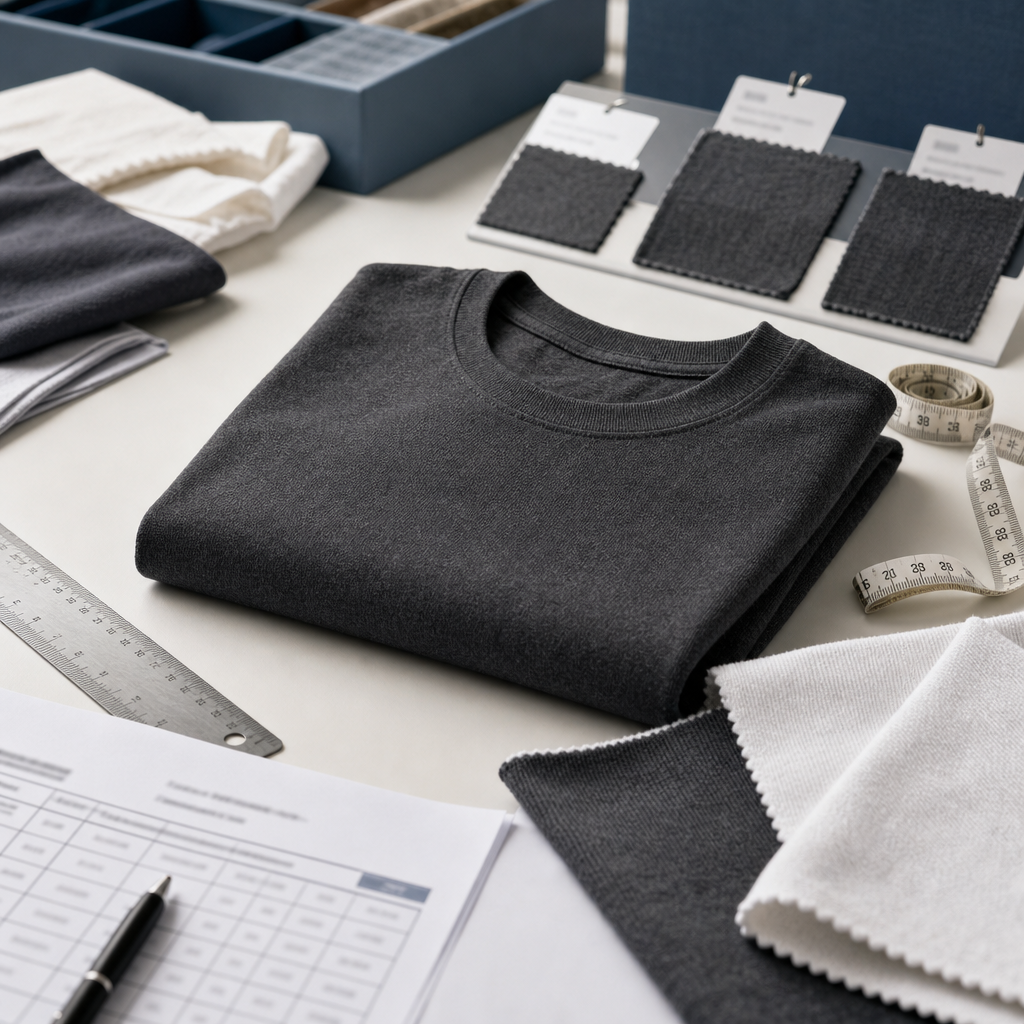
Heavyweight T-Shirt Shrinkage Testing Before Bulk Production
A practical guide to heavyweight T-shirt shrinkage testing before bulk production, covering fabric behavior, sample washing, measurements, tolerances, and buyer approval notes.

Heavyweight T-shirt shrinkage is easy to underestimate before bulk production. A sample can look strong on the table, feel premium in hand, and still become a fit problem after washing. For streetwear and premium basics buyers, shrinkage testing is not a lab detail that can wait until the end. It is part of deciding whether the garment is ready for production.
For T-shirt-specific quoting and production planning, review our custom T-shirt production page.
The issue is not only whether the fabric shrinks. The more important question is how much it shrinks, where it shrinks, and whether the garment still matches the intended fit after normal washing. A boxy T-shirt, oversized tee, or heavyweight private label basic can lose its intended proportion if the body length, chest width, sleeve opening, or neck shape changes differently after wash.
Why Heavyweight T-Shirts Need Specific Shrinkage Checks
Heavyweight jersey usually has more structure than lightweight T-shirt fabric, but that does not make it immune to movement. Cotton-rich fabrics can relax, compact, twist, or shorten after washing and drying. The heavier the fabric, the more visible small fit changes can feel because the garment has a stronger silhouette.
Buyers often focus on GSM first. GSM matters, but it does not tell the full shrinkage story. Fiber content, yarn, knit construction, finishing, dyeing, enzyme wash, garment wash, cutting direction, and drying method all affect the final result. Two fabrics with similar weight can behave differently after washing.
If you are developing T-shirts as part of a broader streetwear program, shrinkage testing should sit alongside fit and fabric decisions on your custom streetwear manufacturer brief, not as a last-minute quality control note.
Start With the Intended Finished Fit
Before testing shrinkage, define the finished fit you are trying to protect. A shrinkage test is not useful if there is no approved measurement target. A regular T-shirt, boxy T-shirt, oversized T-shirt, cropped tee, and heavyweight blank-style tee all have different fit priorities.
For a boxy fit, body length and chest width are usually critical. For an oversized tee, shoulder drop, sleeve length, and chest width may matter more. For a premium basic, neck shape and body length can affect perceived quality even when the chest width is acceptable.
Use the approved sample or target spec to define the points that must stay inside tolerance after washing. If your team is still deciding between fit directions, review boxy T-shirt vs standard oversized T-shirt before locking the test plan.
What to Measure Before and After Washing
A useful shrinkage test starts with consistent measurement. Measure the same garment before and after washing, using the same surface, same method, and same points of measure. Do not compare a pre-wash sample in one size against a different post-wash sample and treat the difference as shrinkage evidence.
Common T-shirt points of measure include:
- Chest width.
- Body length from high shoulder point.
- Shoulder width or shoulder drop.
- Sleeve length.
- Sleeve opening.
- Hem width.
- Neck width and front neck drop.
- Neck rib height.
Record the original measurement, post-wash measurement, difference, and percentage change. A percentage can help compare changes across different measurement points, but the practical fit impact still matters. A small percentage change in neck width may be more visible than a similar percentage change in hem width.
Use a Realistic Wash Method
The wash method should reflect how customers are likely to care for the product. If the care label will recommend cold wash and low tumble dry, test that. If the customer is likely to machine wash and hang dry, test that condition. If the garment has a garment wash or dye process before shipment, separate production wash shrinkage from consumer wash shrinkage.
A basic buyer-side test plan may include:
- One unwashed reference sample kept aside.
- One sample washed once under the intended care method.
- One sample washed multiple times if the fabric or fit is high risk.
- Photos before and after washing.
- Flat measurements before and after washing.
- Notes on twisting, seam movement, neck shape, and handfeel.
For small production runs, this level of testing is usually more useful than vague comments like “fabric feels good” or “sample looks smaller after wash.” StitchQuote also covers broader test priorities in what fabric testing matters most for small production runs.
Check Shape, Not Only Numbers
Measurement tables are important, but shrinkage problems are not always captured by one number. A heavyweight T-shirt can twist, the side seams can move, the neck rib can wave, or the sleeve opening can flare. These issues affect perceived quality even if the chest and length remain inside tolerance.
After washing, check:
- Whether side seams still hang straight.
- Whether the neck rib lies flat.
- Whether the shoulder line still matches the intended fit.
- Whether the hem curls or waves.
- Whether print or embroidery placement still looks balanced.
- Whether the garment feels stiffer, softer, shorter, or wider than intended.
If the T-shirt includes graphics, shrinkage can also change visual placement. A print that sits correctly on the unwashed sample may look too low, too high, or too wide after the garment changes shape.
Agree on Tolerances Before Bulk Production
Shrinkage testing should connect back to the measurement tolerance table. If the buyer has not agreed on acceptable variation, sample review can become subjective. A garment may be slightly different after wash but still acceptable, or it may be inside one measurement tolerance while failing the intended fit.
For guidance on tolerance thinking, see garment measurement tolerances for small batch clothing orders. The same logic applies to T-shirts: decide what must be controlled tightly and what can have normal production variation.
When Shrinkage Should Change the Spec
If shrinkage is consistent and predictable, the pattern or measurement spec can sometimes be adjusted before bulk production. For example, body length may be increased slightly to account for expected post-wash change. But this only works when testing is reliable and the production process is stable.
If shrinkage is inconsistent, the issue may be fabric finishing, cutting, washing, or handling. In that case, changing the pattern alone may hide the problem rather than solve it. The buyer and supplier should review the fabric source, finishing method, and sample process before approving bulk.
Practical StitchQuote Note
For low MOQ T-shirt orders, shrinkage testing is a practical risk-control step. It helps the buyer avoid approving a sample that only works before washing. It also gives the manufacturer clearer approval criteria before cutting bulk fabric.
If your order includes T-shirts, hoodies, and sweatpants, test each fabric and garment type separately. Do not assume one shrinkage result applies across the whole collection. A low MOQ clothing manufacturer can help keep the first order manageable, but the buyer still needs to approve the right sample evidence.
FAQ
How much shrinkage is acceptable for a heavyweight T-shirt?
There is no single acceptable number. It depends on the fabric, fit, garment construction, care method, and agreed tolerance. The key is to test before bulk production and decide whether the post-wash garment still meets the intended fit.
Should shrinkage be tested before or after sample approval?
It should be part of sample approval. A sample that is approved only before washing may not represent the garment customers will actually wear after care.
Does higher GSM mean less shrinkage?
No. GSM describes fabric weight, not shrinkage stability. Fiber content, knit construction, finishing, dyeing, and washing all affect shrinkage behavior.
Can the pattern be adjusted for expected shrinkage?
Yes, if shrinkage is consistent and the production process is stable. If shrinkage is unpredictable, the fabric or finishing process should be reviewed before changing the pattern.
What should buyers send to the factory for shrinkage review?
Send pre-wash and post-wash measurements, photos, wash method, care expectation, fit comments, and the specific points that must be corrected before bulk production.
[…] heavyweight tees, also connect print review with shrinkage testing. The article on heavyweight T-shirt shrinkage testing is relevant because garment shrinkage can change print tension after […]