Custom Streetwear, Casualwear & Denim Manufacturer•MOQ 50 pcs•Denim MOQ 100 pcs•7-Day Sample Available

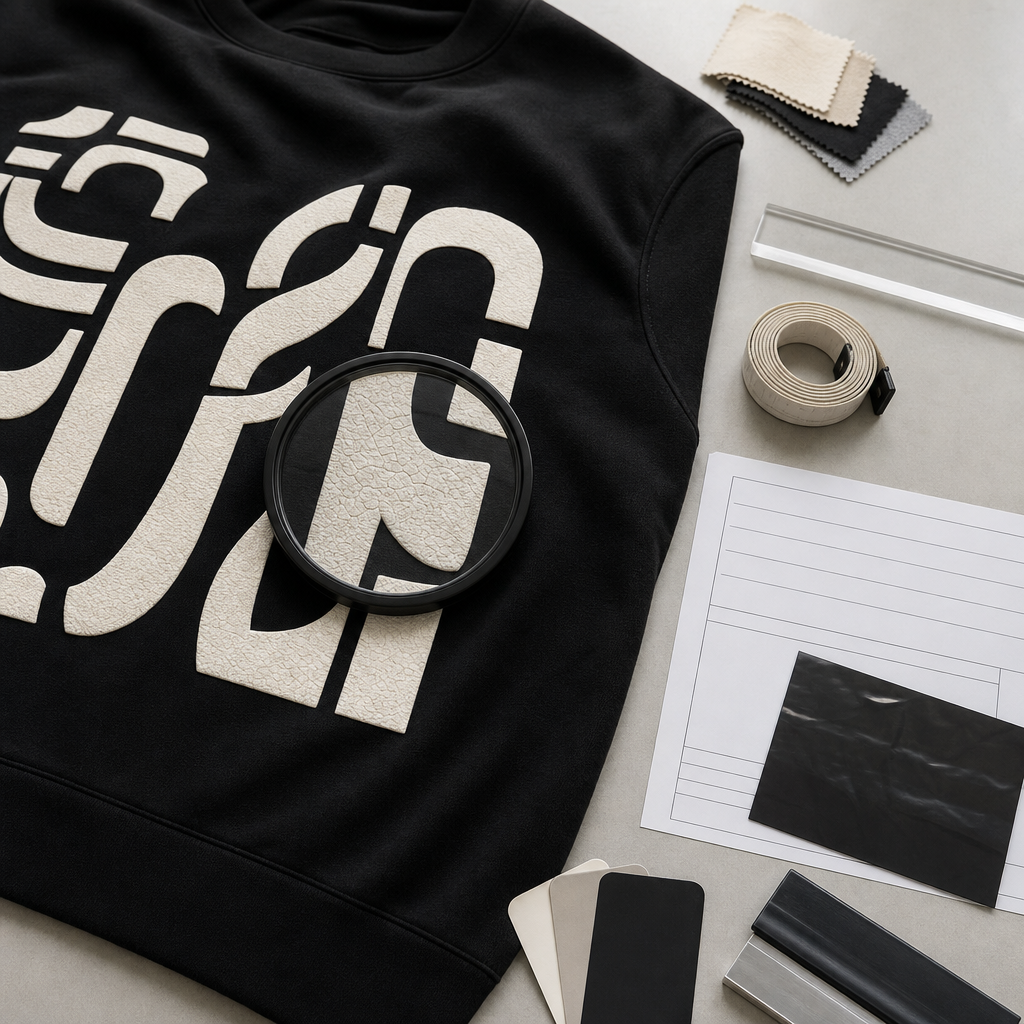
How to Diagnose Puff Print Cracking Before Streetwear Bulk Production
A streetwear print approval guide for buyers checking puff print cracking, fabric stretch, curing, artwork thickness, wash behavior, and sample notes.

Puff print cracking can turn a strong streetwear graphic into a production problem. A raised print may look good in the first photo, then split, flake, or look dry after stretching, washing, or wearing. For low MOQ streetwear buyers, the issue should be diagnosed during sample approval rather than after bulk garments are finished.
The key is to separate normal texture from failure. Puff print is supposed to have dimension. It may show surface texture depending on ink, artwork, fabric, and curing. Cracking becomes a problem when the print separates, exposes the garment color underneath, breaks along stress points, or changes beyond the approved sample standard.
Start With the Cracking Pattern
Look at where the cracking appears. If it happens across the entire print surface, the issue may be ink buildup, curing, wash behavior, or print formula. If it appears only at one seam, fold, or stretched area, the issue may be placement or fabric movement. If it appears only after washing, the sample review should include shrinkage and print durability together.
Ask for close-up photos before wash, after wash, and after light stretching. A single flat photo is not enough to judge raised print durability.
Check Artwork Thickness and Detail
Puff print does not handle every artwork style the same way. Large filled shapes, sharp corners, thin strokes, tiny details, and dense layers can all behave differently. Very thick raised areas may crack if they cannot flex with the garment. Thin details may lose definition or split at edges.
If the buyer is still choosing the print method, StitchQuote’s guide to puff print vs high-density print for streetwear graphics explains the difference between raised texture and sharper dimensional effects.
Match Print Method to Fabric Stretch
Fabric stretch matters. A puff print on a stable heavyweight cotton panel behaves differently from a puff print on a stretchy jersey or rib area. If the garment stretches across the chest, sleeve, or side body, the print must tolerate that movement. A print placed over a high-stretch area may crack even if the same ink works on a stable flat panel.
For heavyweight tees, also connect print review with shrinkage testing. The article on heavyweight T-shirt shrinkage testing is relevant because garment shrinkage can change print tension after washing.
Review Placement Before Blaming Ink
Some cracking is caused by placement. Prints placed too close to seams, armholes, cuffs, pocket edges, or heavy folds may flex more during wear. Oversized and boxy garments can also change how a print hangs and stretches on the body.
Use the same discipline as screen print placement tolerance: define reference points, approve real garment photos, and note where the print should sit on each size. Placement and durability are connected.
Ask About Curing and Wash Testing
Puff print needs correct curing. If curing is weak, the print may crack, peel, or wash poorly. If the cure or heat is too aggressive, the fabric hand feel or print surface may change. Buyers do not need to control the full technical setup, but they should ask whether the approved sample represents the final production process.
Before bulk, request a wash-tested sample or a clear wash-test result. Check whether the print keeps its raised effect, whether edges lift, whether cracks expose the garment underneath, and whether the hand feel remains acceptable.
Compare With Other Decoration Methods
If puff print keeps failing, it may not be the right method for that artwork or fabric. Screen print, high-density print, heat transfer, embroidery, or patch solutions may be better depending on the effect the buyer wants.
The StitchQuote article on screen print vs heat transfer for small streetwear runs can help buyers compare decoration routes when MOQ, cost, color count, and durability are all part of the decision.
Write a Specific Revision Request
Do not send a vague note like “print is bad.” A useful revision request says where the cracking appears, when it appears, and what should be checked. For example: “After one wash, raised print cracks at the top curve and sleeve-side edge. Please review ink thickness, curing, placement on the garment, and whether the artwork edge should be simplified.”
That gives the factory a production problem to solve. It also creates a record for future QC and reorder comparison.
Sample Approval Checklist
- Final artwork size and print location are approved on a real garment.
- Raised effect, edge definition, and hand feel match the buyer’s target.
- Close-up photos show the print before and after wash.
- Stretch or flex points have been reviewed.
- Cracking, lifting, peeling, or color exposure is documented.
- Production process is expected to match the approved sample.
StitchQuote Note
For custom streetwear manufacturing, low MOQ clothing production, and sampling and MOQ projects, StitchQuote treats puff print approval as a decoration QC process. Artwork, fabric, placement, curing, wash behavior, and realistic tolerance should all be approved before bulk production.
FAQ
Is some texture normal in puff print?
Yes. Puff print is a raised decoration method and can have surface texture. The issue is not texture alone. The risk is cracking, splitting, peeling, or exposed garment color beyond the approved standard.
Why does puff print crack after washing?
Common causes include unsuitable artwork thickness, fabric stretch, poor curing, shrinkage, heavy print buildup, or placement over high-flex areas. A wash-tested sample helps identify the likely cause before bulk.
Can puff print work on hoodies and heavyweight T-shirts?
Yes, but the buyer should test the actual fabric, artwork size, placement, and wash process. Heavy fabric can support strong raised effects, but it does not remove the need for print durability checks.
[…] puff, high-density, metallic, and discharge finishes that give streetwear its texture. Our guide on puff print cracking checks covers how those effects are approved. DTG reproduces photographic gradients and unlimited color […]