Custom Streetwear, Casualwear & Denim Manufacturer•MOQ 50 pcs•Denim MOQ 100 pcs•7-Day Sample Available
Hoodie Drawcord, Eyelet, and Aglet Approval Checklist Before Bulk Production
A hoodie trim approval guide for buyers checking drawcords, eyelets, aglets, placement, durability, safety risk, and bulk production consistency.

Hoodie drawcords, eyelets, and aglets look like small trim details, but they affect the final hand feel, perceived value, wash durability, and safety risk of a hoodie. They also create many late-stage production issues because buyers often approve the body fabric and fit first, then leave trim decisions vague until the pre-production sample.
For hoodie-specific quoting and production planning, review our custom hoodie manufacturing page.
For a custom hoodie, these trims should be reviewed as part of the sample approval package. The buyer should not only ask whether the drawcord looks good. The approval should define material, length, diameter, color, end finish, eyelet position, reinforcement, wash behavior, and any claims or safety requirements that apply to the target market.
This checklist is for streetwear brands, premium basics buyers, and private label teams preparing pullover or zip hoodie production.
Approve the Drawcord Type First
Common hoodie drawcord options include flat cotton tape, round cotton cord, polyester cord, braided cord, tonal cord, contrast cord, and branded jacquard tape. The right choice depends on the garment weight, hood size, brand position, and expected retail price point.
A heavyweight fleece hoodie usually needs a cord that feels balanced against the fabric. A thin cord can make the garment feel cheaper even when the body fabric is strong. A very thick cord can look premium but may be uncomfortable, heavy, or difficult to pull smoothly through the hood channel.
Before bulk production, approve these drawcord details:
- Material composition and hand feel.
- Flat or round shape.
- Diameter or tape width.
- Finished length on each size.
- Color standard and whether it must match body fabric, rib, or print.
- Whether the cord is plain, tipped, knotted, heat sealed, or branded.
If you are still building the larger hoodie spec, use the hoodie tech pack checklist for low MOQ production so trim details are connected to measurements, fabric, artwork, and sample notes.
Check Eyelet Size, Finish, and Reinforcement
Eyelets can be metal, plastic, embroidered, stitched, or omitted entirely. Metal eyelets can add a premium finish, but they introduce placement, color, plating, corrosion, and wash durability questions. Embroidered or stitched openings reduce hardware risk but need clean sewing and reinforcement.
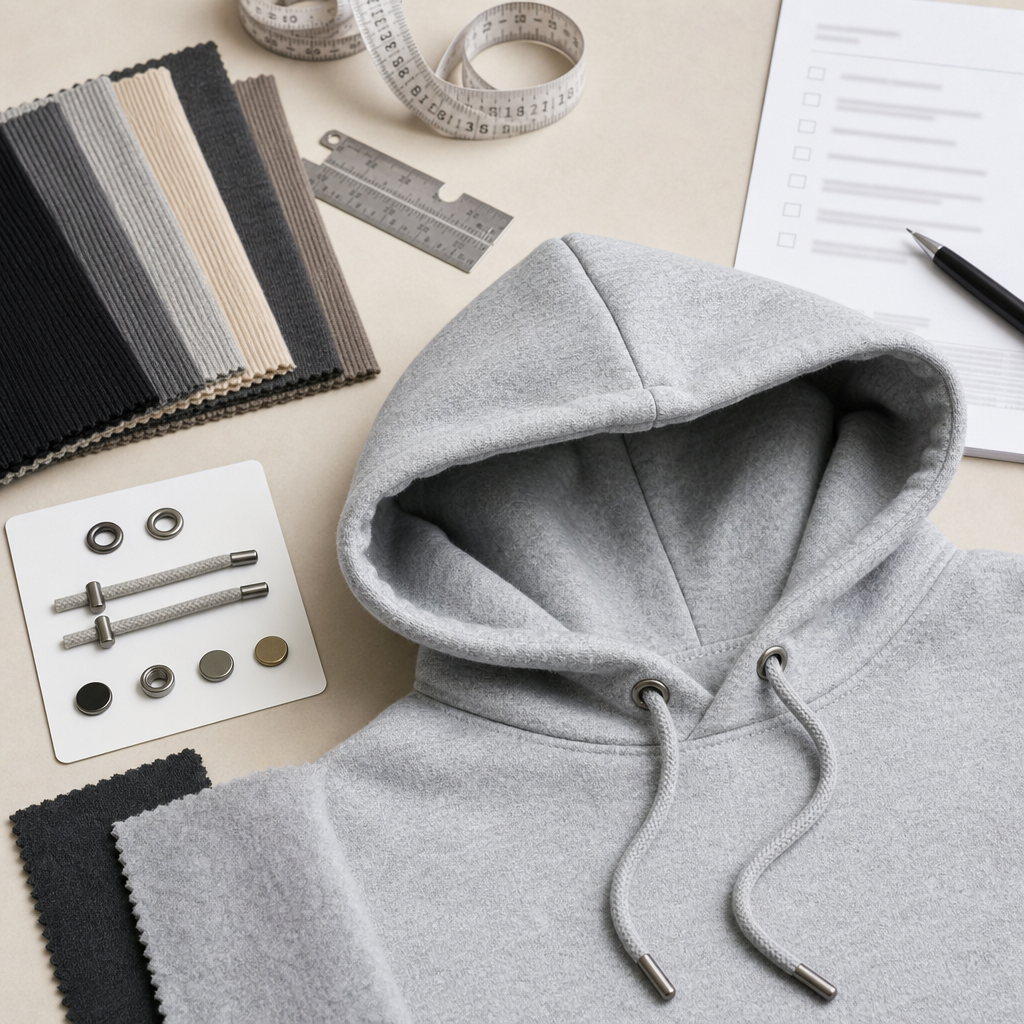
The buyer should approve eyelet outer diameter, inner diameter, color, finish, and placement from the hood edge or seam. The sample should show whether the eyelet sits flat, whether fabric puckers around it, and whether the cord slides smoothly.
For low MOQ orders, avoid approving hardware from a photo of loose trims only. Loose trim cards are useful, but the final approval must be on the actual hoodie fabric because fleece thickness, hood lining, and reinforcement patches change how the eyelet sits.
Review Aglets and Cord Ends
Aglets are the finished ends of the drawcord. They can be metal, plastic, rubber, heat shrink, folded tape, knot, or heat-sealed cord. Each option changes cost, durability, weight, and visual style.
Metal aglets may look premium, but they need wash and pull testing. A heavy aglet on a thin cord can fall awkwardly or hit the garment surface. Plastic or rubber ends may be lighter but should still be checked for color match, finish consistency, and attachment strength.
For private label projects, branded aglets should be treated carefully. Confirm the logo artwork, engraving depth, color contrast, minimum order pressure, and lead time. Do not add certification marks, sustainability claims, or safety claims unless they can be supported by the correct documentation for the trim and target market.
Confirm Placement and Hood Channel Construction
Drawcord approval is not only about the cord. The hood channel controls how the cord exits, how smoothly it moves, and whether the hood opening looks balanced. A cord can be high quality but still look wrong if the eyelets are too close together, too far from the edge, or not symmetrical.
Ask the factory to confirm:
- Distance from eyelet center to hood edge.
- Distance between left and right eyelets.
- Hood channel width and stitch line position.
- Whether reinforcement is added behind hardware.
- How much cord length is exposed when the hoodie is laid flat.
- Whether the drawcord is inserted before or after washing.
If your order includes a zip hoodie, review the trim together with zipper position and hood opening shape. The StitchQuote guide on what buyers should lock before approving a zip hoodie sample covers related sample approval decisions.
Wash and Pull Test the Trim System
Drawcords and hardware should survive normal washing and handling. The exact test plan depends on the product and market, but buyers should at minimum check whether the cord bleeds color, twists badly, shrinks more than the hoodie body, loses aglets, rusts, chips, or creates sharp edges.
After washing, compare the sample with the approved trim card and pre-wash photos. Note whether the cord length changed, whether eyelets stayed flat, and whether the aglet finish still looks acceptable. If the garment will use acid wash, pigment dye, garment dye, or heavy enzyme wash, hardware should be checked under that actual process rather than assumed safe.
Consider Safety and Market Requirements
Drawcord safety rules can vary by product type, age range, and destination market. Adult fashion hoodies and children’s hoodies may not be treated the same. If the hoodie could be sold to children or youth, the buyer should confirm market-specific drawcord rules with a qualified compliance resource before production.
StitchQuote should not invent compliance claims or assume a trim is certified. The safer buyer workflow is to define the product age range, sales market, required tests, and documentation before approving the trim system.
Build a Trim Approval Record
A strong approval record prevents small trim changes from becoming bulk production surprises. Include the drawcord material, size, color, supplier reference if available, eyelet type, aglet type, placement measurements, trim card photo, sample photos, wash result, and buyer comments.
The approval record should travel with the hoodie sample approval. It should not sit in a separate chat thread or supplier message where it can be missed. For new buyers, finalizing key decisions before asking for a sample quote reduces the risk of late trim changes and repeated sampling.
StitchQuote Note
In hoodie manufacturing, trim details need the same level of approval discipline as fabric, fit, and artwork. For private label clothing and low MOQ production, the practical standard is clear: approve the actual trim on the actual sample, define measurable placement, and record wash or pull concerns before bulk.
Use the sampling and MOQ stage to finalize these details. Once bulk hoodies are cut, sewn, washed, and trimmed, changing drawcords or eyelets can create delays, extra cost, and inconsistent units.
FAQ
Should hoodie drawcords match the body fabric exactly?
They do not always need to match exactly. Tonal contrast, black drawcords, natural cotton drawcords, and branded cords can all work. The important point is to approve a physical color standard because photos and digital mockups do not show fabric and trim color accurately.
Are metal eyelets better than stitched eyelets?
Not automatically. Metal eyelets can look more premium, but they need clean placement, proper reinforcement, and wash durability checks. Stitched or embroidered eyelets can reduce hardware risk, but they require neat sewing and the right thread tension.
When should hoodie trims be approved?
Approve drawcords, eyelets, and aglets before bulk production and ideally before the pre-production sample is signed off. Trim approval should happen together with fit, fabric, measurements, artwork, and wash comments so the factory has one clear production standard.
[…] hoodies with drawcords and eyelets, review trim placement together with embroidery. The guide on hoodie drawcord, eyelet, and aglet approval covers trim controls that can affect the decoration […]
[…] the drawcord, eyelet, and aglet approval checklist and the hoodie embroidery placement guide when the style has visible trims or […]