Custom Streetwear, Casualwear & Denim Manufacturer•MOQ 50 pcs•Denim MOQ 100 pcs•7-Day Sample Available

How to Diagnose Denim Leg Twist Before Low MOQ Jeans Bulk Production
A denim sample approval guide for checking leg twist, side seam rotation, fabric skew, wash behavior, tolerance, and QC records before bulk.

Denim leg twist is one of the fit problems buyers often notice only after a jean has been washed, worn, or photographed on body. The side seam may rotate toward the front or back, the inseam may look unbalanced, or the leg may hang differently from the approved sample. For low MOQ jeans production, this should be diagnosed before bulk approval.
For denim-specific quoting and production planning, review our custom jeans manufacturer page.
Leg twist does not always mean the factory made one simple sewing mistake. Denim is a twill fabric, and the wash process can expose fabric skew, cutting balance, pattern issues, and construction tension. The buyer’s job is to identify whether the twist is within an acceptable tolerance or whether it needs correction before bulk production.
For denim wash, leg twist, pocket placement, or fit tolerance decisions, use how to approve jeans after-wash measurements before low moq production to confirm after-wash measurement approval before bulk jeans production.
What Denim Leg Twist Looks Like
Leg twist usually appears as side seam rotation. When the jeans are laid flat after washing, the side seam may no longer sit cleanly at the outer side of the leg. On body, the seam can move forward or backward, making the jean look poorly balanced even if the waist, hip, and inseam measurements are close.
The issue may be subtle in a flat studio photo and more obvious after wear. Buyers should inspect the sample laid flat, hanging naturally, and if possible on body. A quick photo record from front, side, and back can prevent vague arguments later.
Understand Why Denim Twists
Denim is often woven with a twill direction, which can create a natural torque. Fabric skew, sanforization, washing, cutting direction, sewing tension, and pattern balance can all affect whether the leg rotates. Heavier denim, stretch denim, and strong wash processes can each introduce different risks.
Because wash changes the garment, leg twist should be reviewed alongside the wash standard. StitchQuote’s guide to denim wash shade standards for low MOQ jeans reorders explains why shade, hand feel, measurements, trims, and photos should be controlled together.
Do Not Judge Only From the Unwashed Sample
An unwashed denim sample can hide leg twist risk. The garment may look balanced before wash, then rotate after shrinkage and finishing. If the jeans will be stone washed, enzyme washed, rinsed, or heavily distressed, the buyer should review the washed sample that represents the intended production route.
This is also why denim fit approval should not be separated from wash approval. A jean can measure correctly before wash and feel different after wash. StitchQuote’s jeans fit tolerance checklist is useful when buyers need to connect measurements, grading, wash shrinkage, and PP sample approval.
Check Side Seam and Inseam Position
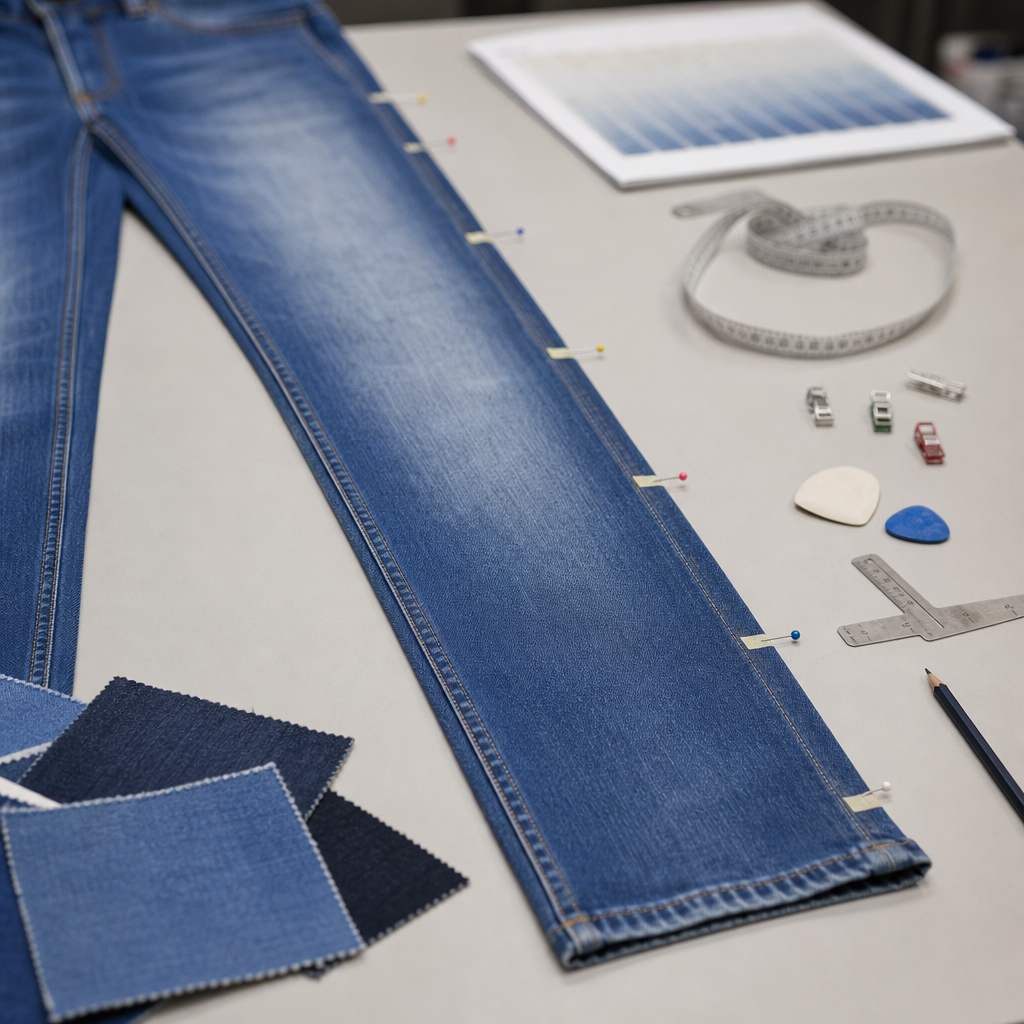
Lay the washed sample flat without forcing the leg into position. Smooth it gently, then look at where the side seam and inseam naturally fall. If the side seam rotates, note whether it moves toward the front or back and whether both legs behave the same way.
Do not pull the leg into a perfect shape for the photo. That hides the problem. The useful record is how the garment rests naturally after wash. Marking the side seam position with pins or tape can help the buyer and factory discuss the same issue.
Separate Leg Twist From Pocket or Fit Issues
Sometimes buyers describe a jean as twisted because the back pocket, yoke, or side seam looks off. That may be true leg rotation, but it may also be pocket placement, yoke balance, or grading. If the visual issue is mostly around the seat or back view, review pocket position as well.
For that situation, use StitchQuote’s guide to denim pocket placement approval. Pocket symmetry and leg balance are connected visually, but they may require different corrections.
Define an Acceptable Tolerance
Some denim twist may be acceptable depending on fabric, wash, and product positioning. A rigid vintage-inspired jean may not be judged the same way as a clean premium basic jean. The important point is to define the acceptable level before bulk, not after cartons are finished.
The buyer’s approval notes should state whether slight seam movement is acceptable, which sample is the standard, and which photos represent the approved result. If the twist changes the silhouette or makes the garment look defective, ask for correction before bulk production.
Ask the Factory for a Root-Cause Review
A useful revision request should be specific. Instead of writing “leg is bad,” state what was observed: “After wash, the outer seam on both legs rotates toward the front by a visible amount. Please review fabric skew, cutting direction, wash shrinkage, seam balance, and whether pattern or process correction is needed.”
This gives the factory a technical problem to investigate. It also creates a record that can be checked again during PP sample, bulk inspection, and reorder planning.
Build a Denim Leg Twist Approval Record
A practical record should include fabric reference, wash route, sample date, pre-wash and post-wash photos, side seam comments, inseam comments, measurements, tolerance notes, and whether both legs behave similarly. If the buyer approves a natural denim character with slight twist, that decision should be documented.
For small runs, the record does not need to be complex. It does need to be clear enough that the buyer, factory, and QC team can compare the bulk result against the same standard.
Checklist Before Bulk
- The sample has been washed using the intended production wash route.
- Both legs are checked naturally laid flat, not forced into position.
- Side seam and inseam rotation are photographed and described.
- Fit measurements and wash shrinkage are reviewed together.
- Back pocket and yoke alignment are checked separately from leg twist.
- Acceptable tolerance is recorded before bulk approval.
- Any correction request names the likely production variables to review.
StitchQuote Note
For custom denim manufacturing, low MOQ clothing production, and sampling and MOQ projects, StitchQuote treats denim leg twist as a wash, fabric, pattern, and QC approval issue. Buyers should review it before bulk production, especially when the style depends on a clean leg line or repeatable reorder standard.
When fabric risk is part of the question, also review what fabric testing matters most for small production runs. Denim twist is not only a visual issue; it can reflect how fabric and process behave together.
FAQ
Is all denim leg twist a defect?
No. Some twist can appear because of denim twill direction, fabric behavior, and wash process. It becomes a problem when it exceeds the approved standard, distorts the leg shape, or looks unacceptable for the product position.
Can leg twist be checked before washing?
The unwashed sample can show cutting or sewing balance, but the real risk often appears after wash. Buyers should review the washed sample that represents the intended bulk process.
What should buyers ask if jeans twist after sample wash?
Ask the factory to review fabric skew, cutting direction, pattern balance, sewing tension, wash shrinkage, and whether the same issue appears on both legs. Request photos and a corrected sample if the twist is beyond tolerance.