Custom Streetwear, Casualwear & Denim Manufacturer•MOQ 50 pcs•Denim MOQ 100 pcs•7-Day Sample Available

Boxy Hoodie Manufacturer in China
Choosing a boxy hoodie manufacturer starts with defining silhouette proportions-not simply requesting an oversized hoodie. For streetwear and menswear brands, your brief should connect chest width, body length, shoulder drop, sleeve volume, and hem finish with the intended fabric weight. StitchQuote offers cut-and-sew and private-label production. Use this page to organize fit and construction specs before sampling; for fabric-led programs, also review the french terry hoodie manufacturer and fleece hoodie manufacturer guides.
Who This Page Is For
This brief is for US and EU streetwear and menswear brands developing cropped or squared hoodies where width and length balance matter as much as fabric choice. If your main need is overall volume without a cropped hem, start with the oversized hoodie manufacturer page, then decide whether a true boxy crop is required.
What “Boxy” Means in Your Brief
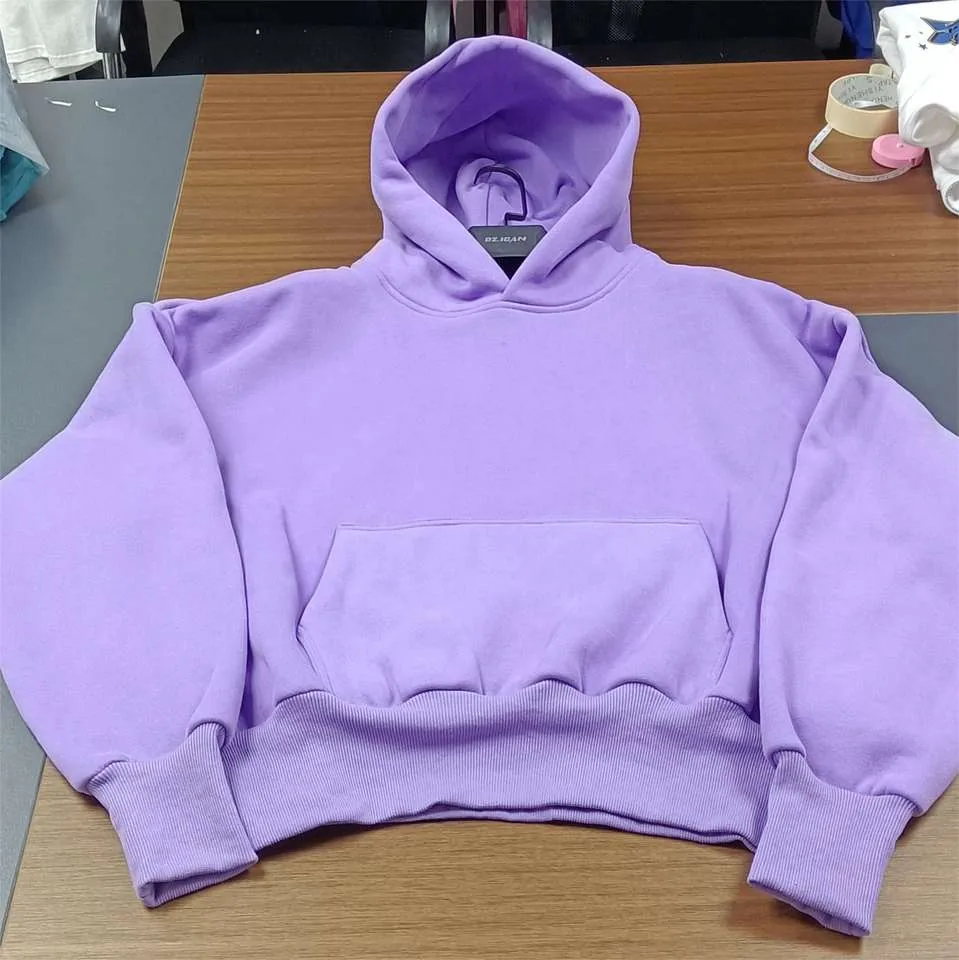
Boxy usually means a wider chest relative to body length, often with a straighter side seam and a higher or cropped hem. It is a silhouette direction, not a single size chart. Specify the intended crop point, whether the waistband is ribbed, and how the shoulder and sleeve should sit on-body.
- Chest and length: give finished measurements and where length is measured from.
- Shoulder: note drop-shoulder depth and how far the seam should sit past the natural shoulder.
- Sleeve: specify opening, bicep ease, and cuff type.
- Reference: include a graded size chart or sample garment; photos alone understate width.
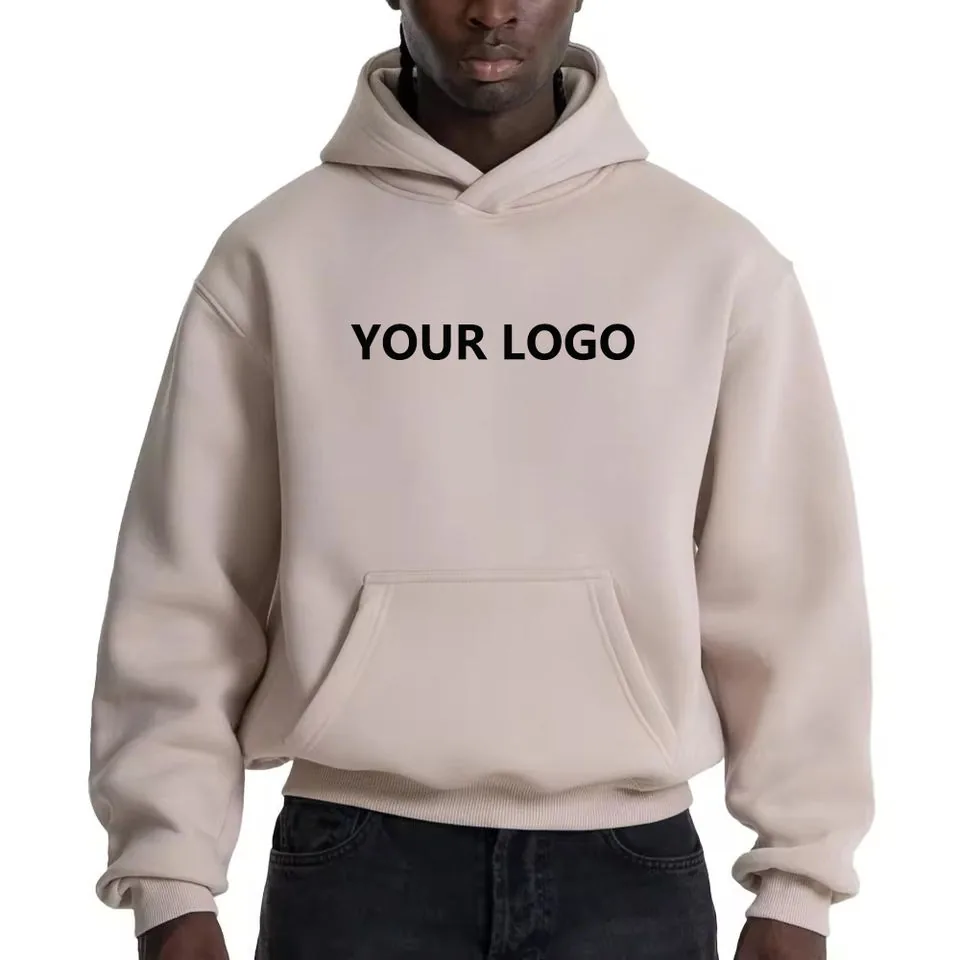
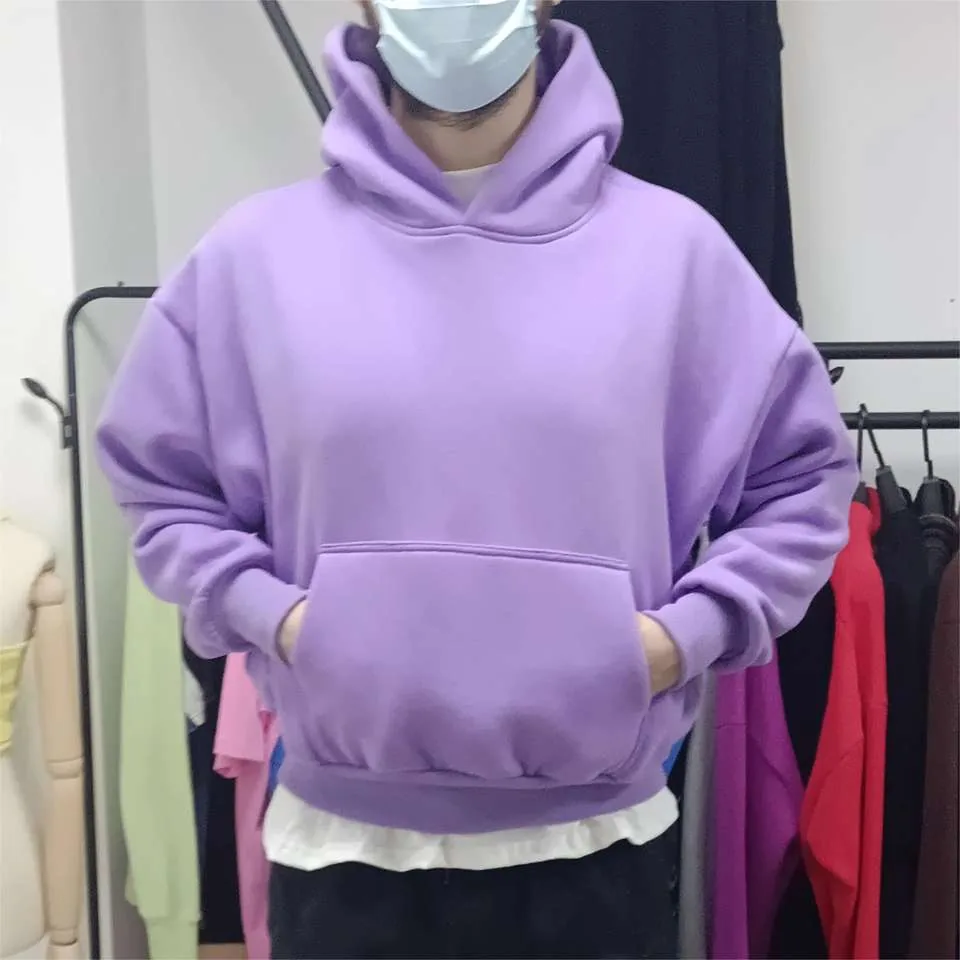
Use the boxy hoodie and 420 GSM boxy hoodie product pages as visual starting points. Confirm measurements for your size run rather than copying a photo silhouette.
Fabric Weight Changes the Silhouette
A boxy shape in lightweight French terry can look softer and more fluid than the same measurements in 420 GSM fleece. State fabric construction and GSM with the fit brief so sampling evaluates both together. Related fabric planning is covered on the custom hoodie manufacturer page and in the mens hoodie fit guide.
Hood, Pocket, and Branding Details
Approve hood volume against the wider body so the hood does not look undersized. Specify kangaroo or zip pocket width, placement from the hem, and how decoration sits on a short body length. Include neck labels, care labels, and print or embroidery positions in the same brief.
Private Label, MOQ, and Sampling
StitchQuote supports private-label and cut-and-sew boxy hoodie programs. For many non-denim styles, MOQ guidance starts around 50 pieces per style; confirm colorways and size ratios early because wider silhouettes can change fabric yield. Standard sampling for typical styles is often around seven days, depending on fabric availability and decoration complexity. For overall quantity planning, see low MOQ clothing manufacturing.
Build a Measurement Standard That Survives Sampling and Washing
A useful technical pack lets different people measure the same hoodie and reach the same result. Before a boxy hoodie manufacturer develops your pattern, identify the base size, measurement method, garment condition, and approval reference. Lay garments flat without stretching them, smooth out folds, and distinguish half-width measurements from full circumferences. Specify whether each target applies before washing or after the agreed care cycle; mixing those conditions can hide a fit problem.
Points of Measure: Define the Method and the Effect
Attach a numbered sketch to this table in your technical pack. Record targets by size and assign tolerances individually. Around +/-1 cm may be indicative for selected body measurements, but smaller details can need tighter limits; all tolerances should be confirmed per project.
| Point of measure | How to specify it | What it controls |
|---|---|---|
| Body width | Measure straight across at a stated distance below the armhole, with the garment flat. | Chest ease and the squared outline; double the flat width only when calculating circumference. |
| Body length | Measure from high shoulder point beside the neck to the bottom edge; state whether rib is included. | Crop position and the balance between torso width and length. |
| Shoulder drop | Use shoulder seam-to-seam width as the flat control; assess drop beyond the natural shoulder on-body. | Seam position and upper-arm coverage; drop varies with the wearer. |
| Armhole | State whether measuring straight depth or the curved seam; illustrate start and end points. | Underarm volume, sleeve mobility, and excess fabric near the chest. |
| Sleeve length | Measure from shoulder seam along the upper sleeve to cuff edge; identify cuff inclusion. | Hand coverage when combined with shoulder width. |
| Sleeve opening | Measure the cuff or finished opening flat and relaxed; specify a separate stretched check if needed. | Wrist fit, sleeve stacking, and ease of pulling the hand through. |
| Hood height and width | Lay the hood sideways; mark crown-to-neck height and face-edge-to-back width on a sketch. | Head coverage and hood volume relative to the body. |
| Rib height | Measure finished visible height from attachment seam to folded edge at hem and cuffs. | Visual proportions and the amount of body or sleeve pulled inward. |
Match Fabric Behavior to the Hem Construction
Approximately 320–450 GSM is an indicative development range for substantial French terry and brushed fleece hoodies, confirmed per project. French terry has an unbrushed loop back; fleece has a raised inner surface. Compare swatches for stiffness, stretch, and recovery as well as weight: equal GSM does not mean equal drape. State fiber composition, face appearance, and whether the GSM target applies after finishing.
For shrinkage approval, measure a marked fabric specimen and a sewn sample before and after an agreed wash and drying method. Record length and width changes separately. Fabric pre-shrinking can reduce later movement, but it does not establish the finished garment result; seams, rib, and decoration also respond to laundering. Use the fleece shrinkage and wash-test guide to organize the approval record.
A rib waistband pulls the lower body inward; a self-fabric turned hem generally gives a straighter exit. Specify relaxed hem width, rib composition, finished height, and the rib-to-body attachment ratio. Avoid prescribing a universal ratio: test recovery with the selected rib and body fabric. Split hems need defined opening heights and reinforced ends, while a very cropped body needs a movement check to assess how far it rises.
Use Sampling Rounds to Resolve Specific Decisions
- Pattern review: reconcile measurement definitions, seam allowances, fabric behavior, pocket position, and hood construction before cutting.
- Fit sample: assess the base size standing, sitting, and with arms raised. Mark corrections against the measured sample, rather than sending disconnected comments.
- Revised and size-set review: verify corrections and selected sizes across the range. Grade shoulder width and sleeve length together to control total reach.
- Production reference: approve the final fabric, trims, decoration, measurements, and wash results in a dated specification and retained sample.
Rounds can be combined or repeated according to complexity, confirmed per project. For additional construction decisions, consult the custom hoodie development guide.
Cost Drivers to Resolve Before Quoting
- Fabric consumption: wide body panels, large hoods, usable fabric width, and shrinkage allowances affect cutting yield.
- Construction: lined hoods, split hems, extra reinforcement, and specialized seam finishes add operations.
- Materials and branding: custom rib, fabric development, embroidery stitch density, print colors, and placement count change sourcing and processing requirements.
Compare quotes against identical specifications using the hoodie manufacturing cost guide.
QC Checklist for the Approved Shape
- Check body measurements and sleeve symmetry against the approved tolerances.
- Inspect side-seam twist and hem skew before and after the agreed wash test.
- Stretch and release cuffs and waistband using an agreed method; check recovery and seam distortion.
- Measure print and embroidery placement from fixed seams; inspect puckering, alignment, and wash appearance.
- Check hood symmetry, pocket level, skipped stitches, and reinforcement at pocket openings.
Pattern and Measurement FAQ
Should tolerances increase for larger sizes?
Not automatically. Set tolerances by measurement function and production capability; grading increments and acceptable variation are separate decisions.
Can a washed sample become the approval reference?
Yes, if its wash conditions and resulting measurements are documented. Retain an unwashed reference too, so production checks compare equivalent conditions.
How should artwork placement change across sizes?
Specify whether artwork stays one size or scales, then define placement from stable reference points for each garment size.
Send your measurement sketch, fabric requirements, size breakdown, and artwork through the StitchQuote quote form for project review.
FAQ
Is a boxy hoodie the same as an oversized hoodie?
Not always. Oversized usually emphasizes overall volume; boxy emphasizes a wider, often shorter proportion. Specify chest, length, and shoulder drop so the sample matches the silhouette you want.
What measurements matter most for a boxy hoodie sample?
Finished chest, body length, shoulder width or drop, sleeve opening, hem circumference, and hood opening. Approve them on-body in the intended fabric weight.
Can StitchQuote manufacture private label boxy hoodies?
Yes. StitchQuote offers cut-and-sew and private-label production. Confirm fabric, measurements, labeling, and MOQ for your style before sampling.