Custom Streetwear, Casualwear & Denim Manufacturer•MOQ 50 pcs•Denim MOQ 100 pcs•7-Day Sample Available

Can Low MOQ and Private Label Work Together?
Use low MOQ private label clothing to compare private label decisions more clearly, protect brand consistency, and keep product, trims, and commercial scope aligned.

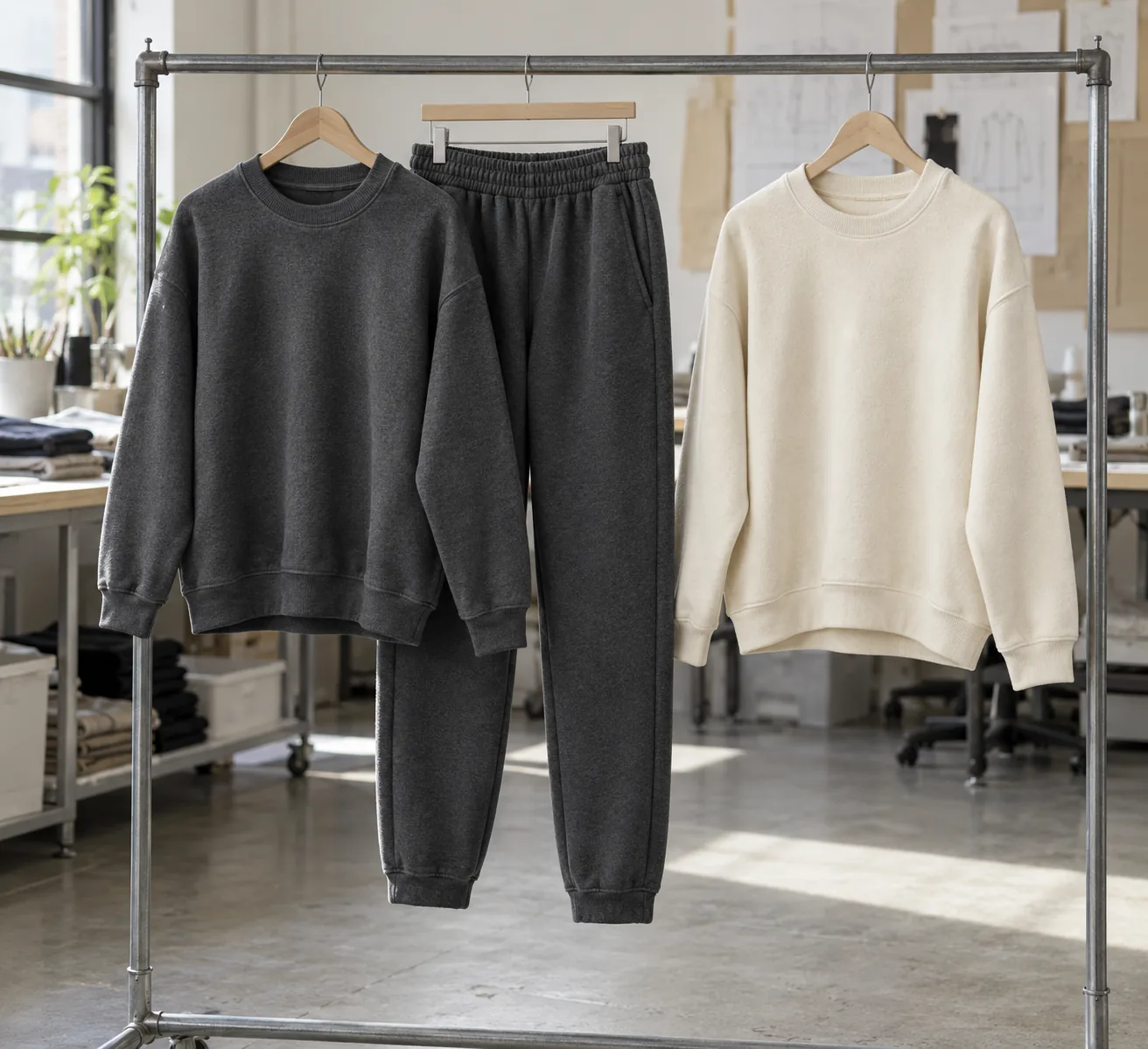
Low MOQ and private label can work together, but a coordinated outfit needs a different buying plan from a single garment. A hoodie and matching jogger may appear as one product on your storefront while requiring two patterns, two size specifications, and separate production quantities. The useful question is whether the proposed assortment works at component level.
For a first release, compare a standalone style with a two-piece set before approving samples. The set can communicate a stronger collection identity, but it also ties launch readiness to both garments. Start with how you intend to sell the pieces, then define quantities, shared materials, branding, and acceptance criteria around that decision.
Decide whether customers are buying an outfit or two separates
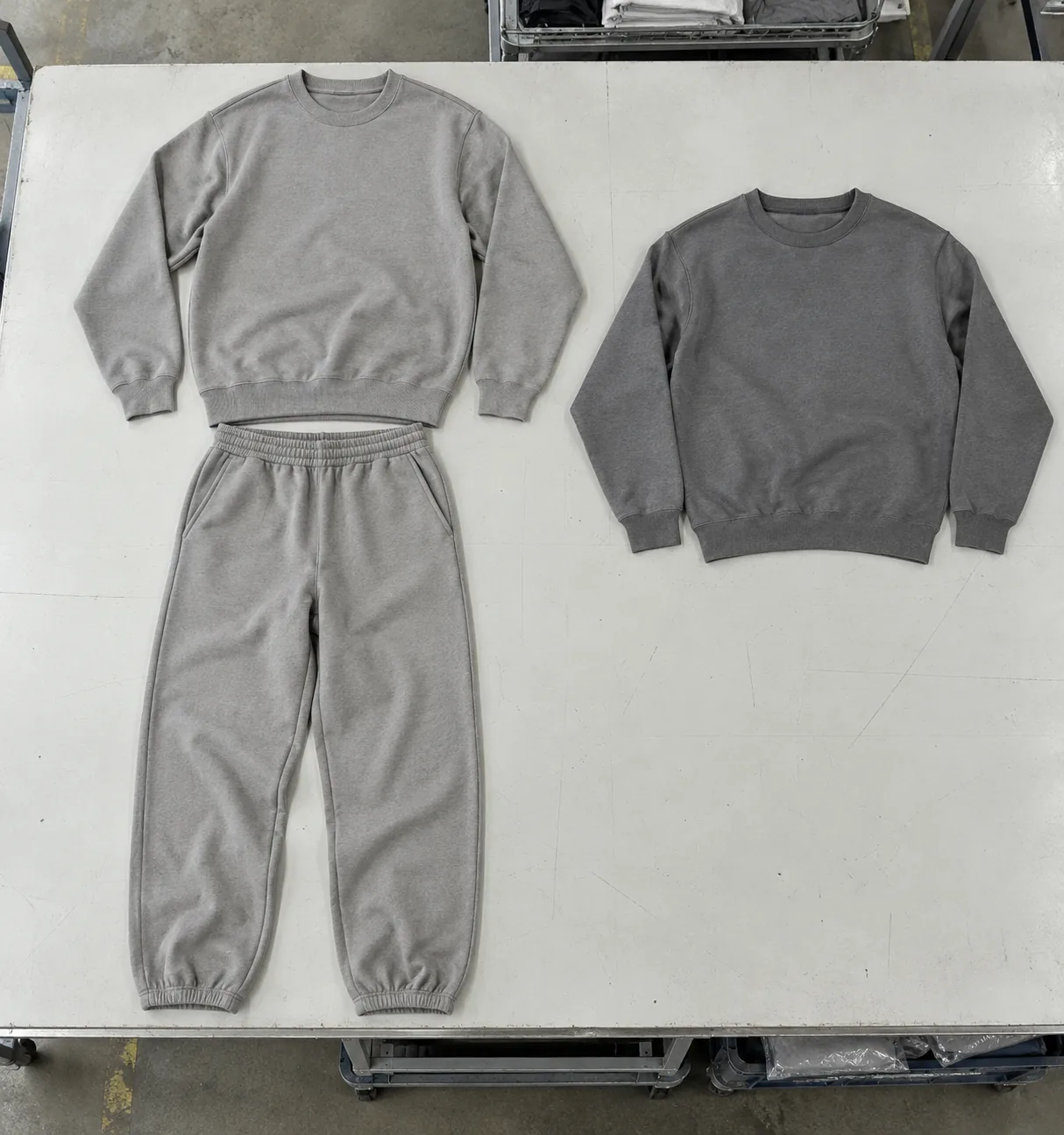
A fixed-size bundle pairs the same top and bottom sizes. Mix-and-match selling lets customers choose each independently. Selling separates with a styling suggestion creates a third option: the garments coordinate, but neither purchase depends on the other. These models need different stock plans even when the physical garments are identical.
Consider a boxy sweatshirt with a tapered trouser. Your customer may prefer a large top and medium bottom. Ordering identical size curves for both components could leave medium tops and large bottoms unsold. Before quoting, specify whether a “set” means a packed retail unit or simply two coordinating styles.
A single-style launch is easier to interpret if you still need evidence about fit or size demand. A set is more defensible when outfit styling is central to the product and you have a credible allocation for each component. Neither choice removes the need for individual garment specifications.
Translate the launch quantity into actual garment counts
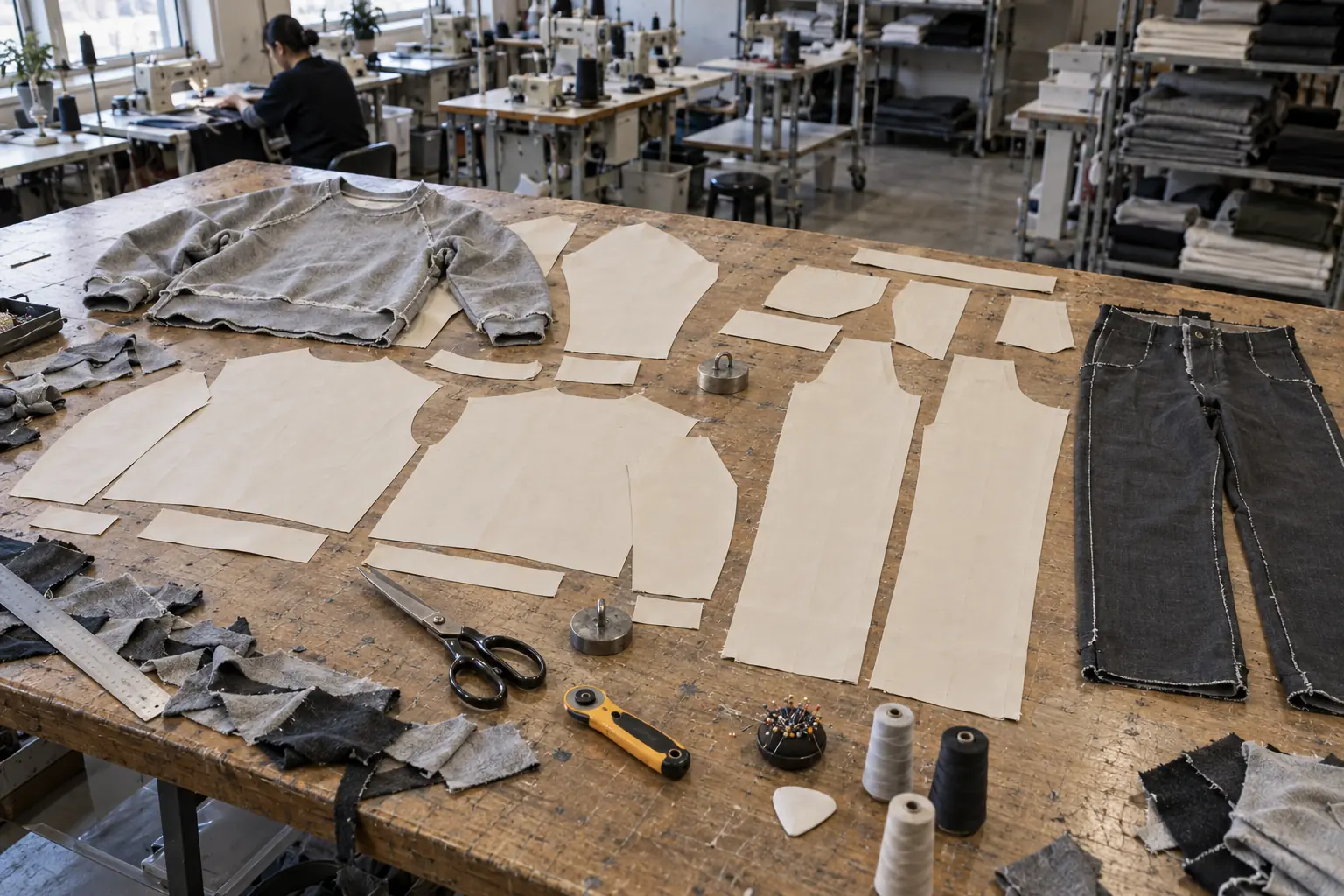
StitchQuote’s MOQ for most categories starts from 50 pieces per style; denim starts from 100 pieces per style. Treat those as starting points for discussion, not permission to divide one minimum across unrelated garments. Confirm how the proposed top and bottom will be classified, along with any color or material conditions.
The following comparison is quantity arithmetic, not a production acceptance promise. It assumes each component is treated as a separate style and uses one color per component.
| Launch concept | Component quantities | Potential selling units |
|---|---|---|
| Standalone sweatshirt | 50 sweatshirts | 50 individual garments |
| Sweatshirt and trouser bundle | 50 sweatshirts plus 50 trousers | 50 complete outfits |
| Denim jacket and jean bundle | 100 jackets plus 100 jeans | 100 complete outfits |
Write the size split under each component rather than only under the collection name. For example, a proposed 50-piece top allocation might be 8 small, 17 medium, 17 large, and 8 extra-large. That is an illustrative allocation, not a recommended demand forecast. A different trouser curve requires a decision about mixed-size bundles or separate sales.
Adding a second color also changes the inquiry. Fifty outfits split between charcoal and cream do not automatically qualify as two accepted 25-outfit runs. Ask for confirmation before building the launch calendar around that split.
Share materials only where the garments can share performance
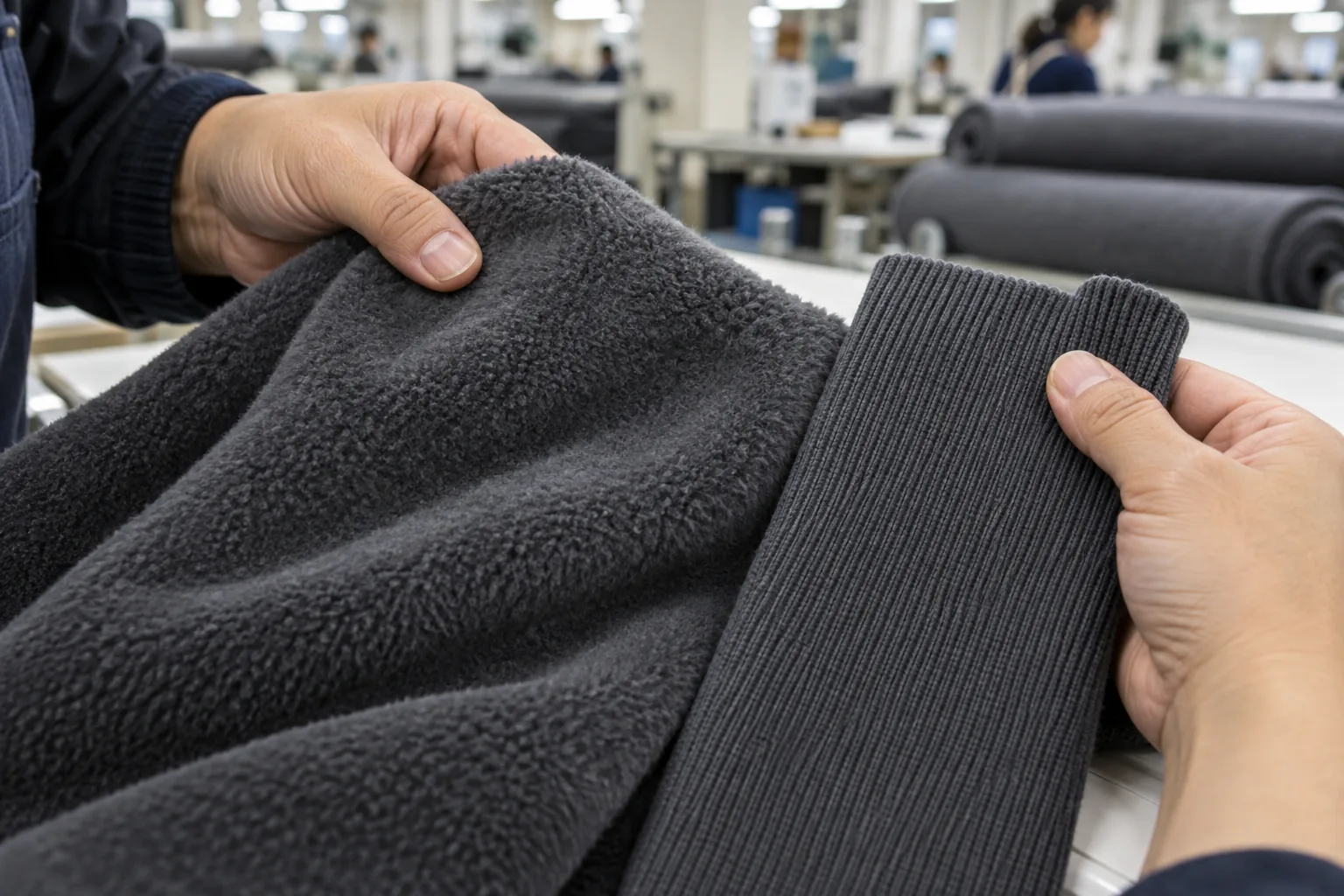
Using one body fabric for both pieces can simplify sourcing, but the material must suit both jobs. A sweatshirt needs the intended drape; trousers also need acceptable knee recovery and seat performance. An illustrative brief could specify 340 GSM cotton-rich brushed fleece for both pieces, then require review of composition, usable width, shrinkage, and recovery before selection.
Ask whether both components can be cut from an approved dye lot and how any additional lots will be assessed. Identical color names are insufficient: brushed surfaces, fabric direction, and finishing can change the appearance of matching pieces. Approve the top and bottom side by side under agreed lighting, including the rib and waistband materials.
Sharing labels is often simpler than sharing every construction detail. A common woven brand label can support collection identity while each garment retains appropriate placement and size identification. Care instructions should reflect the actual materials and treatments. Do not copy one component’s care label onto the other without checking that it remains accurate.
For denim combinations, review the jacket and jeans together after the proposed wash. Different seam bulk and panel shapes can produce different wash effects even with shared fabric. Custom washes and custom-developed fabrics also require more development time than straightforward material choices.
Approve each fit, then approve the relationship between them
A coordinated appearance cannot replace two fit approvals. Give the top its own chest, body length, shoulder, and sleeve measurements. Give the bottom its own waist, hip, rise, inseam, and leg-opening measurements. Include diagrams showing measurement methods, especially for elasticated waists where relaxed and stretched measurements mean different things.
Then assess the outfit on the intended wearer or suitable fit model. Check whether the sweatshirt hem covers the waistband as intended, whether pocket openings remain accessible, and whether the two silhouettes balance. A shorter top may expose a waistband label that looked unobtrusive when the trousers were reviewed alone.
Make branding placement measurable on each component. For example, specify an embroidery center relative to the chest centerline and a separate position relative to the trouser side seam. Avoid instructions such as “same placement as the top,” which cannot define a position on a different pattern.
StitchQuote offers a 7-day sample for standard styles with confirmed specifications and available materials. Complex styles, custom washes, and custom-developed fabric take longer. For a set, confirm timing for both samples and allow an outfit review after individual fit corrections. One approved garment does not establish readiness for its partner.
Compare the cost of a sellable outfit, including incomplete pairs
Request separate component quotations and a clearly defined combined total. Ask what is included for fabric, trims, branding, sampling, packing, and any set assembly. StitchQuote’s services include cut-and-sew, private label, sampling, fabric and trim sourcing, branding through woven labels, prints and embroidery, and QC before packing. Confirm the scope selected for your project.
A shared fabric may reduce sourcing complexity, but each garment still needs cutting, sewing, finishing, and inspection. Matching branding can also involve different handling: a chest embroidery position and a trouser placement may require separate setup decisions. Ask which costs actually change when purchasing both styles together.
For internal planning, divide the combined production and agreed set-packing cost by the number of complete outfits available for sale. If 50 tops are ready but only 47 bottoms have passed inspection, there are temporarily 47 complete bundles. Define how replacements, repairs, or selling spare components separately would work before committing to a bundle-only offer.
Also decide whether replenishment can target only the faster-selling component. Confirm repeat-order quantities and material availability rather than assuming the first set arrangement will apply to a later standalone order.
Use a paired-garment checklist before packing
Inspect the individual pieces and their compatibility. Agree measurement tolerances and inspection coverage in advance; the examples below are proposed discussion points, not StitchQuote’s published standards. Keep the approved samples and latest specifications available to the inspection team.
- Measurements: define tolerances by measurement point. A proposed ±1 cm body-length tolerance may be suitable for discussion, while smaller branding offsets may need a tighter limit. Confirm suitability for each fabric and construction.
- Shade pairing: compare actual tops and bottoms together, including ribbing. Document how visibly mismatched pairs will be separated and reviewed.
- Post-care behavior: assess samples using the agreed care method. Record dimensional change for both components so one does not become disproportionately shorter after washing.
- Construction and branding: check seam security, waistband recovery, pocket openings, embroidery backing, and print appearance against approved references.
- Bundle accuracy: verify component sizes, color pairing, labels, and packing instructions. For mixed-size outfits, show both sizes clearly in the order and packing records.
Specify whether garments arrive packed separately or assembled into retail sets. If assembly happens later, retain component identification so warehouse staff can match sizes and colors reliably.
Questions buyers ask when choosing a first assortment
Can I order 25 tops and 25 bottoms as 50 pieces?
Do not assume that combined count meets a per-style minimum. Present both styles and their quantities for confirmation. StitchQuote’s starting MOQ for most categories is 50 pieces per style, with denim starting at 100.
Must the top and bottom carry identical branding?
No. They can share a label identity while using different decoration placements or sizes. Specify each application independently and review the garments together to judge the overall effect.
What if I want customers to choose different sizes?
Plan component inventory separately and define how orders will be assembled. Equal top and bottom totals do not guarantee every requested size combination remains available throughout the launch.
When is one style the better first order?
Choose one style when fit demand, material performance, or customer size preferences remain uncertain. Add its companion after those findings can inform the second specification and allocation, subject to renewed material and shade approval.
Related reading and project planning:
- Prepare component-specific tech packs
- Review sampling and MOQ considerations
- Explore hoodie manufacturing cost inputs
- Discuss your single-style or coordinated-set brief
Request a manufacturing quote
Share your product type, quantity range, and destination. We usually reply within one business day.