Custom Streetwear, Casualwear & Denim Manufacturer•MOQ 50 pcs•Denim MOQ 100 pcs•7-Day Sample Available
How to Choose Denim Fabric Weight and Stretch Before Custom Jeans Sampling
Choose denim fabric weight and stretch before custom jeans sampling by checking ounce weight, recovery, shrinkage, wash behavior, fit block, and sample notes.

Denim fabric weight and stretch should be decided before custom jeans sampling, not after the first fit sample feels wrong. The same pattern can behave very differently in rigid 13 oz denim, lighter comfort-stretch denim, or a high-stretch fabric with weak recovery. If the fabric decision is vague, the sample may fit, wash, and grade in a way that does not match the brand’s target.
For buyers developing custom jeans, relaxed denim, baggy jeans, or private label denim programs, the custom jeans manufacturer page explains how fabric, wash, fit, trims, MOQ, and sample approval should connect before production starts.
Choose Fabric Before Pattern Approval
Denim fabric is not only a color or weight choice. It controls drape, crease, shrinkage, leg twist risk, waistband feel, pocket behavior, and how the finished jean photographs. Pattern approval is more reliable when the buyer has already chosen the fabric direction or at least narrowed the range of acceptable swatches.
If a fit sample is made in a substitute denim and the final bulk fabric changes later, the approved measurement comments may no longer apply. Buyers should record whether the sample fabric is final, close substitute, or only a fit-test fabric. That note protects both sampling and cost discussions.
Compare Ounce Weight, Weave, and Handfeel
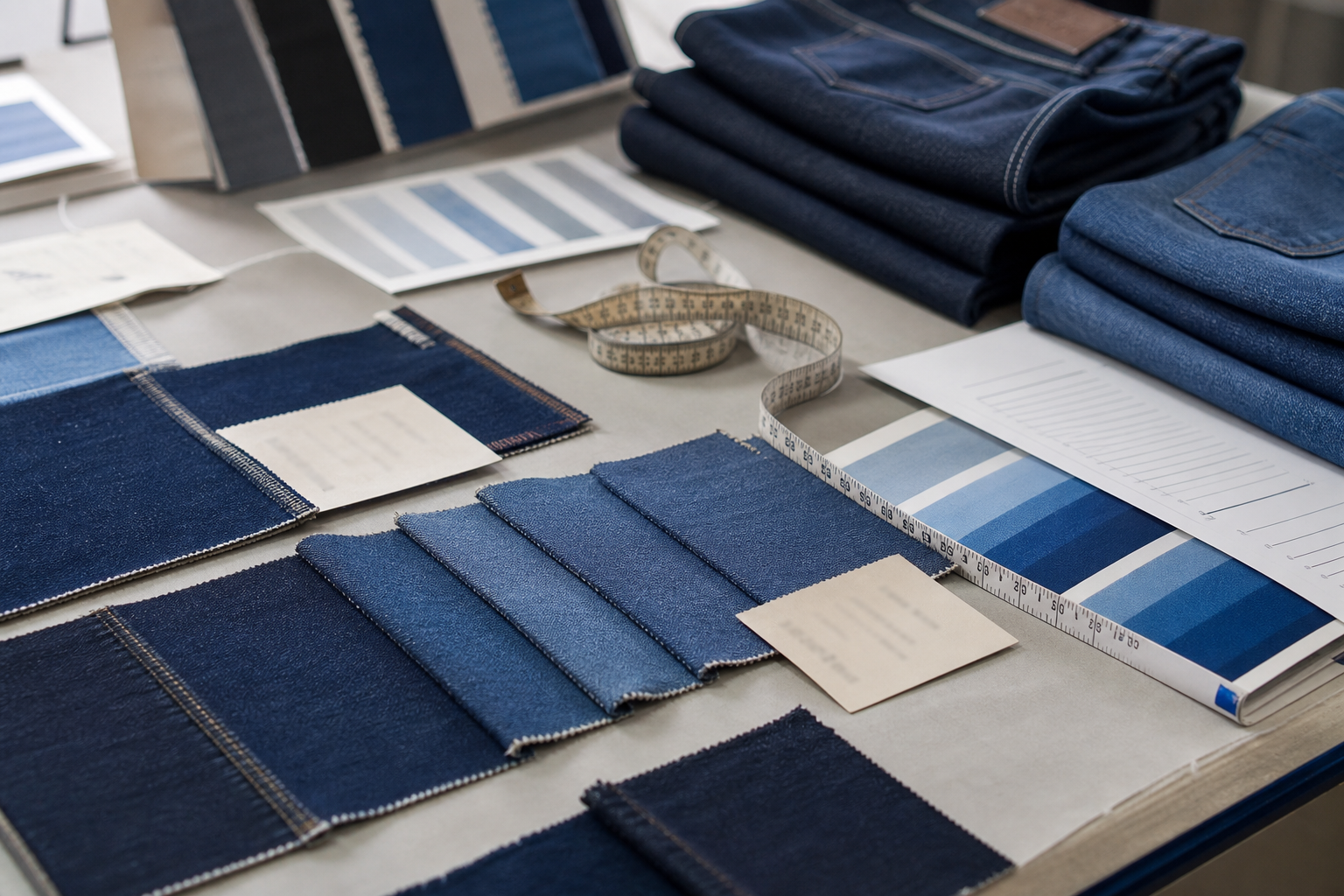
Ounce weight gives a useful starting point, but it does not tell the full story. A 12 oz denim can feel compact and firm, while a heavier fabric may feel softer because of yarn, weave, or finishing. Review handfeel, surface, body, drape, opacity, and how the fabric folds at the knee, hip, pocket, and hem.
For a streetwear jean, the buyer may want a structured shape that holds volume. For a slim or comfort-focused jean, the buyer may accept more stretch and softer recovery. The key is to match weight and handfeel to the intended silhouette before the first sample is cut.
Understand Rigid, Comfort Stretch, and High-Stretch Denim
Rigid denim can create a strong shape and authentic wash character, but it may need more allowance for shrinkage and wearer comfort. Comfort stretch can make the jean easier to wear while keeping a denim look, but recovery must be checked. High-stretch denim may fit closely, but it can grow at the knee, seat, and waistband if recovery is poor.
Ask for stretch percentage, recovery behavior, fiber content, and whether the fabric has been tested after washing. If the jean has a relaxed or baggy fit, stretch may be unnecessary or even harmful to the intended silhouette. If the jean is skinny or close-fitting, recovery becomes a central quality point.
Fabric weight and stretch should be approved as part of the same denim PP sample path for fabric and stretch approval so sampling, wash, and bulk fit stay aligned.
Test Shrinkage, Wash Shade, and Leg Twist Together
Denim fabric choice should be reviewed with wash behavior. A fabric that looks right raw can shrink more than expected, shift shade, torque at the leg, or change handfeel after wash. This is why fabric swatches, wash standards, and measurement comments should be connected instead of approved in separate conversations.
Use the denim wash shade standards guide when color continuity matters across first production and reorder. For construction risk, compare the selected fabric with the denim leg twist guide so the buyer knows whether fabric, wash, and pattern balance need extra attention.
Connect Fabric Choice to Fit and Measurement Approval
Fabric affects measurement approval because shrinkage and recovery can move waist, hip, thigh, inseam, outseam, knee, leg opening, and rise after wash. A buyer should not approve after-wash measurements without knowing whether the sample fabric is final and whether stretch recovery is stable.
The jeans after-wash measurement approval guide explains how to review measurements after wash. Use that step with the fabric decision, not as a late correction after the wrong denim has already been sampled.
Review MOQ, Cost, and Reorder Risk
Low MOQ denim projects often face fabric availability constraints. A stock denim may protect timing, but it may not be stable for reorders. A custom mill fabric may match the brand better, but it can raise MOQ, lead time, and cash exposure. Buyers should compare fabric cost with the full production risk, not only the unit price.
The low MOQ clothing quote comparison guide is useful when denim options have different fabric minimums, wash costs, sample costs, and reorder reliability. The cheapest swatch can become expensive if it creates extra samples or weak customer feedback.
Write a Sample-Ready Denim Fabric Brief
A useful denim fabric brief should include target ounce range, rigid or stretch direction, fiber content preference, stretch and recovery expectations, wash target, handfeel target, shrinkage concern, color standard, and whether the fabric must be repeatable for reorders. It should also say which details are flexible if the first-choice fabric is not available.
If the project is ready for review, send denim swatches, reference jeans, target fit, wash direction, size range, quantity, and approval priorities through the StitchQuote inquiry page. A clearer fabric brief helps the factory build a first sample that reflects the actual custom jeans goal.
Questions Buyers Ask Before Denim Sampling
What denim weight is best for custom jeans?
There is no single best weight. The right choice depends on silhouette, season, wash route, brand position, comfort target, and whether the buyer wants rigid structure or easier everyday wear.
Is stretch denim safer for low MOQ jeans?
Not always. Stretch can improve comfort, but poor recovery can create knee, seat, and waistband growth. For loose or baggy jeans, rigid or low-stretch fabric may better protect the intended shape.
Should fabric be approved before the first jeans sample?
Yes, or at least narrowed to a controlled swatch range. Sampling in an unrelated denim can make fit comments unreliable when the final fabric changes.
What fabric notes should buyers send to the supplier?
Useful notes include ounce range, stretch direction, recovery expectation, wash target, handfeel, shrinkage concern, reorder requirement, and whether substitutions are acceptable before sampling.
Request a manufacturing quote
Share your product type, quantity range, and destination. We usually reply within one business day.