Custom Streetwear, Casualwear & Denim Manufacturer•MOQ 50 pcs•Denim MOQ 100 pcs•7-Day Sample Available

Denim Manufacturers for Jeans, Jackets, Washes, and Private Label
Denim manufacturer hub for jeans, jackets, washes, hardware, fit sampling, and private-label trims through China cut-and-sew.
Brands searching denim manufacturers usually need finished garments—not a fabric roll alone. Jeans, jackets, shorts, skirts, and sets each need fabric, fit, wash, and hardware called out. StitchQuote helps US and EU buyers turn that brief into samples, wash standards, MOQ planning, and reorder control through China cut-and-sew.
Denim has more moving parts than basic knits: shade, handfeel after wash, shrinkage, hardware, and pocket geometry all interact. Most denim styles plan around ~100 pcs per style. We sample first so wash and fit are approved before bulk. Standard styles with confirmed specs often sample in about 7 days; wash development can add time when shade targets are strict.
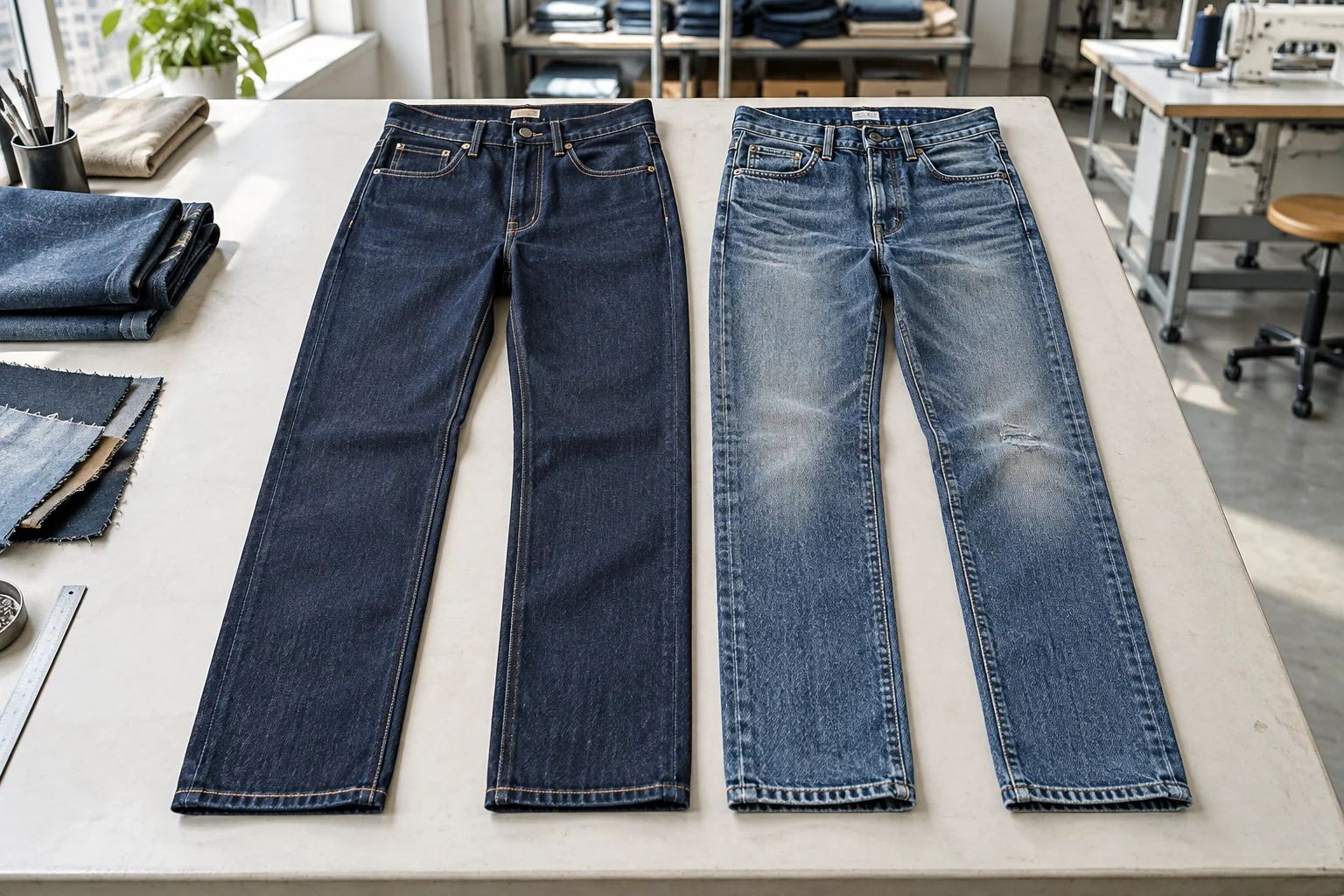
Denim manufacturer routes at a glance
Use this comparison to pick the child lander that matches your first denim SKU. MOQ anchors assume realistic wash and hardware; heavy destroy washes or special fabrics can raise both MOQ and sample rounds.
| Route | Best when | Typical MOQ | Sample (when specs clear) | Open next |
|---|---|---|---|---|
| Custom denim program | Mixed denim range (jeans + jackets + washes) under one brief | ~100 / style | ~7 days (+ wash rounds) | Custom denim manufacturer |
| Custom jeans | Fit + wash + hardware focused on bottoms | ~100 / style | ~7 days (+ wash rounds) | Custom jeans manufacturer |
| Denim jacket | Trucker / oversized jackets with wash and hardware | ~100 / style | ~7 days (+ wash rounds) | Custom denim jacket manufacturer |
| Private-label denim | Buttons, patches, labels, packing must match washed sample | ~100 / style | ~7 days | Private label clothing manufacturer |
| Wash decision | Still choosing clean vs distressed for a first drop | — | — | Distressed vs clean denim |
Who this denim manufacturers hub helps
- Brands developing jeans, jackets, cargo denim, patchwork, wide-leg fits, or washed sets
- Buyers who need clarity on weight, stretch, shrinkage, wash shade, hardware, and pocket placement
- Private-label teams planning buttons, rivets, patches, woven labels, hangtags, and packaging
- Teams that must keep wash and grading repeatable on reorders
Build the brief garment by garment
For a mixed denim range, list each piece with its own fabric reference, wash target, size range, and trims. Mark whether matching pieces must share a shade or are intentionally different. A collection name alone is not an approval standard.
- Fabric: weight (oz or g/m²), stretch %, fiber, mill reference if you have one
- Fit: block reference or graded measurements; rise, thigh, leg shape
- Wash: clean rinse, light distress, heavy destroy—plus target shade photos
- Hardware: button, rivet, zipper type and finish
- Brand trims: leather/patch, labels, hangtags, packaging
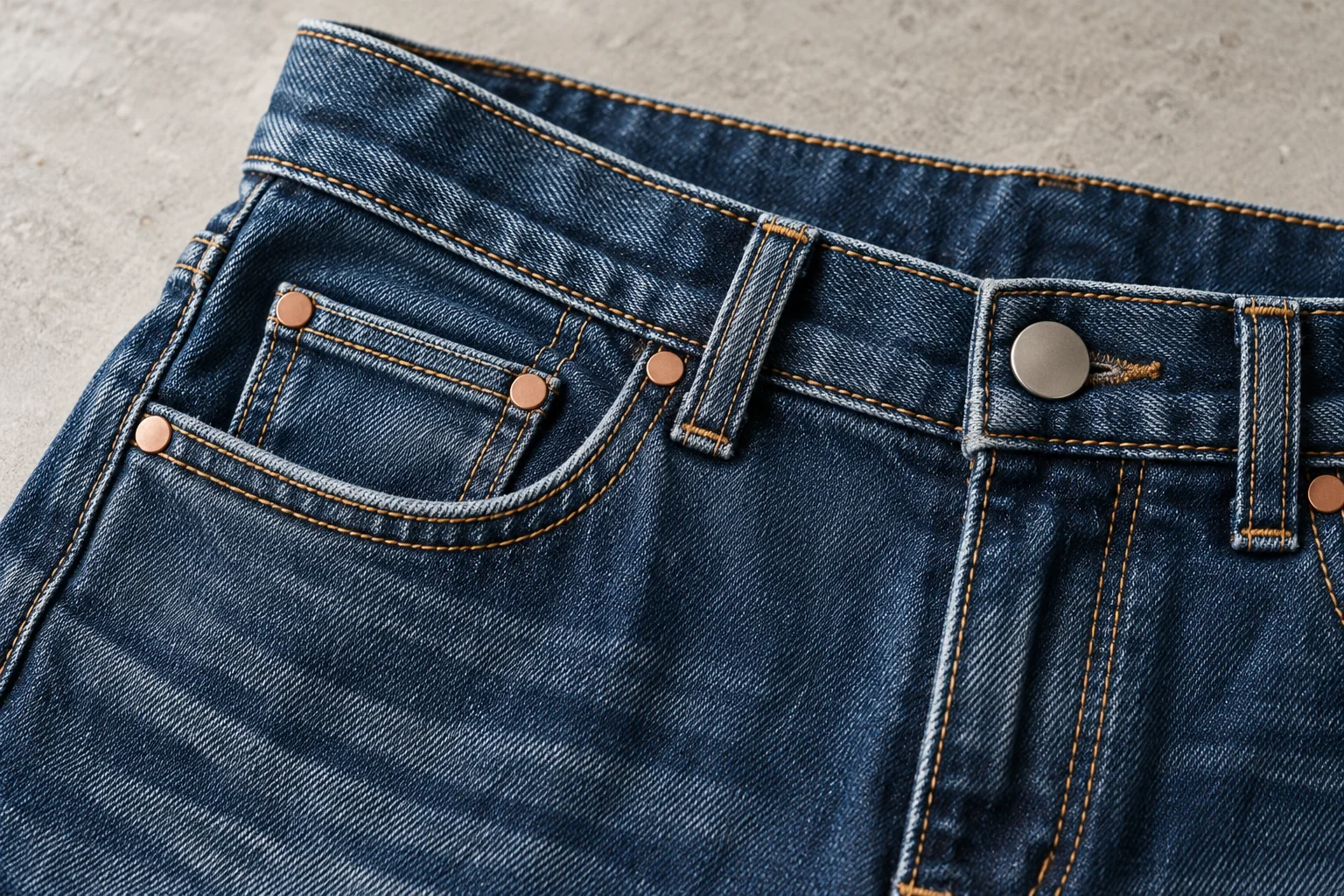
Wash and fit belong in the same approval
Wash changes handfeel, shade, and often measurements. Approve fit on the washed sample you intend to sell—not only on a dry rigid proto. If the first sample uses a temporary wash, write down what still needs to be confirmed before bulk.
For jeans-focused programs, also see denim jeans manufacturer and custom denim jeans manufacturer. For who owns mill vs garment vs wash approvals, read denim mill, garment factory, or wash house: who owns each approval. Still choosing a wash direction? See distressed vs clean denim for a startup collection.
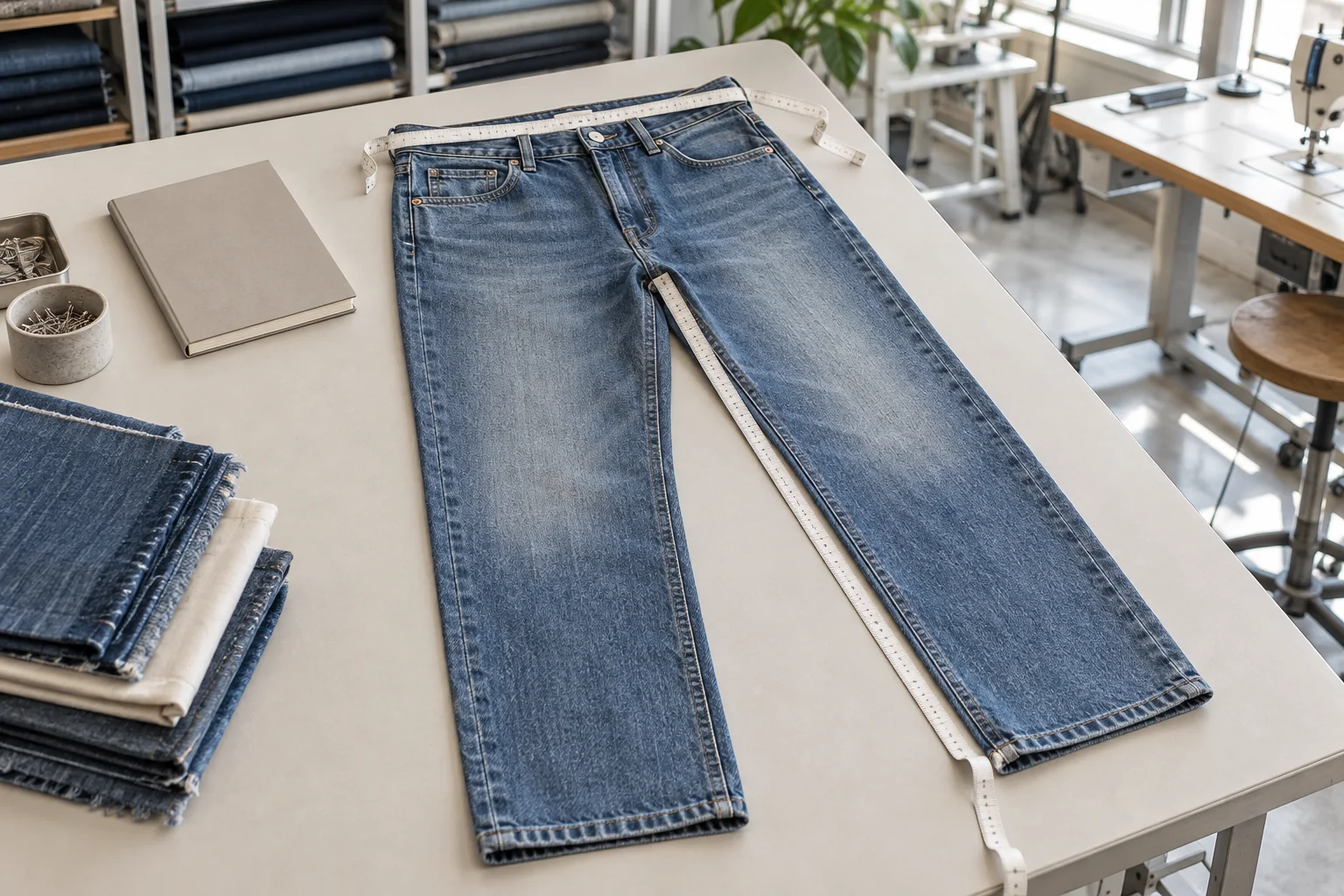
Child pages in this denim cluster
- Custom denim manufacturer
- Custom jeans manufacturer
- Custom denim jacket manufacturer
- Denim jeans manufacturer
- Custom denim jeans manufacturer
- Distressed vs clean denim for a startup collection
- Private label clothing manufacturer
Related hubs
Low MOQ denim production realities for small brands
For a small brand, a low minimum order makes a denim launch easier to budget, but it does not remove development decisions. StitchQuote’s denim MOQ is approximately 100 pieces per style. Before building a purchase plan around that figure, confirm how your proposed size range, fabric, colour and wash combinations affect the order. Do not assume that several washes can share one style minimum or that every fabric option supports the same quantity.
At this scale, procurement should focus on reducing variables rather than simply reducing units. A tightly defined first style gives you a clearer basis for comparing quotations and assessing samples. Ask for the quotation to distinguish garment production from any separately charged sampling, wash development, trims or packaging. Check which specifications the quoted price assumes and what would trigger a revision. Use sampling and MOQ planning to frame those questions before committing to a launch quantity.
Schedule against confirmed specifications, not a general sampling estimate. StitchQuote indicates approximately seven-day sampling for suitable, standard styles with confirmed specifications; wash development may add time. Ask whether that timing applies to your proposed style, what must be supplied before work starts, and whether it covers the sample stage you need. Keep approval, shipping and any revision allowance separate in your internal calendar rather than treating sample completion as readiness for bulk production.
- Confirm the minimum for each proposed style and wash combination.
- Request a written quotation with inclusions, exclusions and specification assumptions.
- Agree the size breakdown before approving the order quantity.
- Check sampling scope and timing before setting a launch date.
What to freeze before the first denim wash sample
The first wash sample should test a defined brief, not several unresolved product directions. Freeze the base fabric specification, garment construction and target fit before requesting it. Record fabric composition, weight, stretch requirements where relevant, and the measurements that will be checked after washing. If a fabric choice remains provisional, label it clearly and ask which conclusions the sample can support. A wash result on one base fabric should not become an automatic approval for another.
Define the wash target with references that show the intended shade, contrast, fading placement and distressing. Identify which reference controls when images differ, and distinguish essential features from preferences. Include the required hand feel and any areas where abrasion or damage is unacceptable. Rather than asking for an exact match without qualification, agree how the sample will be reviewed and how acceptable variation will be documented. This creates a usable approval record for later purchasing decisions.
Freeze the review process as well as the product brief. Name one approval owner, issue a dated specification version and consolidate comments before requesting changes. Ask StitchQuote to confirm whether the proposed wash needs additional development time. If the first sample reveals a fit or shade issue, separate the correction from any new design request so that the next sample has a clear purpose and an agreed scope.
- Lock the fabric, construction and post-wash measurement targets.
- Supply labelled wash references and explicit distressing boundaries.
- Confirm trims and labels that will undergo the wash process.
- Record approval criteria, decision ownership and revision instructions.
How denim MOQ differs from knit basics for small brands
Buyers often carry a knit MOQ plan into their first denim brief. That shortcut creates false budget math. Many knit or casual styles can plan near ~50 pcs per style when fabric, colors, and decoration stay realistic; denim programs usually plan around ~100 pcs per style because wash lots, fabric commitments, and hardware control sit higher. Treat those figures as planning anchors and confirm the exact minimum against your style, wash, and size run when you inquire.
Denim minimums reflect process economics, not a penalty for small brands. A wash house needs a workable lot; mills may hold fabric minimums; buttons, rivets, and zippers must match the washed shade. Splitting one jean into three washes or two fabrics can behave like multiple styles for planning. If your hoodie or tee program uses a lower knit MOQ, do not copy that quantity onto jeans without asking which line items still apply.
Build the purchase plan style by style. Separate garment production from sampling, wash development, trims, and packing on the quotation. Ask whether a second wash shares the same style minimum or needs its own. Use low MOQ clothing manufacturer when comparing category minima across streetwear, and sampling and MOQ planning before locking units. For jeans wash depth, open the custom denim manufacturer lander rather than stretching a knit brief; keep hoodie routes on the hoodie manufacturer hub.
- Plan denim near ~100 pcs/style and knits near ~50 pcs/style—then confirm both on inquire.
- Do not assume washes or fabrics share one minimum without a written answer.
- Split quotation lines for sampling, wash development, and brand presentation.
- Include size breakdown in the MOQ conversation before approving bulk units.
What to verify on washed denim before releasing bulk
A washed sample is the control garment for bulk—not a mood photo. Before you release a purchase order, measure the washed piece against the agreed post-wash chart: waist, hip, thigh, inseam, rise, and any jacket points that move after wash. Record shade and handfeel against the labelled reference you froze earlier. Mark intentional distress versus out-of-tolerance abrasion. If clean vs distressed is still open, pause and reopen distressed vs clean denim for a startup collection before bulk language is signed.
Check hardware and brand presentation on the same washed sample. Button, rivet, and zipper finish should still read correctly against indigo after wash; patches and care labels must survive without bleeding or warping. Private-label packing should match the approved garment—not a temporary sample pack. When mill, garment factory, and wash house share the job, confirm ownership of open items via denim mill, garment factory, or wash house approval responsibilities.
Close the loop in writing: what is approved, what is conditional, and what still needs a revised sample. Align PO size and color units with the approved washed sample—not an earlier dry proto. Keep jeans construction notes on the custom jeans manufacturer page aligned with wash approval, and cross-check private label clothing manufacturer trim standards so bulk does not reinvent labels after shade is locked.
- Measure washed fit; do not release bulk on dry-proto numbers alone.
- Approve shade, handfeel, and distress boundaries against one labelled reference.
- Verify hardware contrast and wash-safe brand trims on the sample you will sell.
- Document approvals, open issues, and PO size/color units before production starts.
FAQ
Why do denim manufacturers often quote ~100 pcs MOQ?
Wash lots, fabric minimums, and hardware control usually make denim less flexible than basic cut-and-sew knits at very small quantities. Exact MOQ still follows your wash and material route—confirm when you inquire.
Can you match a vintage wash from a reference pair?
We can develop toward a reference shade and handfeel. Expect sampling rounds when the wash is complex; approve on the washed sample, not a photo alone.
What should I send for a denim quote?
Garment type(s), reference photos or a sample, fabric/weight/stretch if known, wash target, hardware notes, size range, quantity by color, and branding scope.
How should buyers think about denim shrinkage?
Wash changes handfeel, shade, and often measurements. Approve fit on the washed sample you intend to sell, record key dimensions before and after the agreed wash method, and write shrinkage expectations into the approval—not only on a dry rigid proto.
Oz vs GSM for denim weight—what should the brief use?
Denim is often discussed in ounces (oz) for fabric weight; some mills also quote g/m². State the unit clearly, include stretch % if relevant, and confirm the mill reference on the sample you approve.
What matters in hardware finish for jeans and jackets?
Call out button, rivet, and zipper type plus finish (for example antique brass vs nickel) in the same brief as fabric and wash. Approve hardware on the washed sample so shade and contrast match the intended look.
Request a denim manufacturing quote
Tell us garment type (jeans, jacket, or set), fabric weight and stretch if known, wash target, hardware finish, fit notes, and units by color/size. Wash rounds and exact MOQ are confirmed against your brief.
Prefer chat? WhatsApp +86 15920568771.