Custom Streetwear, Casualwear & Denim Manufacturer•MOQ 50 pcs•Denim MOQ 100 pcs•7-Day Sample Available

Heavyweight T Shirt Manufacturer in China
Choosing a heavyweight t shirt manufacturer starts with defining the fabric and finished feel-not simply requesting a thicker tee. For premium streetwear basics, your brief should connect fabric weight with drape, neck structure, wash treatment, and acceptable shrinkage. StitchQuote offers cut-and-sew and private-label production. Use this page to organize the specifications to confirm before sampling; for broader construction options, visit the T-shirt manufacturing guide.
Who This Page Is For
This brief is for US and EU streetwear and menswear brands developing substantial everyday tees, washed essentials, or premium basics. The focus is fabric behavior and repeatable specifications, rather than silhouette alone. If your main requirement is an undecorated base, see the blank T-shirt guide; still specify weight, handfeel, and wash performance before approving it.
What “Heavyweight” Means in Your Brief
Give a target GSM, meaning grams per square meter, or fabric weight in oz/yd2. If your reference says only “oz,” clarify the unit. Treat weight as one specification, not a complete definition of quality or feel. Ask for confirmation of the proposed fabric before the sample is made.
- Weight: state your target and request an agreed tolerance and measurement stage.
- Fabric: specify fiber composition and whether you want a compact, dry, soft, or more fluid feel.
- Reference: include a physical swatch or garment where possible; photos cannot communicate handfeel.
Use the shoulders tee and washed shirt pages as starting references for discussion. A 250 GSM direction is an example to evaluate, not a fixed catalog limit or the only weight to request. Confirm the proposed specification for your project.
Fit Choices That Interact With Weight
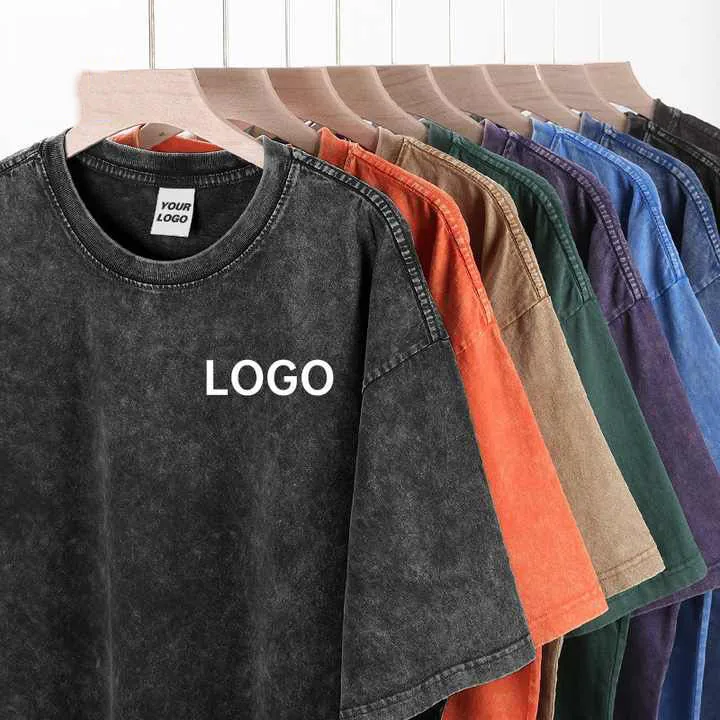
Review boxy, drop-shoulder, and oversized shapes in the intended fabric rather than judging measurements alone. Specify chest width, body length, shoulder position, sleeve opening, and hem width. Use the oversized T-shirt guide for silhouette planning, then check the sample’s balance on-body.
Give the neck rib its own specification: finished width, composition, stretch recovery, and neckline opening. Ask to review whether it lies flat and retains the intended shape after washing. A substantial body fabric should not substitute for a clear collar approval standard.
Approve Wash, Handfeel, and Shrinkage Together
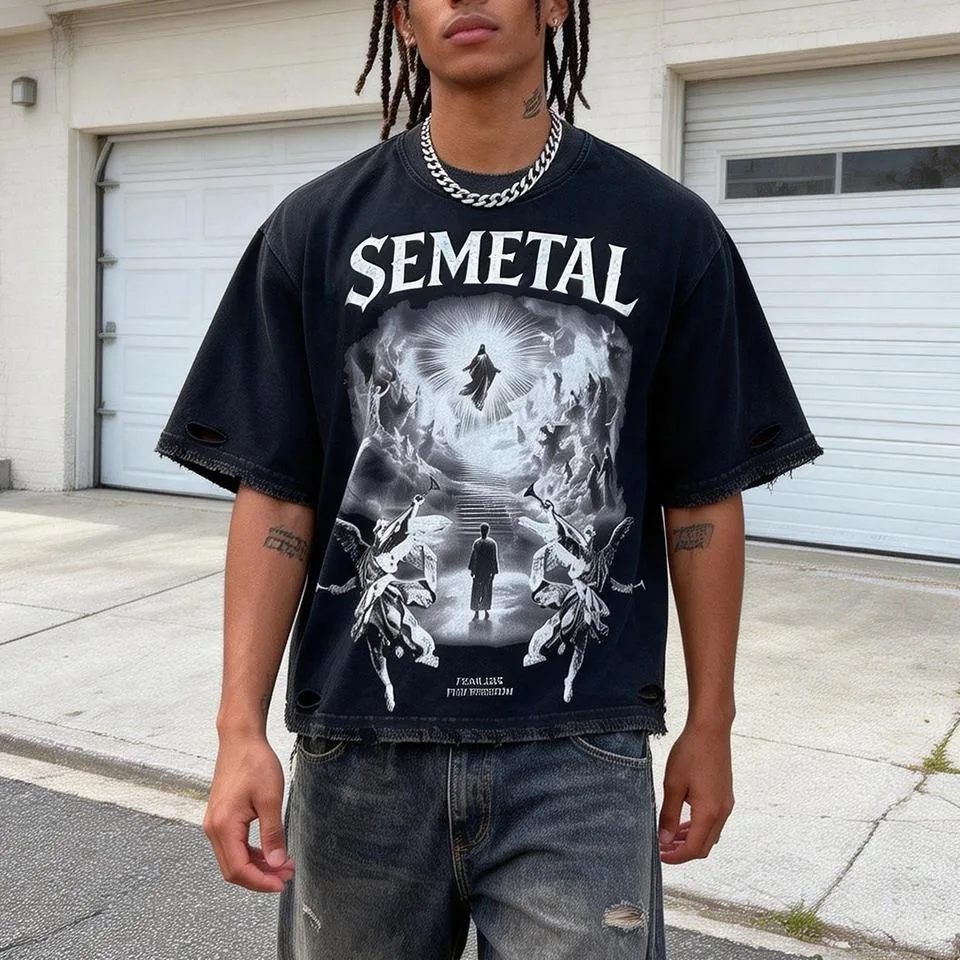
Define the finished result: clean and structured, soft and broken-in, or visibly faded. Use the vintage heavyweight tee as a visual reference, and review the acid-wash guide if that treatment is part of your brief. Confirm treatment feasibility rather than assuming every fabric can produce the same effect.
Agree on the wash method, drying method, measurement points, and acceptable dimensional change. Record measurements before and after testing, including body length, chest, and neckline. Approve shade and handfeel against a physical sample, with acceptable variation documented. The fabric shrinkage and wash-test guide can help structure that review.
Branding, Prints, and Private Labels
StitchQuote offers private-label and cut-and-sew options. Include artwork dimensions, placement, label locations, and care-label content in your brief. For a quiet basic, review private-label T-shirt planning; for decorated styles, use the graphic T-shirt guide. Ask to confirm print compatibility and whether decoration is applied before or after the proposed wash.
MOQ, Sampling, and Bulk Approval
MOQ starts from 50 pieces per style for most knit and casual styles. Samples typically take around 7 days for standard styles; confirm project-specific MOQ and sample timing. Review low-MOQ planning and sampling and MOQ details before committing quantities.
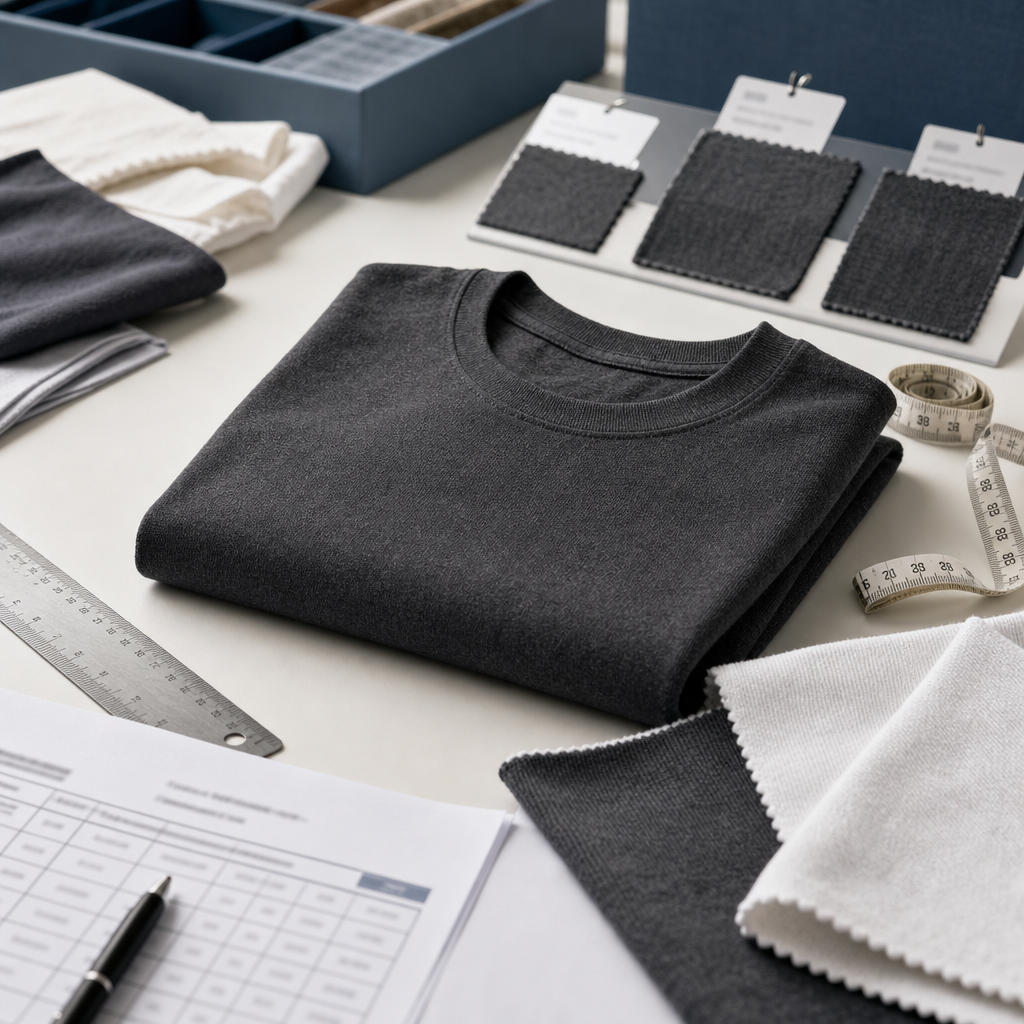
Before bulk approval, document the accepted fabric, measurements, neck rib, wash result, decoration, and tolerances. Request costing against that specification, not “heavyweight” alone. The T-shirt manufacturing cost guide provides a framework for preparing your inquiry.
FAQ
Is 250 GSM the only heavyweight option?
No-treat it as a reference direction, not a limit. Submit your target weight and ask which fabric is proposed for your project.
How should I specify shrinkage?
Define the test conditions and acceptable change at named measurement points. Ask for recorded results rather than relying on “preshrunk” wording alone.
What should I send for sampling?
Send target GSM, composition, measurements, neck-rib details, wash references, artwork, and quantities. Include your intended approval date and confirm sample timing.
Discuss Your Heavyweight Tee Brief
Share your specifications with StitchQuote to confirm the proposed fabric, project MOQ, and sample timing before moving into development.