Custom Streetwear, Casualwear & Denim Manufacturer•MOQ 50 pcs•Denim MOQ 100 pcs•7-Day Sample Available

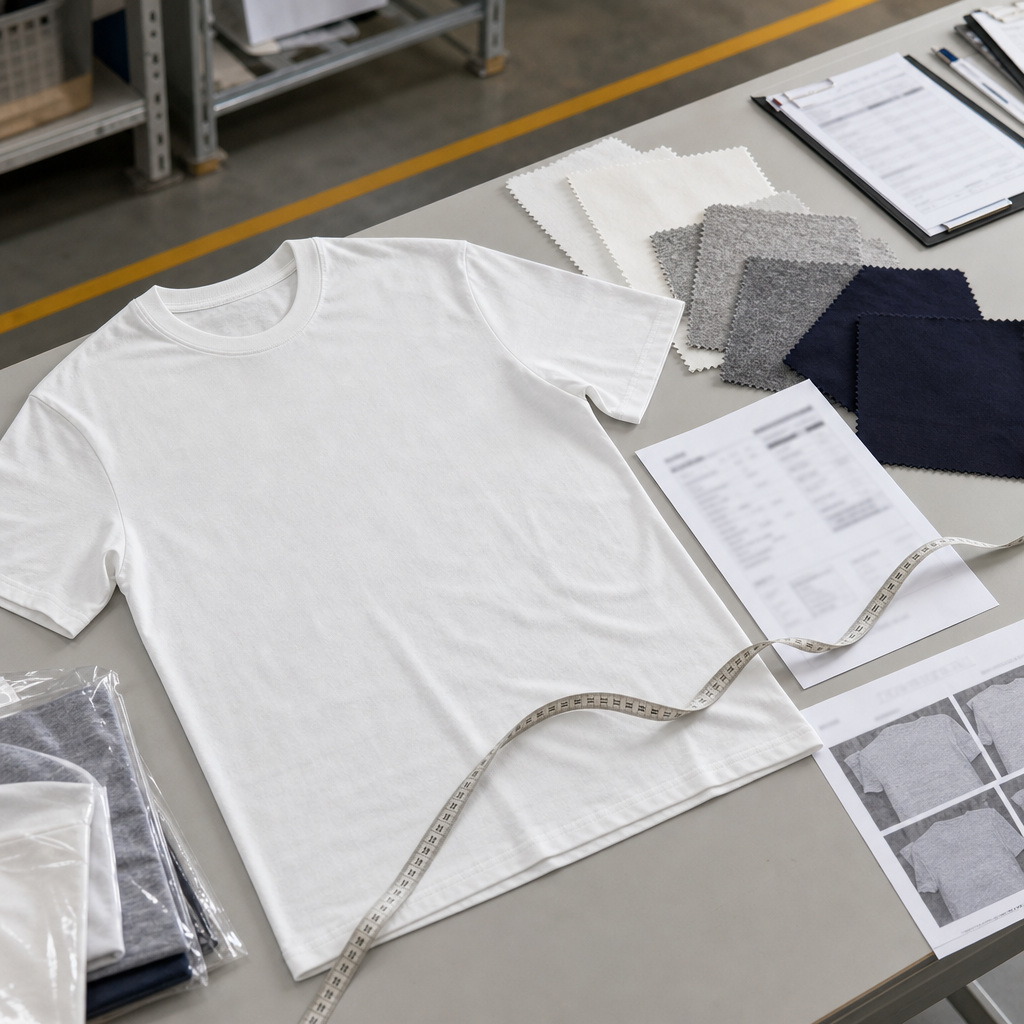
How to Check T-Shirt Fabric Shrinkage Before Premium Basics Production
Check T-shirt fabric shrinkage before premium basics bulk by measuring body length, chest, neck rib, side seams, GSM feel, and after-wash fit.

T-shirt fabric shrinkage should be checked before premium basics bulk production because a sample that looks balanced before wash can lose body length, tighten across the chest, pull at the neck rib, or twist along the side seam after the first customer laundry cycle.
For low MOQ premium basics, treat shrinkage as an approval record, not a vague fabric note. Measure the sample before wash, wash it under the buyer-approved care method, measure it again, then decide whether the pattern, fabric, rib, or tolerance table needs to change before bulk cutting.
Measure the T-Shirt Before Washing
Start with the approved sample laid flat on a stable table. Record body length, chest width, shoulder width, sleeve length, sleeve opening, neck width, neck drop, sweep, and any critical design points. Use the same measuring method that the factory will use during production QC so later inspection results are comparable.
If fabric weight is still being approved, connect the wash test with the T-shirt GSM guide for premium basics. GSM, handfeel, shrinkage, and final fit should be reviewed together before bulk fabric is locked.
Wash Under Buyer-Approved Conditions
The wash condition should match the final care expectation. If the care label says cold wash and tumble dry low, use that method. If the brand expects line drying, do not approve the fabric based only on tumble-dry results. The test should predict real buyer and customer use, not create an artificial pass.
When color is still being reviewed, use the lab dip approval checklist alongside the shrinkage result so shade, fabric, and wash behavior are not approved in separate conversations.
For premium basics, shrinkage should stay connected to fabric, rib, and tolerance planning; use custom T-shirt manufacturing checks for shrinkage risk before releasing a small run.
Review Body, Chest, Neck Rib, and Side Seams
After washing, measure the same points again and write the actual change next to the original measurement. Body length and chest are usually the first fit concerns, but neck rib recovery and side seam movement can make a premium T-shirt feel lower quality even when the main body is close to tolerance.
Use the T-shirt neck rib approval checklist if the collar becomes loose, wavy, tight, or uneven after wash. If the side seam rotates, compare the sample with the twisted side seam diagnosis guide before approving bulk fabric.
Check Surface, Handfeel, and Pilling Risk
Shrinkage is not only a size issue. After washing, inspect fabric surface, pilling, skew, handfeel, collar shape, sleeve opening, and hem stability. A T-shirt can technically measure within tolerance but still feel wrong if the jersey compacts too much or the surface changes faster than expected.
The fabric pilling risk guide helps buyers decide whether surface behavior is acceptable before approving a premium basics fabric for production.
Write the Bulk Approval Rule
If the shrinkage result is acceptable, record the approved tolerance range and keep the before and after wash measurements with the production file. If body length is short, add pattern allowance before cutting. If chest width tightens too much, review fabric relaxation, pattern, and sewing tension. If neck rib changes more than the body, adjust rib quality or construction before bulk.
Do not leave the factory with a general note such as control shrinkage. A useful approval note should say which measurements matter, what range is acceptable, which wash condition was used, and whether another sample must be tested before production starts.
Questions Buyers Ask Before T-Shirt Shrinkage Testing
Should every T-shirt sample be washed before bulk approval?
For a new fabric, new fit, or premium basics style, wash-testing the approved sample is the safest route. Repeat styles can use prior records only when the fabric, dyeing, rib, and factory process are unchanged.
What shrinkage percentage is acceptable for T-shirts?
Acceptable shrinkage depends on fabric, fit, garment wash, and buyer tolerance. The important point is to define body length, chest, neck rib, and side seam rules before production begins.
Should the print or decoration be tested too?
Yes, when decoration affects handfeel or garment tension. Screen print, puff print, embroidery, and heat transfer can change how the garment behaves after wash, especially on lighter jersey.
Prepare T-Shirt Wash-Test Notes for Review
Send your T-shirt reference, jersey fabric, GSM target, rib detail, care method, sample measurements, and order quantity through the StitchQuote inquiry form. StitchQuote can help identify which shrinkage and after-wash fit details should be locked before low MOQ premium basics production.
[…] premium basics where GSM, neck rib, or side-seam balance can shift after washing, use how to check t-shirt fabric shrinkage before premium basics production to confirm fabric shrinkage checks before bulk T-shirt […]
[…] premium basics where GSM, neck rib, or side-seam balance can shift after washing, use how to check t-shirt fabric shrinkage before premium basics production to confirm fabric shrinkage checks before bulk T-shirt […]
[…] T-shirt fabric shrinkage wash test guide helps buyers connect hem shape with length change, width change, and fabric recovery. If the style […]