Custom Streetwear, Casualwear & Denim Manufacturer•MOQ 50 pcs•Denim MOQ 100 pcs•7-Day Sample Available
How to Review Hoodie Rib Cuffs and Hem Recovery Before Bulk Production
A practical hoodie sample approval guide for checking rib cuff quality, bottom hem recovery, wash behavior, seam attachment, and QC notes.

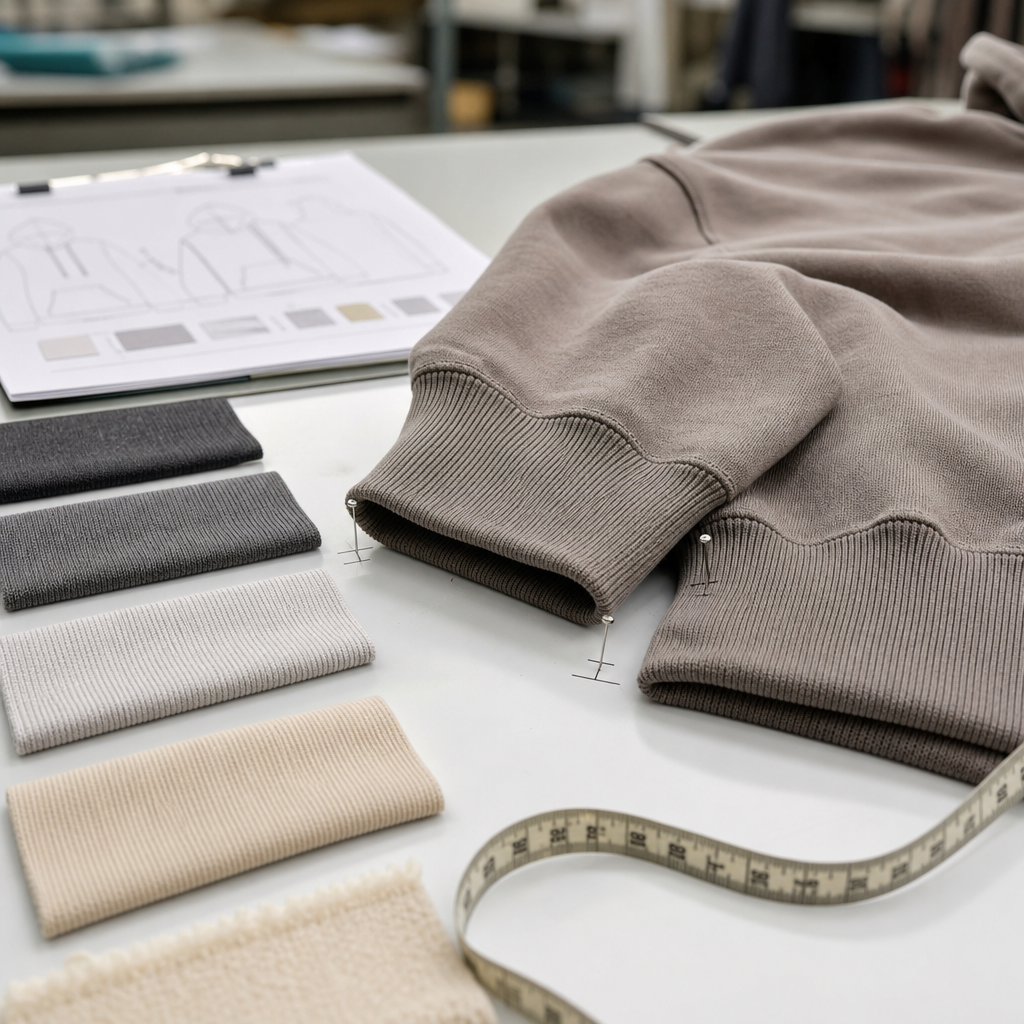
Hoodie rib cuff quality is easy to underestimate because cuffs and hems look like small trim details. In bulk production, they affect fit, hand feel, sleeve shape, bottom opening, wash recovery, and the way the hoodie sits on the body. A strong fabric and clean print can still feel unfinished if the rib stretches out, twists, waves, or does not match the garment.
For hoodie-specific quoting and production planning, review our custom hoodie production page.
For low MOQ streetwear and private label buyers, the practical goal is not to ask for a perfect rib in abstract terms. The goal is to approve the actual rib fabric, attachment tension, opening size, recovery, and wash behavior before bulk production starts.
When fleece weight, rib recovery, or matching-set consistency depends on wash results, use how to test fleece hoodie shrinkage before low moq bulk production to confirm shrinkage checks before bulk hoodie production.
Why Rib Recovery Matters on Hoodies
Rib cuffs and bottom hems control the edges of a hoodie. They help the sleeve stay in place, shape the body opening, and create the visual weight that buyers expect from premium hoodies. If the rib is too weak, the cuff can flare after wear. If it is too tight, the sleeve may feel restrictive or the bottom hem may ride up.
StitchQuote’s complete guide to hoodie manufacturing explains how fabric, pattern, trims, sewing, decoration, and wash behavior work together. Rib should be reviewed as part of that whole system, not as a separate afterthought.
Start With the Rib Fabric
Buyers should confirm whether the rib is 1×1, 2×2, flat knit, cotton-rich, poly-cotton, or includes elastane. The fiber and structure affect recovery, stretch, color uptake, hand feel, shrinkage, and cost. A rib that feels soft in a small swatch may not hold shape well on a heavy hoodie.
Ask whether the rib is the same fabric lot as the body or a separate trim order. For matching sets, rib shade can become visible when hoodies and sweatpants sit together. The article on matching set fabric consistency is useful when rib, body fabric, and sweatpants panels must work in the same color family.
Check Cuff Opening and Stretch Recovery
A cuff should stretch enough for the wearer to put on the hoodie comfortably, then recover close to the approved shape. If it stays stretched after light pulling, the sleeve can look tired before the garment has been worn much. If it is too tight, the garment may feel cheap or uncomfortable.
Review the cuff on a real sample, not just a trim card. Measure the cuff opening flat, gently stretch it, let it rest, and compare it with the original measurement. The exact tolerance depends on the style, fabric weight, and intended fit, so the buyer should approve a realistic range instead of a vague comment like “make cuff better.”
Review Bottom Hem Tension
The bottom hem has a larger visual impact than many buyers expect. A loose bottom hem can flare away from the body. A tight bottom hem can pull the hoodie inward and change the silhouette, especially on boxy or oversized styles. Cropped hoodies, heavyweight fleece, and drop-shoulder fits need special attention because the hem tension changes how the garment hangs.
Check the hem while the hoodie is laid flat and while it is worn or hung naturally. Look for rippling, twisting, uneven tension, and whether the body fabric bunches above the rib seam.
Inspect Attachment and Seam Waviness
Rib quality is not only the rib fabric. Sewing tension and attachment ratio matter. If the rib is stretched too much during sewing, it can create puckering or a tight edge. If it is not controlled enough, the seam may look wavy or loose. Heavy fleece can make this more visible because the seam has more bulk.
Buyers should inspect the cuff seam, bottom hem seam, side seam joins, and any crossing points where rib meets body fabric. If the same sample also has drawcords, eyelets, or aglets, review the trim package together with StitchQuote’s guide to hoodie drawcord, eyelet, and aglet approval.
Connect Rib Checks to Washing
Rib can change after washing. It may shrink more than the body, recover poorly, twist at the seam, or change hand feel. Buyers should not approve rib recovery only from a new, unwashed sample. A wash review should compare cuff opening, hem width, seam shape, shade, and texture before and after laundering.
For small production runs, this can be part of the broader fabric review process. StitchQuote’s guide to fabric testing for small production runs covers why shrinkage, rubbing, colorfastness, and surface change should be reviewed before bulk decisions.
Check Size Grading
A cuff that works on size M may not work across the full size range. Larger sizes may need a different balance between sleeve width and cuff opening. Smaller sizes can look bulky if the rib height or seam allowance is not scaled carefully. The buyer should review at least the key sample size and any size where fit risk is high.
For low MOQ orders, full size-set sampling may not always be practical. When it is not practical, the buyer should still ask how cuff opening, rib height, bottom hem width, and attachment ratios will grade across sizes.
Create Clear Approval Notes
A useful rib approval record should include rib fabric reference, fiber content if available, rib structure, cuff opening, cuff height, bottom hem height, hem width, wash comments, shade comments, and photos of any seam issues. This gives the factory a clear standard for bulk and reorder comparison.
Approval should also state what the buyer values most. A relaxed oversized hoodie may accept a softer, less compressive rib. A fitted athletic-inspired hoodie may need stronger recovery. Those are product decisions, not just QC corrections.
Questions to Ask Before Bulk
- Is the rib fabric approved on the real hoodie sample?
- Does the cuff recover after light stretching?
- Does the bottom hem hold the intended silhouette?
- Are cuff opening, rib height, and hem width measured and recorded?
- Has the sample been washed and checked for rib shrinkage or twisting?
- Does the rib shade match the body fabric closely enough for the product position?
- Will the rib specification be repeatable for reorders?
StitchQuote Note
For custom streetwear manufacturing, low MOQ clothing production, and sampling and MOQ projects, StitchQuote treats hoodie rib approval as part of sample fit and trim control. The buyer should approve rib fabric, recovery, seam attachment, wash behavior, and size grading before bulk production.
FAQ
What makes hoodie rib cuffs stretch out?
Common causes include weak rib structure, unsuitable fiber blend, poor elastane recovery, excessive stretching during sewing, heavy wear, washing, or a mismatch between rib strength and garment weight.
Should hoodie cuffs and bottom hem use the same rib?
Often they do, but the best choice depends on style, weight, fit, and recovery needs. A buyer should approve both areas on the actual hoodie sample because cuff behavior and bottom hem behavior are not identical.
Can low MOQ buyers control rib quality?
Yes, if they approve the real sample, record measurements, review wash behavior, and ask how the rib specification will be repeated. The approval does not need to be complicated, but it must be specific.
[…] the rib is loose, stretched, or slow to recover, review the hoodie rib cuffs and hem recovery guide before approving the grading table. Rib behavior can change how the sleeve and hem sit on the […]