Custom Streetwear, Casualwear & Denim Manufacturer•MOQ 50 pcs•Denim MOQ 100 pcs•7-Day Sample Available

How Hoodie Rib Quality Changes the Final Perceived Value
Understand hoodie rib quality with more practical factory-side context around material behavior, product feel, stability, and how the decision affects sample and.

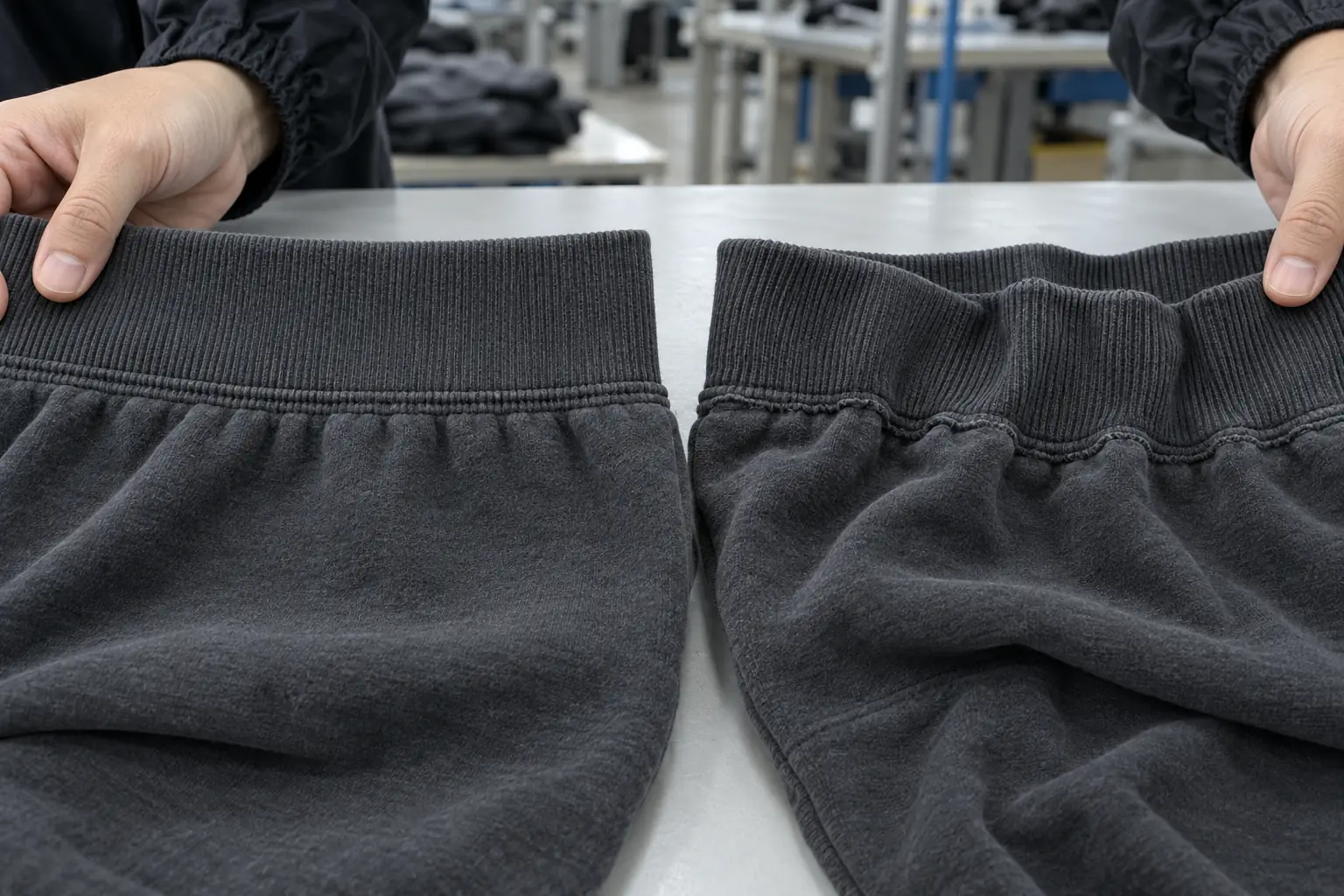
A hoodie can feel substantial on a showroom rail and look tired after its first wash. Often the change starts at the edges: cuffs tighten, the waistband pulls the body into folds, or a once-clean sleeve opening turns wavy. Buyers read these details as quality signals because they affect how the garment sits and feels every time it is worn.
Hoodie rib quality therefore needs approval along a shrinkage path, from finished fabric through sewing, garment treatment, and customer laundering. The useful buying question is whether the rib and body will keep the intended relationship after those stages. This guide focuses on that relationship and the evidence to request before approving production.
Start with the silhouette the customer should keep
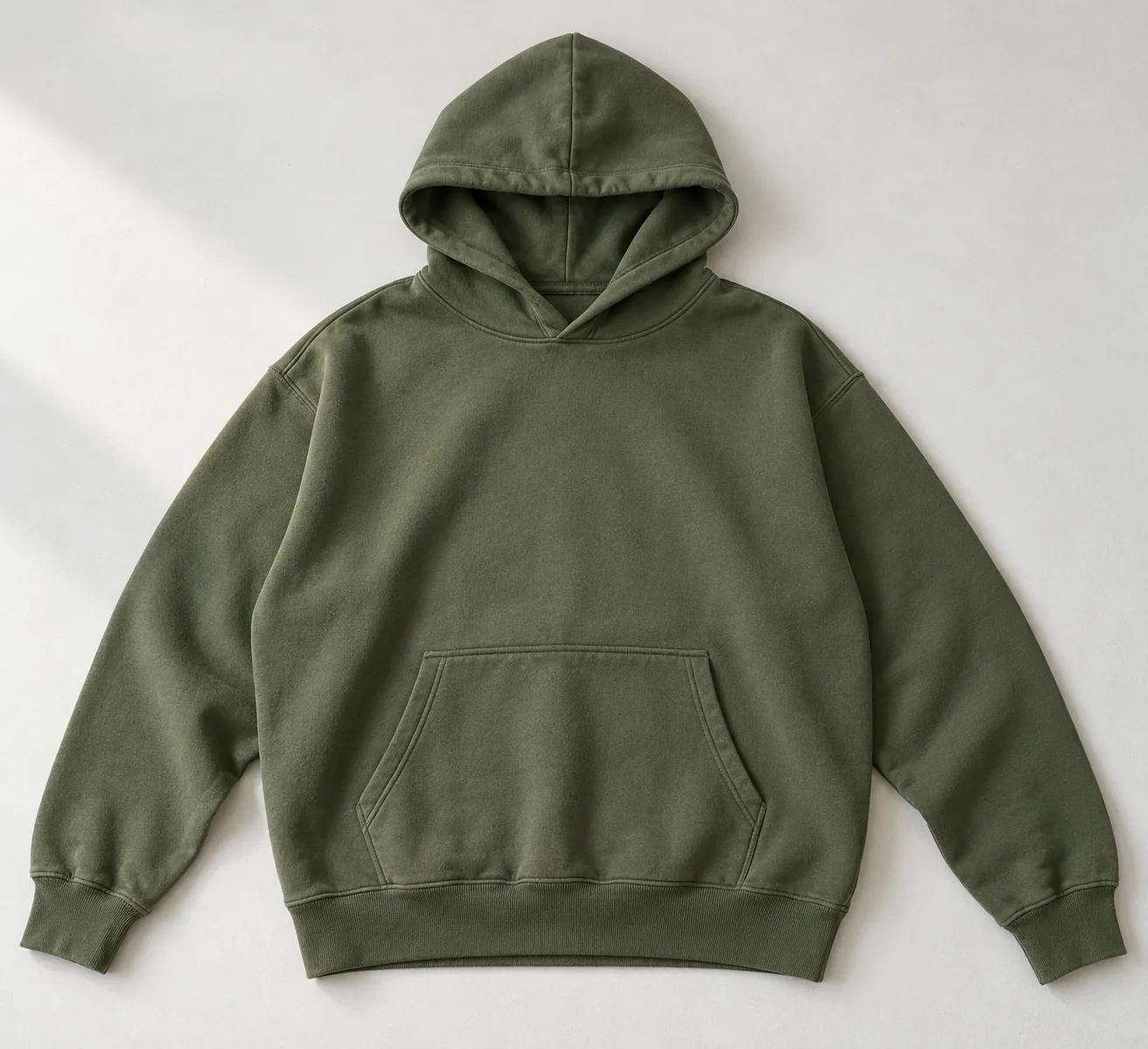
Define the desired washed appearance before choosing a rib construction. A cropped, blouson hoodie may need a waistband that draws the body inward. A straight, relaxed style may need only enough tension to hold a clean edge. The same rib can look controlled on the first design and visibly over-tight on the second.
Record cuff opening, cuff height, waistband height, relaxed hem width, and body width immediately above the waistband. State whether measurements describe the garment as shipped or after the agreed care cycle. Include reference photographs of both states, with the garment lying flat without stretching the rib into position.
For an illustrative adult style, a buyer might specify a 7 cm finished cuff height and a 10 cm relaxed flat opening, with an initial tolerance of ±0.5 cm. These are example development values, not universal standards. Set separate washed targets according to fit, size range, and intended compression at the wrist.
Map where the body and rib change dimensions
The body and rib may arrive with different processing histories. One may have been compacted more effectively, while the other still holds knitting or finishing tension. Cutting them to the right dimensions does not remove that difference. Steam, garment washing, and home laundering can release it at different stages.
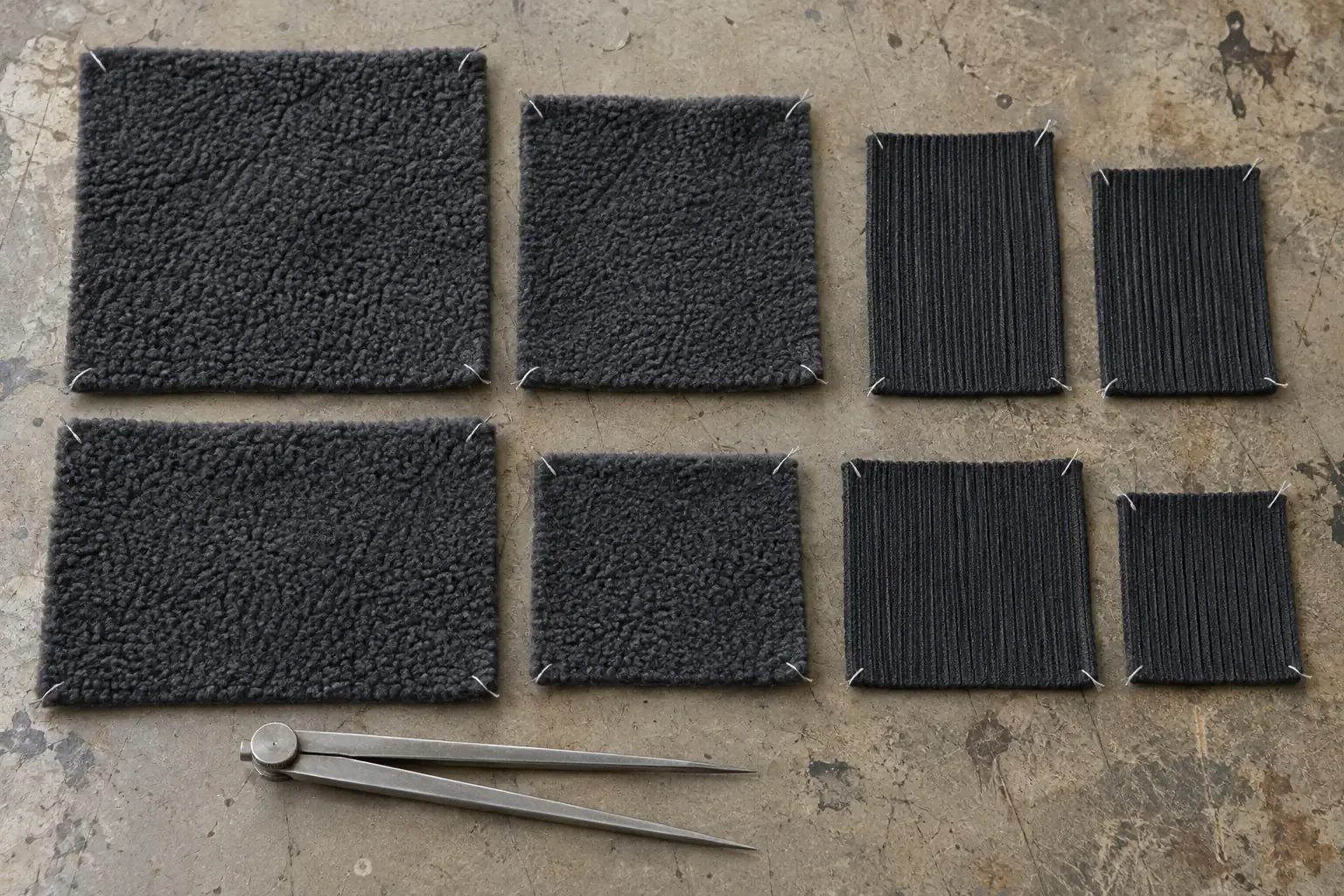
Request paired samples from the actual proposed materials. Mark a measurable rectangle on each and identify the length and width directions. For rib, identify which direction will run around the wrist or waist. Test under the proposed care conditions, then dry and allow both materials to rest under the same agreed conditions before measuring.
| Checkpoint | Record | Decision it supports |
|---|---|---|
| Finished fabric before cutting | Relaxed dimensions, lot identity, processing history | Whether the pairing is ready for sampling |
| After garment treatment | Body and rib measurements, seam appearance | Whether delivered fit meets the brief |
| After customer care simulation | Dimensional change and recovery | Whether the silhouette remains acceptable |
Use shrinkage percentage = (original measurement − washed measurement) ÷ original measurement × 100. A marked 40 cm span that becomes 38 cm has shrunk 5%. A negative result indicates growth. Record both directions; one overall percentage hides changes that can shorten a cuff while also tightening its opening.
Translate differential shrinkage into an attachment decision
Consider a simplified waistband example. A body edge measures 120 cm around before washing, and the relaxed rib loop measures 108 cm, excluding seam allowances. The initial rib-to-body ratio is 90%. If the body shrinks 3% around that edge and the rib shrinks 8% along its loop, their separate test dimensions become 116.4 cm and 99.36 cm. The ratio drops to roughly 85.4%.
Those figures do not predict the exact dimensions of a sewn garment: the joined materials restrain each other. They do show why an acceptable first sample may gather more strongly after washing. The seam must absorb a larger mismatch, potentially producing puckering or an exaggerated balloon shape.
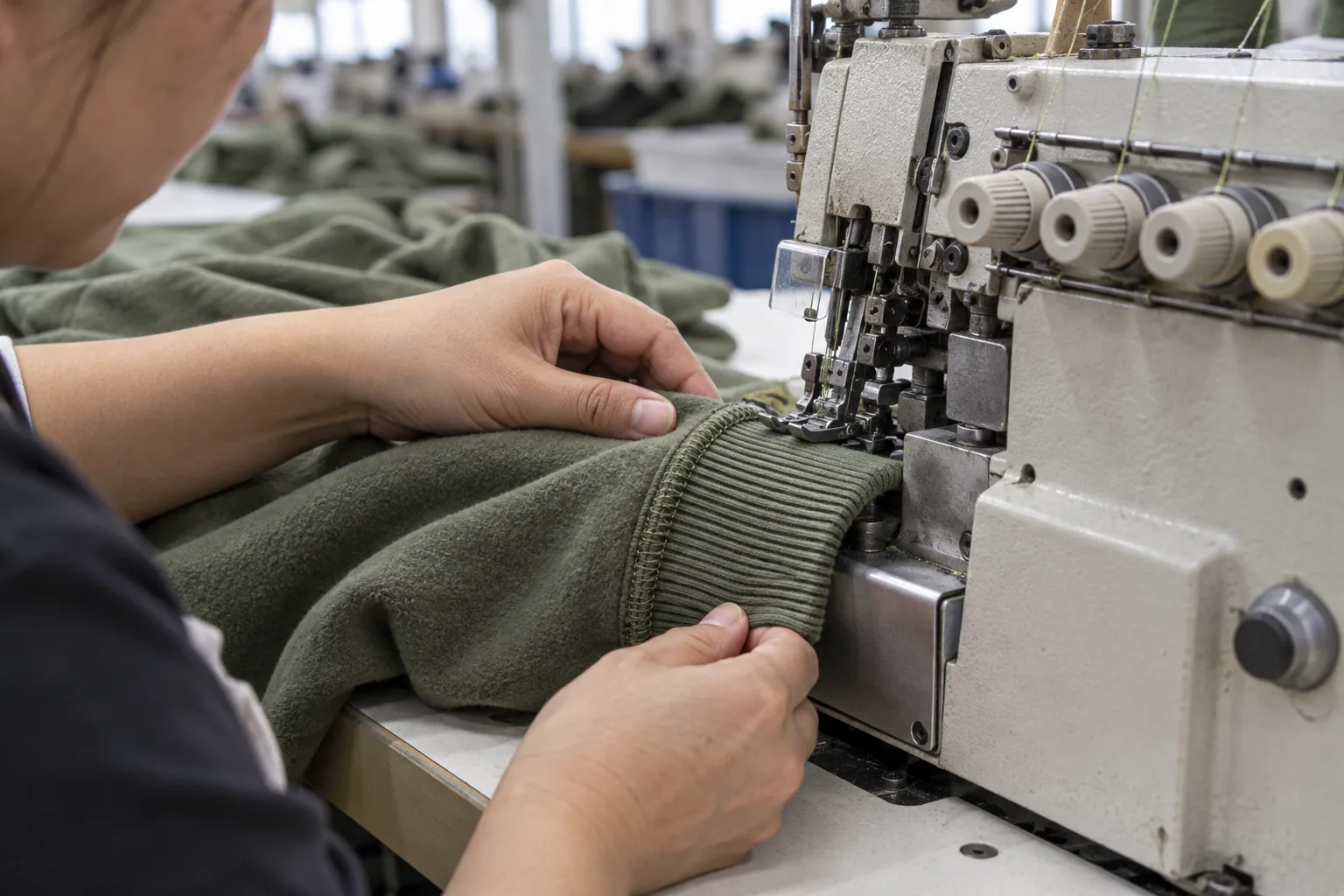
Ask the sample maker to compare a small set of attachment ratios using the same body fabric and sewing settings. Evaluate each after washing. Simply lengthening the rib can reduce gathering but may leave the unwashed garment loose or weaken hold at the wrist. A more stable rib may solve the underlying mismatch more cleanly.
Document the approved rib loop length, body attachment length, seam allowance, and distribution marks. Apply the decision deliberately across sizes rather than assuming one cuff length works throughout the range. Larger openings and different sleeve volumes can change both dressing comfort and the visual amount of gathering.
Separate shrinkage control from stretch recovery
A rib can pass dimensional checks and still feel inexpensive if it stays stretched after wear. Conversely, a firm rib can recover well but shrink too much during care. Specify these as separate requirements. Rib structure, yarn choice, elastane content where used, finishing, and fabric weight all contribute; none alone guarantees the result.
For a practical development screen, agree a relaxed opening, an extension relevant to dressing, a hold time, a number of repetitions, and a rest period before remeasurement. Use the same sequence on unwashed and washed cuffs. This is a comparative screen unless a formal test method is specified, so do not present its results as a standardized certification.
Observe the whole cuff during extension. Excessive force can strain the joining seam even when the rib itself stretches easily. Look for stitch cracking, exposed seam allowances, twisting, and uneven return. After resting, compare opening size and surface shape with the approved sample.
Record rib weight with its measurement state, such as conditioned finished fabric before laundering. A heavier rib is not automatically more stable, and matching the body’s GSM is not a compatibility test. Choose the combination that maintains the desired edge shape without feeling bulky against the hand.
Approve the production sequence, then preserve its evidence
Use a complete garment to validate the chosen materials. If the style includes garment washing, test that treatment before simulating customer care. If pressing occurs before packing, inspect both freshly pressed and rested garments. Temporary flattening can disguise a wavy seam that returns later.
Run an initial care cycle, inspect it, then repeat to an agreed checkpoint, such as three total cycles for a development comparison. Confirm temperature, detergent, load conditions, drying method, and rest time. These example checkpoints need project agreement; they are not a guarantee of long-term durability.
Keep an unwashed control and the approved washed sample with their measurement sheets. Identify material lots and sample versions. When a replacement rib is proposed, compare it through the same sequence. Similar color and hand feel are insufficient grounds for treating it as interchangeable.
StitchQuote offers sampling, fabric and trim sourcing, cut-and-sew, private label, branding, and QC before packing. MOQ for most categories starts from 50 pcs per style. A 7-day sample is available for standard styles with confirmed specs and available materials; complex styles, custom washes, and custom-developed fabric take longer. Include wash validation in the agreed schedule rather than assuming it fits inside sample construction time.
Use a release checklist that catches expensive-looking failures
Agree the inspection sample quantity and lot coverage before bulk approval. Destructive wash checks require planned test garments; a packing inspection alone cannot establish laundering performance. Compare results against documented limits instead of relying on a general instruction to “keep the rib premium.”
- Dimensional agreement: Check cuff and waistband measurements before and after the specified cycles. Record individual results, including left-to-right differences.
- Seam balance: Inspect the joining seam relaxed. Flag localized pleats, roping, skipped stitches, and concentrated gathering that differs from the approved sample.
- Recovery: Repeat the agreed extension screen and assess residual growth after resting. Check whether openings return evenly.
- Appearance: Compare rib and body for shade divergence, surface fuzzing, twisting, and edge flare after care.
- Traceability: Confirm the tested rib lot, approved construction, treatment route, and applicable care instructions match the bulk order.
If a result fails, isolate the likely cause before adjusting patterns. Separate material shrinkage, attachment tension, sewing feed, and treatment variation. Changing several variables together may produce a better sample without establishing a repeatable production solution.
Questions buyers ask before approving washed rib
Should the rib and body have identical shrinkage percentages?
Not necessarily. Compatible behavior depends on the attachment ratio and intended shape. Close percentages help reduce mismatch, but the joined garment must still pass fit and appearance checks in both directions.
Can pressing rescue a waistband that waves after washing?
Pressing may temporarily improve appearance. Recheck after rest and another care cycle. If waviness returns, investigate attachment balance and material behavior before approving a pressing adjustment as the solution.
Does a tighter cuff communicate better quality?
Only when it supports the design and remains comfortable. Excessive compression, difficult hand passage, or a sleeve that bunches above the cuff can undermine perceived value despite strong recovery.
When should a rib substitution trigger another garment test?
Retest when construction, yarn composition, finishing, or observed shrinkage changes. For a new lot of an approved material, follow the agreed verification plan and investigate deviations before cutting the full order.
Related reading and project planning
- Document measurements and approval conditions in your tech pack
- Plan sampling and minimum order quantities
- Understand hoodie fabric weight specifications
- Discuss your hoodie rib requirements with StitchQuote
Request a manufacturing quote
Share your product type, quantity range, and destination. We usually reply within one business day.