Custom Streetwear, Casualwear & Denim Manufacturer•MOQ 50 pcs•Denim MOQ 100 pcs•7-Day Sample Available
How to Choose the Right Clothing Manufacturer for a Startup Brand
Learn how a startup brand should choose a clothing manufacturer by comparing category fit, MOQ, sampling workflow, quote clarity, quality control, and communication.

On This Page
- Start with product category fit, not the factory’s sales pitch
- Check whether MOQ and sample workflow match your stage
- Read the quote like a scope document, not just a price
- Judge communication by how the factory handles ambiguity
- Compare factories with one decision scorecard
- Red flags that usually cost startup brands time and money
- What to confirm before you approve a supplier
Choosing the right clothing manufacturer for a startup brand is usually less about finding the lowest unit price and more about finding a factory that can handle your product type, your order size, and your approval pace without creating avoidable delays. For most startup programs, the real decision is whether the supplier can support the category, sampling workflow, MOQ structure, and communication standard you need before bulk production begins. If you are still comparing what kind of support you need, start with our manufacturing services overview.
From the factory side, the best startup projects are usually the ones with a clear product direction, a realistic first order, and one decision-maker who can approve the next step without reopening every detail. Problems usually start when a founder compares factories by headline price alone, ignores category fit, or sends the same vague brief to several suppliers and expects the quotes to be directly comparable. That is why manufacturer selection usually makes more sense when it sits inside a broader sampling and MOQ plan rather than a price-only conversation.
Start with product category fit, not the factory’s sales pitch
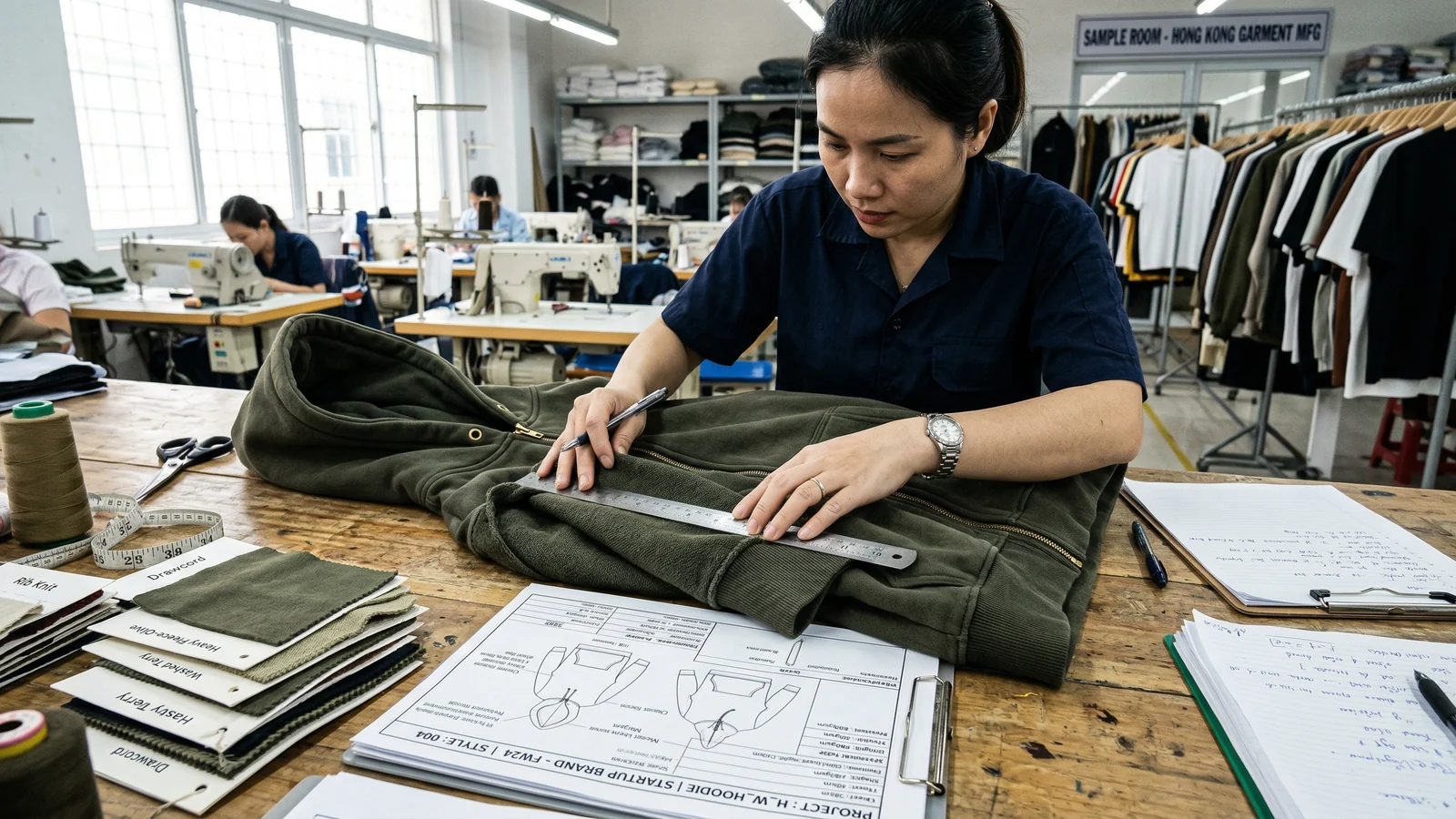
A startup brand should first ask whether the supplier regularly makes the kind of product you want to launch. A factory that is strong in basic tees may not be the right partner for washed heavyweight hoodies, denim, or trim-heavy private label programs. The first check is simple: does the factory already understand the silhouette, fabric behavior, branding details, and sample issues that usually come with your category?
This matters because startup projects do not have much room for wasted rounds. If the supplier is learning your category while sampling your order, you will usually pay for that in slower revisions, inconsistent feedback, or unclear quote assumptions. If your collection is still being narrowed, it helps to compare your product direction against the styles shown in our products overview and decide what kind of factory experience the first drop actually requires.
Check whether MOQ and sample workflow match your stage
A factory can be technically capable and still be the wrong fit for a startup if the MOQ structure or sample process does not match the way your launch is built. Some suppliers are only efficient when fabric is booked at larger scale. Others can support smaller runs, but only if styles, colors, and trims are kept under control. A startup brand should never evaluate MOQ as one isolated number. The real question is what that MOQ assumes about fabric, color splits, size range, packaging, and branding scope.
The same applies to sampling. If your first collection still needs fit adjustments, trim decisions, and artwork revision, the factory needs a sample room workflow that can absorb that reality without turning every comment into a full restart. That is why early supplier discussions should always connect to sample lead time and revision handling. Our guide on how long clothing sampling takes is useful here because it shows why an apparently fast factory is not always fast once approvals are added.
Read the quote like a scope document, not just a price
One of the biggest sourcing mistakes startup brands make is treating the quote as the decision. In practice, the quote is only useful if you understand what is included, what is still pending, and which assumptions are shaping the number. A low quote can quickly stop being attractive if it excludes trims, testing, packaging, export scope, or revision work that another supplier has already built into the commercial basis.
From the factory side, a good quote usually answers a few practical questions clearly: what fabric basis is being quoted, how branding is being handled, whether the price assumes one fit block or several variations, what trade term is being used, and what needs to be approved before the number can really hold. If you are comparing manufacturing models, our article on what CMT means in garment manufacturing can help you understand why two offers may look similar while covering very different responsibilities.
Judge communication by how the factory handles ambiguity
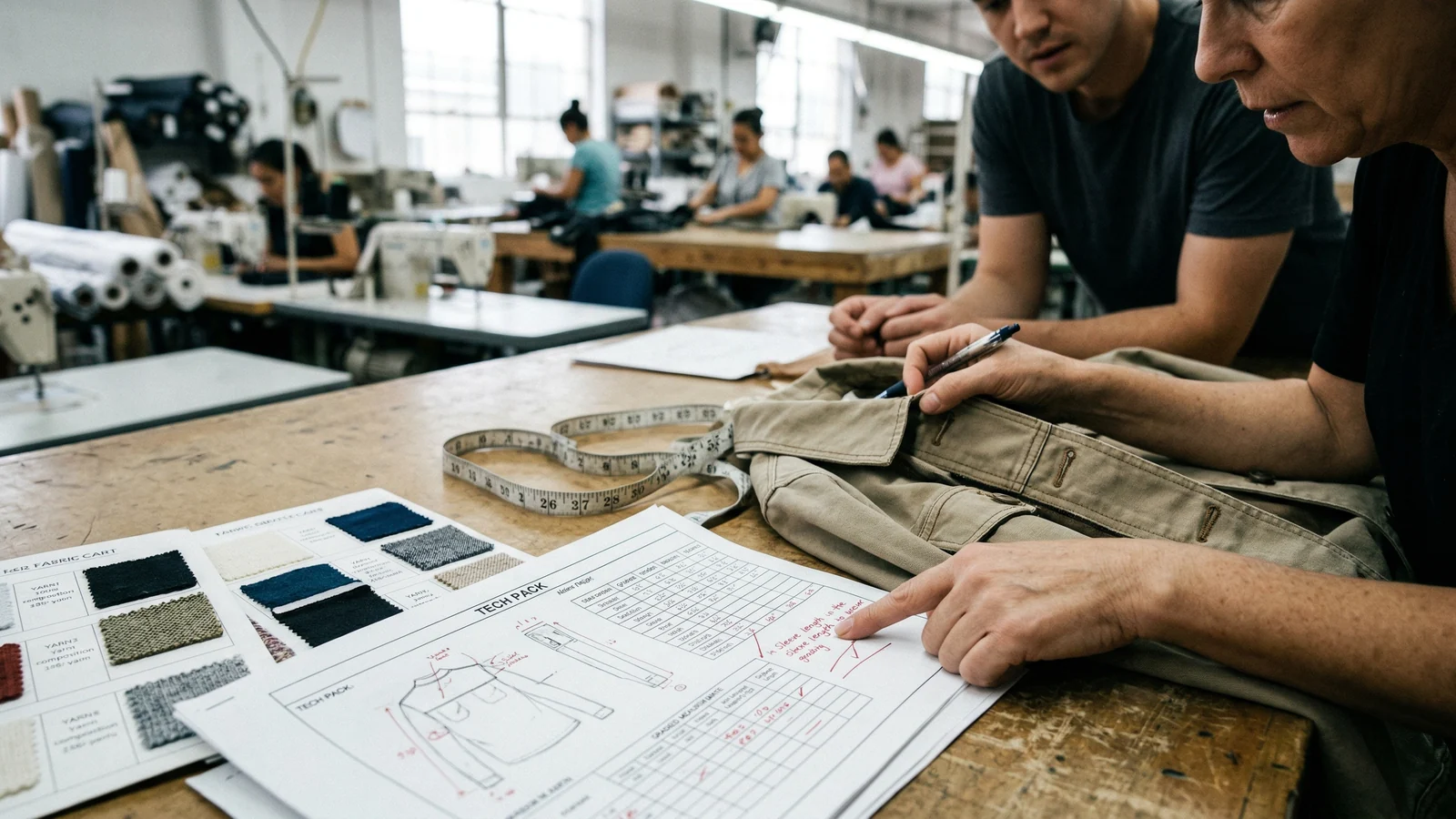
Most startup briefs are not perfect on day one. That is normal. The more important test is how the factory responds when the brief still has open points. A useful supplier does not just say yes to everything. They point out where the measurements are incomplete, where the fabric direction is risky, where MOQ will be affected, and where a reference image is not enough to control bulk quality.
This is one reason communication quality matters more than many founders expect. A factory that explains risk early usually saves time later. A factory that avoids difficult questions may feel easier to deal with in the first call, but often becomes expensive once sample comments start stacking up. If your file still needs structure, our guide on how to prepare a tech pack for apparel manufacturing is a strong companion before you compare factories too aggressively.
Compare factories with one decision scorecard
Startup brands usually make cleaner decisions when they compare suppliers using one scorecard instead of scattered impressions from email, WhatsApp, and PDF quotes. The scorecard does not need to be complicated. It just needs to force every supplier onto the same basis so the team is comparing category fit, MOQ reality, sample workflow, communication speed, and quote scope in one place.
- Category fit: Does the factory already make your product type at the quality level you want?
- MOQ reality: Are the stated minimums still realistic once colors, trims, and branding are included?
- Sample control: Can the supplier support the revision pace a startup collection normally needs?
- Quote clarity: Are material scope, trims, packaging, and commercial assumptions clearly written?
- Communication: Do they explain risk clearly and respond in a way that helps decisions move forward?
- Bulk confidence: Do you trust them to repeat the approved standard after sampling, not just make one good sample?
Once you compare factories this way, the decision usually becomes more obvious. The right supplier is not always the cheapest one. It is usually the one that creates the strongest chance of a stable first bulk order.
Red flags that usually cost startup brands time and money
There are a few warning signs that deserve attention early. The first is a supplier that gives a price quickly but struggles to answer basic questions about fabric basis, sample comments, or order structure. The second is a factory that agrees to every request without pushing back on feasibility. The third is a quote that looks attractive only because it is built on a much narrower scope than the other offers you received.
Another red flag is when the supplier cannot explain what happens between first sample, PP approval, and bulk launch. Startups usually need a partner that can translate product ideas into a manageable sequence of approvals. If the supplier cannot describe that path clearly, the project often ends up running on informal assumptions instead of a repeatable working standard.
What to confirm before you approve a supplier
Before you commit, the supplier should understand the product category, the first-order quantity logic, the sample path, the branding scope, and the decision timeline on your side. You should also know exactly what you are sending next: tech pack, measurement chart, artwork, label references, packaging notes, target quantity, and launch timing. A startup program becomes much easier to manage once both sides know what approval standard the next sample or quote revision is supposed to prove.
- Confirm the core product family and avoid mixing too many different styles in the first order.
- Normalize trade terms, material basis, and branding scope before you compare factory quotes.
- Check how sample comments are handled and who signs off the next round.
- Make sure MOQ still works after colors, trims, and packaging are added.
- Approve one clear next step instead of keeping several open questions alive at once.
If you want to turn factory conversations into a more reliable sourcing decision, review the relevant styles in Products, see how our Services support startup programs, or send your project through the Contact page with your current brief.
Frequently Asked Questions
What should a startup brand send before asking a factory for a quote?
A startup brand should usually send the product category, target quantity, size range, reference images or tech pack, branding scope, and expected launch timing so the factory can quote on a realistic basis.
Should a startup choose the factory with the lowest MOQ?
Not automatically. A low MOQ only helps if the factory can also support your sample revisions, product category, quality expectations, and bulk consistency.