Custom Streetwear, Casualwear & Denim Manufacturer•MOQ 50 pcs•Denim MOQ 100 pcs•7-Day Sample Available

MOQ by Style, MOQ by Color, and MOQ by Size Range Explained
Learn MOQ by color and size range through a clearer factory-side view that helps brands reduce rework, align sample goals, and move toward approval with better.

A supplier offering 50 pieces and another offering 100 pieces may be quoting different assortments, even when both received the same garment sketch. One may allow two colors within the total; the other may require the total in each color. A low headline minimum tells you little until you know which combinations of construction, material, shade, and size it covers.
Before choosing a quote, translate every minimum into an order you could actually sell. The useful comparison is the commitment required to deliver your intended assortment, including any unused fabric or trims you must purchase. This guide shows how to turn supplier replies into comparable quantities, identify restrictions hidden behind a style total, and protect the agreed split through production.
Make every supplier quote the same assortment
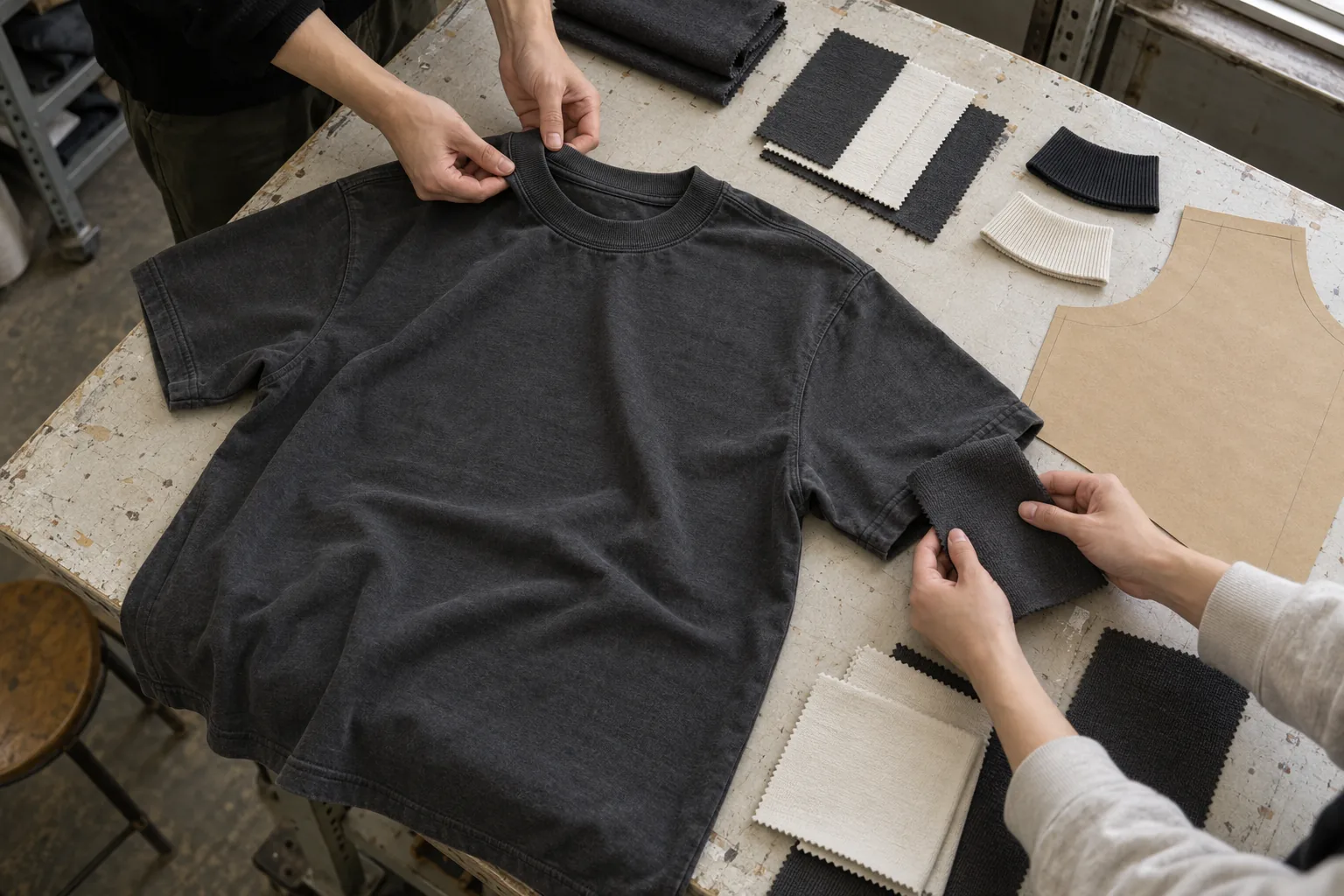
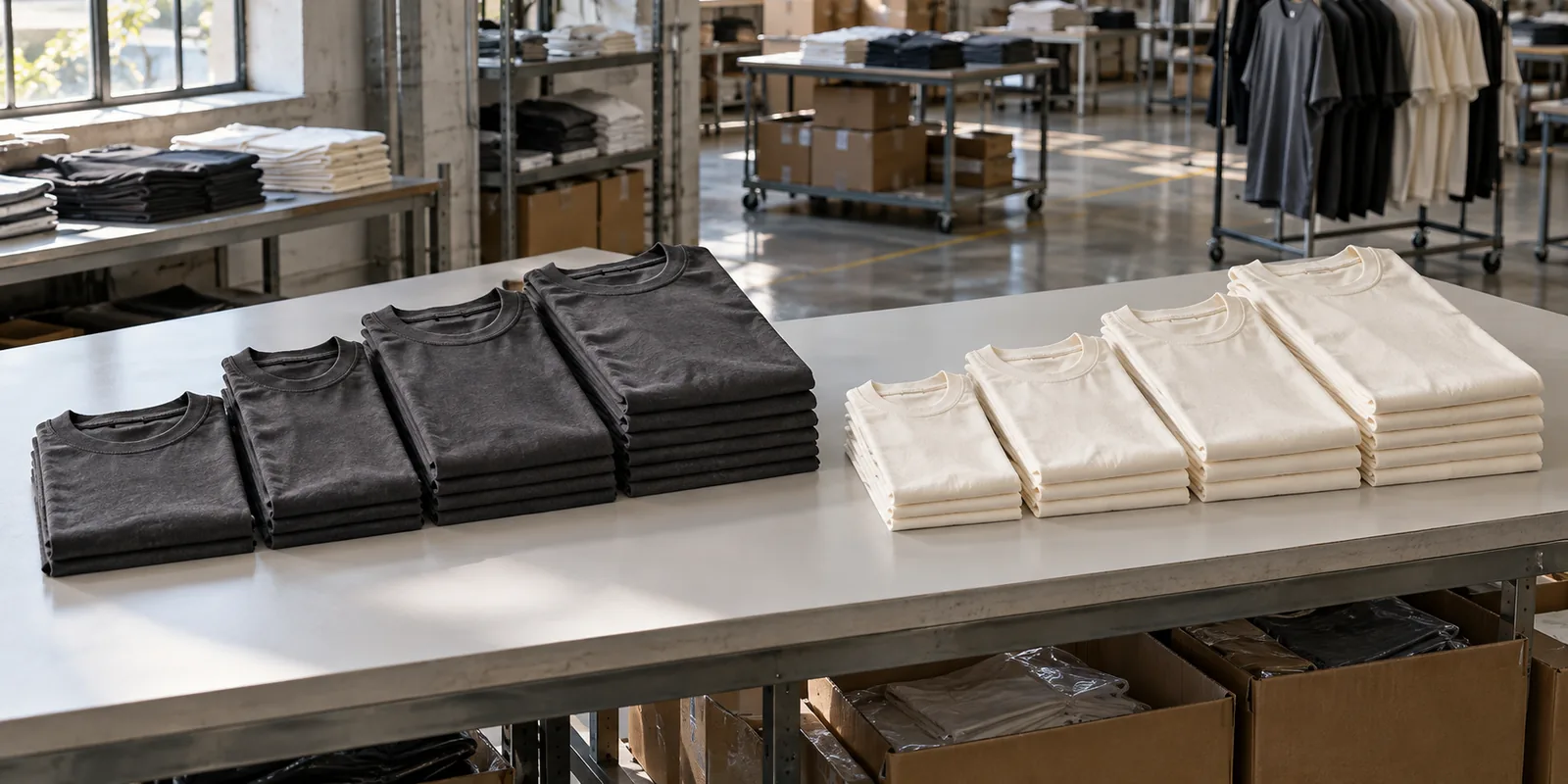
Start with a single reference specification and a quantity matrix. For example, request 120 heavyweight jersey tees: 72 in charcoal and 48 in chalk, both using the same pattern, fabric weight, neck rib, and print placement. State the fiber composition, target finished weight, washing treatment, and packaging. Otherwise, a supplier can lower the apparent entry point by substituting stock fabric or omitting a finish.
Ask each supplier to quote that exact matrix first, then list any proposed alternative separately. “120 pieces, colors subject to availability” is not equivalent to a confirmed two-color offer. Likewise, an offer based on a lighter jersey should stay outside the comparison until you decide that material change is acceptable.
Use the same specification revision and request a quote validity date. Record whether each answer is confirmed, conditional on material availability, or awaiting a sourcing check. An unresolved condition should remain visible instead of becoming an assumed approval.
Separate garment minimums from material commitments
A style minimum usually applies to a defined garment design, but suppliers may classify variations differently. A tee with a chest print and the same tee with a large embroidered panel might share a pattern yet require different production setups. Ask whether the decoration change creates another style minimum, a separate setup charge, or neither.
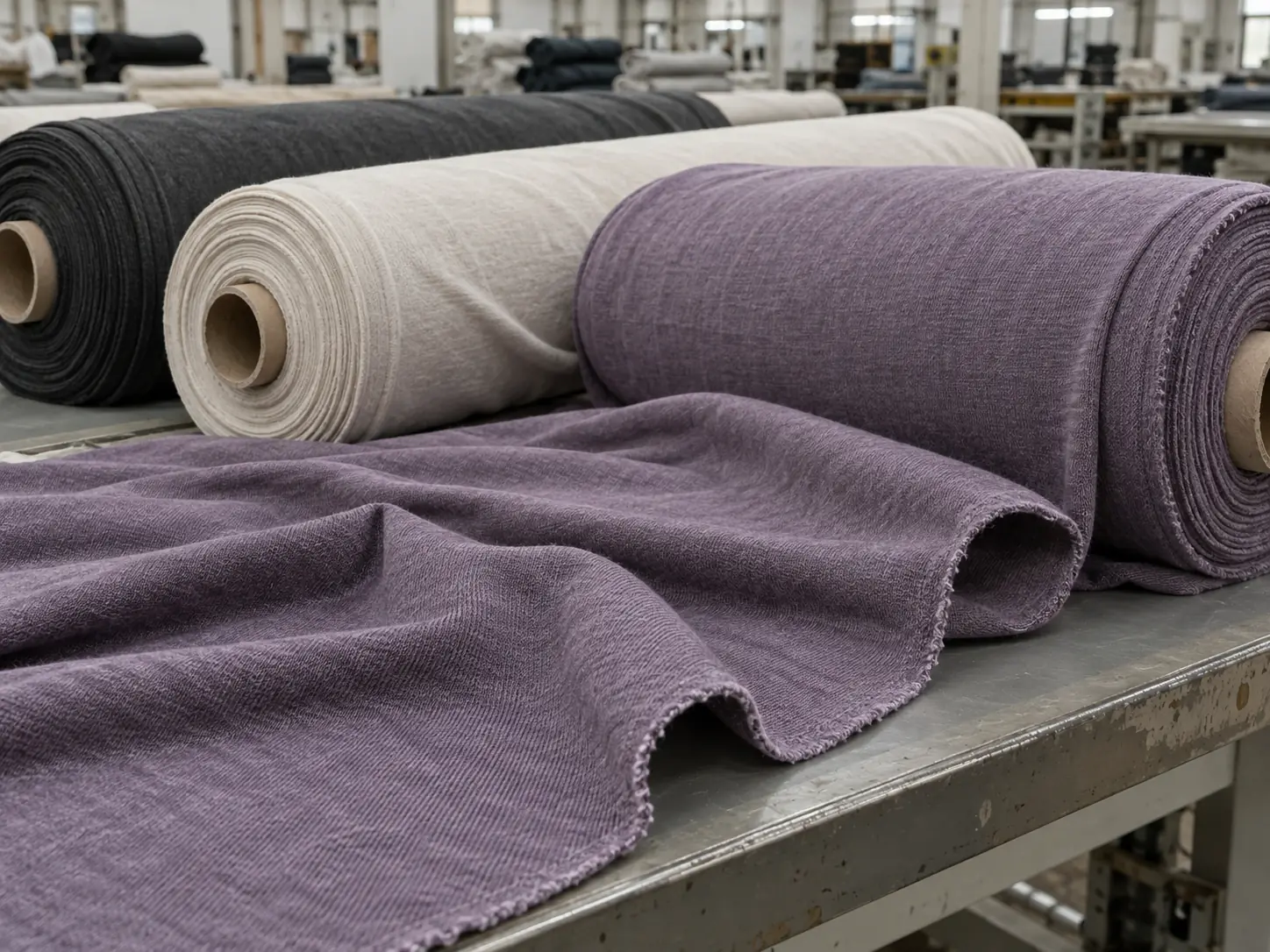
A color minimum may arise from garment production, fabric dyeing, or a matching component. Stock black jersey and custom-dyed violet jersey can have very different purchase conditions. A supplier willing to sew a small violet batch may still require payment for a larger fabric lot. Request the required fabric quantity, estimated consumption, and treatment of any remainder.
Size-range conditions require their own explanation. A standard grade may support XS–XL under one total, while adding an extended range may require additional pattern development or a separate cutting arrangement. Do not assume every size has a minimum, but ask explicitly whether there is a minimum per size, per color-size combination, or per size group.
At StitchQuote, MOQ for most categories starts from 50 pieces per style; denim starts from 100 pieces per style. Those starting points do not establish a universal color allocation or size split. Confirm the requested combination against its materials, construction, and branding requirements.
Convert each reply into a comparable purchase commitment
The following hypothetical comparison uses the 120-piece tee request above. These are illustrative supplier terms, not StitchQuote policies. Each response produces a different purchasing decision despite referring to the same style.
| Quote condition | Effect on the requested split | What to clarify |
|---|---|---|
| 100 per style; 40 per color | 72 charcoal plus 48 chalk meets both thresholds | Confirm size allocation and available fabric |
| 60 per color | Keeping 72 charcoal requires increasing chalk to 60: 132 total | Also quote a revised 60/60 split at 120 total |
| 100 per color | Two colors require 200 total | Request a one-color alternative if commercially useful |
Compare total payable commitment alongside unit price. Include garments, sampling, separately charged development, decoration setup, required excess materials, and packing. Identify what is already included so you do not count it twice. Keep freight and taxes on a consistent basis when included in the comparison.
Then compare inventory exposure. Buying 80 additional garments to obtain a lower unit price may leave more cash tied up in slow sizes. Equally, changing 72/48 to 60/60 preserves the total but changes the assortment. Treat that as a merchandising decision requiring approval, rather than a harmless arithmetic adjustment.
Find restrictions inside the size curve
A total can satisfy both style and color thresholds while leaving individual size quantities unresolved. For the charcoal allocation, a proposed XS–XL curve could be 6/12/24/18/12, totaling 72. The chalk curve could be 4/8/16/12/8, totaling 48. If a supplier requires six units in every color-size combination, the four chalk XS pieces need discussion.
Ask whether that restriction is mandatory or simply a preferred cutting ratio. Possible responses include accepting the original curve, reallocating two chalk pieces from another size, or increasing the total. Each response has a different commercial effect; obtain a revised matrix before accepting the quote.
Clarify whether quoted pricing applies across the full size range. Different fabric consumption, graded print dimensions, or construction changes can affect individual sizes. For extended sizes, specify whether a fixed-size graphic remains unchanged or scales with the garment. A supplier should not have to infer that choice from a single medium sample.
Request alternatives that reveal the actual constraint
Once the original assortment is priced, ask for two controlled alternatives. For the tee example, compare the requested two-color run with a one-color run at the same total, then with a two-color run using available stock fabric. Change one variable at a time so the responses reveal whether color setup or material procurement is driving the minimum.
For denim, use equally specific alternatives: the same fit with one wash versus two washes, with hardware and branding held constant. Wash development and processing requirements can change the feasible quantity. Do not assume that sharing a pattern lets different washes pool into one unrestricted minimum.
Separate sampling readiness from bulk readiness. StitchQuote offers a 7-day sample for standard styles with confirmed specifications and available materials; complex styles, custom washes, and custom-developed fabrics take longer. A sample schedule does not confirm that every bulk color is available. Request material confirmation and a production timing assumption for each alternative.
Check the approved split before authorizing packing
The commercial agreement needs a matching QC and allocation check. A correct total of 120 garments can still conceal missing sizes or an unwanted color substitution. Make the approved matrix part of the purchase specification, then use it for the finished-goods count.
- Identity: Match style revision, fabric, finish, decoration, and color reference to the approved sample and specification.
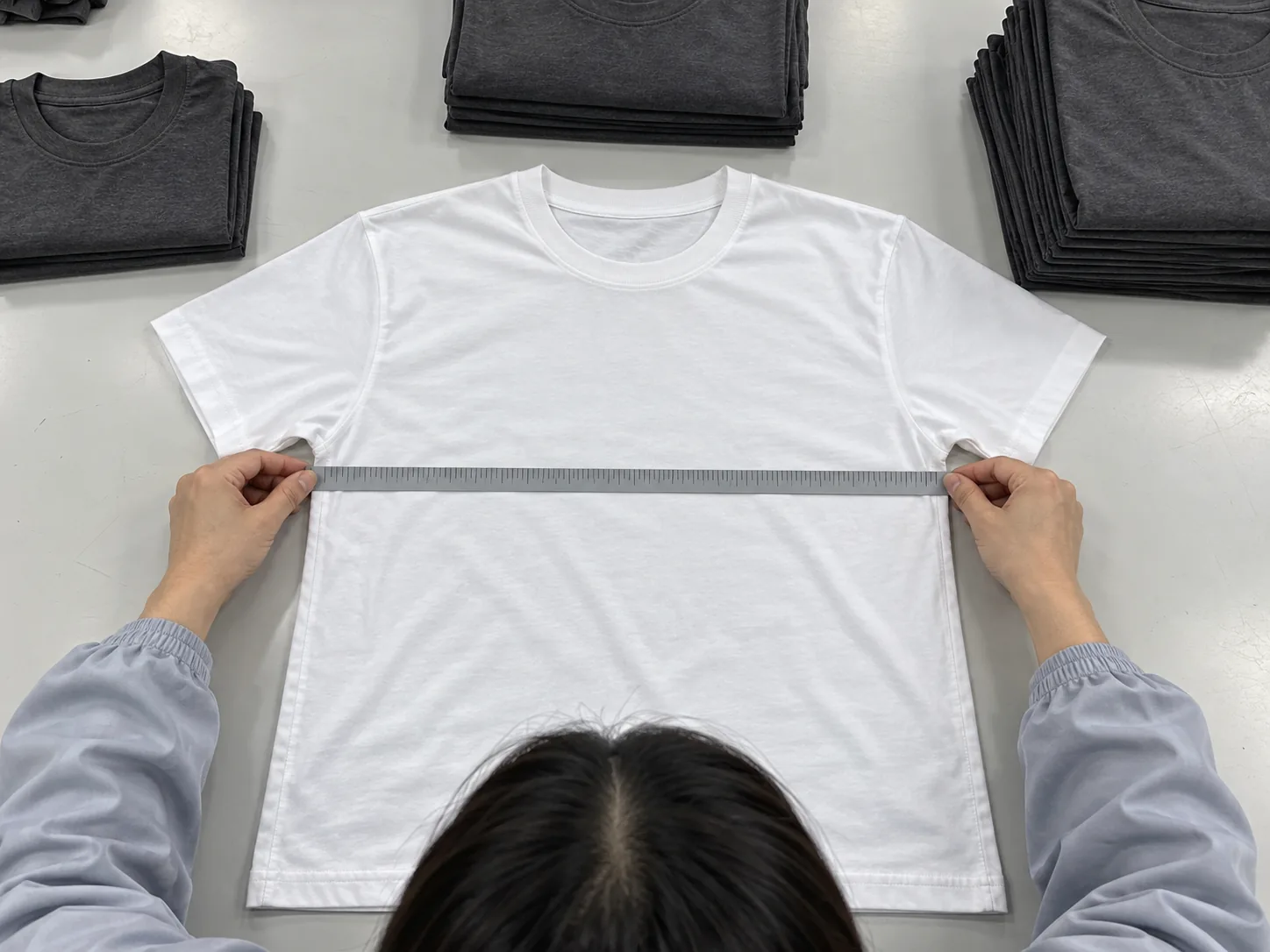
- Measurements: Define points of measure and tolerances before production. For example, a buyer might propose ±1 cm for half-chest and body length on a jersey tee; confirm suitability for the fabric and finish rather than applying it universally.
- Allocation: Reconcile finished quantities by color and size. Agree in writing whether any overproduction, shortages, or substitutions are acceptable.
- Labeling: Check that sewn size labels, care information, and package identifiers match the garment inside.
- Exceptions: Record defective units and their size-color positions. Confirm the remedy before accepting a reduced assortment.
StitchQuote provides QC before packing, alongside cut-and-sew, private label, sampling, fabric and trim sourcing, and branding through woven labels, prints, and embroidery. Agree on project-specific inspection criteria so the checks address your purchase requirements.
Questions buyers ask when two quotes look similar
Can I combine two styles that use the same fabric?
Shared fabric may help meet a material purchase requirement, but it does not automatically combine garment minimums. Different patterns and sewing operations still require separate planning. Ask the supplier to distinguish the shared fabric commitment from each style’s production threshold.
Does paying for leftover fabric guarantee a smaller reorder?
No. Fabric ownership does not remove cutting, sewing, or decoration constraints. Confirm storage terms, usable remaining quantity, shade continuity, and the reorder minimum separately. Record who owns the remainder and how it will be identified.
Which quote should I choose if one has more conditions?
Compare confirmed terms before ranking price. A conditional offer may become attractive after material availability is resolved, but it is not yet a firm match for your assortment. Request written confirmation of the open points and refresh the comparison using the resulting quantities.
Related reading and next steps
- Prepare the specification behind a comparable quote
- Review sampling and MOQ considerations
- Explore hoodie manufacturing cost components
- Send StitchQuote your assortment for a project quote
Request a manufacturing quote
Share your product type, quantity range, and destination. We usually reply within one business day.