Custom Streetwear, Casualwear & Denim Manufacturer•MOQ 50 pcs•Denim MOQ 100 pcs•7-Day Sample Available
Pre-Shipment Inspection for Low MOQ Apparel: What Buyers Should Check Before Release
A pre-shipment inspection helps low MOQ apparel buyers verify measurements, sewing quality, labels, packing, and release risks before goods leave the factory.

A pre-shipment inspection should confirm whether low MOQ apparel is ready to release, not simply whether the order looks finished in a few photos. By the time packing is complete, the buyer needs evidence on measurements, sewing defects, labels, shade, quantities, cartons, and any risk that should block release before the balance payment or shipment.
For buyers working with a low MOQ clothing manufacturer, the inspection plan should be proportional to the order but still specific enough to protect fit, finish, and customer-facing quality. A small order can still create brand damage if the same preventable defect repeats across every piece.
Start With the Approved Reference
The inspection should compare bulk goods against the approved sample, size spec, bill of materials, label artwork, packing instruction, and any written approval comments. If the factory and buyer inspect against different references, the discussion can turn into opinion instead of a quality decision.
The pre-production sample approval guide explains why the approved sample must carry more than a visual yes. Pre-shipment inspection works only when the earlier approval record is clear enough for the QC team to repeat.
Define the Inspection Scope Before the Goods Are Packed
Buyers should agree what will be checked, when it will be checked, which sizes and colors are included, and what happens if defects are found. Some orders use a formal AQL sampling plan, while small or urgent orders may use a focused size, color, and defect review. The responsible choice depends on quantity, product risk, buyer tolerance, and whether earlier production checks were clean.
AQL should not be treated as a magic pass. It is a sampling method, not proof that every garment is perfect. For a first run, the buyer should still name the critical issues that cannot ship, such as wrong size labels, incorrect care labels, major measurement failures, open seams, visible stains, broken trims, wrong print placement, or carton mix errors.
Check Measurements and Fit-Critical Points
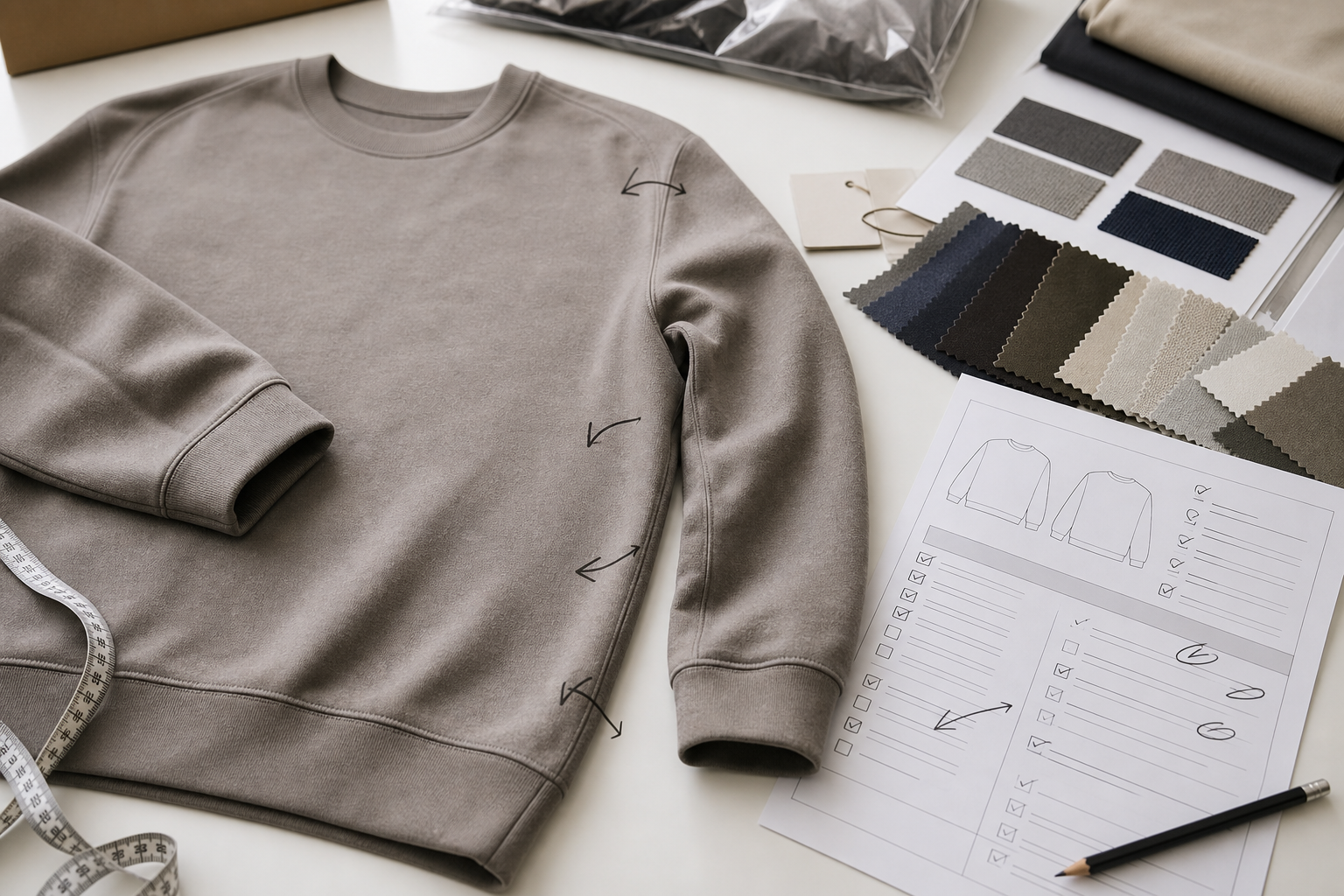
Measurement inspection should focus on the points customers will notice: body length, chest, shoulder, sleeve, waist, rise, inseam, leg opening, hood, collar, cuff, pocket position, and any style-specific fit point. The inspector should use the approved measuring method and tolerance table, not a new method invented at the final stage.
If the buyer has unresolved sample comments, use the apparel sample comments guide to turn those comments into inspection language. Notes such as recheck sleeve length after wash or hold pocket height within tolerance are easier to inspect than general comments like improve fit.
Review Sewing, Trims, Labels, and Decoration
Pre-shipment inspection should include visible stitching, thread tension, skipped stitches, seam puckering, loose thread, bartacks, button attachment, zipper function, drawcords, labels, hangtags, print, embroidery, and packaging trims. The goal is to separate minor repairable issues from defects that require sorting, rework, or buyer approval before release.
The stitch density and thread tension guide is useful when the issue is not obvious from a distant photo. Sewing defects often need close-up inspection, handling, and comparison against the approved sample.
Verify Quantity, Size Ratio, and Packing
Low MOQ orders often contain several sizes, colors, and styles in one shipment. A pre-shipment inspection should check carton count, piece count, size ratio, color split, polybag or folding method, carton marks, barcode or sticker placement when used, and whether any short shipment or overage is documented.
For order timing and handoff control, connect this step with the sampling and MOQ process. Inspection should not become a last-minute search for missing information that should have been locked before production.
Decide Release, Rework, or Hold
A useful inspection report should lead to one of three decisions: release, release after minor repair, or hold for sorting and correction. Buyers should avoid vague status notes such as mostly okay. If defects are concentrated in one size, color, operator bundle, or carton group, the factory needs a clear instruction on what to isolate and recheck.
For a low MOQ apparel order, send the approved sample record, size spec, packing instruction, inspection concerns, and shipment timing through the StitchQuote inquiry page. A clearer inspection scope helps the production team catch release risks before goods leave the factory.
Questions Buyers Ask About Pre-Shipment Inspection
Is pre-shipment inspection still necessary for a small order?
Yes. Low MOQ reduces quantity, but it does not remove repeated defect risk. A focused inspection can protect fit, labels, packing, and customer-facing quality before shipment.
Should buyers use AQL for low MOQ apparel?
Sometimes. AQL can be useful when the order size supports sampling, but buyers should still define critical defects and inspect high-risk sizes, colors, and style details.
What defects should block release?
Wrong product, wrong size ratio, missing or incorrect labels, major measurement failures, visible stains, broken trims, open seams, severe decoration defects, and carton mix errors should be held for correction or buyer decision.
Can inspection be done from factory photos only?
Photos help with coordination, but measurements, stitching, trims, packing ratios, and carton checks usually need a structured inspection record. Photos alone can miss repeated or hidden defects.