Custom Streetwear, Casualwear & Denim Manufacturer•MOQ 50 pcs•Denim MOQ 100 pcs•7-Day Sample Available

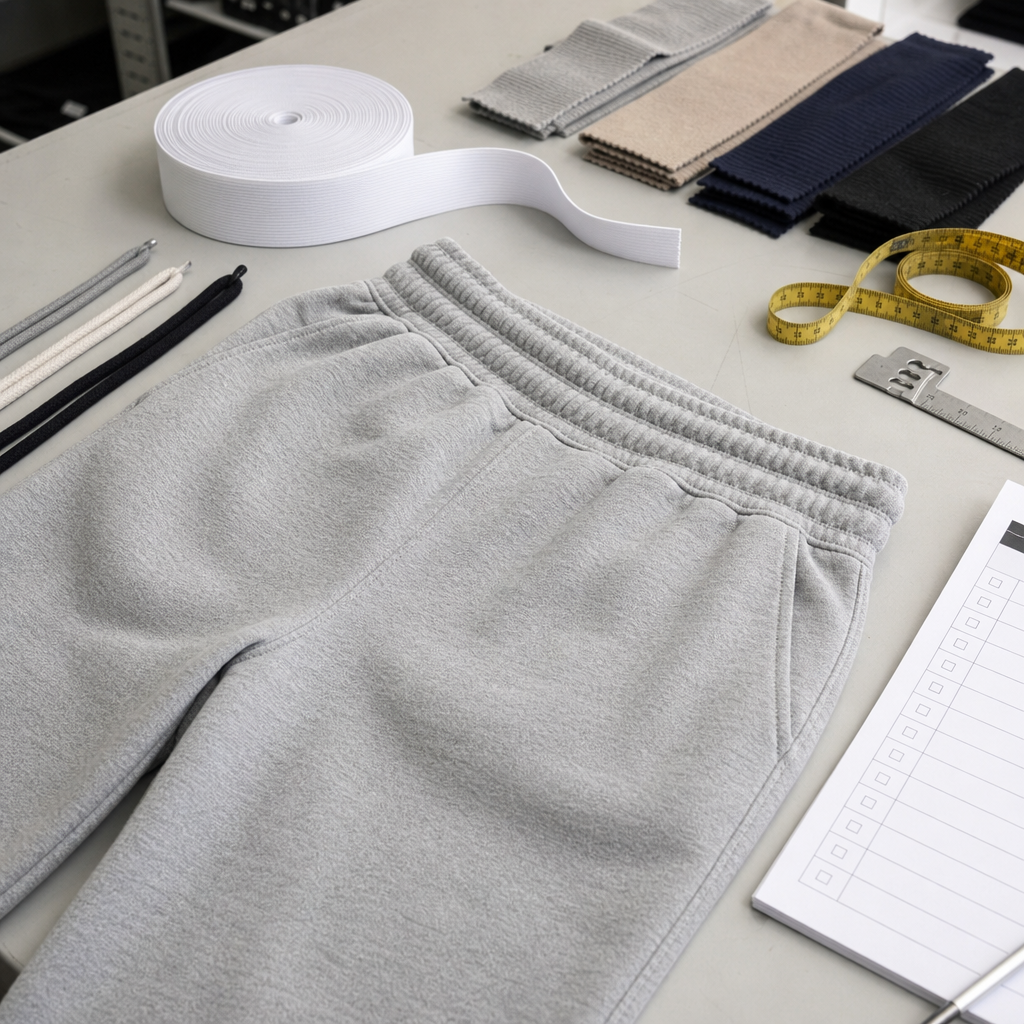
Sweatpants Waistband Construction Checklist for Low MOQ Jogger Production
Plan sweatpants waistband construction before low MOQ jogger production, including elastic width, drawcords, rib fabric, grading, shrinkage, and sample checks.

Use this sweatpants waistband construction checklist before you approve a jogger sample or request a low MOQ sweatpants quote. The waistband looks like a small detail, but it controls comfort, fit security, perceived quality, and how consistently the garment can be produced across sizes.
For startup streetwear and private label programs, waistband decisions also affect sampling cost. If the buyer changes elastic width, drawcord type, rib quality, or stitch detail after the first sample, the factory may need to rebuild the waistband pattern and recheck the fit. It is better to define the waistband as a construction system, not as a vague note that says “elastic waist with drawcord.”
For pocket shape, rise, and after-wash fit approval details, review how to approve sweatpants pocket shape and rise before low moq production before locking bulk comments.
Why the Waistband Matters in Small-Batch Jogger Production
Low MOQ production leaves less room for trial-and-error during bulk. A waistband that is too soft can feel unstable after a few wears. A waistband that is too firm can make the garment feel smaller than the size chart suggests. A drawcord that looks good in a product photo may still twist, fray, pull inside the casing, or create unnecessary cost if the end tip is custom.
This is why waistband planning belongs in the same approval workflow as fabric, measurements, and shrinkage. If your brand is still comparing production options, connect the waistband brief to your broader low MOQ clothing manufacturing plan and the sample approval process on sampling and MOQ.
Start With the Waistband Type
The first decision is the waistband structure. Common options include:
- Self-fabric waistband with encased elastic: often used when the body fabric should wrap cleanly around the waist and keep a minimal look.
- Rib waistband with elastic inside: useful for a softer streetwear feel, but rib recovery and color matching need careful approval.
- Panel waistband with topstitching: gives a more controlled look and can help reduce elastic rolling when the stitching is planned correctly.
- Exposed branded elastic: can work for sport or lounge styles, but it usually requires stronger branding decisions and more careful supplier selection.
Do not choose the type only from a reference photo. Ask how the waistband should feel on body, how much stretch recovery it needs, whether the style is intended for heavyweight fleece, french terry, washed fabric, or lighter casualwear, and whether the same waistband will be used across a matching set.
Lock Elastic Width, Handfeel, and Recovery
Elastic width changes the balance between comfort and stability. Narrow elastic may feel easier to wear but can roll inside the waistband if the casing is wide or the body fabric is heavy. Wider elastic can feel more secure, but it may create pressure if the garment is graded poorly or the elastic recovery is too strong.
Buyers should approve the elastic by testing it in the sample, not by looking at a trim card alone. Check:
- whether the waistband returns to shape after stretching;
- whether the elastic twists after sitting, bending, and washing;
- whether the elastic edge creates an uncomfortable ridge;
- whether the waistband still feels balanced after the garment is washed and dried according to the care expectation.
If your brand is using washed fleece or garment-dyed fabric, elastic behavior should be reviewed together with fabric shrinkage. The logic is similar to other garment approval checks: define the measurement points, test the sample consistently, then decide whether the spec needs adjustment before bulk. The article on garment measurement tolerances is a useful companion when setting realistic pass/fail expectations.
Specify the Drawcord Instead of Treating It as Decoration
Drawcords affect cost, lead time, and user experience. A flat cotton drawcord, round cord, tonal cord, contrast cord, waxed cord, metal-tipped cord, and branded aglet are different sourcing decisions. Each one should be shown in the sample brief with color, width or diameter, length, end finish, and placement.
For low MOQ programs, custom metal tips and branded hardware may add minimums or extend the schedule. A practical first order may use a strong standard cord and save custom hardware for a reorder. The same principle applies to other launch details: build the first production order around decisions that improve fit, fabric, and repeatability before spending too much budget on secondary decoration.
Check Eyelets, Buttonholes, and Cord Exit Placement
The cord exit is one of the most visible details on joggers. Buyers should decide whether the cord exits through metal eyelets, stitched buttonholes, embroidered eyelets, or a hidden internal channel. Each option has tradeoffs.
- Metal eyelets can look premium, but plating color, washer backing, and wash durability must be approved.
- Buttonholes are simpler, but they need clean stitching and correct reinforcement.
- Internal drawcords keep the front cleaner, but they may be less visible in product photos and can be harder for customers to adjust.
Placement also matters. If the exits are too close together, the front can pucker. If they are too low, the cord may sit awkwardly below the natural waist. If they are not mirrored correctly, the finished garment looks careless even when the rest of the jogger is well made.
Define Stitching and Anti-Roll Details
A waistband can fail because the construction is underspecified. Topstitching, channel stitching, bartacks, and seam allowance all help control how the waistband behaves during wear. Some designs need a clean waistband with minimal visible stitching. Others need topstitch lines to keep elastic from rolling. The right choice depends on the fabric weight, waistband height, elastic width, and intended look.
Ask the sample maker to call out the stitch type and visible stitch count where it matters. The goal is not to over-engineer a simple jogger. The goal is to make sure the bulk order follows the same waistband logic as the approved sample.
Grade the Waistband, Not Only the Body
Size grading is often where waistband problems show up. A medium sample may feel fine, but the extra-small can feel too tight while the XXL feels too loose. The waistband spec should connect to the full size chart, not only the sample size.
At minimum, review relaxed waist, extended waist, front rise, back rise, hip, thigh, inseam, leg opening, and waistband height. If the garment is intended for a streetwear fit, also review how the waistband interacts with the rise and seat volume. A relaxed oversized leg with a tight waistband can feel inconsistent, while a loose waistband on heavy fleece can feel unstable.
Prepare the Waistband Details Before Asking for a Quote
Before requesting a production quote, give the manufacturer a practical waistband brief:
- waistband type and height;
- elastic width, strength, and recovery expectation;
- drawcord type, color, length, and end finish;
- eyelet or buttonhole method;
- visible stitching and anti-roll construction;
- sample size measurements and full size grading plan;
- wash or shrinkage expectations if the fabric is washed, dyed, or brushed;
- reference sample photos with notes explaining what should and should not be copied.
This gives the factory a better basis for pricing than a single inspiration image. It also reduces the chance that the first sample is technically correct but commercially unusable. If you are preparing a broader streetwear line, the same clarity supports a smoother conversation with a custom streetwear manufacturer or casualwear manufacturer.
Practical StitchQuote Note
When StitchQuote reviews a jogger or sweatpants project, the waistband is treated as part of the fit system. Fabric weight, elastic recovery, drawcord choice, stitch control, and grading are reviewed together so the sample can be approved with fewer late changes. For new buyers, the best next step is to prepare the waistband details together with fabric, measurements, artwork, trims, and packaging notes before the sample request.
FAQ
What is the best waistband for low MOQ sweatpants?
There is no single best waistband. For many startup programs, a self-fabric or rib waistband with reliable encased elastic is practical because it can balance comfort, cost, and repeatability. The right choice depends on fabric weight, desired fit, drawcord style, and how much custom trim the first order can realistically support.
Should joggers use rib waistband or self-fabric waistband?
Rib can feel softer and more casual, while self-fabric can look cleaner and more minimal. Rib needs recovery and color matching checks. Self-fabric needs elastic and casing checks to prevent rolling or stiffness.
When should custom drawcord tips be used?
Custom tips are useful when they support the brand identity and the order size can absorb the trim minimum. For a first low MOQ order, standard cord options may be safer unless the branded tip is essential to the design.
What should be checked before approving a sweatpants sample?
Check relaxed and stretched waist, waistband height, elastic recovery, drawcord placement, eyelet or buttonhole finish, stitch quality, comfort on body, and post-wash shape. These checks should be written into the sample approval notes before bulk production.
Request a manufacturing quote
Share your product type, quantity range, and destination. We usually reply within one business day.
3 Comments
Comments are closed.
[…] If the set uses french terry, the hoodie and pants should be checked for loop consistency and surface cleanliness. The article on choosing french terry for cleaner premium hoodies is useful when reviewing fabric handfeel and surface quality. If the pants use a different construction detail, such as a heavier waistband, connect that review to the sweatpants waistband construction checklist. […]
[…] joggers and sweatpants, waistband construction affects both comfort and recovery. The sweatpants waistband construction guide shows why elastic width, channel shape, stitching, drawcords, and fabric weight should be reviewed […]
[…] related construction context, review the sweatpants waistband construction guide and the jogger cuff and leg opening […]