Custom Streetwear, Casualwear & Denim Manufacturer•MOQ 50 pcs•Denim MOQ 100 pcs•7-Day Sample Available

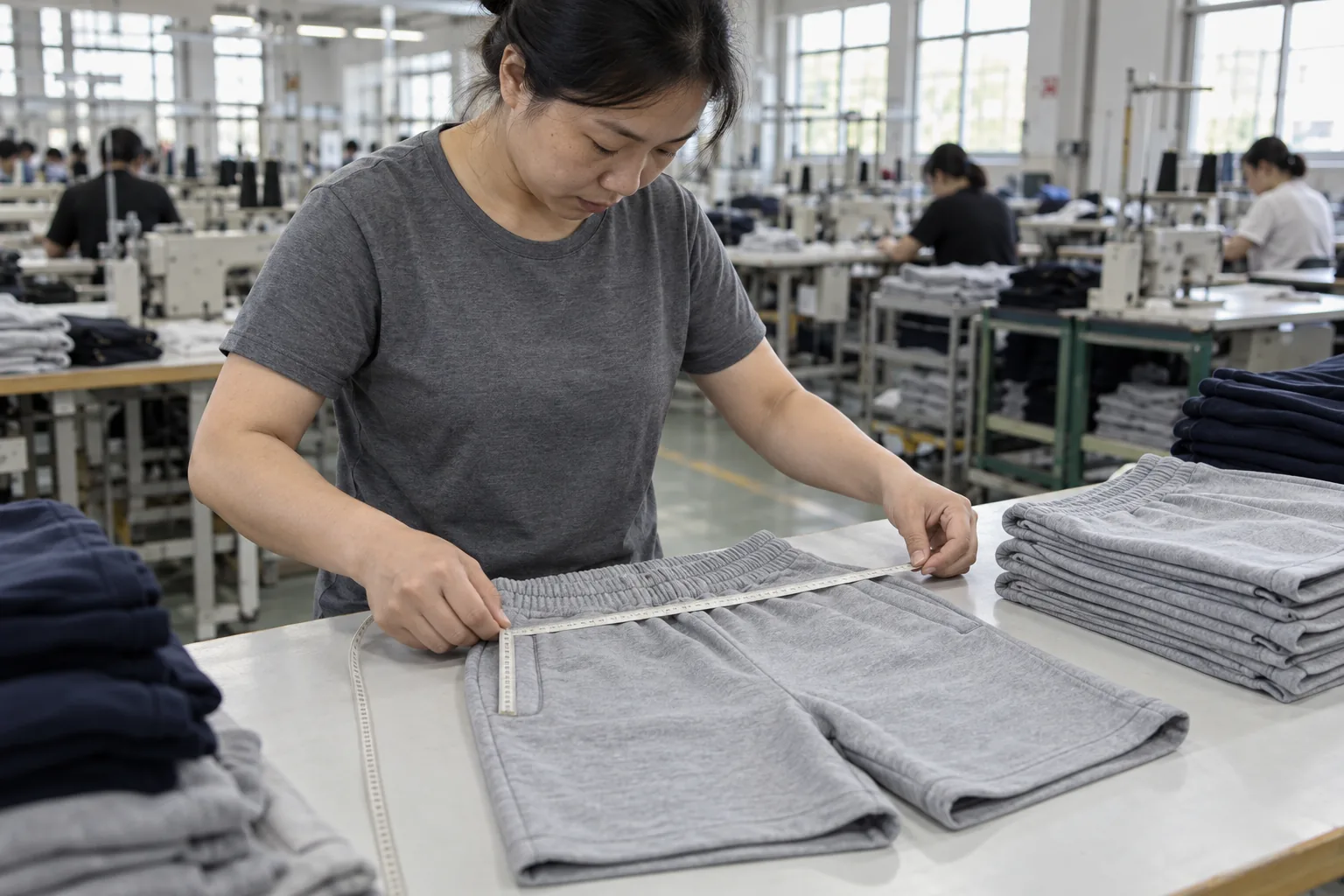
What Questions to Ask a Low MOQ Clothing Manufacturer
Use this factory-side guide to compare what questions to ask a low moq clothing manufacturer more clearly across supplier fit, quote scope, approvals, and timing.

A low minimum order is useful only when the quotation covers the garment you actually intend to sell. Two suppliers can quote the same quantity while assuming different fabrics, decoration methods, size distributions, and packing requirements. The cheaper offer may therefore represent a different product rather than a better deal.
When deciding what questions to ask a low MOQ clothing manufacturer, organize the conversation around a comparable quotation. Your aim is to identify what each price buys, which assumptions could change it, and what evidence you need before paying for development. The following questions help turn scattered supplier replies into a purchasing decision.
Give every bidder the same garment and quantity breakdown
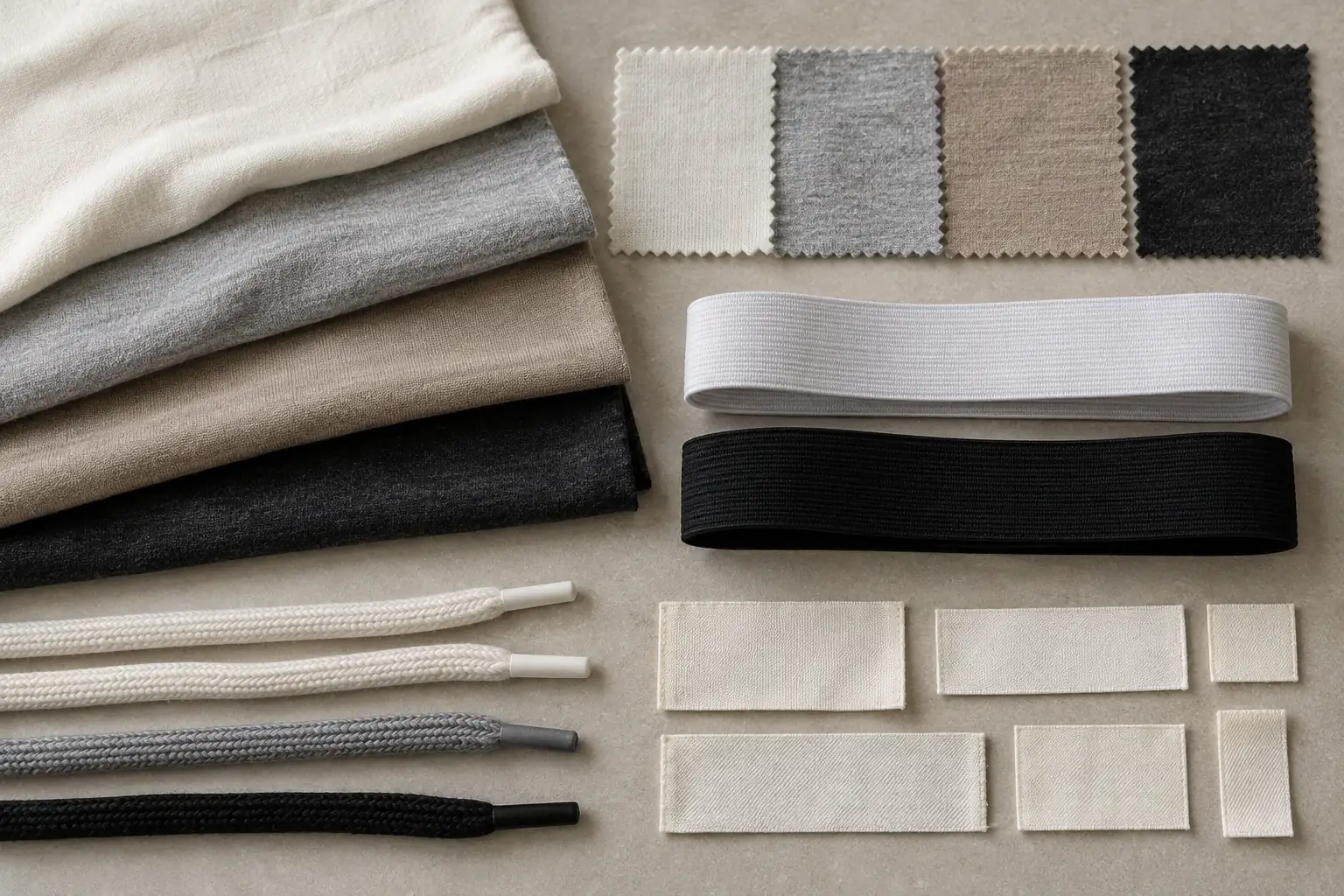
Ask: “Which specification revision and quantity breakdown does this quotation cover?” Send an identical brief to each supplier, including a dated revision identifier. Otherwise, one factory may estimate from a reference photograph while another prices every construction detail in your technical drawing.
For example, a jersey shorts brief could specify 100 pieces in one color, cotton jersey at a target 280 gsm, two side pockets, a back patch pocket, an elastic waistband, and an internal drawcord. Include a size allocation that adds up to 100, garment measurements, label positions, and packing instructions. These are example requirements, not universal production standards.
Ask suppliers to list any substitutions separately: blended fabric instead of cotton, a different fabric weight, or a stock drawcord instead of a custom version. An alternative may be commercially sensible, but it should not silently replace the original specification. Request one price against your brief and a separate alternative where useful.
Also identify unresolved details. If the print artwork is provisional, ask what print dimensions and number of colors were assumed. A quotation with visible assumptions is easier to compare than a precise-looking total based on unspecified work.
Separate the sewing minimum from material purchase commitments
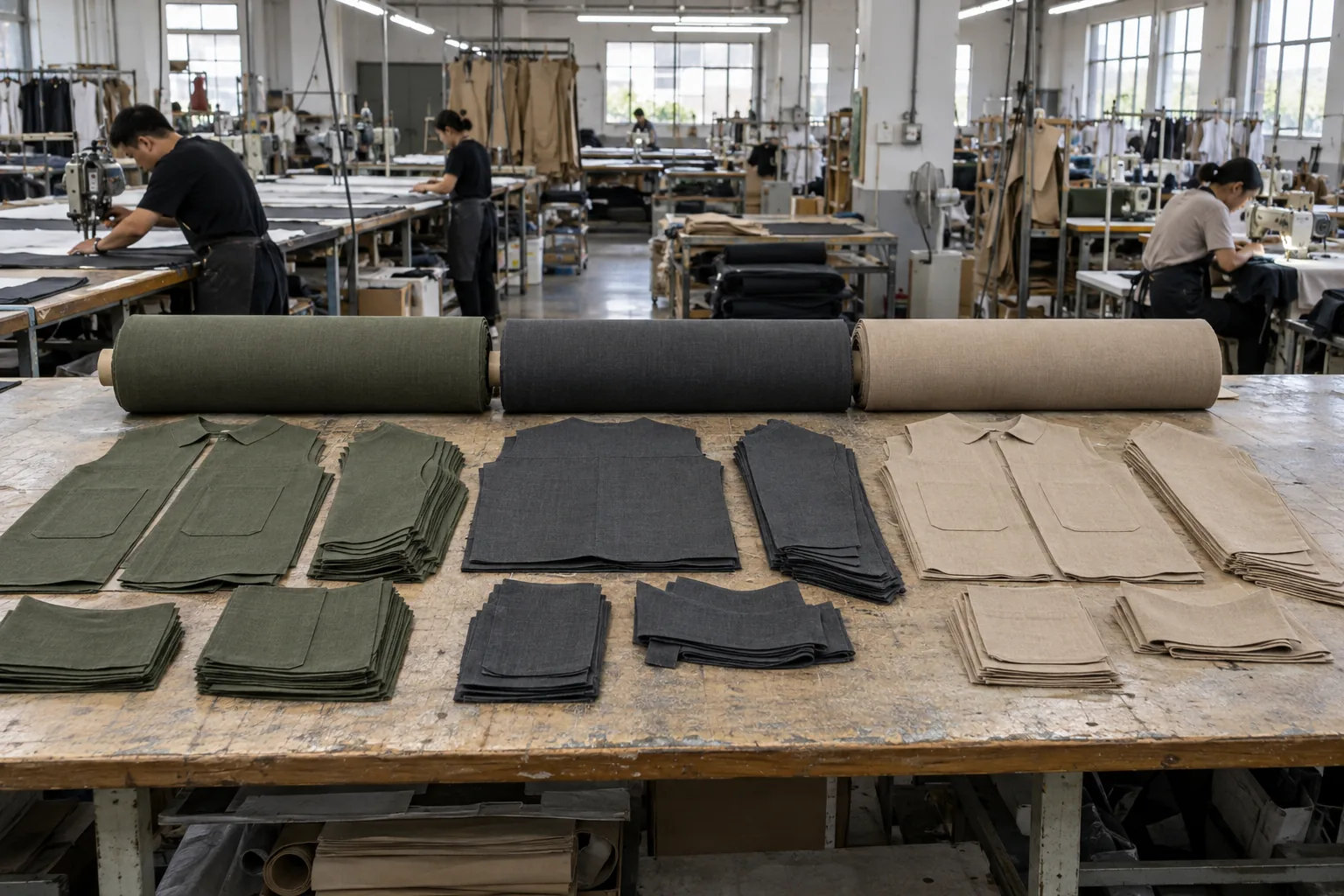
Ask: “Does the minimum apply per style, per color, or to the combined order, and what separate material minimums apply?” A style minimum does not automatically permit every color and size combination. Request written acceptance of the actual assortment, including whether adding a color changes the unit price or creates an additional purchase requirement.
Consider a proposed 60-piece overshirt order split between three colors. Sewing 20 pieces per color might be feasible while buying three small fabric lots is uneconomic. Ask whether stock fabric would avoid that problem, whether colors can share trims, and whether a custom dye lot requires purchasing more fabric than the garments consume.
If you must fund excess material, clarify ownership, storage arrangements, identification, and the conditions for using it on a reorder. Do not count leftover fabric as a saving until the supplier confirms that it will be available and suitable for your next run.
StitchQuote’s MOQ for most categories starts from 50 pieces per style; denim starts from 100 pieces per style. Those starting points should still be checked against the proposed fabric, wash, branding, and assortment. Ask for the accepted breakdown rather than treating a published minimum as approval of every variation.
Rebuild each offer into the same cost boundary
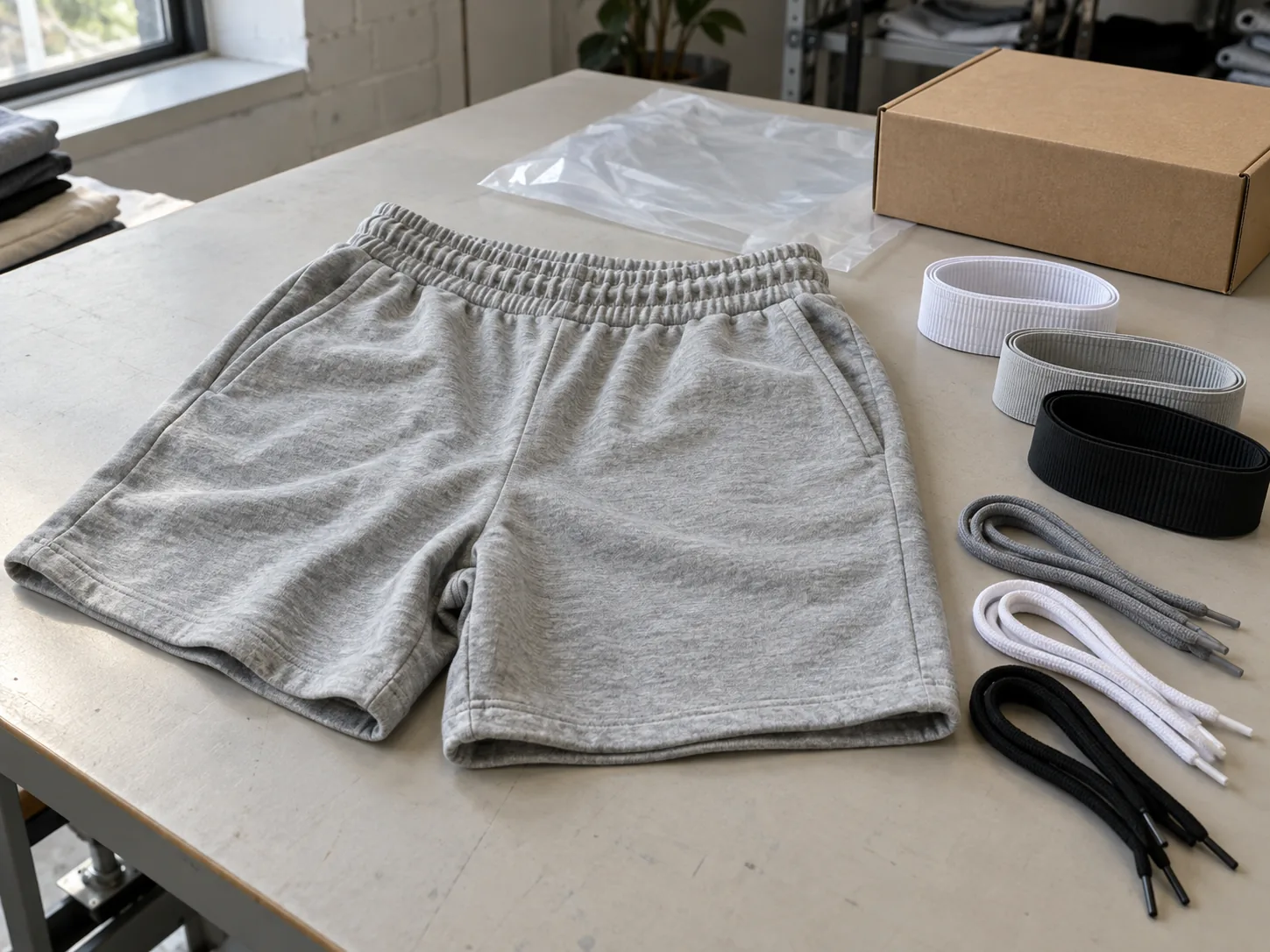
Ask: “What is included, what is charged separately, and what could trigger repricing?” Create a comparison sheet before ranking suppliers. Use the same currency and delivery basis, and record quote validity. Where freight is included, request the destination and shipping assumptions; an estimate to a port is not equivalent to delivery to your warehouse.
| Comparison line | Question to resolve |
|---|---|
| Garment unit price | Does it include fabric, sewing, trims, decoration, and labels? |
| Development charges | Are patterns, samples, revisions, and sample shipping separate? |
| Material exposure | Must you buy surplus fabric or trim quantities? |
| Inspection and packing | Which checks, bags, cartons, and markings are included? |
| Delivery boundary | Who pays freight, insurance, clearance, duties, and taxes? |
Calculate the planned cash commitment as garment quantity multiplied by unit price, plus separately charged development, setup, material, packing, and delivery costs. Keep uncertain items visible instead of assigning them a zero. For a landed-cost comparison, add destination charges using assumptions verified for your shipment.
Ask whether sample fees are credited against production and under what conditions. A credit dependent on a larger order should not reduce your comparison total if you intend to remain below that threshold. Similarly, compare payment milestones: an offer requiring earlier funding has a different cash-flow effect even when its final total matches another quote.
Use sampling to verify the assumptions behind the price
Ask: “What will the quoted sample prove, and which bulk-production details will it leave unverified?” A fit sample in substitute fabric can help establish shape, but it cannot fully demonstrate the handfeel, shrinkage, or appearance of the intended material. Record every difference between the sample and the quoted production garment.
For the jersey shorts example, evaluate waistband recovery, pocket opening stability, and leg shape after the agreed care cycle. If the sample uses a different elastic width or substitute jersey, ask whether the production version needs another approval. Request a clear charge and timing basis for revisions rather than assuming unlimited rounds.
StitchQuote offers a 7-day sample for standard styles with confirmed specifications and available materials. Complex styles, custom washes, and custom-developed fabrics take longer. When comparing schedules, ask each supplier when its sample clock starts and whether the quoted period includes dispatch or delivery.
StitchQuote’s services include cut-and-sew, private label, sampling, fabric and trim sourcing, branding through woven labels, prints and embroidery, and QC before packing. Identify which services your quotation includes; the availability of a service does not establish its scope or price for your particular order.
Attach a measurable acceptance checklist to the quotation
Ask: “Which quality criteria are included in this price, and how will deviations be handled before shipment?” Quality expectations affect production work, inspection effort, and the risk of receiving unsellable pieces. Agree on an approved reference sample and a written measurement sheet before bulk cutting.
- Measurement method: Define where measurements start and finish, whether garments lie relaxed, and how elasticated dimensions are checked.
- Tolerances: Set limits by measurement point. As a negotiation example, a brand might propose ±1 cm for shorts outseam and ±0.5 cm for pocket placement; confirm suitability for the fabric and construction.
- Material performance: Agree on the care procedure and acceptable dimensional change, plus how shade variation and surface defects will be evaluated.
- Construction and branding: Check seam security, skipped stitches, waistband twisting, label orientation, and decoration position against approved references.
- Inspection evidence: Specify the inspection coverage, measurement records, defect photographs, and any buyer review required before packing.
- Correction responsibility: Confirm who pays for rework, how corrected goods are checked, and what happens when an issue cannot be repaired.
Do not assume “QC included” means every garment receives every measurement or performance test. Ask which checks cover all units and which use a sample. For small orders, also clarify the permitted shipment quantity variation: a short delivery can disrupt a tightly planned size assortment.
Choose the offer with the fewest unresolved commercial dependencies
Before awarding the order, ask each shortlisted supplier to issue a revised quotation incorporating the agreed answers. Keep the specification revision, assortment, exclusions, payment milestones, sample requirements, and acceptance criteria together. A promise buried in a message thread is easy to miss when production begins.
Then compare three things: the cost of the approved scope, the cash required before saleable goods arrive, and the assumptions still unresolved. A slightly higher confirmed offer may fit your launch better than a lower estimate dependent on unapproved materials. Treat missing answers as open items, not automatic evidence of poor manufacturing capability.
Finally, ask what changes would invalidate the quotation. Adding a second color, increasing print coverage, or changing the wash can alter both cost and schedule. Agree that changes require an updated quote before work proceeds.
FAQ: resolving mismatches between competing quotations
Can I compare a stock-fabric quote with a custom-fabric quote?
Yes, as two product options. First obtain comparable offers using the same fabric route. Then evaluate whether the custom option’s appearance or performance justifies its extra development, material commitment, and timing requirements.
Should I ask for a larger-quantity price before placing a small order?
Request it as a separate scenario with the same specification. It can inform a reorder plan, but judge the first purchase using the quantity you can fund and sell. Confirm how long each price remains valid.
What if one supplier will only finalize pricing after sampling?
Ask for a provisional breakdown identifying the unresolved cost drivers and the paid development scope. Establish when a firm production quote will be issued, and avoid committing to bulk production before reviewing it.
Related reading and quotation support:
- Prepare a tech pack for comparable supplier bids
- Review sampling and MOQ considerations
- Explore hoodie manufacturing cost components
- Contact StitchQuote about your quotation brief
Request a manufacturing quote
Share your product type, quantity range, and destination. We usually reply within one business day.