Custom Streetwear, Casualwear & Denim Manufacturer•MOQ 50 pcs•Denim MOQ 100 pcs•7-Day Sample Available

Why Fabric Choice Changes the Real MOQ More Than Buyers Expect
Understand fabric choice affects MOQ with more practical factory-side context around material behavior, product feel, stability, and how the decision affects sample.

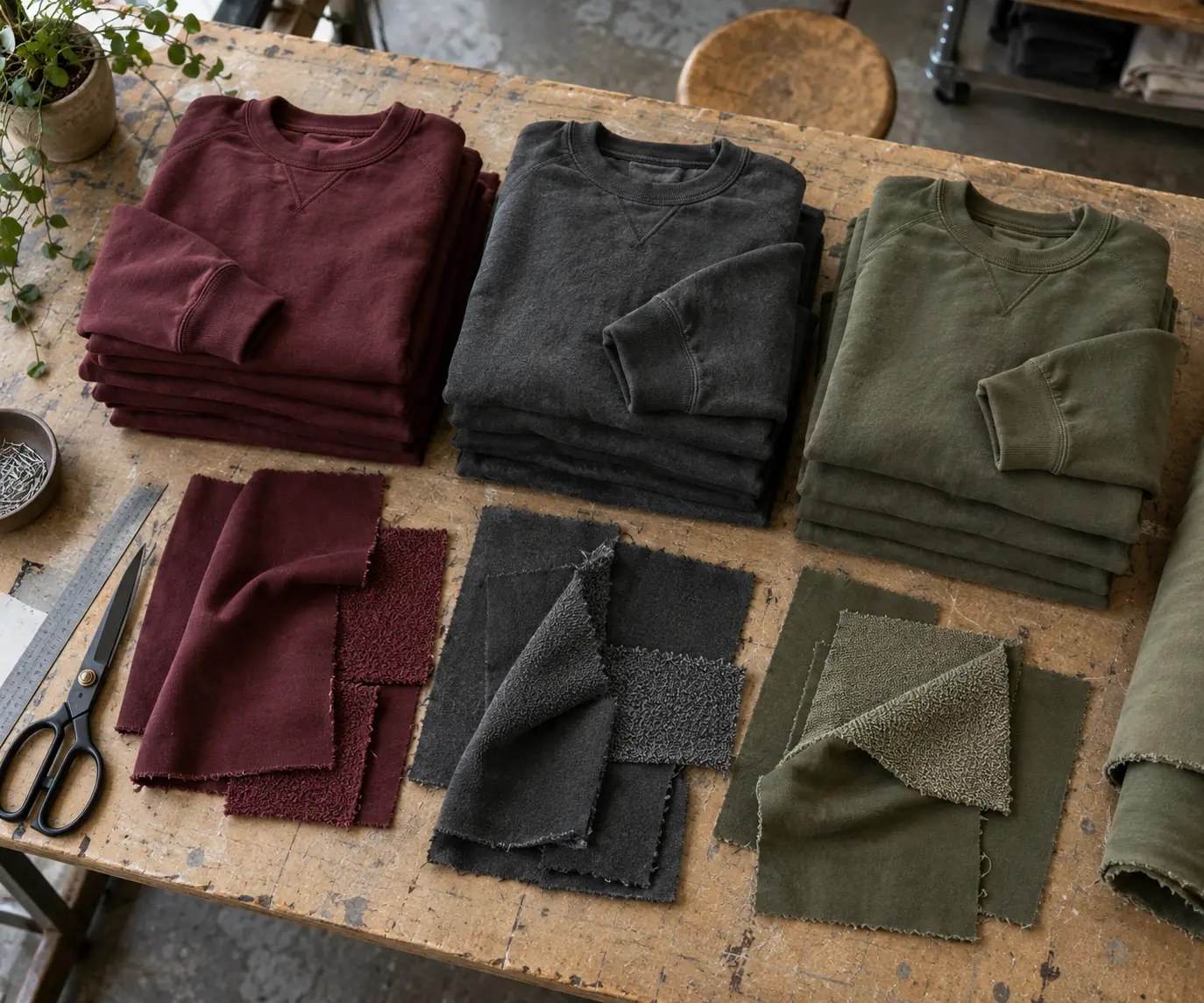
A launch order of 180 sweatshirts can look comfortably above a garment minimum until the buyer divides it into six colors. Each shade now needs fabric for just 30 pieces, yet the fabric supplier may purchase, dye, or reserve material in much larger units. The gap becomes a colorway cost: money committed to material that the first drop cannot fully use.
Fabric choice changes that calculation before sewing begins. Available stock shades, custom dyeing, usable width, and consumption all influence how much cash each color requires. For a brand choosing its launch palette, the useful question is not simply how many garments it can order. It is how much material it must fund to make each color commercially workable.
Build a cost line for every shade in the palette
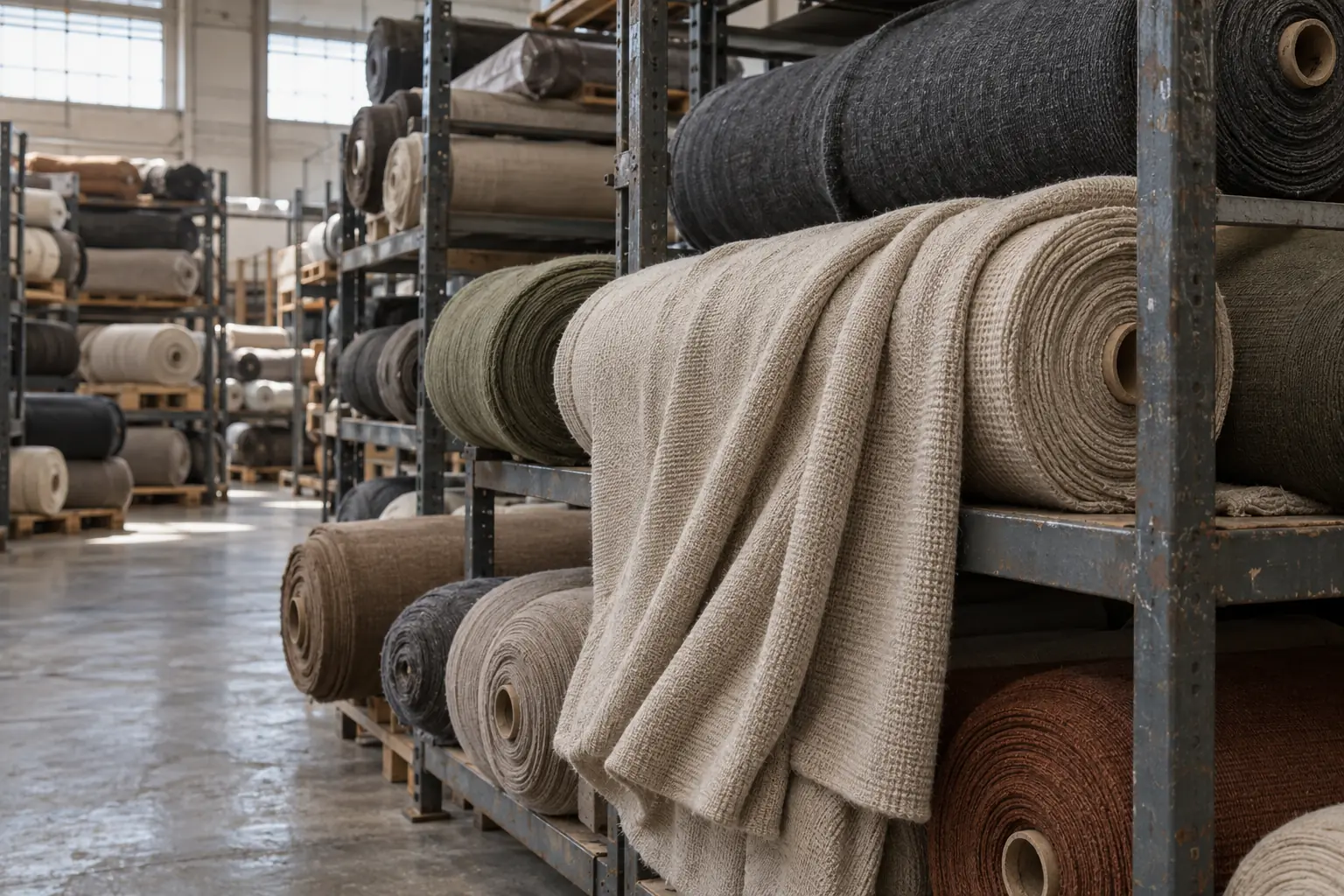
A per-style garment minimum does not automatically establish a per-color fabric allowance. Ask the supplier to distinguish the sewing minimum, the fabric purchasing unit, and any dye-lot minimum. A stocked material might be sold by the roll; a custom shade might require a dye batch whose output exceeds your garment needs.
StitchQuote’s MOQ for most categories starts from 50 pieces per style; denim starts from 100 pieces per style. Those starting points do not promise that any number of colors can be divided within them. Confirm the proposed fabric and color split before treating an assortment as approved.
Make each shade a separate line in the buying plan. Record garment quantity, estimated material demand, minimum material purchase, and who carries any balance. This exposes an expensive accent color even when the average garment quote looks acceptable.
Stock shades and custom dyes spend the budget differently
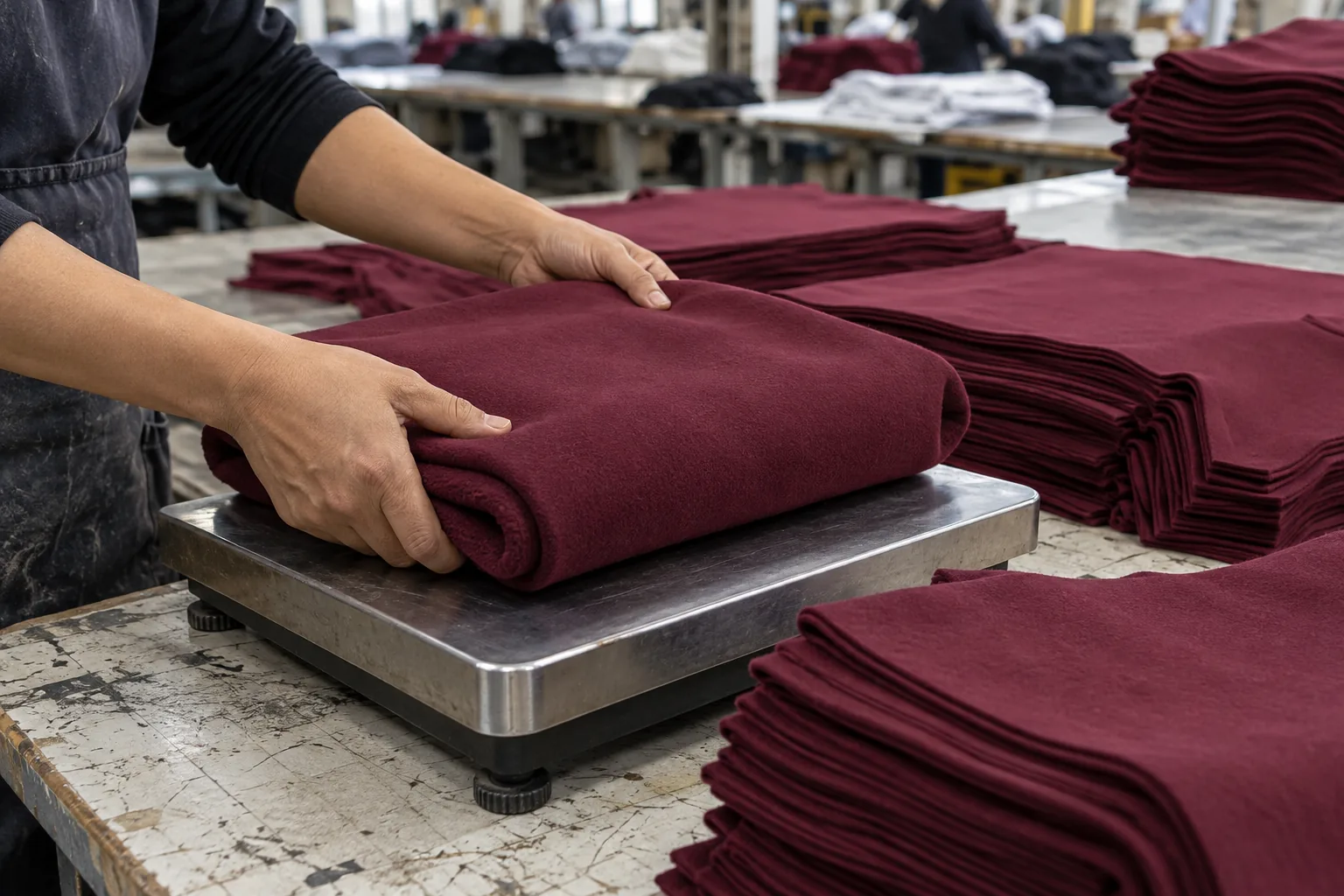
Stock fabric offers a specific color in a specific construction. It can be an economical route when enough matching material is available, but availability needs checking against the full order. A sample cutting does not establish that all required rolls are still in stock or belong to a consistent shade lot.
Custom dyeing gives the buyer more control over the intended palette while introducing batch economics. Lab-dip approval, bulk dyeing, and material testing may create costs or time commitments even for a small garment order. Ask which charges are separate and which are included in the fabric rate.
Do not compare a stocked midweight jersey against a custom-dyed heavyweight interlock as if color were the only difference. Hold composition, construction, weight, finish, and usable width as constant as practical. Otherwise, a cheaper shade may actually represent a different product.
Translate fabric surplus into a colorway decision
Consider a hypothetical 180-piece sweatshirt launch using one approved fabric. Assume planned consumption is 0.8 kilograms per garment, including an agreed cutting allowance, and the chosen custom-dye route requires purchasing 60 kilograms per shade. These are illustrative planning assumptions, not StitchQuote specifications or quoted minimums.
| Palette plan | Pieces per shade | Demand per shade | Total fabric purchase | Planned surplus |
|---|---|---|---|---|
| Two shades | 90 | 72 kg | 144 kg | 0 kg |
| Three shades | 60 | 48 kg | 180 kg | 36 kg |
| Six shades | 30 | 24 kg | 360 kg | 216 kg |
The illustration assumes purchases above the minimum can match demand exactly. Actual roll lengths, batch increments, and allowances can change the result. Even so, it reveals why adding colors can raise the material commitment without raising the garment count.
Calculate effective fabric cost per shipped piece by dividing the fabric purchase cost allocated to the order by its shipped quantity. Add separately charged color development or processing once, avoiding double counting. Then decide whether the extra shade deserves that share of the launch budget.
Lock fabric weight and usable width before comparing consumption
Give each candidate fabric a specification line that includes fiber composition, knit structure, finished GSM, usable cutting width, and surface finish. For example, a buyer could request a 320 GSM cotton-rich brushed fleece and a matching rib specification for the cuffs and waistband. This is an illustrative product brief, not a StitchQuote stock specification. A lighter loopback alternative needs its own approval because changing the reverse surface and weight changes the garment’s feel, warmth, and drape.
Check whether the fabric quotation uses kilograms or linear meters. At 320 GSM and 1.80 meters usable width, one linear meter contains approximately 0.576 kilograms of fabric: 320 multiplied by 1.80, divided by 1,000. This conversion helps reconcile quotes, but it does not establish garment consumption. The cutting marker must account for the actual size ratio, fabric direction, pattern shapes, and any unusable edges. Ask whether quoted width includes the selvedges and whether weight is measured before or after finishing.
Request a consumption estimate using the intended size breakdown rather than a single sample size. An order weighted toward larger sizes can require more material than an equally sized order concentrated in smaller sizes. Keep shell fabric and rib demand separate: a shade may work economically for the fleece while its matching rib creates another purchasing commitment. Confirm whether shrinkage, cutting waste, and rejected fabric are already included before adding further allowances to the buying calculation.
Use a measured sample to set bulk acceptance rules
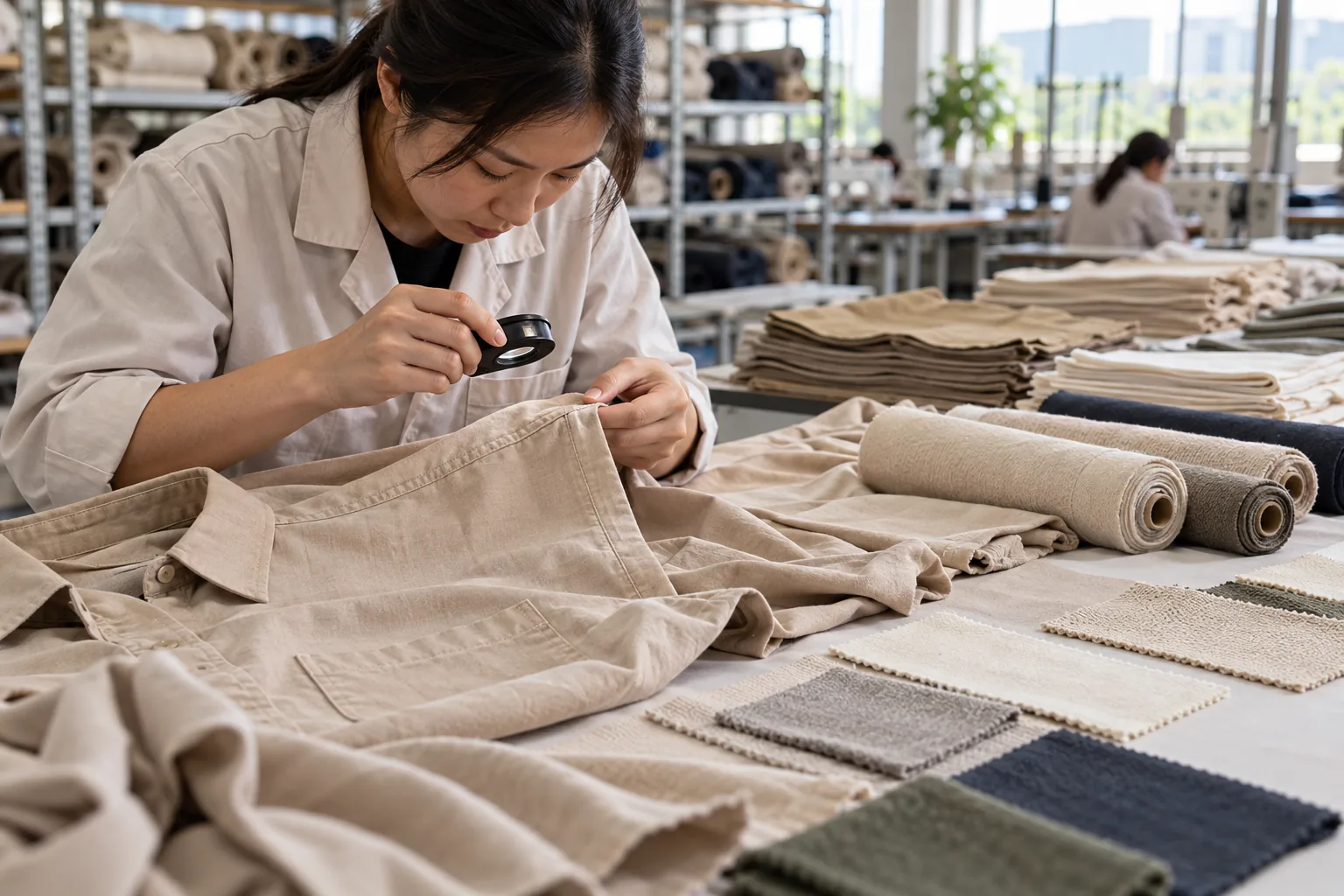
Attach a measurement diagram to the approved sample record. For a sweatshirt, identify half-chest measured flat below the armhole, body length from the high shoulder point, shoulder width, sleeve length, and relaxed cuff opening. Specify the measurement method and garment condition so the sample room and inspection team measure the same way. Record each size’s target separately; approving the medium sample alone does not verify the grading for the entire order.
Agree on tolerances by measurement point before cutting. As an illustrative starting proposal for discussion, a buyer might allow plus or minus 1 centimeter on half-chest and body length but plus or minus 0.5 centimeter on a relaxed cuff opening. These are proposed buyer criteria, not universal tolerances or StitchQuote guarantees. Tight tolerances can increase inspection and rework requirements, while loose cuff tolerances may noticeably change fit. Choose limits that reflect the fabric’s stretch and the intended silhouette.
Wash a representative sample using the proposed care instructions, then compare measurements before and after washing. Calculate dimensional change for each point as the difference divided by the original measurement, multiplied by 100. Record twisting, seam puckering, rib recovery, and shade change alongside the numbers. If different colors receive different finishing treatments, ask which colors need separate checks. Resolve failures before releasing the full material purchase, and retain the approved sample and fabric reference for comparison during production QC.
Protect the hero color before adding accent shades
A buyer might keep a signature burgundy as a custom shade, choose an available charcoal for the main volume, and postpone a low-volume seasonal color. That preserves a recognizable assortment while concentrating custom material spending where it has a clear purpose.
Sharing fabric across a sweatshirt and a short can also increase demand for one shade. This only helps if both products genuinely use the same material specification and compatible production timing. Do not assume shared fabric removes each style’s garment minimum.
Ask for comparable quotes for the original palette and a reduced palette. Keep size ratios, branding, packaging, and garment specifications consistent. Any apparent saving should be traceable to reduced fabric commitments or fewer color-specific operations, rather than an unnoticed specification change.
Approve color consistency before accepting leftover stock
Surplus fabric has value only if it remains usable. Reserving it for a reorder can be sensible, but it also creates storage, ownership, and shade-matching questions. Put those terms in writing before bulk purchasing.
- Shade reference: Identify the approved physical standard and the viewing conditions used to assess it.
- Lot separation: Confirm how rolls and cut bundles will be tracked to avoid mixing visibly different shades within a garment.
- Material performance: Agree on relevant shrinkage and colorfastness checks, including possible color transfer onto lighter panels or trims.
- Bulk comparison: Check production material against the approved reference; a lab dip alone does not verify every bulk roll.
- Residual inventory: Record the remaining usable quantity, lot identity, storage terms, and responsibility for defects or deterioration.
StitchQuote provides QC before packing. Agree on fabric and color acceptance criteria earlier as well, so problems can be identified before material is cut and sewn.
Questions buyers ask when a palette exceeds the budget
Can a sample in a stock shade validate a custom-color order?
It can support fit and construction approval if the material is representative. It cannot establish final color approval. StitchQuote offers a 7-day sample for standard styles with confirmed specs and available materials; complex styles, custom washes, and custom-developed fabric take longer.
Will garment dyeing eliminate the minimum for each shade?
Not necessarily. It moves color application to another production stage, which can still have batch minimums and processing charges. Confirm fabric suitability, thread and trim compatibility, shrinkage, and the cost for each finished color.
Should leftover fabric be treated as free stock for the next drop?
No. It has already consumed cash, and future cutting, sewing, and branding still carry costs. Its usefulness also depends on condition and quantity. A later replenishment lot may not match, so avoid assuming leftovers and new material can be mixed freely.
Request a quote that makes the palette tradeoff visible
Send a color-by-color quantity split alongside the fabric specification and size breakdown. Request separate confirmation of garment minimums, material commitments, color development charges, and surplus handling. StitchQuote’s services include cut-and-sew, private label, sampling, fabric and trim sourcing, and branding through woven labels, prints, and embroidery. Use the quotation stage to settle which palette your budget can support.
- Prepare the specifications for a comparable fabric quote
- Review sampling and MOQ planning
- Understand the broader cost of manufacturing a hoodie
- Contact StitchQuote to review your colorway quantities
Request a manufacturing quote
Share your product type, quantity range, and destination. We usually reply within one business day.