Custom Streetwear, Casualwear & Denim Manufacturer•MOQ 50 pcs•Denim MOQ 100 pcs•7-Day Sample Available
How to Review Hoodie Embroidery Placement Before Bulk Production
A practical hoodie embroidery placement guide for buyers checking artwork position, hooping distortion, stitch density, sample photos, and bulk QC notes.

Hoodie embroidery placement needs more control than a flat mockup can show. Fleece thickness, kangaroo pockets, drawcords, rib seams, sleeve shape, and hooping pressure all affect where embroidery can sit and how clean it looks after production. A small placement error can make an otherwise strong hoodie look unbalanced.
For hoodie-specific quoting and production planning, review our custom hoodie manufacturer page.
For low MOQ streetwear and private label orders, the buyer should approve embroidery as a production detail: artwork size, placement measurements, stitch density, backing, sample photos, wash behavior, and realistic tolerance.
Approve the Embroidery Location on the Real Hoodie
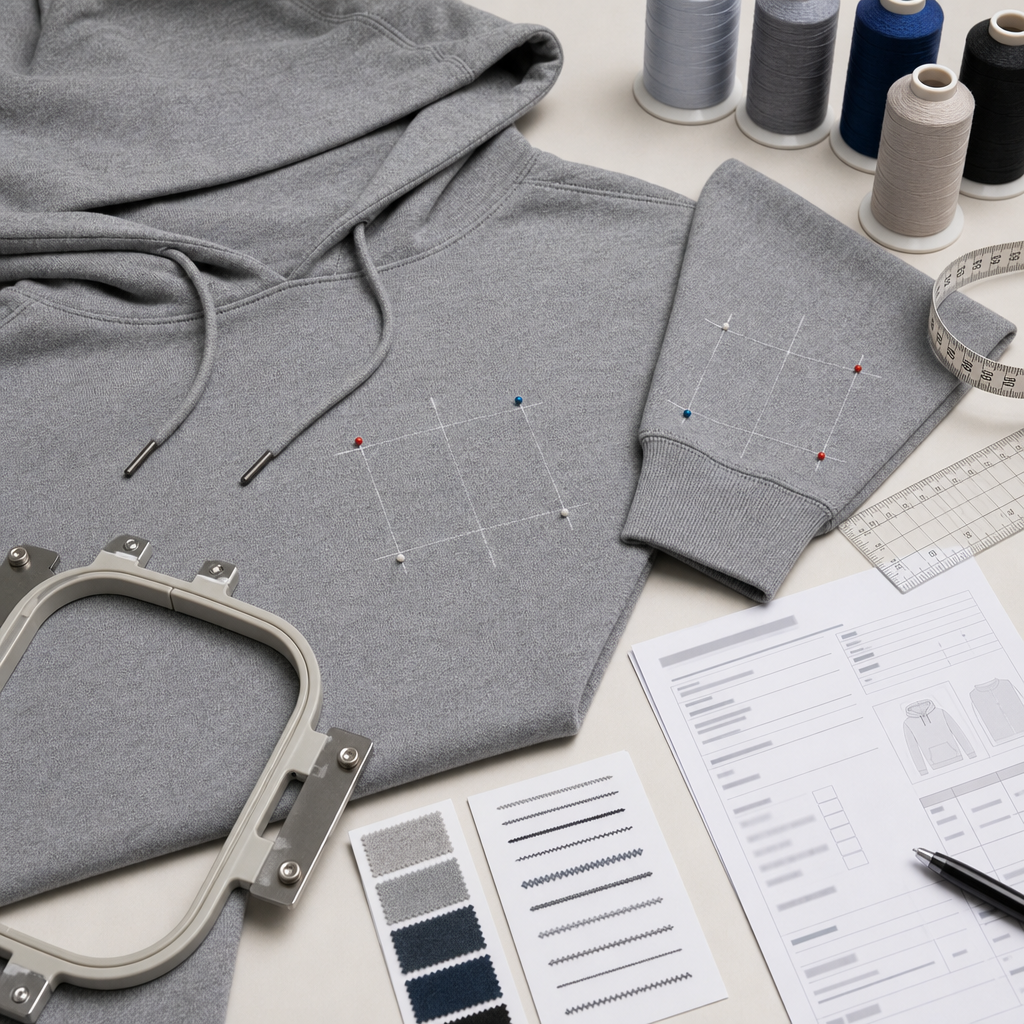
Do not approve hoodie embroidery placement from a digital mockup alone. The production team needs garment reference points. For chest embroidery, define distance from the high shoulder point, center front, neckline, armhole, or pocket edge. For sleeve embroidery, define distance from sleeve seam, cuff edge, and sleeve center line.
Placement should be reviewed on the actual sample body. A drop shoulder hoodie, zip hoodie, cropped hoodie, or oversized hoodie can shift the visual center. If the hoodie spec is still incomplete, use the hoodie tech pack checklist for low MOQ production before approving decoration.
Check Artwork Size and Stitch Density Together
Embroidery artwork size cannot be separated from stitch density. A small logo with too much detail can fill in. A large dense embroidery can make fleece stiff or pull the garment surface. Buyers should ask for an embroidery sample or strike-off when the design has fine lines, small text, dense fill areas, or thread color changes.
If the buyer is deciding between embroidery methods, direct embroidery vs embroidered patch is a useful comparison. Direct embroidery can look clean, but patches may work better when the garment fabric is thick, textured, or difficult to hoop.
Watch for Hooping Distortion
Hoodie fleece can move under the embroidery hoop. If hoop tension is uneven, the embroidery may pucker or the logo may sit slightly rotated. This is especially common around seams, pocket edges, hood openings, and rib areas where thickness changes.
Ask for close-up sample photos after embroidery and after washing. Look for puckering, thread tension problems, misalignment, and whether the fabric surface returns cleanly around the stitched area.
Keep Clear of Seams, Pockets, and Drawcords
Embroidery needs enough clearance from bulky areas. A logo placed too close to a kangaroo pocket edge or sleeve seam may be harder to hoop and less consistent in bulk. Drawcords and hood openings can also hide or visually compete with chest embroidery.
For hoodies with drawcords and eyelets, review trim placement together with embroidery. The guide on hoodie drawcord, eyelet, and aglet approval covers trim controls that can affect the decoration area.
Use Measurable Approval Notes
A useful approval note should include artwork file name, final embroidery size, thread colors, location, measurement reference points, accepted tolerance, backing type, and sample photo date. Avoid vague comments like “place as mockup” or “same as sample” without measurements.
The same discipline used for screen print placement tolerance also applies to embroidery: define the reference points, show marked photos, and approve realistic variation before bulk.
Wash Test Before Final Approval
Embroidery can change after wash. Fleece may shrink, thread may tighten, puckering may become more visible, and backing may feel different against the body. Buyers should compare pre-wash and post-wash photos before signing off production, especially on heavyweight fleece or garment-dyed hoodies.
StitchQuote Note
For hoodie manufacturing, custom streetwear manufacturing, and sampling and MOQ projects, StitchQuote treats embroidery approval as a sample-stage control. Placement, stitch quality, backing, and wash behavior should be approved before bulk, not corrected after finished hoodies arrive.
FAQ
Can hoodie embroidery placement be approved from a mockup?
No. A mockup helps show design intent, but final approval should use a real hoodie sample with measurements, photos, thread colors, and placement tolerance.
Why does embroidery pucker on fleece?
Puckering can come from dense stitches, poor backing, hoop tension, fabric stretch, or placement too close to bulky seams. A sample or embroidery strike-off helps catch the issue before bulk.
Should embroidery be tested after wash?
Yes. Washing can reveal shrinkage, puckering, thread tension problems, and backing comfort issues that are not obvious on the first sample photo.
[…] thread approval should connect to placement, artwork files, garment size, and production notes. The hoodie embroidery placement guide explains how position should be reviewed before bulk. The cut and sew tech pack guide for low MOQ […]