Custom Streetwear, Casualwear & Denim Manufacturer•MOQ 50 pcs•Denim MOQ 100 pcs•7-Day Sample Available
How to Prepare a Private Label Clothing Size Spec Sheet Before Sampling
Prepare a private label clothing size spec sheet before sampling with clear measurement points, tolerances, fit intent, and approval priorities.

A private label size spec sheet should be prepared before sampling because the factory needs more than a product photo or a general size label. Without clear measurement points, tolerances, sample size, and fit intent, the first sample can come back close in style but wrong in body length, width, rise, sleeve shape, or overall proportion.
For buyers building a private label program, the private label clothing manufacturer page explains how product scope, materials, sampling, branding, MOQ, and production planning should fit together before a quote becomes a real order.
Define the Sample Size and Fit Intent First
Start the spec sheet by naming the sample size and the intended fit. A medium sample for an oversized streetwear tee, a slim premium basic, and a relaxed hoodie will not share the same measurement logic. The manufacturer should know whether the buyer wants boxy, cropped, relaxed, regular, slim, oversized, high-rise, dropped-shoulder, or another fit direction.
Startup buyers should also connect the sample size to the planned order size range. The clothing manufacturer for startup brands page is a helpful reference when early product decisions still need to balance fit, MOQ, budget, and launch risk.
List Measurement Points the Factory Can Actually Check
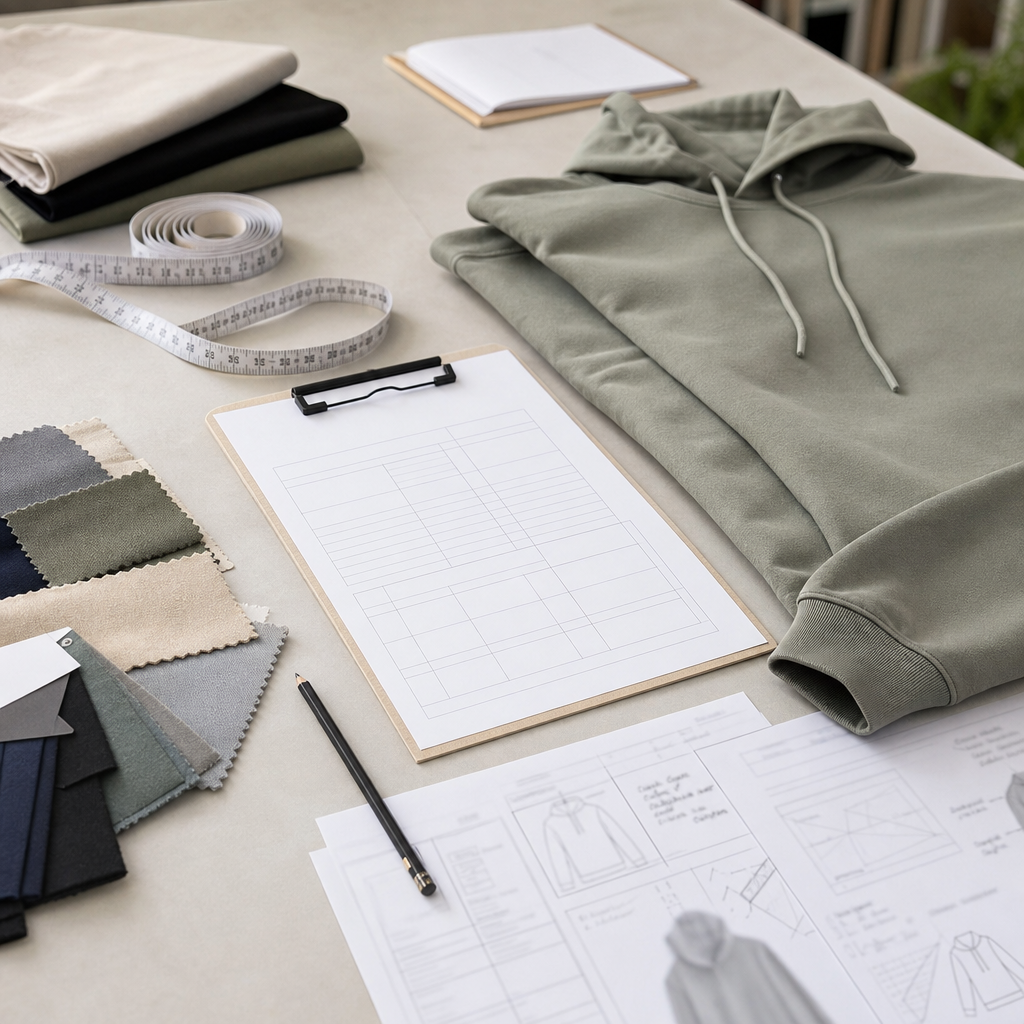
A useful spec sheet names each point of measure clearly. Depending on the style, include body length, chest, shoulder, sleeve length, sleeve opening, hem width, waist, hip, front rise, back rise, thigh, knee, inseam, outseam, cuff opening, pocket position, collar width, and hood height. Each point should be measurable on a flat garment without guessing what the buyer meant.
For T-shirt programs, compare the handoff with the T-shirt measurement tolerance guide. Tolerance planning helps the buyer decide which measurements must be tight and which can allow small production variation.
Add Tolerances and Priority Measurements
Not every measurement carries the same fit risk. Chest width, body length, shoulder, rise, inseam, and sleeve length often affect fit more visibly than small internal details. Mark priority measurements and add reasonable tolerances so the sample room and QC team know what should be checked carefully before approval.
For hoodie styles, the hoodie fit block and size grading checklist shows how one approved sample size should eventually connect to a broader graded size table before bulk production.
Separate Sample Approval From Size-Run Grading
Private label buyers often approve one sample and assume the whole size range is solved. That is risky. The sample-size spec sheet confirms the first physical fit direction, while the graded size table protects small, large, and extended sizes. A sample can be approved in size M while size S is too short or size XL loses the intended shape.
Before production, review the planned size breaks against the startup size-break planning guide. This helps the buyer avoid ordering too many sizes without enough fit evidence or demand confidence.
Connect Specs to Fabric, Wash, and Construction
Measurements do not exist separately from fabric and construction. Heavy fleece, rib recovery, denim wash, stretch jersey, garment dye, and seam construction can all change how the finished piece measures and feels. If the fabric may shrink, relax, or twist after washing, write that concern into the sample and QC notes instead of treating the spec sheet as a fixed spreadsheet only.
The sampling and MOQ process explains how sample approval should connect to material choice, measurement review, and bulk readiness rather than being treated as a visual sign-off only.
Send a Clean Spec Handoff Package
Before sending the project to a manufacturer, package the size spec sheet with style drawings or photos, target fabric, sample size, size range, tolerance notes, priority measurements, branding details, and open questions. Mark which details are approved and which details need the sample room’s recommendation. This gives the factory a practical inspection path and reduces avoidable back-and-forth.
For a private label project, share the target garment type, fabric direction, size range, sample goals, and spec sheet through the StitchQuote inquiry page so the production discussion starts with clear technical context.
Questions Buyers Ask Before Sending a Size Spec Sheet
Can a factory create the size spec sheet for a private label buyer?
Yes, but the buyer should still provide fit intent, reference measurements, size range, and approval priorities. Otherwise the factory has to guess the brand’s target fit.
How many measurements should a first sample spec include?
Include enough points to control the fit and construction of the style. Simple T-shirts may need fewer points than hoodies, joggers, denim, or cut and sew garments.
Should tolerances be included before the first sample?
Yes. Early tolerance notes help the factory understand which measurements must be controlled tightly and which can be adjusted after the first sample review.
What should be approved before bulk production?
The buyer should approve sample fit, priority measurements, tolerance direction, fabric behavior, size grading, and any construction details that affect how the garment measures after sewing and finishing.
Request a manufacturing quote
Share your product type, quantity range, and destination. We usually reply within one business day.
3 Comments
Comments are closed.
[…] the buyer has not prepared a measurement table, the private label size spec sheet guide shows how sample size, points of measure, tolerances, and grading direction should be organized […]
[…] the private label size spec sheet guide when the sample approval still lacks clear points of measure or tolerance language. If the sample […]
[…] private label work, the scope should connect to a measurement table or a basic tech pack. The private label size spec sheet guide explains how body length, chest, shoulder, sleeve, waist, hip, and tolerance points should be […]