Custom Streetwear, Casualwear & Denim Manufacturer•MOQ 50 pcs•Denim MOQ 100 pcs•7-Day Sample Available

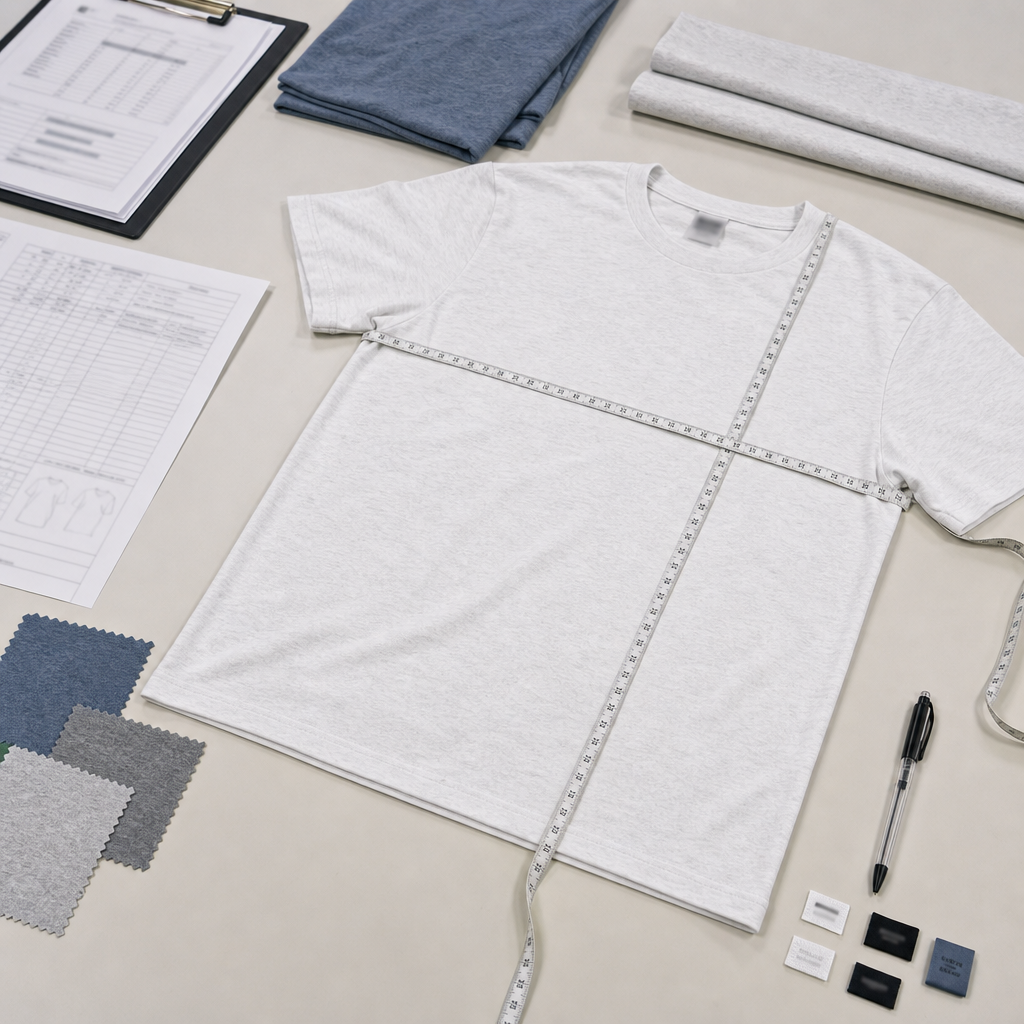
How to Set T-Shirt Measurement Tolerances Before Low MOQ Bulk Production
Set T-shirt measurement tolerances for body length, chest, shoulders, sleeves, neck opening, wash change, and QC records before bulk production.

T-shirt measurement tolerances should be set before low MOQ bulk production because a sample can be acceptable while bulk pieces still vary in body length, chest width, shoulder width, sleeve length, or neck opening. A tolerance table gives the buyer and factory a shared quality standard before cutting and sewing begin.
For premium basics and streetwear T-shirts, tolerance decisions should connect fit intent, fabric shrinkage, GSM, rib behavior, size range, and inspection method. The goal is not zero variation. The goal is a realistic range that protects fit without creating impossible QC rules.
Factory buyer decision table
Updated July 23, 2026: T-shirt tolerance is a production control tool, not a wish for zero variation. The buyer should decide which points protect the intended fit and which points can carry normal fabric and sewing variation without rejecting good bulk pieces.
| Measurement area | Factory-side check | Approval risk |
|---|---|---|
| Fit-critical points | Body length, chest, shoulder, sleeve length, neck width, and hem sweep by size | Bulk pieces fit differently even when the sample was approved |
| Fabric movement | Shrinkage, side-seam torque, GSM, garment dye, and neck rib recovery after wash | The table passes before wash but misses the customer-wear state |
| Inspection method | Flat measurement setup, sample size, tolerance by point, and AQL/QC record owner | Buyer and factory measure the same garment differently during final inspection |
For buyer routing, connect this page to custom T-shirt manufacturing, the broader garment measurement tolerance guide, and sampling and MOQ. Send size charts, fit photos, wash requirements, and order quantity through contact before bulk approval.
Choose the Critical Measurement Points
Start with the measurements that change the way a T-shirt fits: body length, chest width, shoulder width, sleeve length, sleeve opening, neck width, neck drop, hem sweep, and armhole. For oversized styles, shoulder and body balance may matter more than a standard slim-fit table.
Use the oversized T-shirt fit balance guide when the silhouette depends on dropped shoulders, wider body width, or a boxy shape.
When tolerance rules affect chest, length, neck rib, and wash change, compare them with a custom apparel production path for tolerance-sensitive basics before confirming the supplier brief.
Set Tolerances the Factory Can Inspect
A practical tolerance should match the fabric, sewing method, size range, and order quantity. Tight tolerances on stretchy jersey or garment-washed fabric may create unnecessary inspection failures. Loose tolerances can make the bulk order feel inconsistent to customers.
For a first order, connect tolerance decisions with the startup size break planning guide. More sizes mean more points where fit can drift.
Check Neck Rib, Side Seams, and Wash Change
Measurement tolerance is not only about flat specs. Neck rib recovery, side seam twisting, and after-wash shrinkage can change the final fit even when the first sample looks clean. Review these risks before approving the bulk tolerance table.
The T-shirt neck rib approval checklist and the side seam twist diagnosis guide are useful when jersey behavior affects final measurements.
Measure Before and After Wash
If the T-shirt will be washed, garment dyed, or made from fabric with uncertain shrinkage, measure the sample before and after wash. Record the change in length, chest, sleeve, shoulder, and neck opening. If the sample falls outside tolerance after wash, revise the pattern, fabric selection, or tolerance before bulk approval.
For fabric selection and handfeel decisions, review the T-shirt GSM guide for premium basics.
Write QC Comments Before Bulk
Factory-ready comments should name the measurement point, size, tolerance, and inspection method. For example: keep body length within tolerance after wash, recheck neck width after rib recovery, hold shoulder width on larger sizes, or inspect sleeve opening on the size set before packing.
For sample timing, approvals, and practical order planning, use the sampling and MOQ guide.
Frequently Asked Questions
Should every T-shirt measurement have the same tolerance?
No. Body length, chest, shoulder, neck opening, and sleeve length affect fit differently. Critical points usually need tighter control than less visible points.
Can low MOQ production still use a tolerance table?
Yes. Low MOQ does not remove the need for QC standards. A simple tolerance table can prevent confusion between sample approval and bulk inspection.
When should measurements be checked after wash?
Check after wash when fabric shrinkage, garment dye, rib recovery, or side seam twisting could change the final fit. Before-and-after records make approval decisions clearer.
Prepare T-Shirt Specs for Factory Review
Send your T-shirt reference, size chart, fabric target, GSM, fit direction, neck rib details, wash requirement, and order quantity through the StitchQuote inquiry form. StitchQuote can help identify which tolerance points should be locked before low MOQ bulk production.