Custom Streetwear, Casualwear & Denim Manufacturer•MOQ 50 pcs•Denim MOQ 100 pcs•7-Day Sample Available
How Startup Brands Should Choose Size Breaks for a First Low MOQ Clothing Order
A practical first-order size break framework for startup clothing brands balancing MOQ, fit risk, inventory exposure, and reorder planning.

Size breaks can decide whether a first low MOQ clothing order sells through cleanly or gets trapped in uneven inventory. Many startup brands spend time choosing colors and graphics, then treat size ratio as a guess. That creates risk: too many small sizes, not enough core sizes, weak reorder data, and cash locked in slow-moving stock.
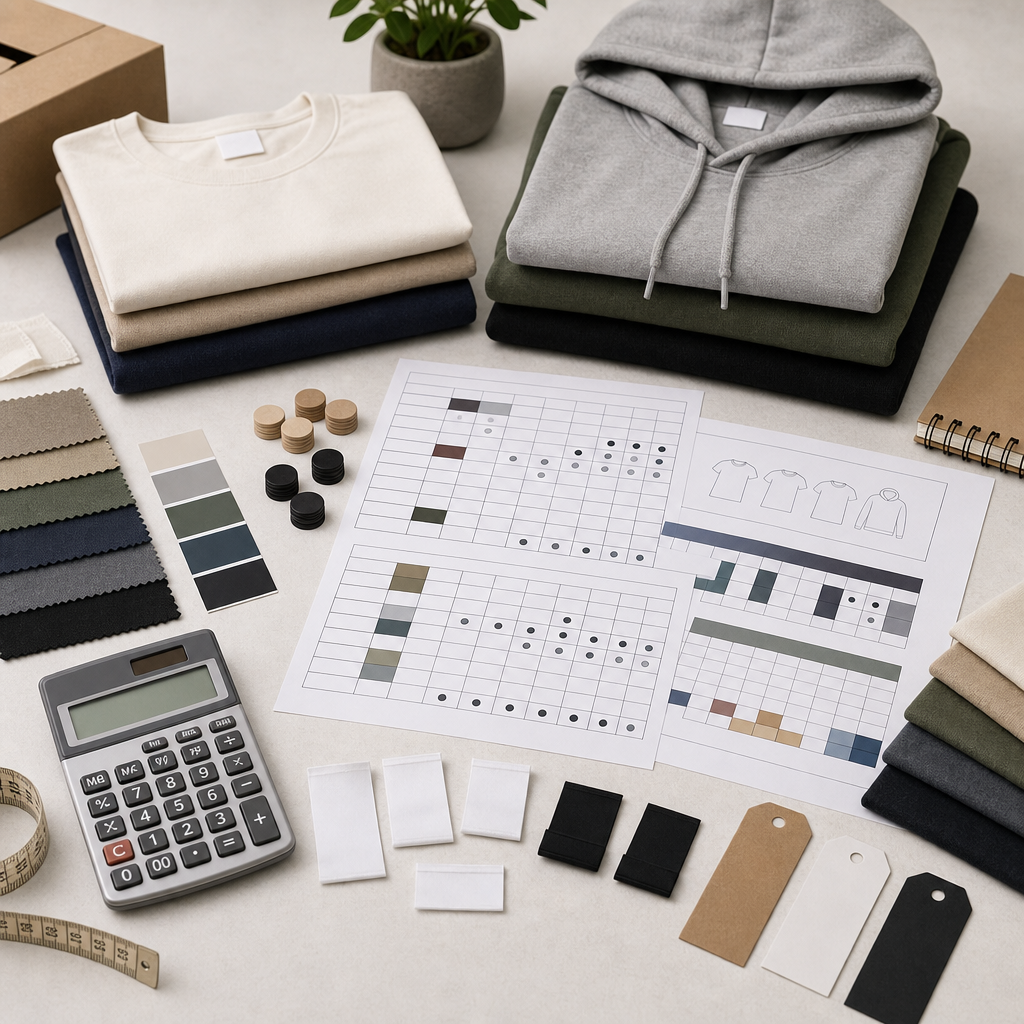
A size break is the quantity split across sizes. For example, a 100-piece order might be divided across XS, S, M, L, XL, and XXL. The best split depends on product fit, target customer, sales channel, region, price point, and how much customer data the brand already has.
Start With Fit Intent
Size demand changes when fit changes. A slim T-shirt, oversized hoodie, boxy tee, wide-leg sweatpant, and denim jean will not sell the same size curve. Oversized streetwear may reduce the need for very precise size matching, but it can also create confusion if the size chart is not clear.
Before ordering bulk, confirm the approved sample fit and size chart. If the fit is not stable, the size break is built on weak information. Use the startup clothing brand SKU planning guide to connect style count, color count, size count, and MOQ pressure.
Keep the First Size Range Narrow Enough to Learn
Startup brands often want to serve every possible customer from the first order. That intent is understandable, but each added size spreads inventory thinner. If MOQ is low but the order has too many sizes and colors, each size-color cell may become too shallow to sell or learn from.
For a first order, it is often better to choose a clear core range and collect real demand data. The brand can expand size coverage after it understands sell-through, returns, and customer requests.
Do Not Separate Size Breaks From Color Count
Size breaks and color count are linked. A 200-piece order across two colors and five sizes has 20 pieces per size-color cell on average. The same order across four colors and six sizes has fewer than nine pieces per cell on average. That can create stockouts in core sizes and unsold pieces in edge sizes.
The StitchQuote article on why too many colors can break a small first order explains this risk. Size depth is usually more useful than too many color options in the first launch.
Use Customer Signals, Not Only Founder Preference
If the brand has preorder data, waitlist data, pop-up feedback, community surveys, or previous sales, use it. If there is no data, make the first order a learning order and avoid pretending the size curve is proven.
Founder preference can be useful for brand direction, but it should not be the only basis for size allocation. A brand selling oversized hoodies to a streetwear audience may need a different size curve than a brand selling fitted premium basics.
Protect Margin and Cash Flow
Every extra size can add sampling work, grading checks, labels, packing complexity, and inventory risk. If the brand is already tight on margin, a wide size range can make the first order harder to manage.
Review how startup brands should think about margin before asking for custom production. Size breaks affect cash flow because unsold sizes delay the next production decision.
Ask the Manufacturer the Right Questions
- What size set is needed for fit approval and grading?
- Which sizes carry the highest measurement or fit risk?
- How does MOQ change if the size range expands?
- Can labels, packaging, and carton planning handle the selected size range?
- What size data should be recorded after the first launch?
StitchQuote Note
For startup clothing brand manufacturing, low MOQ clothing production, and private label clothing, StitchQuote treats size breaks as a production and cash-flow decision. The right first order should be narrow enough to control risk and structured enough to create useful reorder data.
The sampling and MOQ stage should confirm fit, grading, size labels, packing, and quantity split before bulk production starts.
FAQ
What is a size break in clothing production?
A size break is the quantity split across sizes in a production order. It determines how many units are made in each size for each style and color.
Should a startup brand offer every size in the first order?
Not always. A wider size range can be inclusive, but it also spreads inventory thinner. Startups should balance customer needs with MOQ, cash flow, and the need to learn from real demand.
How should brands choose size ratios without sales data?
Use target customer assumptions, fit intent, preorder or survey signals if available, and a conservative first run. Treat the first order as a learning order and record size-level demand for reorders.
Request a manufacturing quote
Share your product type, quantity range, and destination. We usually reply within one business day.
One comment
Comments are closed.
[…] buyer recently decided size breaks, connect that decision to packing. StitchQuote’s guide on startup size breaks for a first low MOQ clothing order explains how size planning affects inventory depth and reorder […]