Custom Streetwear, Casualwear & Denim Manufacturer•MOQ 50 pcs•Denim MOQ 100 pcs•7-Day Sample Available

How to Write Apparel Sample Comments Factories Can Use Before Low MOQ Production
Write apparel sample comments factories can use by separating fit, measurement, fabric, trim, and approval notes before low MOQ production.

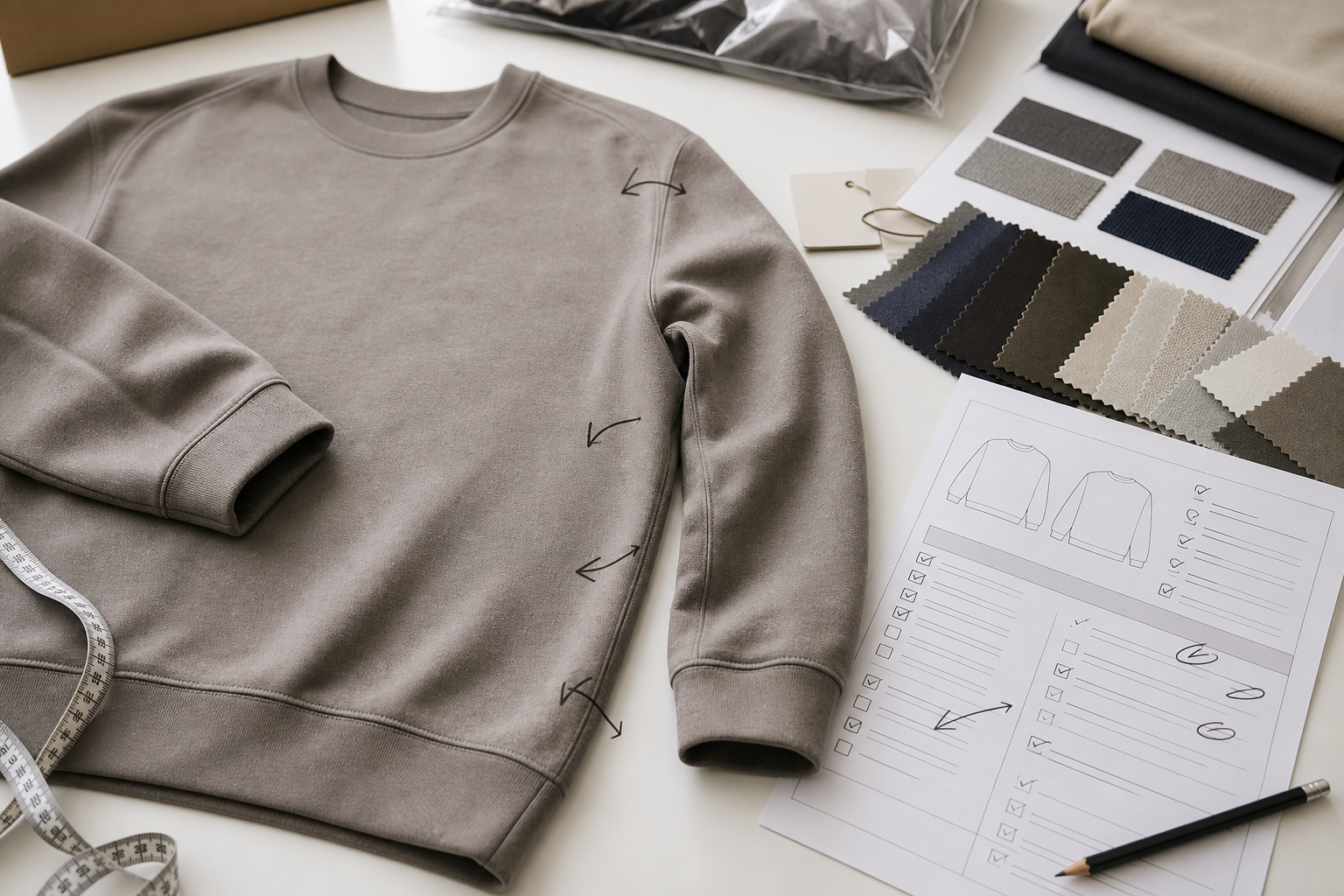
Apparel sample comments are most useful when they tell the factory exactly what to change, what to keep, and what still needs buyer approval before low MOQ production. Vague feedback like make it better or fit is off can create another sample round without solving the actual production risk.
The sampling and MOQ page explains how sample approval, production minimums, and factory planning connect before a buyer moves into bulk. Clear comments help that process because they turn sample review into a usable handoff instead of a loose conversation.
Why Vague Sample Comments Slow Down Low MOQ Production
Low MOQ production still needs disciplined sample approval. The factory may be managing pattern updates, fabric booking, trim sourcing, label approval, and cutting plans at the same time. If the buyer sends comments without priority, measurements, or approval status, the sample room has to guess which issue matters most.
Useful comments should answer four questions: what is wrong, where it appears, how much it should change, and whether the current sample is approved, rejected, or approved with revision. This keeps sampling from drifting into repeated subjective reviews.
Separate Fit Comments From Measurement Comments
Fit comments describe how the garment feels or looks on body. Measurement comments describe the point of measure and the amount of change. A factory can use both, but mixing them together creates confusion. For example, saying the chest feels tight is helpful, but it becomes actionable when paired with a chest width measurement, target spec, and tolerance.
If the buyer has not prepared a measurement table, the private label size spec sheet guide shows how sample size, points of measure, tolerances, and grading direction should be organized before the next sample is made.
Tie Each Change to a Photo, Point of Measure, or Construction Area
Every important comment should point to a location. Use front, back, side seam, shoulder, sleeve opening, waistband, pocket mouth, label placement, hem, or other garment areas. If the issue is visual, attach a marked photo. If the issue is measurable, include the actual measurement and target. If the issue is construction, name the seam, stitch, or operation.
For cut-and-sew projects, comments should stay aligned with the original development documents. The cut and sew tech pack guide is useful when buyers need to keep artwork, specs, construction notes, trims, and approval history in one controlled record.
Mark Fabric, Trim, Label, and Packaging Comments Separately
A sample can have several kinds of issues at once. Fabric handfeel, color, shrinkage, label placement, drawcord length, zipper pull, hangtag position, and packaging may involve different factory teams or suppliers. Put these comments in separate sections so one open trim issue does not block a fit approval, and one fit revision does not hide a label problem.
This is especially important for buyers comparing a first sample to a future low MOQ order. The low MOQ clothing manufacturer page gives context for why small production runs still need clear material, sample, and approval decisions before bulk cutting.
Clear sample comments help startup teams avoid vague approvals; keep the revision record tied to a startup brand sample-to-production planning route before the first bulk order.
State What Is Approved and What Needs Revision
The best sample comments do not only list problems. They also say what is approved. If fabric, color, main label, pocket shape, neck rib, seam type, or packaging direction is acceptable, mark it as approved so the factory does not reopen that decision in the next sample.
Use status labels such as approved, revise and resubmit, approved for fit only, approved for construction only, pending buyer artwork, pending fabric confirmation, and check again in pre-production sample. When measurements are involved, the T-shirt measurement tolerance guide shows why tolerance language should be realistic and production-friendly.
Send One Clean Sample Comment Handoff
Do not scatter final comments across chat screenshots, voice notes, and separate spreadsheets. Consolidate the final decision into one sample comment sheet with style name, sample version, date, sample size, fit model size if relevant, photo references, measurement changes, construction comments, material comments, trim comments, packaging comments, approval status, and open questions.
For a new private label or low MOQ apparel project, send your sample photos, spec notes, fabric plan, revision priorities, and order quantity through the StitchQuote inquiry page. A clean comment handoff helps the factory judge whether the next step should be another sample, a pre-production sample, or bulk preparation.
Questions Buyers Ask About Apparel Sample Comments
Should sample comments include every small issue?
They should include every issue that affects fit, production quality, material approval, branding, or bulk consistency. Cosmetic preferences can be included, but they should be marked as lower priority if they do not block approval.
Can a buyer approve a sample with comments?
Yes, but the approval status must be clear. Approved with comments should state which points are approved for bulk and which points must be corrected before or during the pre-production sample stage.
What makes sample comments hard for a factory to use?
Comments become hard to use when they lack location, measurement, photo reference, priority, or approval status. Mixed messages from different team members also create avoidable risk.
Should sample comments be sent before asking for a bulk quote?
Yes, if the comments change fabric, trims, construction, measurements, packaging, or labor complexity. Those changes can affect price, MOQ, lead time, and production planning.
Request a manufacturing quote
Share your product type, quantity range, and destination. We usually reply within one business day.
2 Comments
Comments are closed.
[…] apparel sample comments guide helps buyers turn vague feedback into usable production language. Comments such as reduce shine on […]
[…] findings should be written into the sample record with clear photos and comments. The apparel sample comments guide explains how to turn broad remarks into production-ready notes the sewing and finishing teams can […]