Custom Streetwear, Casualwear & Denim Manufacturer•MOQ 50 pcs•Denim MOQ 100 pcs•7-Day Sample Available
How to Prepare a Cut and Sew Tech Pack for Low MOQ Streetwear Production
Prepare a cut and sew tech pack for low MOQ streetwear production with clear measurements, fabric standards, trims, artwork, and construction notes.

A cut and sew tech pack should make the sample room’s first job easier. In low MOQ streetwear production, unclear drawings, missing measurements, vague fabric notes, or incomplete trim details can slow sampling before the buyer has even seen the first physical sample.
For brands comparing factories or preparing a new style from scratch, the cut and sew manufacturer page explains how pattern development, fabric choice, sampling, labeling, MOQ, and bulk planning should connect before production starts.
Start With the Product Decision, Not the Template
A tech pack is useful only when it reflects the actual product decision. Before filling pages, confirm whether the style is a true cut and sew project, a modified blank, or a hybrid. Custom body shape, paneling, special pockets, unusual proportions, custom fabric, and original construction usually require more detail than a decoration-only streetwear order.
If the buyer is still deciding between custom construction and ready-made blanks, review cut and sew vs blanks for streetwear brands. That decision affects how much pattern, measurement, material, and construction information the factory needs before sampling.
Add Drawings, Measurements, and Tolerances
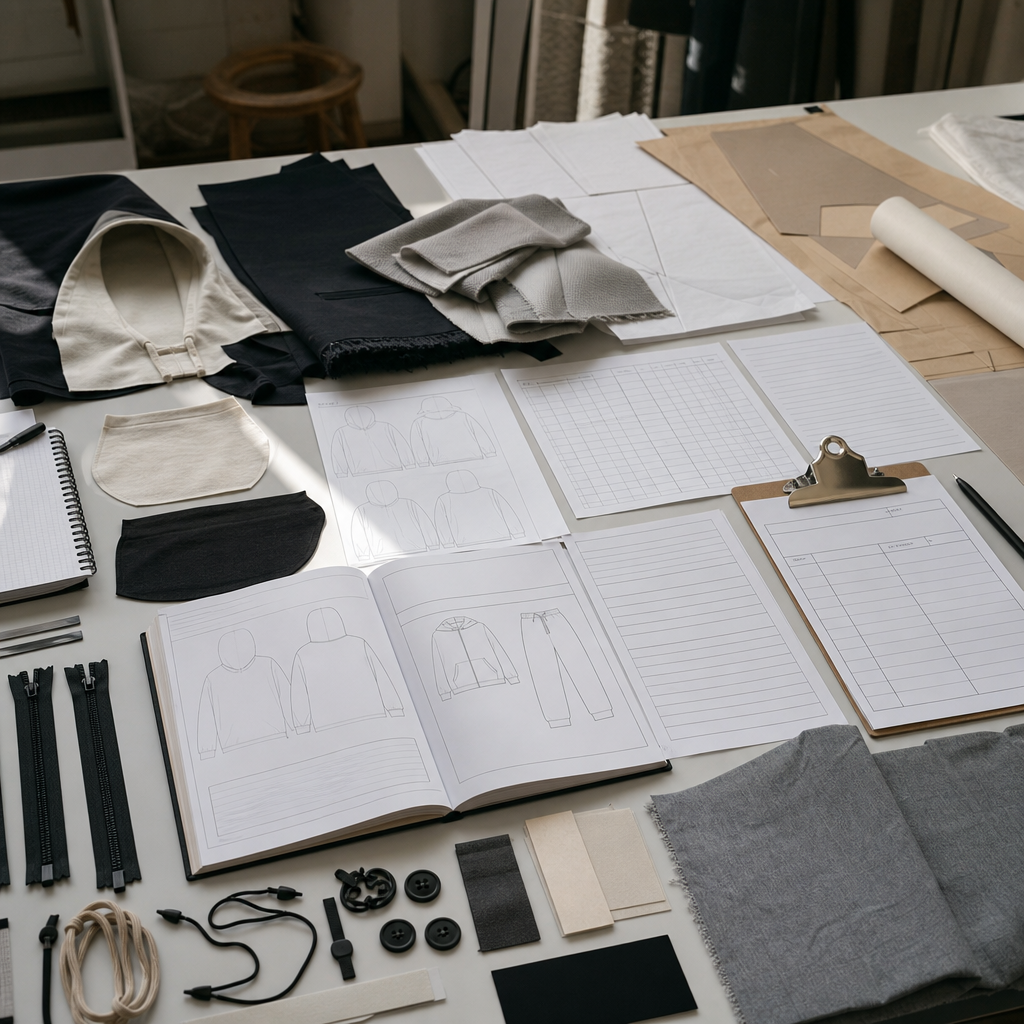
The tech pack should include front and back drawings, important construction views, a measurement table, size range, sample size, grade rules when available, and tolerance notes. For low MOQ production, buyers sometimes skip tolerances because the order is small. That creates risk because the factory has no shared standard for deciding whether the sample or bulk measurement is acceptable.
Measurement points should be named clearly: body length, chest, shoulder, sleeve, hem, waist, hip, rise, inseam, outseam, cuff opening, pocket position, and any style-specific points. If the project includes a new shape, connect the tech pack to the later cut and sew pattern approval stage so sample comments can be translated into pattern changes, not just loose fit opinions.
When the tech pack controls original fit, trims, and artwork instead of a blank decoration job, compare it with a streetwear production route for cut-and-sew tech packs before requesting samples.
Specify Fabric, Trims, Artwork, and Labels
A factory-ready tech pack should say what fabric is intended, whether a substitute is acceptable, target GSM or weight, stretch or recovery expectations, color standards, wash route when relevant, and any fabric testing concerns. It should also include trims such as labels, zippers, drawcords, eyelets, buttons, elastic, hangtags, and packaging requirements if they affect the sample.
Artwork should include placement, size, color, technique, and approval notes. For streetwear, print, embroidery, appliqué, patch, wash, and label placement can change both sample cost and production risk. The cut and sew MOQ risk guide explains why fabric, trims, decoration, and special construction can raise minimums or lead time.
Write Construction Notes the Sample Room Can Follow
Construction notes should describe stitch type, seam allowance, finishing method, pocket construction, waistband method, collar or rib attachment, hem finish, reinforcement points, and inside finishing standards. Do not rely only on a reference photo when the construction must be controlled. A photo can show the look, but the sample room still needs instructions for how the garment should be made.
For construction-specific approval, use the cut and sew seam construction checklist. It helps buyers separate visible styling from the technical stitching and finishing details that affect comfort, durability, and repeatability.
Separate Must-Have Details From Flexible Details
A strong tech pack tells the factory which details are fixed and which details can be discussed. Fixed details might include body shape, pocket size, artwork placement, label position, fabric handfeel, or size tolerance. Flexible details might include a similar stock rib, alternate zipper puller, or packaging option if the buyer has not approved a final trim package.
This distinction matters in low MOQ work because the supplier may have practical alternatives that protect timing or minimums. If everything is written as fixed, sampling can slow down. If everything is flexible, the sample may drift away from the intended product.
Check the Pack Before Sending It for Sampling
Before sending the tech pack, check whether a sample maker can answer these questions without another email: What is the sample size? What fabric should be used? Which measurements matter most? Which trims are approved? Where does artwork go? Which construction details are fixed? What does the buyer want reviewed after the first sample?
The sampling and MOQ process is the right next reference when the pack is ready. If the style is ready for discussion, send drawings, target fabric, size range, decoration notes, and timing expectations through the StitchQuote inquiry page.
Questions Buyers Ask Before Sending a Cut and Sew Tech Pack
Does every low MOQ cut and sew project need a full tech pack?
Yes, but the depth can vary. A simple style may need fewer construction views, while an original streetwear silhouette needs clearer measurements, fabric standards, construction notes, and sample approval priorities.
Can a reference garment replace a tech pack?
No. A reference garment can help explain the target, but the buyer should still provide measurements, material expectations, trim details, artwork placement, and construction notes.
What should be fixed before asking for a sample quote?
The buyer should fix the intended style, sample size, size range, fabric direction, decoration method, trim package, and the details that must not change during sampling.
What causes the most tech pack back-and-forth?
The most common causes are missing measurements, unclear fabric requirements, artwork without placement dimensions, unspecified trims, and construction notes that do not explain how the sample should be built.
Request a manufacturing quote
Share your product type, quantity range, and destination. We usually reply within one business day.
3 Comments
Comments are closed.
[…] cut-and-sew projects, comments should stay aligned with the original development documents. The cut and sew tech pack guide is useful when buyers need to keep artwork, specs, construction notes, trims, and approval history […]
[…] cut-and-sew tech pack guide is the best place to record those match points. Drawings, photos, and callouts help prevent vague […]
[…] cut and sew tech pack guide is the right place to mark snap placement, diameter, color, spacing, backing requirement, and any […]