Custom Streetwear, Casualwear & Denim Manufacturer•MOQ 50 pcs•Denim MOQ 100 pcs•7-Day Sample Available

Low MOQ Denim for Startup Brands: Why Jeans Often Start at 100 pcs

Your first denim drop might need only one strong silhouette, but the minimum order can still be higher than the tees or hoodies you sourced before it. If your search for “denim manufacturer low moq” keeps leading to larger quantities than expected, the reason often lies in production: jeans combine fabric behavior, wash development, specialized sewing, and trim sourcing in one garment.
StitchQuote is a custom streetwear menswear manufacturer in China offering OEM production, with a general MOQ of 50 pcs/style and 100 pcs for denim; 7-day samples apply to standard styles. Confirm whether a proposed denim design qualifies for that sampling timeline. For a startup, the useful question is not just “Can I order fewer?” It is “Which design decisions make a small denim run easier to execute consistently?”
Why Jeans MOQ Is Higher Than Simpler Garments
A minimum order reflects more than sewing time. Pattern development, machine setup, material purchasing, wash trials, and inspection all require work before finished pieces can ship. A small order spreads that preparation across fewer garments.
Denim adds another complication: the garment you sew is not necessarily the garment you sell. Washing may change its color, hand feel, dimensions, and surface appearance. Manufacturers must account for that transformation rather than judge only the unwashed garment.
There is no universal jeans minimum. Ask what the quoted MOQ covers: one style, one fabric, one wash, or a combination. A low-minimum clothing program does not automatically mean every treatment or material has the same threshold.
Wash Recipes and Shade Lots: One Blue Is Not Every Blue
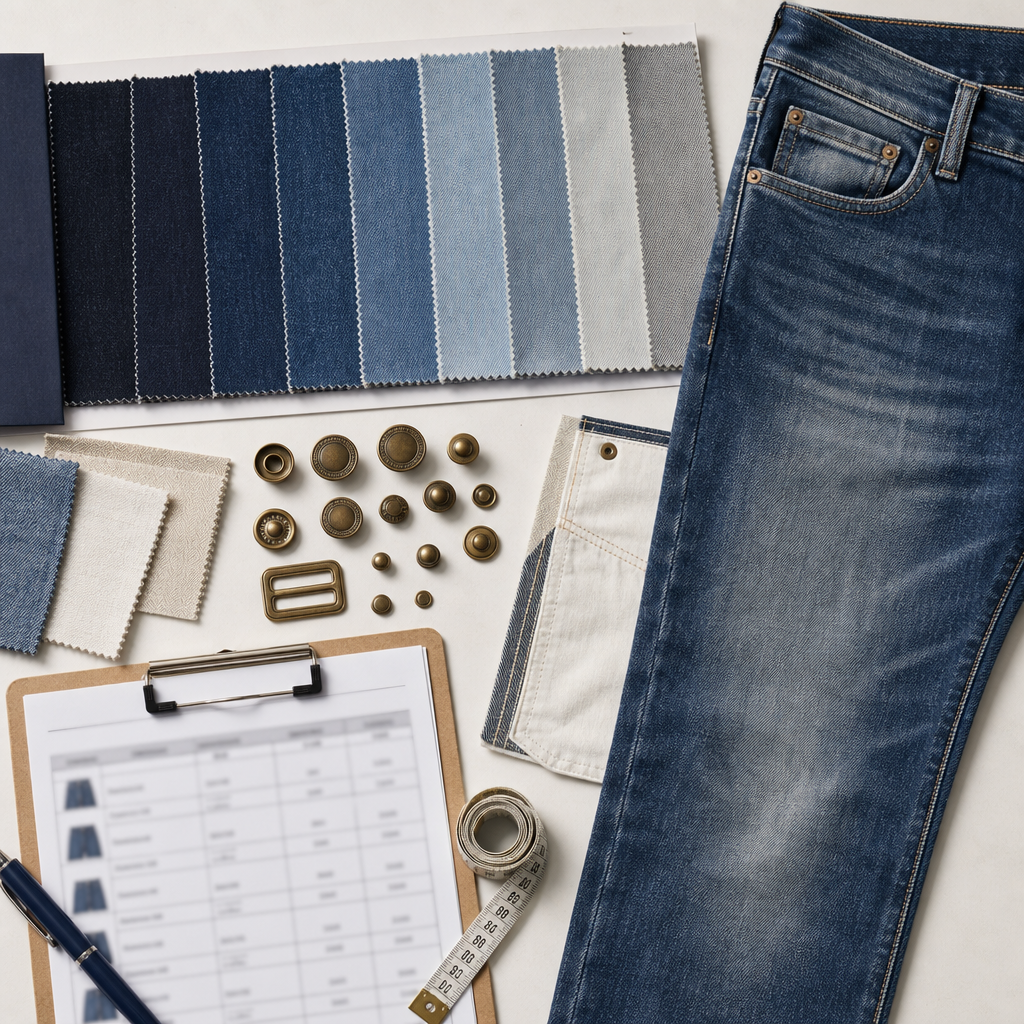
A denim wash is a production recipe, not simply a color name. Depending on the intended finish, it may involve controlled processing times, temperature, chemistry, mechanical action, and drying conditions. Changing these variables can change the result.
Equipment loading can also affect repeatability. A small development sample and a production wash batch may not behave identically. That is why approving a photo of “vintage blue” is less useful than approving a physical reference and agreeing on acceptable variation.
Keep the First Wash Assortment Focused
Fabric shade lots matter before washing begins. Denim from different dye lots can react differently to the same treatment. Ask whether your order can use a consistent fabric lot and how shade differences will be checked.
One fabric and one wash target reduce development variables. Three washes can mean three separate approvals, even when the jeans share a pattern. They may also create separate minimums. The denim manufacturing overview can be a starting point for discussing your intended finish, but get order-specific requirements confirmed.

Special Machines and Setup Still Matter on Small Runs
Jeans commonly require operations such as durable seam construction, bartacks, waistband attachment, buttonholes, and hardware setting. The exact machines and attachments depend on the garment’s construction. Not every design needs every operation, but each added detail can introduce another setup or quality checkpoint.
Consider a wide-leg streetwear jean with contrast stitching, extra utility pockets, and reinforced panels. It may look like a straightforward variation, yet thread changes, pocket placement, and intersecting seams all need attention.
Ask a jeans manufacturing partner to review construction before finalizing the tech pack. An early feasibility discussion can identify details that complicate production without contributing much to your brand’s signature fit.
Hardware and Trims Can Have Their Own Minimums
Your garment minimum and your trim minimum may be different. Custom buttons, engraved rivets, branded patches, zipper specifications, and labels can each have separate sourcing requirements. A low garment MOQ does not guarantee that every custom component is available in the same quantity.
For a first release, separate essential branding from details you could introduce later. A suitable stock button finish may preserve the look without requiring custom tooling. If custom hardware is central to the design, ask about tooling, excess quantities, and ownership before approving it.
- Specify hardware dimensions, finish, and placement.
- Confirm compatibility with the fabric and proposed wash.
- Ask whether trims are attached before or after processing.
- Clarify how unused custom components would be handled.
After-Wash Measurement Risk: Approve the Finished Fit
Denim can shrink, relax, twist, or change feel during processing. Fabric construction, stretch content, wash treatment, and drying conditions all influence the outcome. A measurement sheet for an unwashed sample alone cannot define the customer’s finished fit.
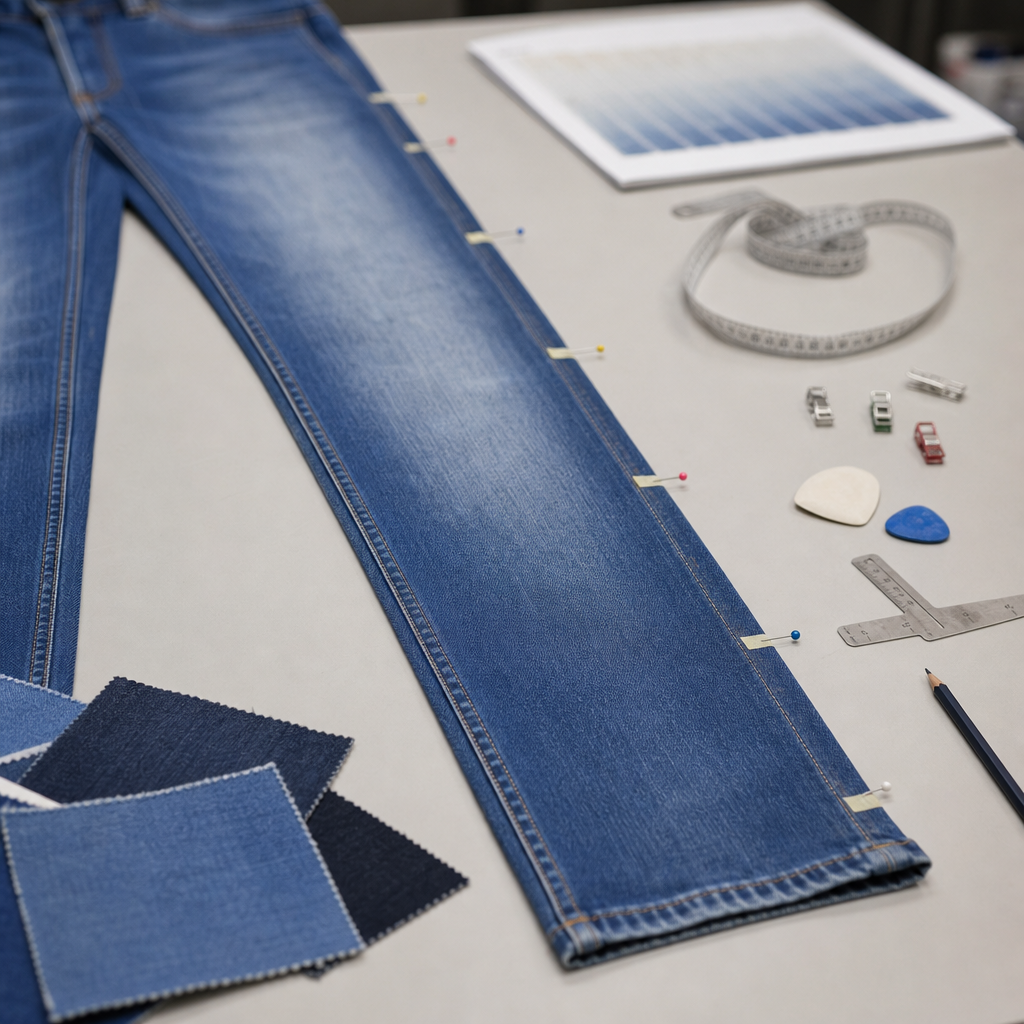
Set measurement targets for the intended delivery condition. Include waist, hip, front and back rise, thigh, knee, inseam, and leg opening where relevant. Define how each point is measured and agree on tolerances rather than assuming one tolerance works everywhere.
Check More Than the Waist
A jean can meet its waist target but still fit poorly because the rise, thigh, or seat has changed. Inspect seam alignment, leg twist, pocket shape, zipper function, and hardware security alongside dimensions.
For stretch denim, discuss recovery and the fit-check method as well. The guide to denim weight and stretch in sampling can help frame those fabric decisions. Any requested wear or laundering tests should have an agreed method and acceptance criteria.

A Practical Sampling Path for Your First Denim Drop
When evaluating a “denim manufacturer low moq” option, look beyond the headline minimum. Ask how sample approvals connect to bulk production. A staged process makes it easier to trace a problem to fit, fabric, wash, or construction.
1. Define the Product Before Requesting a Sample
Prepare a tech pack with sketches, measurements, construction notes, fabric direction, trim details, and wash references. Describe the intended silhouette clearly: relaxed straight, baggy, tapered, or another defined fit. Reference garments can communicate proportions, but they should support—not replace—written specifications.
2. Separate Fit Approval From Finish Approval
Agree on the sample sequence with the manufacturer. A development sample may help assess construction, while a washed sample shows the combined effect of fabric and processing. If substitute materials are used, record what cannot yet be approved.
3. Confirm the Production Reference
Before bulk authorization, confirm which approved sample, specifications, wash reference, and trim list govern production. Request representative size checks where appropriate. Review sampling and MOQ details early, and confirm how revisions affect the schedule.
A simpler finish can reduce the number of approval variables, though it does not remove the need for testing. If you are considering heavy abrasion, compare distressed versus clean denim for a startup collection before committing.
Checklist for a First Low MOQ Denim Order
Use this checklist to make supplier conversations specific and quotes easier to compare:
- Order scope: Confirm what counts as one style and whether washes or colors have separate minimums.
- Size breakdown: Provide quantities by size and ask about any size-level restrictions.
- Fabric: Specify composition, weight, stretch direction, and acceptable substitutions.
- Wash: Supply a physical reference when possible and define acceptable shade variation.
- Construction: Document seams, stitching, pockets, reinforcement, and distressing placement.
- Trims: Separate stock components from custom items and confirm sourcing minimums.
- Fit approval: Agree on finished measurements, tolerances, and sample sign-off.
- Commercial scope: Clarify sampling, testing, packaging, freight, duties, and revision charges.
For budget planning, use the guide to jeans manufacturing costs to organize questions, then request a quote for your actual specifications. Comparing differently scoped quotes can hide important trade-offs.
FAQ: Low MOQ Denim for Startup Brands
Can I split a denim order across multiple washes?
Possibly, but do not assume the minimum applies to the combined total. Each wash may require separate development and processing. Ask for written confirmation of quantities per style, fabric, and wash before planning your assortment.
What should I ask when searching for a jeans manufacturer low MOQ option?
Ask what the minimum includes, which materials are available at that quantity, and how finished fit and shade are approved. When comparing “denim manufacturer low moq” results, prioritize clear order terms over the smallest advertised number.
Does a clean finish always mean easier production?
No. A clean finish can avoid some distressing steps, but consistent dark shades, dimensional stability, and trim compatibility still need control. Evaluate the complete fabric-and-wash combination rather than judging difficulty from appearance alone.
Should a first drop include jeans and a denim jacket?
Only if your budget and development capacity support two products. They need separate patterns and fit approvals, and may carry separate minimums. The first denim jacket order guide can help you assess the additional preparation.
Start With a Focused Denim Brief
If your first drop also includes cut-and-sew tees or hoodies beside denim, keep category MOQs separate and review our men’s streetwear manufacturer overview. For fleece vs loop-back options on tops, see the French terry hoodie manufacturer page before you lock fabric.
A manageable first order starts with clear priorities: a defined fit, an achievable finish, and documented approval criteria. Denim can sit within a broader custom streetwear collection, but it deserves its own development plan.
If you are preparing a first jeans drop, you can contact StitchQuote with your tech pack, wash references, size breakdown, and intended quantity to discuss the requirements for your design.
Request a manufacturing quote
Share your product type, quantity range, and destination. We usually reply within one business day.