Custom Streetwear, Casualwear & Denim Manufacturer•MOQ 50 pcs•Denim MOQ 100 pcs•7-Day Sample Available

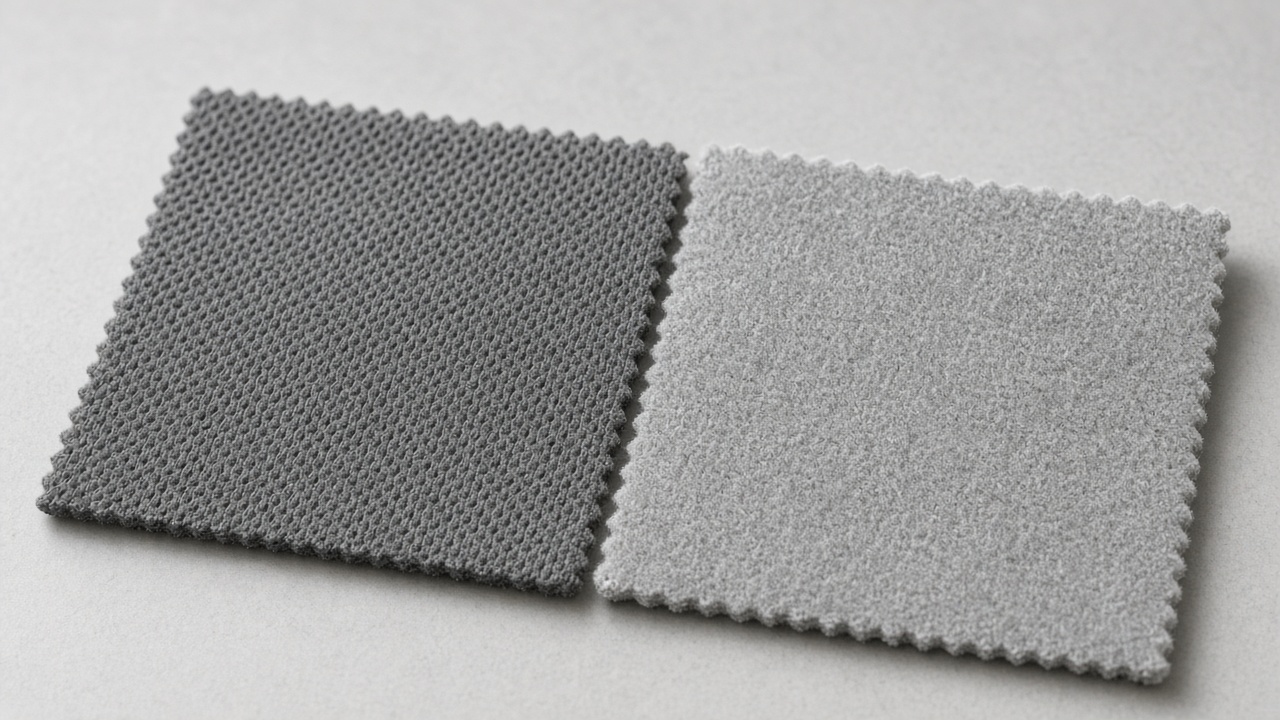
How to Choose Hoodie Fabric: Types, GSM & Finishes
Step-by-step hoodie fabric selection: construction, finished GSM bands, finishes, and sample checks before bulk.

Choose hoodie fabric by defining the intended climate, wearing occasion, and silhouette, then compare French terry and brushed sweatshirt fleece in suitable fiber compositions. Use finished fabric GSM to shortlist weight, but assess physical samples for drape, bulk, surface appearance, and hand feel. Confirm finishes and decoration on the proposed fabric, then review a sewn sample before and after an agreed washing procedure. Before bulk production, record the approved specifications, acceptance limits, and sample results.
Once fabric route and GSM are clear, move to garment execution on the custom hoodie manufacturer page—fit block, decoration, sampling, and bulk handoff.
Quick fabric-selection path (for newcomers):
- Use case — climate, occasion, silhouette
- French terry vs brushed fleece — then fiber composition
- GSM band — shortlist finished fabric weight
- Finish & decoration — hand feel and print/embroidery checks
- Sample checks & quote — approve fabric before bulk; confirm MOQ and timing when you inquire
1. What climate, wearing occasion, and silhouette should the hoodie fabric support?
Choose fabric around where the hoodie will be worn and how the finished garment should hang. Indoor layering, transitional wear, and colder-season use create different priorities for bulk and comfort. Define whether the silhouette should fall fluidly or hold a firmer shape before selecting a fabric weight. Fabric name and GSM alone do not guarantee warmth or breathability.
| Brief item | What the buyer should specify |
|---|---|
| Market and climate | Destination market, intended season, and typical indoor/outdoor conditions |
| Wearing occasion | Indoor layering, everyday commuting, or colder-season casual wear |
| Silhouette | Regular, cropped, oversized, or boxy; fluid drape or firm shape |
| Desired hand feel | Dry, compact, soft, fluid, or lofted |
| Reference garment | Specific fabric, fit, and feel features to retain—and features to change |
| Target price | Target retail positioning and garment sourcing budget |
| Quantity | Planned units per style and proposed color split |
For indoor layering, prioritize comfortable movement and manageable bulk under another garment. For transitional use, assess the hoodie both as a standalone piece and as a layer. For colder-season positioning, evaluate the complete garment rather than treating a heavyweight label as proof of insulation.
For a firm or oversized silhouette, inspect how the fabric supports the hood, shoulders, and hem. Double-layer hoods, pockets, and seam intersections add weight and localized bulk; a flat swatch cannot show their full effect. Mark the reference garment’s successful features separately so the supplier knows whether to reproduce its drape, proportions, interior feel, or all three.
Next: With climate and silhouette noted, choose French terry or fleece in step 2—or open the construction comparison if undecided.
2. Should the hoodie use French terry or brushed sweatshirt fleece, and which fiber composition fits the brief?
Shortlist French terry for a visible loopback interior and brushed sweatshirt fleece for a raised, fuzzy interior. Choose fiber composition separately: “cotton” describes fiber content; “French terry” and “brushed sweatshirt fleece” describe construction or finishing.
| Option | Interior | Likely use direction |
|---|---|---|
| French terry | Visible, unbrushed reverse loops | Layering or a less fuzzy interior |
| Brushed sweatshirt fleece | Reverse fibers raised into a nap | Cozy interior or greater perceived loft |
For the full side-by-side on handfeel, decoration, and when to sample both, see French terry vs fleece hoodie—then return here for GSM bands and finishes. Treat 100% cotton and cotton/polyester blends as sampling candidates; confirm ratios with the supplier. Related landers: French terry hoodie manufacturer · fleece hoodie manufacturer.
Next: Lock terry or fleece, then set a finished GSM band in step 3.
3. What finished fabric GSM should buyers shortlist for the intended drape and bulk?
Use approximately 240–300 GSM for lighter layering, 300–380 GSM for everyday styles, and 380–500 GSM for heavier designs as initial sourcing bands. Many men’s streetwear programs land somewhere in the ~300–400 GSM mid band once season and silhouette are fixed. These ranges overlap in use; they are neither quality grades nor StitchQuote stock specifications. Compare nearby weights in physical samples before fixing the target.
GSM means grams per square meter of fabric, not total garment weight. Garment size, hood layers, pockets, and other components affect the finished hoodie’s weight without changing the body fabric’s GSM. Blank markets sometimes quote ounces per square yard; for China cut-and-sew knits, ask for GSM first so quotes use one unit. Rough conversion: GSM ÷ 33.906 ≈ oz/yd² (example: 340 GSM ≈ 10 oz/yd²).
| Illustrative finished fabric GSM band | Intended garment direction | What to check in samples |
|---|---|---|
| Approximately 240–300 GSM | Lighter layering and lower-bulk designs | Whether the fabric provides the intended coverage and hangs correctly |
| Approximately 300–380 GSM | Everyday midweight styles | Balance of drape, body, and comfort in the intended fit |
| Approximately 380–500 GSM | Heavier designs seeking substantial weight | Hood behavior, seam bulk, movement, and whether the garment feels excessively heavy |
Two fabrics at the same GSM can behave differently because of knit density, yarn, fiber composition, and finish. A heavier option may still drape fluidly; a lower-weight option may feel compact. Higher GSM also tends to raise fabric cost and carton weight, and decoration processes (screen, puff, embroidery) can respond differently on open versus dense faces—approve artwork on the actual face.
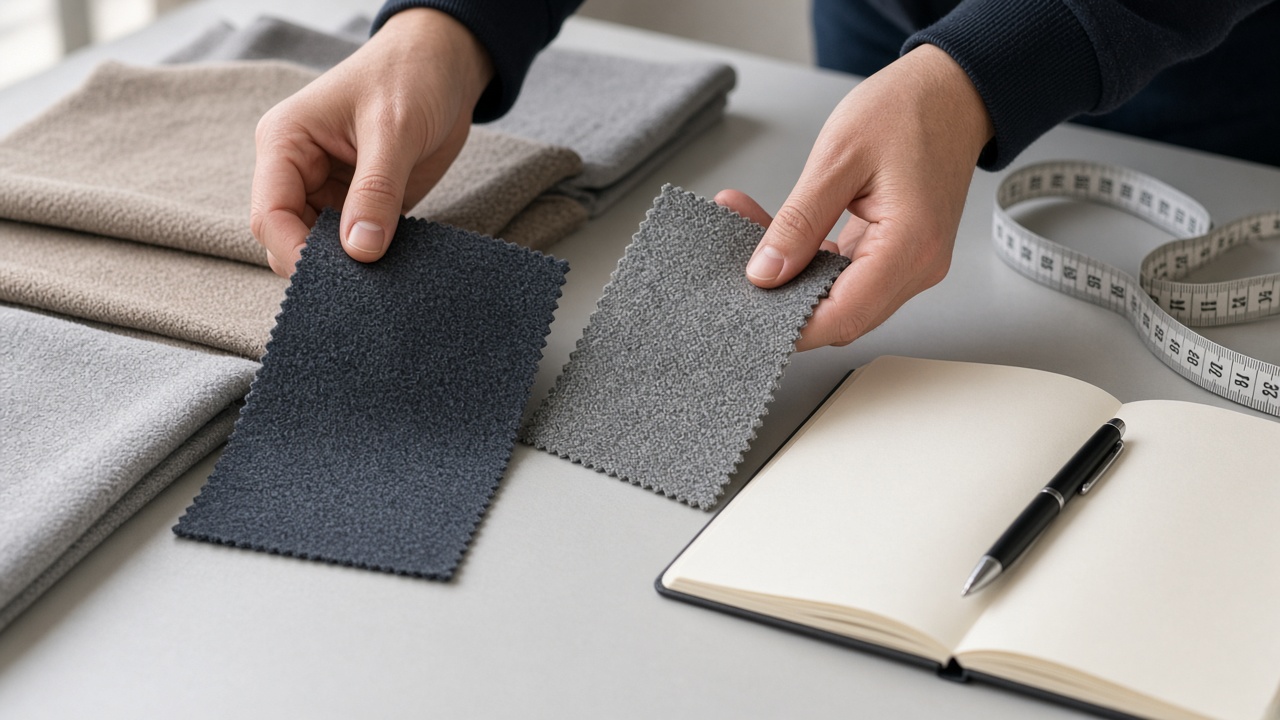
If the sample feels too limp, compare construction and finish as well as weight. If it feels too bulky, review the sewn hood and pocket areas before simply reducing GSM across the design.
Write the selected specification as finished body-fabric GSM, with an agreed tolerance and recorded conditioning and measurement basis. Clarify whether measurements refer to the finished fabric before laundering or another agreed state so comparisons remain meaningful. For heavyweight programs around 500 GSM, also review the 500 GSM hoodie manufacturer route after the weight band is locked.
Include the target range, construction preference, and a reference garment or swatch in the sampling brief. Confirm available weights and the selected fabric’s measured GSM before approval.
Common weight mistakes to avoid: writing “heavy” with no number or reference; approving color on a different construction than bulk; ignoring that rib and body can differ in weight; locking print or puff artwork before the fabric face is approved.
Next: With a GSM band shortlisted, approve finish and decoration on the actual face in step 4.
4. Which finish and fabric surface will deliver the required hand feel, appearance, and decoration result?
Approve a physical reference for hand feel and shade, then evaluate decoration on the actual outer face of the proposed fabric. A brushed reverse describes the interior; it does not establish whether the exterior is suitable for a particular print or embroidery process.
Replace broad descriptions such as “premium soft” with observable requirements: dry, compact, fluid, or lofted, supported by a retained swatch. Check whether the desired feel remains after the agreed washing procedure.
| Approval checkpoint | What to inspect and record |
|---|---|
| Face and reverse | Identify both sides; retain labeled references |
| Loopback interior | Loop size, density, and consistency |
| Brushed interior | Brushing level, nap evenness, loose fibers, and flattening |
| Shade | Approve after the intended finishing route, including brushing where applicable |
| Hand feel | Compare before and after washing against the reference |
| Decorated sample | Use the intended fabric, color, artwork, placement, and proposed process |
| Decoration performance | Check adhesion where applicable, stiffness, puckering, distortion, and heat-related surface or shade changes |
Brushing can change perceived shade, so a color sample taken before brushing is not a sufficient reference for finished brushed sweatshirt fleece. For a production-floor brushing and handfeel checklist, see how to check hoodie fleece brushing and handfeel. For fleece pilling risk before bulk, see how to reduce pilling risk in fleece hoodies.
For a product where softness is a priority, prioritize the washed hand feel over the first-touch impression. For large printed areas, assess whether decoration changes drape or makes the panel unacceptably stiff. For embroidery, inspect local distortion and puckering. Where the proposed process uses heat, check its effect on the actual surface and shade.
Confirm the specific finishing treatment, decoration process, and settings during sampling. Durability should be assessed on the selected fabric and decoration combination.
Next: Finish and decoration checked? Move to sample checks and the quote brief in step 5, then the hoodie manufacturer hub.
5. Can the fabric choice fit the order quantity and budget, and what must pass before bulk approval?
Confirm the material route, color split, quantity, and quoted cost before committing to the fabric. Then approve fit and fabric against written sample requirements before bulk production. Garment MOQ and material or dye-lot minimums are separate constraints; a workable garment quantity does not automatically make every fabric or custom color feasible.
MOQ and sampling timelines depend on the fabric route, colors, and decoration—not a single fixed number for every program. Confirm current garment MOQ, material or dye-lot minimums, and sampling timing when you inquire. StitchQuote’s sample-first approach puts fit and fabric approval before bulk production; discuss your brief on the hoodie manufacturer page.
For smaller runs, ask which material and color routes can support the proposed quantity. If the quote exceeds budget, request clearly identified alternatives and approve any changed material through sampling.
Bulk approval matrix
Agree the wash/dry procedure, cycle count, measurement points, and acceptance limits before evaluating results. Blank cells below are intentional: limits and results must come from the buyer–supplier agreement and actual sample review. Confirm who will perform any required testing and which methods will be used. For fleece shrinkage wash testing before bulk, see fleece hoodie shrinkage wash test. For how rib, GSM, and fit notes belong in the tech pack, see hoodie tech pack: rib, GSM, and fit notes.
| Requirement | Agreed method | Acceptance limit | Sample result | Approval status |
|---|---|---|---|---|
| Finished fabric GSM | Record conditioning, measurement basis, and sampling method | Pending | ||
| Fit and dimensional change | Record wash/dry procedure, cycles, conditioning, and measurement points; assess length and width separately | Pending | ||
| Twisting and garment shape | Inspect seams, hood, and pockets before and after washing | Pending | ||
| Opacity | Compare intended colors under consistent lighting and representative stretch | Pending | ||
| Surface appearance and feel | Compare washed and unwashed samples with retained references; define any required pilling assessment | Pending | ||
| Decoration | Review decorated sample after the agreed care procedure | Pending | ||
| Body-to-rib shade | Compare under agreed lighting before and after washing | Pending | ||
| Rib recovery and compatibility | Agree stretch/recovery checks; assess differential shrinkage and cuff/hem behavior | Pending |
A “pre-shrunk” description does not replace measured sample results. Body fabric and rib also need joint approval because differences in recovery or dimensional change can affect cuffs, hem tension, and overall fit.
Quote-brief checklist
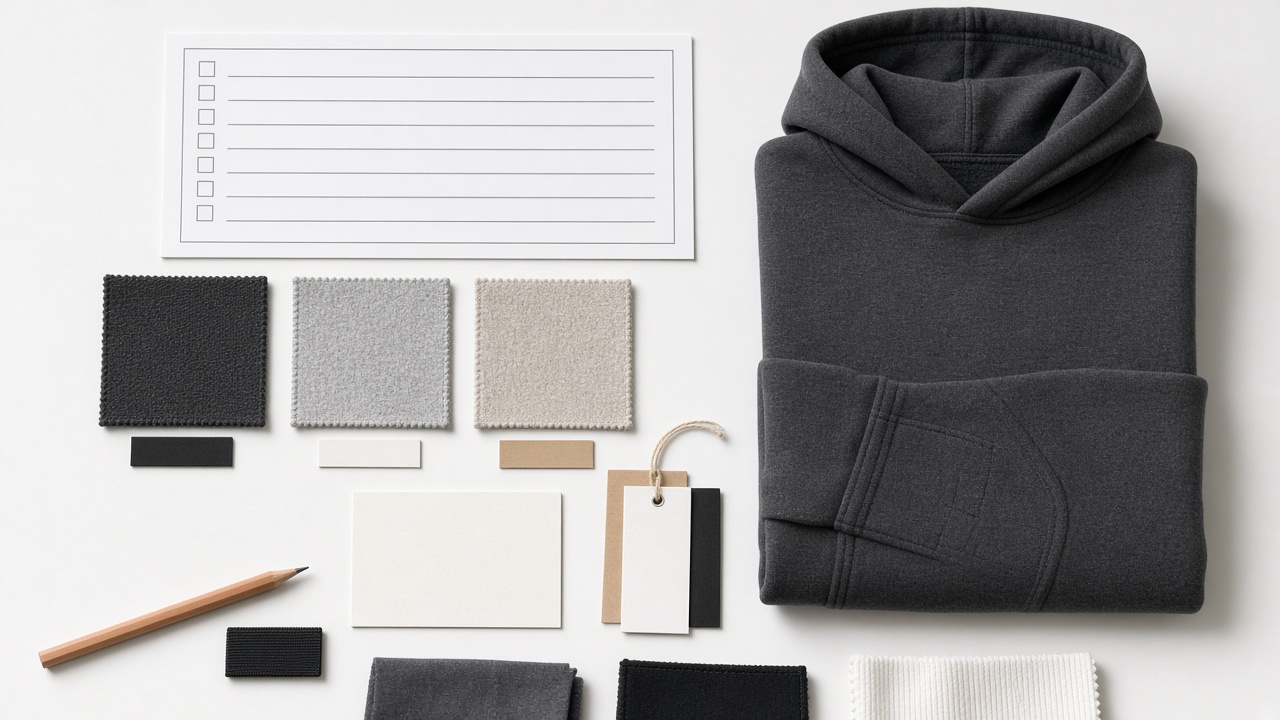
- Construction and full fiber composition (French terry or brushed fleece stated explicitly)
- Finished fabric GSM target, measurement basis, proposed tolerance, and unit (GSM—not only “heavy”)
- Finish reference showing face, reverse, and desired hand feel
- Colors and quantity by style, color, and size
- Size specifications and reference garment or swatch ID
- Rib composition, dimensions, recovery, and shade requirements (separate from body)
- Artwork, placement, branding, and trims—approved on the intended fabric face
- Wash/dry requirements, cycle count, and acceptance criteria
- Confirm sample fabric and bulk fabric share the same construction and finish before locking the PO
Retain approved fabric, rib, shade, decoration, fit, and wash records under a clear specification version. Require buyer approval for material substitutions, including changes to composition, brushing, or rib. If terry and fleece both appear in one drop, treat them as separate fabric SKUs with separate approvals.
Fabric decision complete? Take construction, finished GSM, finish notes, and artwork to the hoodie manufacturer hub to discuss sampling and production. Confirm current MOQ and timing when you inquire.
FAQ: choosing hoodie fabric
How do I convert hoodie fabric oz/yd² to GSM?
Ask suppliers for GSM first on China knit programs. Rough conversion: GSM ÷ 33.906 ≈ oz/yd² (example: 340 GSM ≈ 10 oz/yd²). Always confirm the measured finished fabric GSM on the proposed production fabric.
Should I choose 100% cotton or a cotton blend for a first hoodie?
Either can work. Specify fiber percentages explicitly if cotton content is part of positioning. Compare actual swatches and quotes for blends rather than assuming every blend shrinks less, pills less, or costs less.
Does “pre-shrunk” replace a wash test?
No. A pre-shrunk description does not replace measured sample results. Agree wash/dry procedure, measurement points, and acceptance limits, then record before-and-after dimensions on the sewn sample.
French terry or fleece—where should I decide?
Use the French terry vs fleece guide to lock construction and handfeel. Use this page for GSM bands, finishes, and bulk approval checkpoints after that choice.
When should I contact a hoodie manufacturer?
After you can state construction (terry or fleece), a finished GSM band, finish/handfeel notes, and decoration intent—even if artwork is early. Start on the hoodie manufacturer hub to align sampling before bulk.
Also useful
- French terry vs fleece hoodie — side-by-side construction comparison
- Hoodie manufacturer — custom / private-label program discussion
- Related manufacturer pages: French terry hoodie manufacturer · Fleece hoodie manufacturer · 500 GSM hoodie manufacturer
- Complete guide to hoodie manufacturing
- Also useful for QC: fleece brushing & handfeel · fleece shrinkage wash test · tech pack rib/GSM/fit · fleece pilling risk
Discuss your hoodie fabric brief with StitchQuote
With your brief prepared, explore StitchQuote’s custom hoodie manufacturing service for China-based cut-and-sew OEM production. Share your French terry or brushed sweatshirt fleece preference, finished fabric GSM target, quantity, and reference samples to discuss fabric, trims, branding, and decoration before sampling. Confirm current MOQ and sampling timeline when you inquire.
If you are still comparing interiors, read the French terry vs fleece hoodie guide to refine your shortlist.
Contact info@stitchquote.com or WhatsApp +86 15920568771 to discuss your brief.
Request a manufacturing quote
Share your product type, quantity range, and destination. We usually reply within one business day.