Custom Streetwear, Casualwear & Denim Manufacturer•MOQ 50 pcs•Denim MOQ 100 pcs•7-Day Sample Available

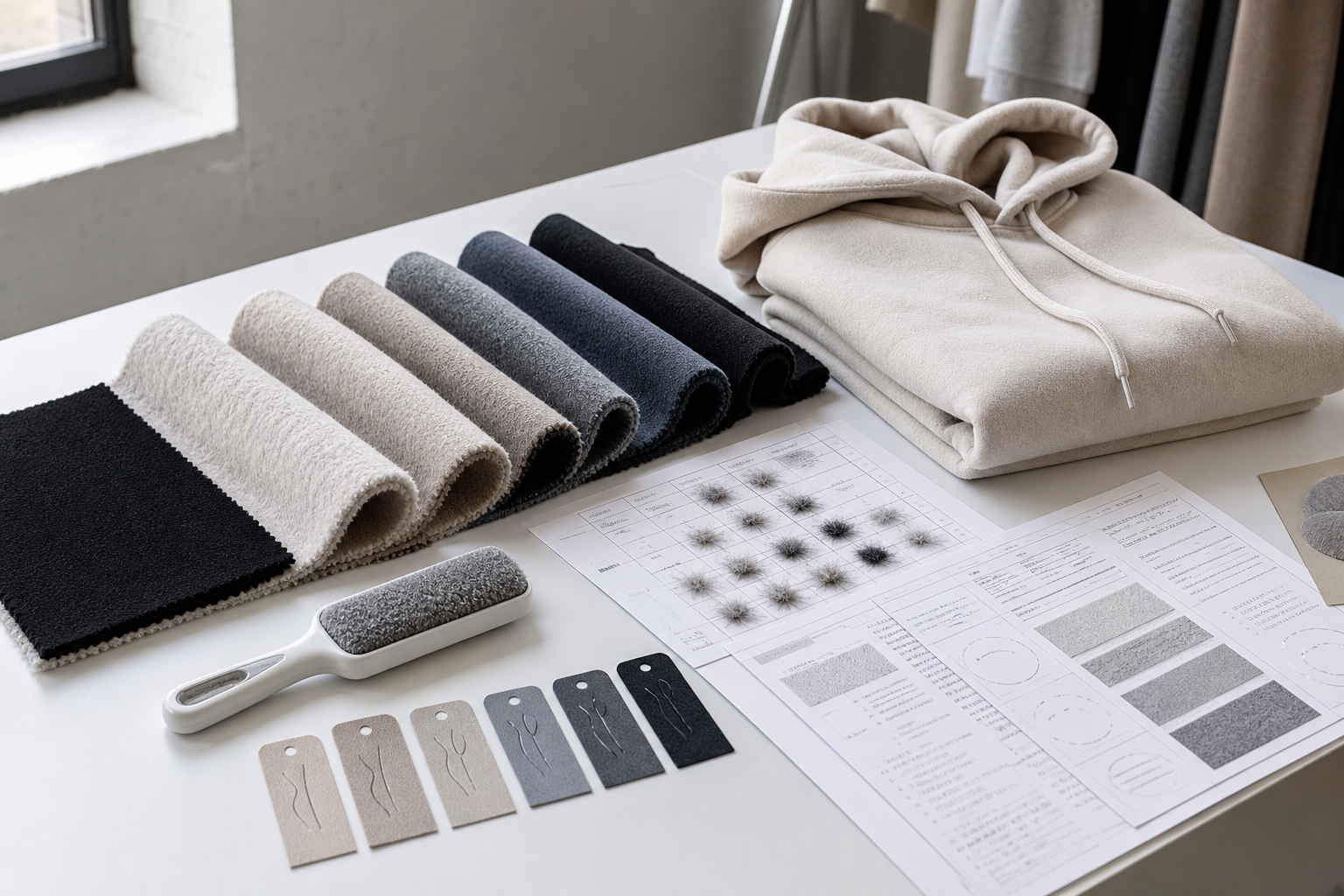
How to Check Hoodie Fleece Brushing and Handfeel Before Low MOQ Production
Check hoodie fleece brushing and handfeel before low MOQ production by reviewing softness, loft, lint, pilling, wash change, decoration, and sample comments.

Brushed fleece handfeel approval should start before a hoodie sample is treated as production-ready. A fabric can look correct in photos but still feel flat, dusty, sticky, too warm, too thin, or unstable after wash. For low MOQ hoodie production, these small handfeel problems can shape the buyer’s first impression more than a technical spec sheet does.
For brands developing premium fleece, heavyweight hoodies, or streetwear basics, the custom hoodie manufacturer page explains how fabric, fit, decoration, labels, MOQ, and sample approval should connect before bulk cutting starts.
Why Fleece Brushing Changes Hoodie Quality Perception
Brushing raises fibers on the back side or surface of fleece to create softness, warmth, and a fuller handfeel. That process can make a hoodie feel more premium, but it can also create lint, pilling, shade change, or uneven surface texture when it is not controlled. Buyers should review the brushed surface as a production variable, not only as a nice-to-have comfort detail.
Ask whether the intended fabric is cotton fleece, cotton-poly fleece, French terry with light brushing, or a heavier brushed-back fleece. Each choice changes warmth, shrinkage, decoration behavior, and cost. If the project also has a fabric substitution discussion, compare the decision with the fabric substitution guide for low MOQ clothing so the new fabric does not quietly lower the product level.
Check Face, Back Side, Loft, and Softness
Inspect both the face side and the brushed back side. The face should match the intended print, embroidery, or garment-wash direction. The back side should feel even across body panels, sleeves, hood, pocket, and rib-adjacent areas. If the brushing is heavier in one area and flatter in another, the hoodie can feel inconsistent when worn.
Useful checks include loft, softness, dust transfer, lint on dark fabric, hand warmth, surface recovery after rubbing, and whether the brushed side catches on inner layers. A buyer does not need lab equipment for every first sample, but the review should be specific enough that the supplier knows what to improve.
Compare Brushing With GSM, Warmth, and Shrinkage
GSM alone does not prove handfeel. A 400 GSM fleece with compact yarn can feel firm, while a lighter brushed fleece may feel warmer and softer. Compare the sample to the target product level: premium basics, heavyweight streetwear, lightweight layering, or matching-set comfort. The brushing depth should support that positioning instead of fighting it.
Before bulk approval, connect handfeel comments with wash-test evidence. The fleece hoodie shrinkage wash-test guide is useful because brushing, shrinkage, and surface change often show up together. A fleece that feels perfect before wash can become harsher, flatter, or lintier after laundering.
Test Pilling, Shedding, and Color Change
Rub the brushed surface with a light and dark cloth, check lint transfer, and review the sample after wear simulation or washing when possible. Pilling risk is especially important for premium basics because customers touch the inside surface every time they wear the hoodie. If pills appear quickly, the garment can feel old before the first reorder.
The fabric pilling risk guide can help buyers separate acceptable surface fuzz from a real durability issue. Comments should describe what was checked: back-side pilling, face-side abrasion, lint transfer, color dusting, and whether the issue appears before or after wash.
Check Decoration, Rib, and Seam Compatibility
Brushed fleece can affect print handfeel, embroidery backing, seam bulk, and rib balance. A very lofty fleece may make embroidery feel heavy or create uneven print pressure. A compact brushed fleece may sew cleanly but feel less premium than expected. If the hoodie uses rib cuffs or a rib hem, compare rib recovery against the body fleece after wash.
For rib-specific checks, use the hoodie rib cuffs and hem recovery guide. Rib tension, body shrinkage, and fleece softness should be approved together because customers judge the finished hoodie as one product, not separate components.
Write Supplier Comments That Can Be Used in Production
After inspection, avoid vague comments such as make it softer or improve quality. Better notes say back-side brushing approved, reduce lint transfer, keep face side smoother for print, match pocket fleece to body fleece, retest after wash, or compare against the approved swatch before cutting. These comments become a practical QC reference for purchasing, cutting, sewing, finishing, and final inspection.
If the hoodie project is ready for review, send the target fabric, GSM, reference sample, decoration plan, size range, and sample comments through the StitchQuote inquiry page. A clearer fleece approval record helps keep low MOQ hoodie production from drifting after the first sample.
Questions Buyers Ask Before Hoodie Fleece Approval
Is brushed fleece always better for custom hoodies?
No. Brushed fleece can feel warmer and softer, but it can also create lint, pilling, and shrinkage concerns. The right choice depends on the brand position, decoration method, weight target, and wash expectation.
Should buyers approve hoodie handfeel before or after wash?
Both checks matter. The first handfeel check shows whether the sample matches the product target, while the after-wash check shows whether softness, loft, surface, and measurements remain acceptable.
What is the biggest low MOQ fleece risk?
The common risk is approving a soft first sample without checking lint, pilling, wash change, and decoration compatibility. Small orders still need repeatable fabric behavior.
What should be included in fleece handfeel comments?
Useful comments name the fabric side, exact concern, test condition, and approval status, such as back-side brushing approved, lint transfer too high after wash, or keep face side smoother for screen print.
Request a manufacturing quote
Share your product type, quantity range, and destination. We usually reply within one business day.