Custom Streetwear, Casualwear & Denim Manufacturer•MOQ 50 pcs•Denim MOQ 100 pcs•7-Day Sample Available

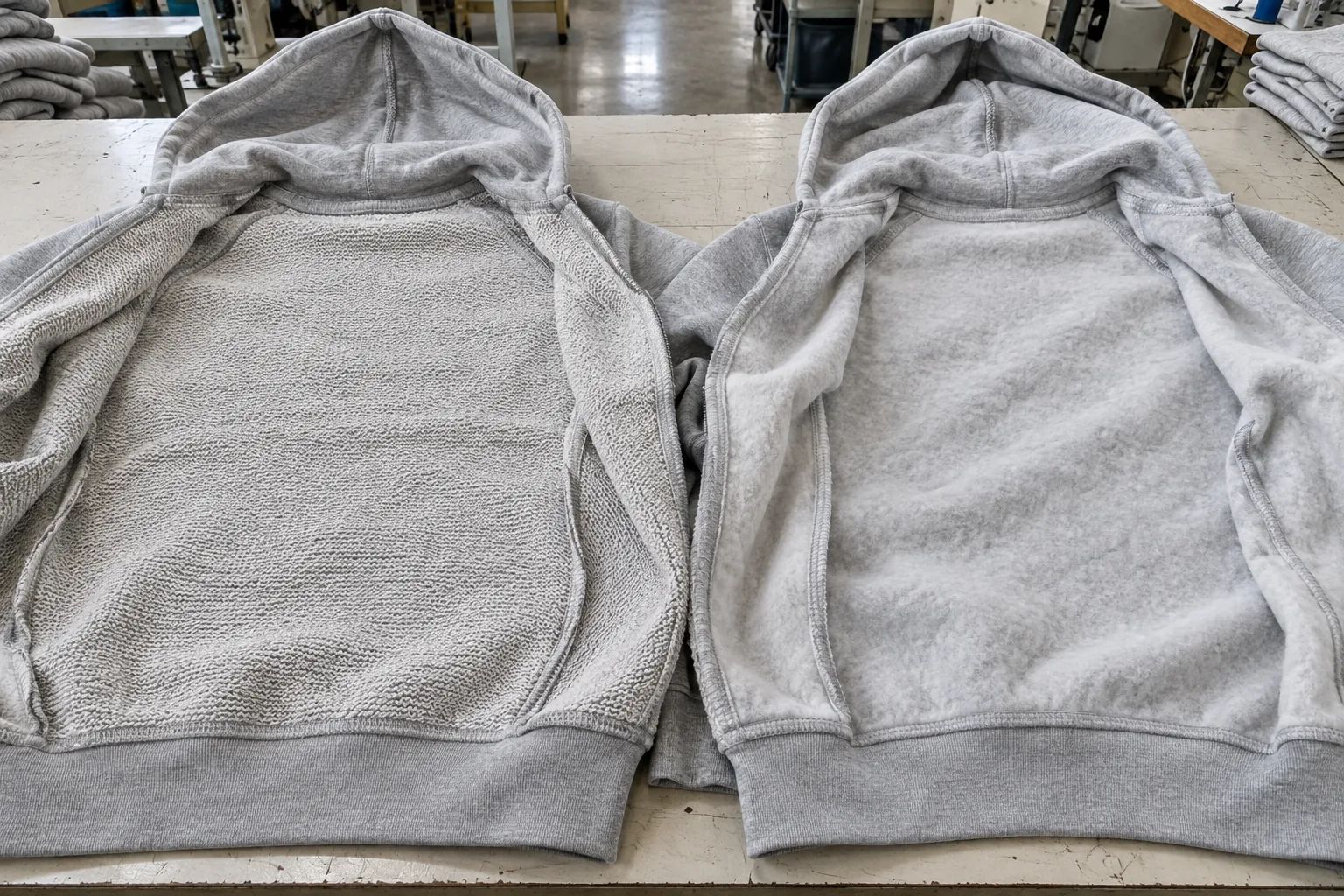
French Terry vs Fleece Hoodie: Which Construction Fits Your Drop
Compare French terry and fleece hoodie constructions: interiors, handfeel, decoration notes, and which manufacturer route to open next.

By StitchQuote Production Team
Two hoodie fabrics with the same GSM can feel and wear differently. One may have a dry, structured touch with visible loops inside; another may feel softer and warmer against the skin. Construction affects handfeel, drape, and how a print sits on the surface. Choosing by weight alone can leave your first sample technically on spec but far from your intended product.
For US and European men’s streetwear founders, the French terry vs fleece decision belongs before sampling: pick the interior construction first, then discuss weight bands and finishes. A clear construction choice gives sample approval a reference point beyond “make it heavier” or “make it softer.”
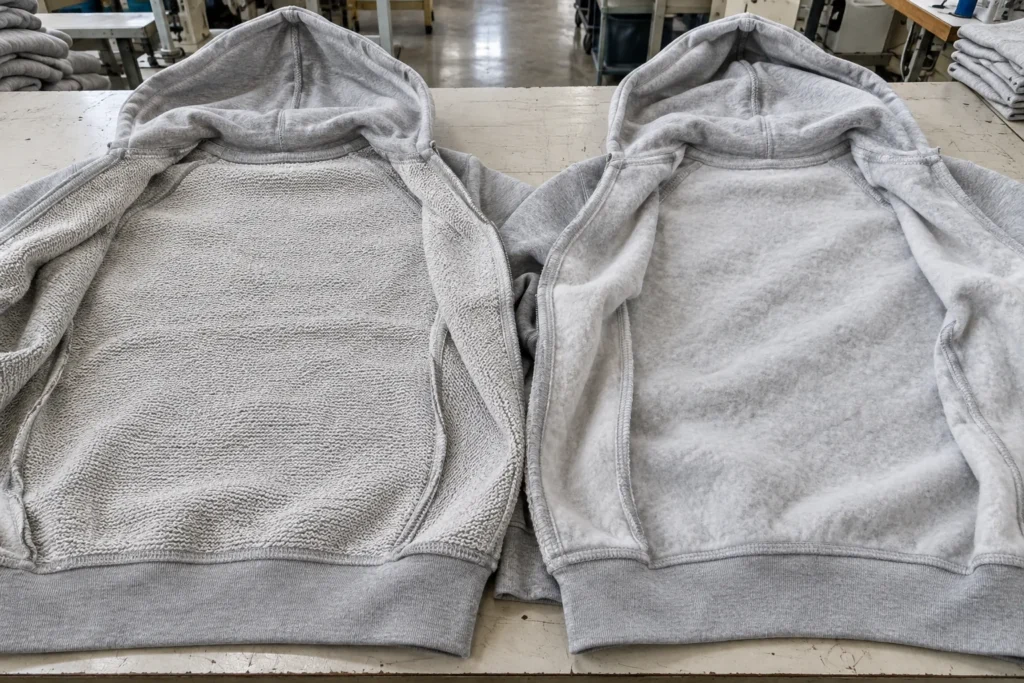
French terry vs fleece — decide the construction
Use this table to pick loopback French terry or brushed sweatshirt fleece before you open a manufacturer page. Typical hoodie MOQ with StitchQuote is near 50 pcs per style when materials are realistic; confirm sample timing when specs are clear.
| Factor | French terry (loopback) | Sweatshirt fleece (brushed) |
|---|---|---|
| Interior | Visible uncut loops; drier / more structured feel | Brushed pile; softer, warmer handfeel |
| Common use | Layering, transitional weather, cleaner face for some graphics | Cozy streetwear basics, cooler-weather drops |
| Decoration note | Inspect face smoothness separately from loops | Watch pilling/shedding; trial print on production fabric |
| Open next | French terry hoodie manufacturer | Fleece hoodie manufacturer |
Decision locked? Go to the matching manufacturer lander above, or the full hoodie manufacturer hub for fit, puff print, and oversized routes. Still choosing GSM bands and finishes after the construction pick? Continue on how to choose hoodie fabric.
What French terry and fleece actually are
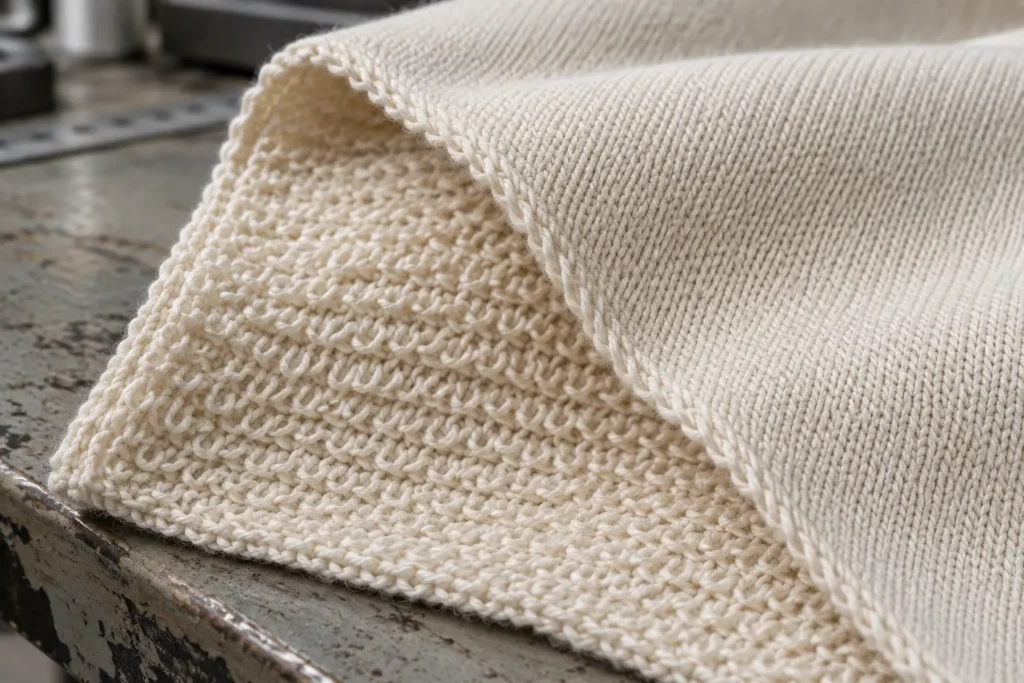
French terry is a knit fabric typically made with a relatively smooth outer face and uncut loops on the inside. Those interior loops give loopback French terry its recognizable texture. The face and back perform different roles: the outside presents your graphics and silhouette, while the loopback side determines much of the next-to-skin feel.
Sweatshirt fleece, in this comparison, means a hoodie fabric with a brushed interior that creates a soft, fuzzy pile. It does not mean outdoor polar fleece. Brushing raises fibers on the back, changing the feel of the fabric without necessarily changing the appearance of its outer face.
Neither name specifies composition, weight, stretch, or finish. French terry and sweatshirt fleece can use different fiber blends and yarn arrangements. Ask for face-and-back swatches and composition details instead of approving a fabric from its commercial name alone.
Handfeel, drape, and seasonality
French terry often suits a hoodie intended for layering, transitional weather, or a less fuzzy interior. Depending on yarn, knit density, and finish, it may feel dry and firm or soft and fluid. A loopback construction does not automatically guarantee a crisp, premium silhouette.
A brushed fleece hoodie often fits a collection built around cozy interiors and cooler-weather wear. The raised fibers can help retain warmth, but actual comfort also depends on weight, composition, fit, and conditions. A lightweight fleece and a dense French terry should not be compared on construction alone.
For men’s streetwear, evaluate the fabric in your intended proportions. A dropped shoulder, wide sleeve, and cropped body can look different when the material collapses softly versus holding away from the body. Use your hoodie fit specifications alongside fabric swatches, especially when shoulder shape and hood volume define the design.
For a trans-seasonal capsule, loopback may be a useful starting point. For a collection centered on warmth and plushness, brushed fleece may fit better. Treat both as sampling directions rather than fixed seasonal rules.
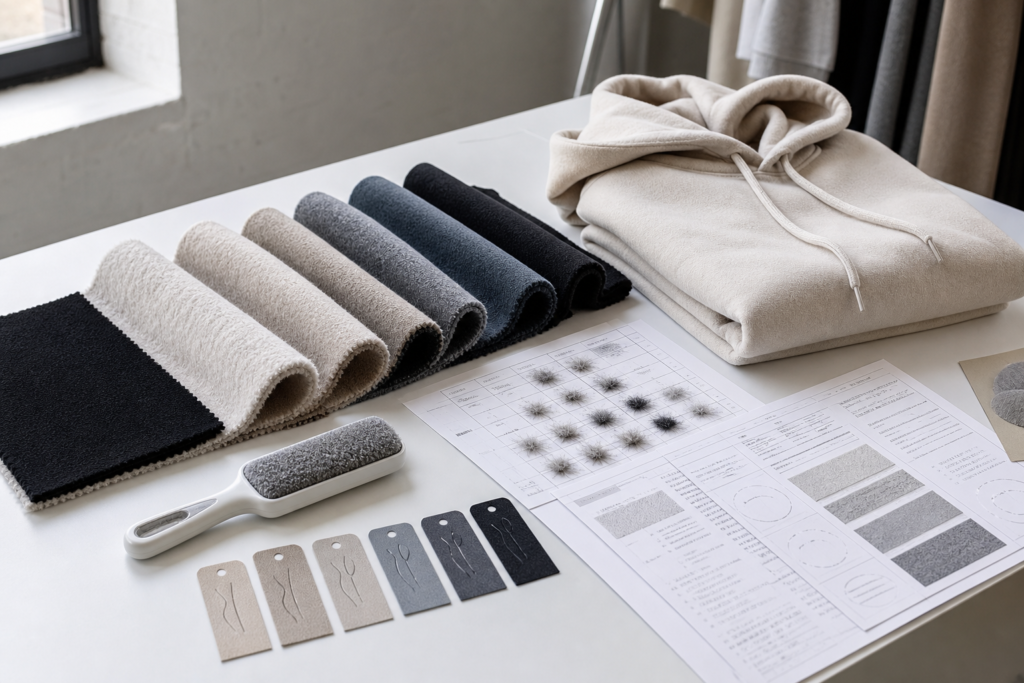
After you pick construction: GSM and finishes live elsewhere
Weight bands, oz↔GSM conversion, finish, and step-by-step fabric approval belong on the full selection guide—not on this construction page. Once you know terry or fleece, open how to choose hoodie fabric for finished GSM bands, handfeel finishes, and sample checkpoints. For a quick weight-band reference only, see the hoodie GSM guide.
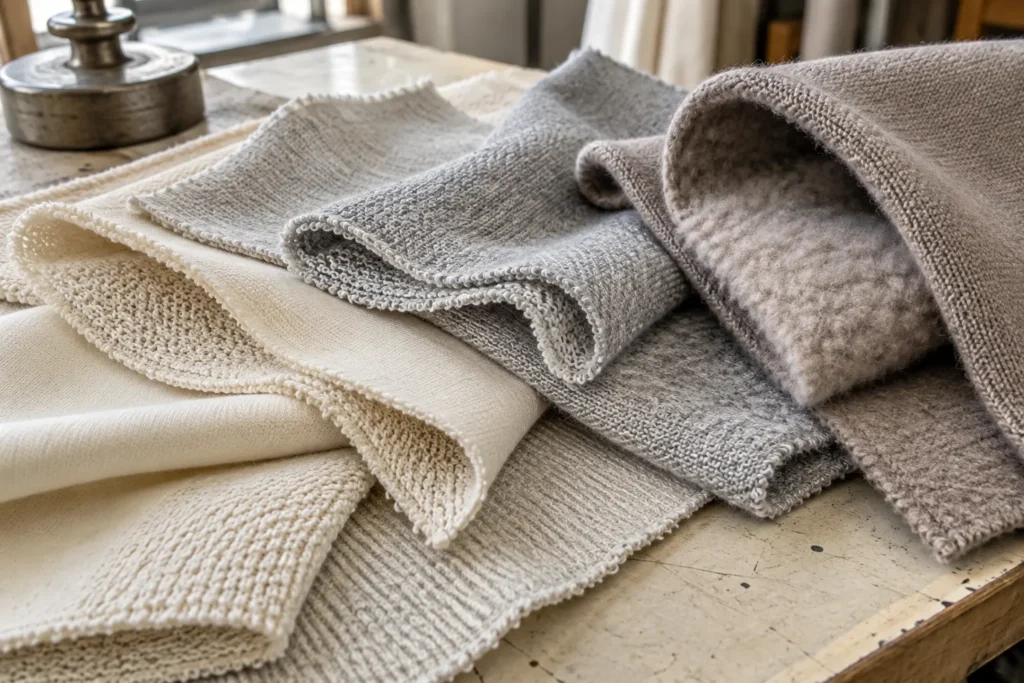
Printing, embroidery, and wash notes by construction
Decoration happens primarily on the outer face, so inspect that surface separately from the interior. A compact, smooth French terry face may support cleaner results for some graphics, but fleece can also have a smooth printing surface. Construction names alone do not establish print compatibility.
Send your actual artwork, intended print method, placement, and dimensions with the sample brief. Approve a decorated sample using the proposed production fabric; a successful print on a substitute fabric is an incomplete reference.
Brushed fleece can be susceptible to pilling or shedding, depending on fibers, yarns, brushing, and finishing. French terry can also pill, and its interior loops may snag under some conditions. Neither construction is automatically resistant to wear. Compare both under the care method you expect customers to use. For loopback-specific notes, see choosing French terry for cleaner premium hoodies.
What to put in the brief (construction-focused)
Name the construction clearly before you stack weight and finish detail:
- Construction: loopback French terry or brushed sweatshirt fleece (not “fleece” alone if you mean polar fleece).
- Face and reverse: desired outer smoothness; loop appearance or brushing level.
- Composition: fiber percentages for body (and rib separately).
- Handfeel reference: labeled swatch or reference garment for the interior feel you want to match.
For GSM targets, finish approval, and the full sample matrix, use how to choose hoodie fabric. Our cut-and-sew tech pack guide helps organize the rest of the garment brief.
Next steps after the construction pick
- How to choose hoodie fabric — GSM bands, finishes, sample checks
- French terry hoodie manufacturer
- Fleece hoodie manufacturer
- Hoodie manufacturer hub — custom cut-and-sew, fit, puff, oversized
- Custom hoodie manufacturer
FAQ: French terry vs fleece
Is French terry cooler than fleece?
French terry often feels less insulating than a comparable brushed fleece because it lacks the same raised interior pile. Weight, density, composition, and fit can change that comparison, so assess closely matched swatches.
Which fabric is better for an oversized streetwear hoodie?
Either can work. Choose according to the desired drape and structure, then sample the actual oversized pattern. Fabric weight alone cannot predict whether the body will hold its shape or fall softly.
Does higher GSM mean better hoodie quality?
No. Higher GSM describes greater fabric mass per unit area. Quality also depends on whether the fabric, construction, finish, and decoration meet your approved requirements. For weight-band guidance after you pick terry or fleece, see how to choose hoodie fabric.
Can French terry and fleece use the same print design?
Often, yes, but each proposed fabric needs a decoration trial. The outer face, composition, finish, and printing process can affect the result even when the artwork stays identical.
Should founders sample both constructions?
If the wearing experience is still undecided, comparing both can help. Start with swatches, then sample the strongest candidate—or both if the finished silhouette is the unresolved question.
Request a quote for your terry or fleece hoodie
Tell us which construction you prefer (French terry or brushed fleece), target fit, and artwork if ready. We will route you to the matching cut-and-sew path on the hoodie manufacturer hub. Early-stage briefs are fine.
Prefer chat? WhatsApp +86 15920568771.
Request a manufacturing quote
Share your product type, quantity range, and destination. We usually reply within one business day.