Custom Streetwear, Casualwear & Denim Manufacturer•MOQ 50 pcs•Denim MOQ 100 pcs•7-Day Sample Available
How to Check Color Crocking Risk in Dark Streetwear Fabrics Before Bulk Production
A practical fabric approval guide for checking dry and wet rubbing risk on dark streetwear fabrics before sample approval or bulk production.

Color crocking risk is one of the most important checks for dark streetwear fabrics. A black hoodie, navy T-shirt, washed denim jacket, or pigment-dyed garment may look strong in a sample photo, but if color transfers onto skin, bags, labels, packaging, or lighter garments, the buyer has a real quality problem.
For low MOQ and private label buyers, the goal is not to make every dark fabric behave like a pale fabric. Dark dye, garment dye, heavy wash effects, and soft finishes all create realistic limits. The goal is to know the risk before bulk production and to approve the fabric, wash route, care instructions, and tolerance with clear evidence.
What Color Crocking Means
Color crocking is color transfer caused by rubbing. A fabric can transfer color when it is dry, wet, or damp from sweat, rain, washing, or steam. This is different from a lab dip shade mismatch. The shade may be approved and still have poor rubbing performance.
StitchQuote’s guide to fabric testing for small production runs explains why buyers should review colorfastness, shrinkage, rubbing, pilling, and hand-feel changes together. Crocking is one of the checks that matters most when the product uses dark or heavily dyed fabric.
Why Dark Streetwear Fabrics Need Extra Review
Streetwear buyers often choose black, washed black, navy, charcoal, deep brown, forest green, or garment-dyed colors because they create a stronger product look. Those colors can also carry more dye load or require wash and finishing processes that affect rubbing behavior.
Garment dye and piece dye can also behave differently. If the buyer is still choosing a route, review StitchQuote’s article on garment dye vs piece dye for low MOQ streetwear. The dye route should be approved with color, shrinkage, trims, hand feel, and crocking risk in mind.
Check Dry and Wet Rubbing Separately
Dry rubbing and wet rubbing are not the same. A fabric may look acceptable in dry handling but transfer more color when damp. Buyers should ask whether both conditions have been reviewed, especially for products worn close to the skin or layered with lighter garments.
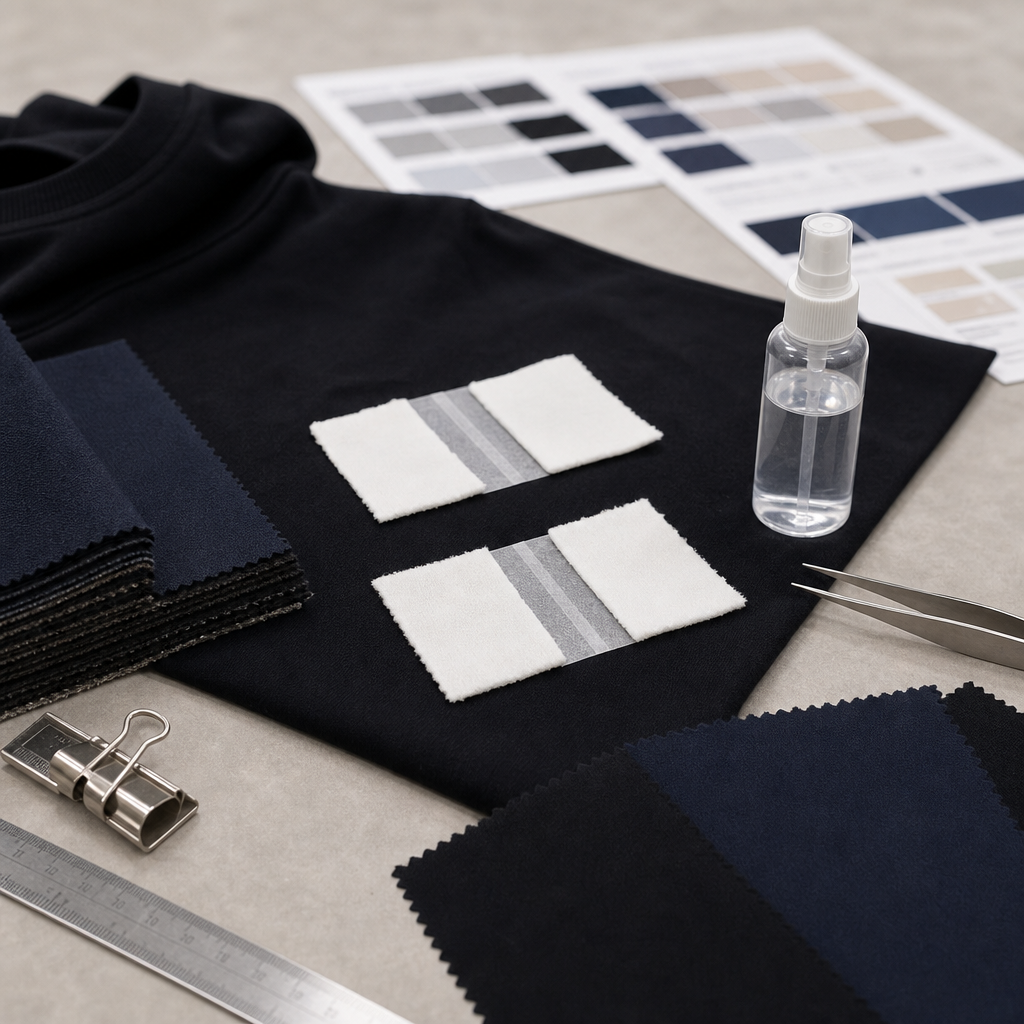
A practical sample review can include rubbing a white cloth on high-risk areas, comparing pre-wash and post-wash behavior, and checking whether dark color transfers onto light labels, drawcords, pocket bags, or packaging materials. This does not replace a formal lab test when one is required, but it helps the buyer identify obvious risk before approving bulk.
Do Not Approve Only the Lab Dip
A lab dip shows target shade, not full garment behavior. The dye may match the color standard, but the finished fabric may still rub off after washing, brushing, softening, garment dyeing, or distressing. Buyers should connect lab dip approval with real fabric and garment sample review.
If color approval is still in progress, StitchQuote’s lab dip approval guide for low MOQ apparel production can help buyers separate shade comments from production behavior comments.
Review Wash Route and Finish
Wash route can change crocking risk. Enzyme wash, stone wash, pigment dye, sulfur dye, softener, brushing, and garment dye can all affect how much loose color remains on the surface. A dark washed fabric should be reviewed after the final intended wash process, not only before finishing.
Denim buyers should connect crocking review with wash shade approval. StitchQuote’s guide to denim wash shade standards explains why wash samples, shade bands, trims, measurements, and QC records should be approved together.
Check Trim and Packaging Contact Points
Color transfer often appears where buyers are not looking. Dark fabric can stain white drawcords, care labels, neck labels, hangtags, tissue paper, polybags, light embroidery, contrast stitching, pocket bags, or adjacent garments during packing and shipping.
Before bulk, place dark fabric against the actual trims and packaging materials when possible. If the product is a matching set, check whether the hoodie, sweatpants, rib, drawcords, and labels interact cleanly after wash and handling.
Set a Realistic Approval Standard
Some dark fabrics require care instructions and buyer education. A washed black garment may naturally release slight color in early washes. That is different from severe transfer that stains other items or creates customer complaints. The buyer should decide what level of transfer is acceptable for the product position and price point.
A useful approval record should include fabric reference, color standard, dye or wash route, dry rub comments, wet rub comments, wash review, trim contact review, photos, and final tolerance. Vague notes like “black is approved” are not enough for dark streetwear programs.
Questions to Ask Before Bulk
- Has the fabric been checked for dry and wet rubbing?
- Was the review done before or after the final wash and finishing route?
- Can the dark fabric transfer color onto labels, drawcords, packaging, or lighter garments?
- Does the approved sample represent the intended bulk fabric and process?
- Are care instructions realistic for the color and finish?
- What level of color transfer is acceptable for this product position?
- Will the same dye and finishing standard be repeatable for reorders?
StitchQuote Note
For custom streetwear manufacturing, private label clothing production, low MOQ apparel production, and sampling and MOQ projects, StitchQuote treats color crocking as part of dark fabric approval. Buyers should review rubbing, wash behavior, trims, packaging, and care notes before bulk.
FAQ
Is color crocking the same as poor lab dip approval?
No. A lab dip is mainly a shade approval step. Color crocking is color transfer caused by rubbing, especially under dry, wet, or damp conditions. A shade can match and still have crocking risk.
Which apparel colors need the most crocking review?
Dark and heavily dyed colors need the most attention, especially black, navy, deep indigo, garment-dyed colors, pigment-dyed colors, sulfur-dyed colors, and washed denim shades.
Can low MOQ buyers request color crocking checks?
Yes. Even when a full lab program is not practical, buyers can ask how dry and wet rubbing were reviewed, inspect washed samples, and check contact with trims, labels, and packaging before bulk approval.
Request a manufacturing quote
Share your product type, quantity range, and destination. We usually reply within one business day.