Custom Streetwear, Casualwear & Denim Manufacturer•MOQ 50 pcs•Denim MOQ 100 pcs•7-Day Sample Available

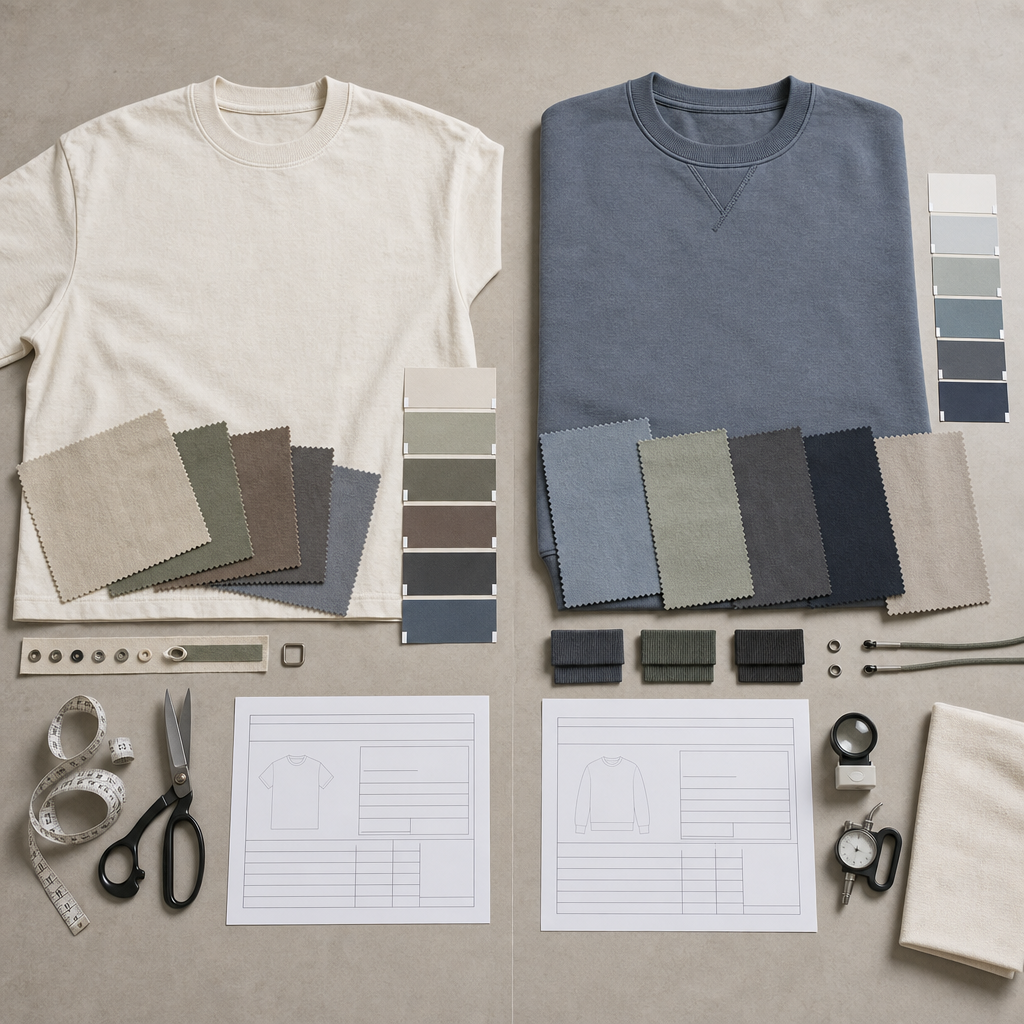
Garment Dye vs Piece Dye for Low MOQ Streetwear: How Buyers Should Choose
A sourcing decision framework for buyers comparing garment dye and piece dye routes before low MOQ streetwear or private label production.

Garment dye vs piece dye is not just a color choice. It affects sample timing, shrinkage, measurements, trims, labels, shade consistency, and reorder planning. For low MOQ streetwear and private label buyers, choosing the wrong dye route can create extra sample rounds or color results that are difficult to repeat.
The better question is not which dye route is universally better. The useful question is which route fits the garment, fabric, color standard, MOQ, wash effect, and reorder plan. A washed streetwear capsule may benefit from garment dye. A cleaner premium basics program may need piece-dyed fabric for tighter shade control before cutting.
This guide compares both routes from the buyer’s side, with practical checks to make before sampling or bulk production.
What Piece Dye Usually Means
Piece dye usually means fabric is dyed before cutting and sewing. The garment is made from fabric that has already been dyed, finished, and approved. For many T-shirts, hoodies, sweatshirts, joggers, and matching sets, this route gives buyers a clearer fabric standard before production starts.
Piece dye can be useful when the buyer wants cleaner color consistency, more predictable trim matching, and fewer surprises after the garment is sewn. It also allows fabric testing and shrinkage checks before cutting, which can reduce measurement risk.
The tradeoff is that piece dye may depend on fabric MOQ, color MOQ, and fabric lead time. For a very small first order with many colors, it can become inefficient. This is why SKU and color planning matter before asking for a sample or quote.
What Garment Dye Usually Means
Garment dye usually means the garment is sewn first, then dyed as a finished piece. This can create a softer, lived-in, washed look that many streetwear and casualwear brands like. It can also make sense when the buyer wants a particular garment-dyed character rather than a clean fabric-dyed look.
However, garment dye changes the risk profile. The finished garment may shrink, seams may pucker, trims may react differently, and labels or drawcords may stain or change color. If the garment has metal trims, contrast stitching, printed artwork, or delicate labels, those details need to be tested under the intended dye and wash process.
Garment dye is not a shortcut around color approval. Buyers still need physical color standards, sample review, and shade tolerance notes.
Use Garment Dye When the Finished Look Matters Most
Garment dye can be a good route when the buyer wants a washed, vintage, tonal, or softened look that depends on the finished garment. It can work well for certain T-shirts, sweatshirts, hoodies, and casualwear capsules where slight variation is part of the intended appearance.
The buyer should still approve the result on the real garment, not only on a fabric swatch. A garment-dyed hoodie and a garment-dyed T-shirt may absorb dye differently because fabric weight, stitching, rib, pocket layers, and trims all affect the final result.
If the collection includes matching tops and bottoms, use extra caution. Matching set consistency is harder when multiple garment types, fabric weights, or trim systems are dyed separately. StitchQuote’s guide on matching set fabric consistency for hoodie and sweatpants production explains why fabric lots, GSM, shrinkage, brushing, and trims should be checked together.
Use Piece Dye When Repeatability Matters Most
Piece dye is often the safer route when the buyer needs cleaner shade control, predictable fabric behavior, and easier reorder matching. Because the fabric is dyed and finished before cutting, the production team can test shrinkage, review lab dips, and approve shade before garments are made.
This route may suit premium basics, private label programs, and repeatable core styles where the brand wants the same color again next season. It can also help when trims, labels, prints, or embroidery need to match the fabric more precisely.
For color approval, buyers should not rely on digital color references alone. The lab dip approval checklist for low MOQ apparel production explains how to compare physical color standards, lighting, trim matching, approval comments, and bulk shade risk.
Low MOQ Changes the Decision
Low MOQ production makes dye-route decisions more sensitive. A buyer may want five colors, three bodies, several trims, and a tight launch schedule. Each added color or dye process can increase sampling pressure, shade-control work, and production coordination.
Before choosing garment dye or piece dye, ask:
- How many colors are truly needed for the first order?
- Does the color need to be exact, or is controlled variation acceptable?
- Will the style be reordered, or is it a limited capsule?
- Do trims, labels, drawcords, or prints need to survive the dye process?
- Will measurements be checked before and after dye or wash?
- Can the same color standard be repeated across different fabric weights?
If the buyer is still unsure how many styles and colors to launch, it is worth reviewing SKU planning before locking a dye route. Too many colorways can create more risk than value in a small first order.
Check Shrinkage and Measurements
Garment dye and piece dye can both affect shrinkage, but garment dye often changes the finished garment directly. This means the buyer should check measurements after the dye and wash process, not only before it. Body length, sleeve length, chest width, hem width, and rib behavior can all change.
For piece dye, fabric shrinkage should be tested before cutting. For garment dye, finished garment measurements should be part of sample approval. Either way, the buyer should define acceptable measurement tolerance before bulk production.
StitchQuote’s guide to fabric testing for small production runs is useful here because color, shrinkage, rubbing, and wash behavior all affect production approval.
Do Not Forget Trims, Labels, and Packaging
Garment dye can stain or change trims. Drawcords, buttons, labels, care labels, embroidery threads, patches, hangtags, and packaging decisions should be checked before bulk. Some trims should be dyed with the garment, some should be attached after dye, and some may need a different material or color.
Private label buyers should be especially careful with care labels and brand labels. A label that looked clean on the pre-dye sample may become hard to read or visually mismatched after dyeing. The guide on private label clothing label and hangtag approval covers the approval record needed before bulk.
Factory Questions Before Choosing
- Which dye route is planned, and why is it recommended for this fabric?
- What sample will show the final production color most accurately?
- What shade tolerance should the buyer approve?
- How will shrinkage be measured before and after dye or wash?
- Which trims are attached before dye and which are attached after dye?
- How repeatable is this color route for a reorder?
StitchQuote Note
For custom streetwear manufacturing, private label clothing production, and low MOQ apparel production, StitchQuote treats dye route as a sourcing decision, not a decoration afterthought. The right route depends on the intended look, color tolerance, fabric behavior, trims, and reorder plan.
The sampling and MOQ stage is the right time to approve dye-route assumptions. Once the route is locked, the buyer should keep color standards, sample photos, shrinkage notes, trim comments, and reorder expectations in one approval record.
FAQ
Is garment dye better for streetwear?
Garment dye can be better when the brand wants a washed, lived-in, or vintage look. It is not automatically better for every streetwear order. If the brand needs tight shade control, repeatability, or precise trim matching, piece dye may be the better route.
Does garment dye affect garment measurements?
Yes, it can. Garment dye and wash processes can change body length, width, rib recovery, and seam behavior. Measurements should be checked after the intended dye and wash process before bulk approval.
Can low MOQ brands use custom colors?
Yes, but custom colors need realistic planning. Buyers should confirm color MOQ, sample timing, lab dip or garment-dye sample requirements, shade tolerance, and reorder expectations before committing to too many colors in the first order.
[…] guide to garment dye vs piece dye for low MOQ streetwear explains why dye route should be part of the product decision, not just a color […]