Custom Streetwear, Casualwear & Denim Manufacturer•MOQ 50 pcs•Denim MOQ 100 pcs•7-Day Sample Available

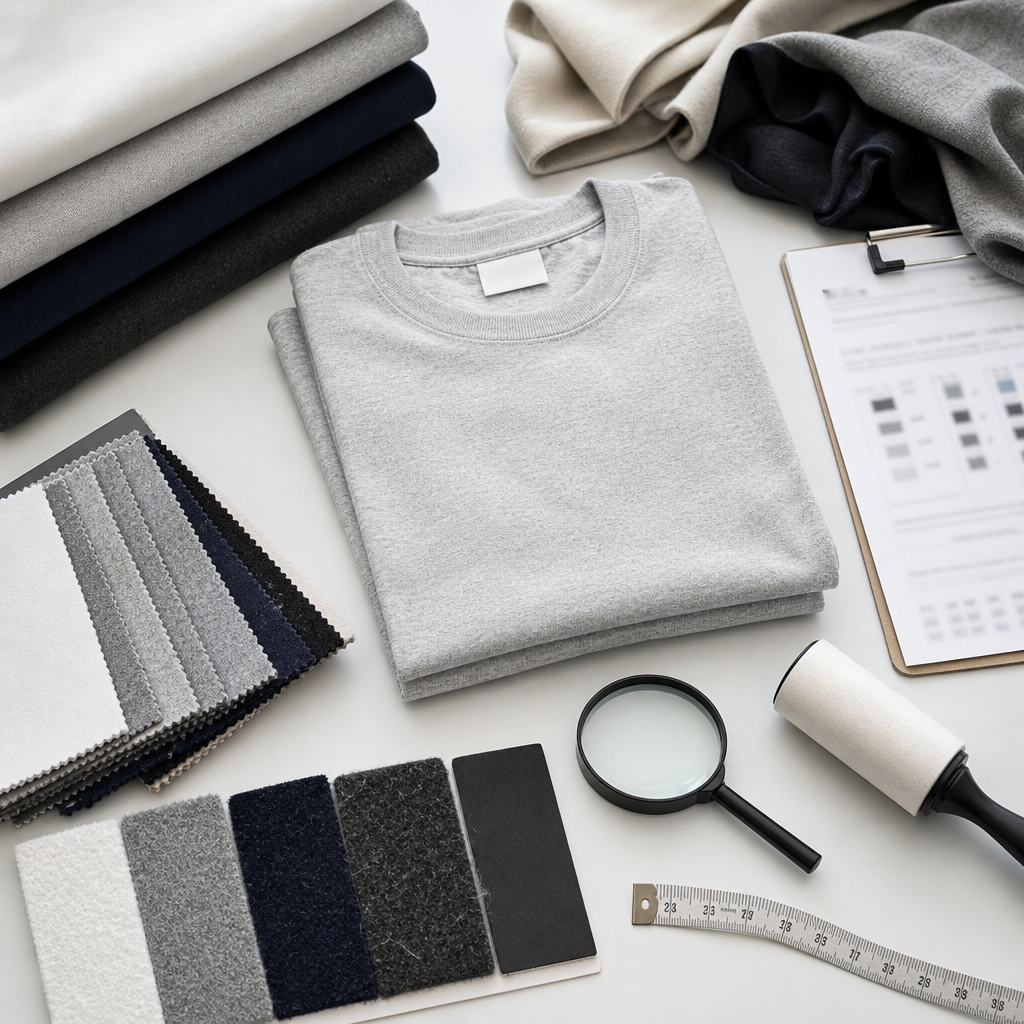
How to Check Fabric Pilling Risk Before Premium Basics Production
A practical fabric approval guide for buyers checking pilling risk before premium basics, private label, or low MOQ apparel production.

Fabric pilling risk is one of the quiet quality problems that can damage a premium basics program after the first few wears. A T-shirt, hoodie, sweatshirt, or jogger can look clean in the sample room, but if the surface pills quickly after washing or friction, the garment starts to feel cheap even when the fit and color are correct.
For low MOQ and private label buyers, the goal is not to demand a fabric that never changes. All fabric surfaces age. The goal is to understand where pilling is likely, what level is acceptable for the product position, and what should be tested before bulk production.
When fleece weight, rib recovery, or matching-set consistency depends on wash results, use how to test fleece hoodie shrinkage before low moq bulk production to confirm shrinkage checks before bulk hoodie production.
For premium basics where GSM, neck rib, or side-seam balance can shift after washing, use how to check t-shirt fabric shrinkage before premium basics production to confirm fabric shrinkage checks before bulk T-shirt production.
Why Pilling Matters for Premium Basics
Premium basics depend on repeated wear. The buyer is usually not selling a one-time novelty item. The customer expects the garment to hold its surface, shape, and hand feel after normal use. Pilling weakens that perception because it shows up on high-friction areas: underarms, side seams, sleeve edges, seat, thigh, cuffs, and areas touched by bags or outerwear.
StitchQuote’s article on what buyers usually mean by premium basics explains why perceived quality is a combination of fabric, fit, construction, shrinkage control, and surface finish. Pilling is one of the surface details that buyers should not leave to chance.
Understand What Causes Pilling
Pilling happens when loose fibers work out of the fabric surface, tangle, and form small balls. The risk depends on fiber type, yarn structure, knitting or weaving method, fabric finishing, brushing, washing, and how the garment is worn.
Softness can increase risk if it comes from loose surface fibers or heavy brushing. Blends can also behave differently from pure cotton. For example, some cotton-modal fabrics feel soft and premium, but the buyer still needs to check surface durability and wash behavior. If you are comparing fiber options, review cotton vs cotton modal for soft premium basics.
Do Not Judge Pilling From a New Swatch Only
A new fabric swatch can be misleading. It may show color and hand feel, but it does not show how the surface behaves after friction and washing. Buyers should review a washed sample or ask for pilling and abrasion feedback before approving bulk fabric.
For low MOQ production, this does not always mean running a full laboratory program for every small order. It does mean asking the right questions and checking the fabric in conditions close to real use. A simple buyer review can include wash comparison, rubbing high-friction areas by hand, checking underarm and side seam surfaces after wear testing, and comparing the fabric to a known approved reference.
Connect Pilling to Fabric Weight and Finish
GSM alone does not solve pilling. A heavier fabric can still pill if the yarn, fiber blend, or surface finish is unstable. A lighter fabric can perform well if the construction and finishing are controlled. Buyers should review GSM together with yarn, knit structure, wash process, brushing, and intended hand feel.
If the fabric decision is still open, use StitchQuote’s guide on choosing T-shirt GSM for low MOQ premium basics. It covers how fabric weight interacts with drape, shrinkage, sewing, cost, and reorder risk.
Check Brushed Fleece and Soft Finishes Carefully
Brushed fleece, peached jersey, and very soft surface finishes can feel strong in a sales sample but still need surface checks. Brushing can raise fibers, which improves softness but can also create more loose fiber on the surface. The buyer should ask whether the fabric has been anti-pilling finished, whether that finish is appropriate for the garment, and how the fabric behaves after wash.
Do not approve the phrase “anti-pilling” without context. Ask what was tested, what sample represents bulk, and whether the final hand feel still matches the buyer’s product goal.
Review Pilling in Real Garment Areas
Pilling is not evenly distributed. A flat fabric card may look acceptable while the garment pills at the underarm, side body, thigh, or cuff. Buyers should inspect samples in the areas that see friction. Hoodies and sweatshirts should be checked around cuffs, hem rib, pocket openings, and underarms. Sweatpants should be checked at inner thigh, seat, waistband, and cuffs.
For a broader view of fabric approval, read what fabric testing matters most for small production runs. Pilling should be considered alongside shrinkage, colorfastness, rubbing, and hand-feel changes.
Create an Approval Record
A useful fabric approval record should include fabric reference, fiber content, GSM, finish, color, sample date, wash method, pilling comments, photos of high-friction areas, and buyer tolerance. If the buyer accepts a softer fabric with some pilling risk, that decision should be clear before bulk production.
A vague approval like “fabric feels good” is not enough for premium basics. The factory needs to know whether the buyer is prioritizing soft hand feel, clean surface, low shrinkage, cost control, or reorder consistency.
Questions to Ask Before Bulk
- Has this fabric been washed and reviewed for surface change?
- Which areas of the garment are most likely to pill?
- Does the softness come from brushing, finishing, fiber blend, or yarn structure?
- Is the fabric suitable for the intended retail position and care instructions?
- Can the same fabric quality be repeated for a reorder?
- What level of pilling is acceptable after normal wash and wear?
StitchQuote Note
For private label clothing production, low MOQ apparel production, and sampling and MOQ projects, StitchQuote treats pilling risk as part of fabric approval. The buyer should review surface durability, softness, shrinkage, color, and construction together before bulk.
FAQ
Can buyers fully prevent fabric pilling?
No fabric is guaranteed to stay unchanged forever. The practical goal is to reduce risk by choosing suitable fabric, checking surface behavior after wash and friction, and setting realistic approval standards before bulk production.
Does heavier GSM reduce pilling?
Not automatically. GSM affects weight and structure, but pilling depends on fiber, yarn, knitting, finishing, brushing, washing, and wear conditions. A heavier fabric can still pill if the surface is unstable.
Should low MOQ buyers ask for pilling tests?
They should at least ask how pilling risk has been reviewed and inspect washed samples. For premium basics or repeat programs, stronger fabric testing and a clear approval record are worth considering before bulk.