Custom Streetwear, Casualwear & Denim Manufacturer•MOQ 50 pcs•Denim MOQ 100 pcs•7-Day Sample Available

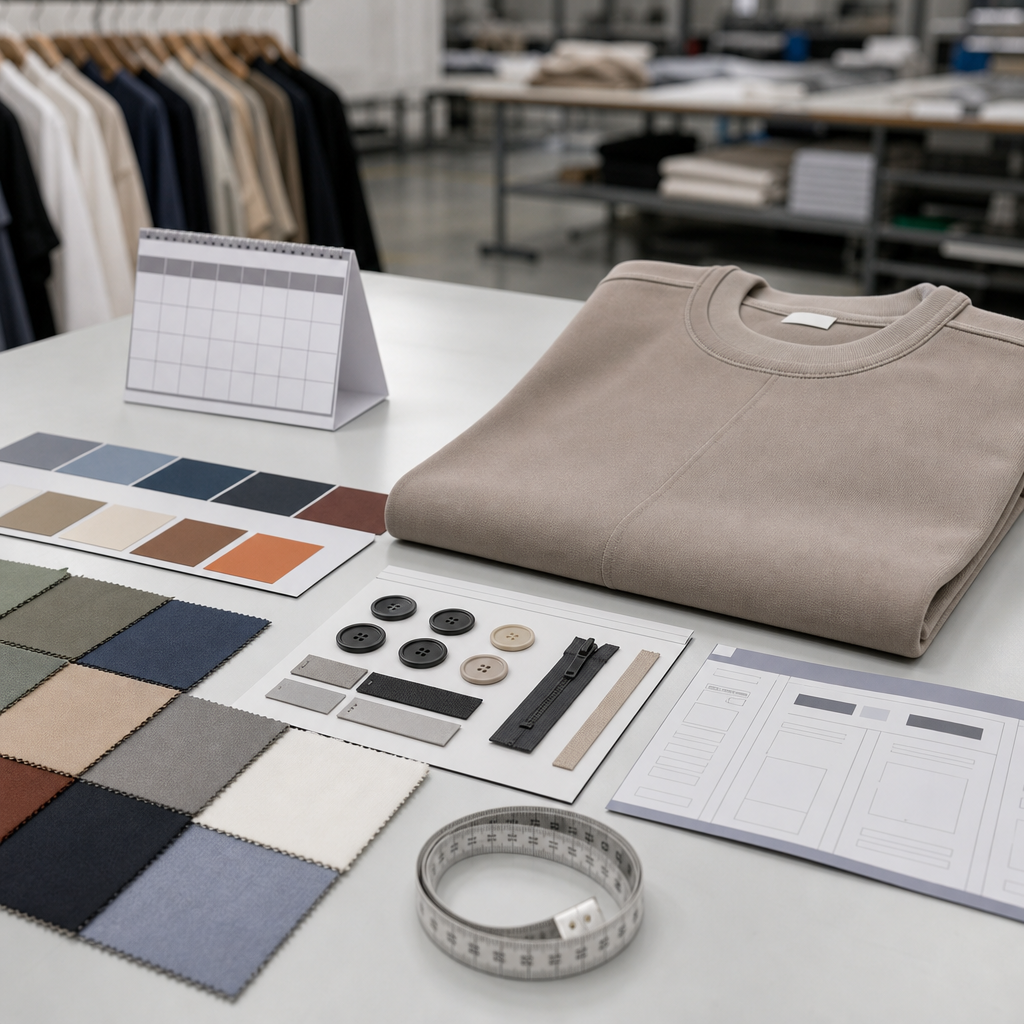
How to Plan Low MOQ Clothing Reorders Without Losing Fabric, Fit, or Color Consistency
A reorder planning guide for startup and private label buyers who need to repeat fabric, fit, color, trims, wash, decoration, and packaging standards.

Low MOQ clothing reorders can fail even when the first order sold well. The buyer may approve a new run expecting the same fabric, fit, color, trims, wash, decoration, and packaging, but the factory may be working from incomplete records or changed material availability. That is how small differences turn into a reorder mismatch.
For startup and private label brands, reorder planning should start before the first bulk order is finished. A useful reorder file gives the next production run a clear reference instead of relying on memory, screenshots, or vague notes.
When fleece weight, rib recovery, or matching-set consistency depends on wash results, use how to test fleece hoodie shrinkage before low moq bulk production to confirm shrinkage checks before bulk hoodie production.
For jogger programs where cuffs, leg opening, fabric recovery, and reorder consistency matter, review low MOQ jogger production before finalizing the supplier brief.
Factory buyer decision table
Updated July 23, 2026: Reorder consistency starts during the first production run. The buyer should leave the factory with a record that can be used again: approved sample state, material source, color route, trim rules, size updates, and what must not change without written approval.
| Reorder file item | Factory-side check | Buyer risk if missing |
|---|---|---|
| Fabric and color | GSM, blend, handfeel, dye route, shade band, wash result, and supplier reference | The reorder arrives as a close substitute instead of the same product standard |
| Fit and grading | Final spec, tolerance, sample size, after-wash measurements, and any approved pattern correction | Sales feedback is ignored or informal fit changes are not recorded |
| Trim and packing | Label pack, drawcord, zipper, button, tag, polybag, carton ratio, and substitution approval rule | Small details drift and the second run feels cheaper than the first |
Use this reorder file with low MOQ clothing manufacturing, private label clothing manufacturing, and startup brand manufacturing. For an exact-repeat or corrected-repeat project, send the approved sample record through contact.
Why Reorders Drift
Reorders drift when the original approvals are not specific enough. Fabric lots change, color standards are lost, trim suppliers change, measurements are adjusted informally, wash effects vary, and packaging instructions get rewritten. Each change can be small, but the combined result may feel like a different product.
This is especially important for low MOQ programs because small orders may not reserve fabric or trims for long periods. Buyers should know which details must repeat and which substitutions are acceptable.
Keep the Approved Sample Record
The approved sample is the center of the reorder file. Buyers should keep photos, measurements, fabric reference, trim reference, color standard, wash notes, decoration files, label and packaging notes, and the exact comments that led to approval.
StitchQuote’s guide to sampling and MOQ explains why sample approval should create production clarity. A reorder uses the same logic: the next run needs a clear standard that can be checked again.
Document Fabric and Color Standards
Fabric is one of the most common reorder risks. GSM, yarn, fiber blend, finish, hand feel, shrinkage, and surface behavior can all change if the fabric is substituted. Buyers should save fabric references and ask whether the same quality will be available for the next run.
For T-shirt and premium basics programs, the article on choosing T-shirt GSM for low MOQ premium basics is useful because fabric weight affects drape, shrinkage, cost, sewing, and reorder consistency.
Separate Color Approval From Dye Route
A color can look close in photos but still come from a different dye route or finishing process. That can affect shrinkage, hand feel, trims, and reorder consistency. Buyers should record whether the garment was piece dyed, garment dyed, washed, pigment dyed, or treated with another process.
StitchQuote’s guide to garment dye vs piece dye for low MOQ streetwear explains why dye route should be part of the product decision, not just a color comment.
Set Fit and Measurement References
Fit drift can happen when a factory adjusts a pattern, fabric changes shrinkage, or the buyer approves small corrections without updating the spec. Reorder planning should include the final approved measurements, tolerance, sample size, size grading notes, and wash status.
If the first order involved difficult size planning, connect reorder planning with StitchQuote’s article on startup size breaks for a first low MOQ clothing order. Reorders often work better when the buyer updates size depth based on real sales instead of simply repeating the first ratio.
Preserve Trim, Decoration, and Packaging Notes
Trims and decoration can change the perceived quality of a reorder. Labels, drawcords, zippers, buttons, embroidery, print placement, ink type, hangtags, and packaging should all be recorded. If a substitute is acceptable, write down what can change and what cannot.
For denim buyers, wash and trim records are especially important. StitchQuote’s guide to denim wash shade standards for low MOQ jeans reorders shows how shade bands, photos, trims, measurements, and tolerance records help keep repeat production aligned.
Use Testing Notes, Not Only Photos
Photos are useful, but they do not capture shrinkage, pilling, crocking, seam slippage, or hand-feel change after wash. If the first order had testing or sample-wash notes, save them for the reorder. If the first run had a known risk that the buyer accepted, record that too.
StitchQuote’s article on what fabric testing matters most for small production runs can help buyers decide which test notes are worth keeping for repeat orders.
Plan Reorder Timing
Timing affects consistency. If the buyer waits too long, the same fabric, trims, color standard, or wash route may be harder to repeat. If the buyer reorders too quickly without reviewing sales, they may repeat a poor size mix or product detail that should be adjusted.
A good reorder decision balances sales data, inventory depth, production lead time, fabric availability, sampling needs, and cash flow. The buyer should decide whether the reorder is an exact repeat, a corrected repeat, or a new version based on the same core style.
Create Clear Substitution Rules
Substitutions are sometimes practical, but they should not be silent. The buyer should define which changes require approval: fabric source, GSM, dye route, label material, zipper type, print method, packaging, carton plan, or measurements. Any approved change should be added to the reorder record.
This protects both the buyer and factory because the next run has clear decision rules instead of assumptions.
Reorder Planning Checklist
- Approved sample photos and final comments are saved.
- Fabric quality, GSM, color standard, and wash route are recorded.
- Final measurements, tolerance, grading, and wash status are documented.
- Trims, labels, decoration, and packaging standards are preserved.
- Testing and wash-review notes are available for comparison.
- Sales data is used to update size and color quantities.
- Substitution rules are clear before the factory starts the reorder.
StitchQuote Note
For startup clothing brand manufacturing, low MOQ clothing production, and private label apparel production, StitchQuote treats reorder planning as a documentation workflow. The first order should create the standards needed to repeat fabric, fit, color, trims, decoration, wash, and packaging with fewer surprises.
FAQ
Why do low MOQ clothing reorders look different from the first order?
Common causes include changed fabric lots, different dye or wash behavior, incomplete measurement records, trim substitutions, revised packaging, or unclear approval notes from the first order.
Should a reorder always copy the first order exactly?
No. A reorder can be an exact repeat, a corrected repeat, or a new version. The key is to decide intentionally and record which details should stay the same and which can change.
What should buyers save after the first production run?
Save approved samples, photos, measurements, fabric and color references, trim details, decoration files, wash notes, packaging instructions, testing comments, and any substitution approvals.