Custom Streetwear, Casualwear & Denim Manufacturer•MOQ 50 pcs•Denim MOQ 100 pcs•7-Day Sample Available

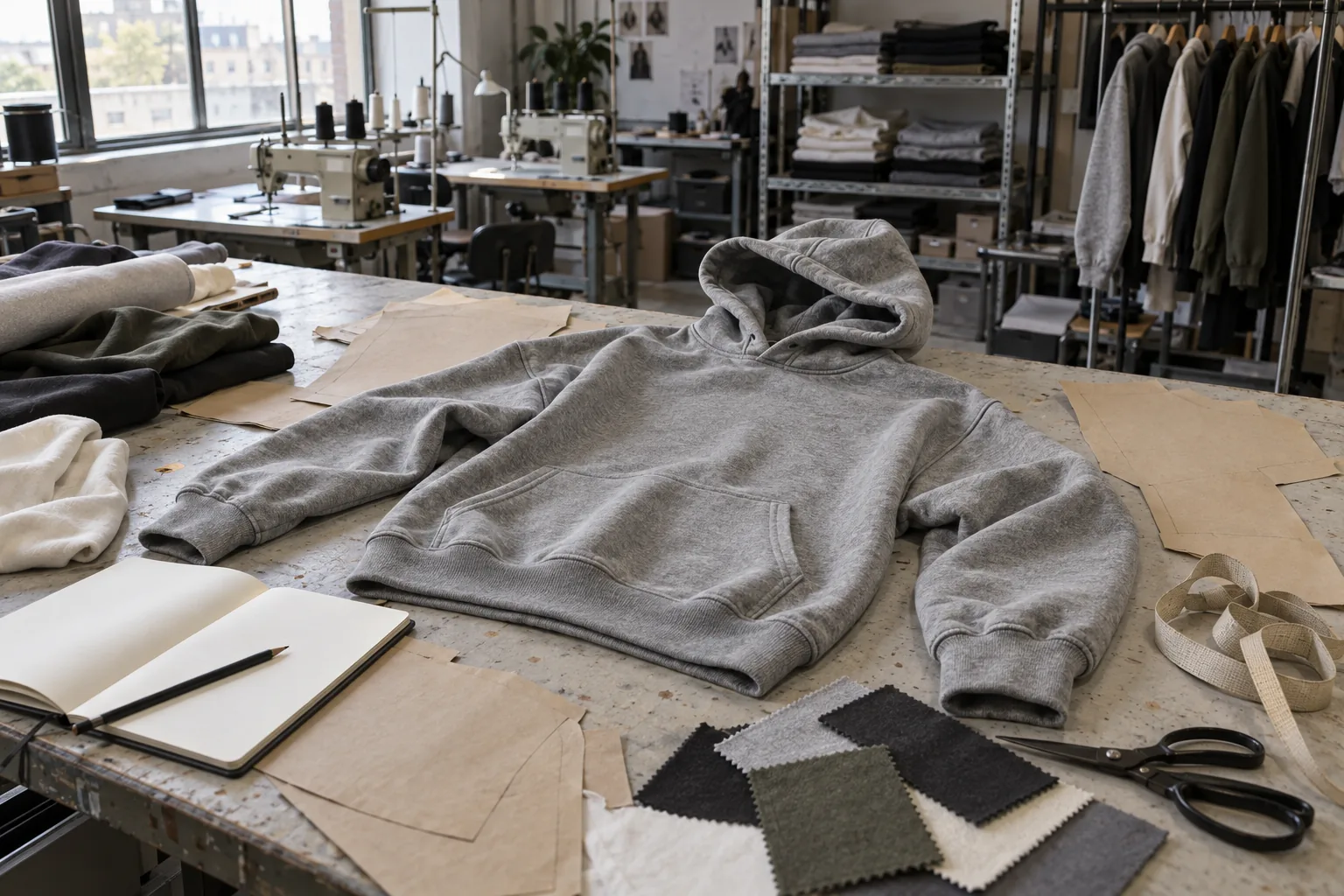
How to Choose a Hoodie Manufacturer (MOQ, Samples, China OEM Checklist)

Choosing a factory is not the same as finding the cheapest quote. For a streetwear hoodie program, you need a partner that can interpret fit, fabric weight, decoration, sampling, and a realistic minimum order. This checklist explains how to choose a hoodie manufacturer—especially a China cut-and-sew OEM—without relying on a paid “best of” list.
Use it to shortlist suppliers, compare proposals side by side, and decide when to move from inquiry to sample. StitchQuote is a China OEM focused on streetwear and low-MOQ cut-and-sew; treat the same questions as you would for any candidate.
1. Confirm the Service Model: Cut-and-Sew vs Blanks
Ask whether the supplier develops custom patterns and sews from fabric, or only decorates stock blanks. Cut-and-sew is the right path when silhouette, panel design, or fabric choice defines the product. Blanks can work when artwork is the differentiator and the base garment already fits.
- Cut-and-sew: pattern, markers, sewing, optional wash and decoration coordination.
- Blank decoration: print or embroidery on existing garments; limited control of body shape.
- Hybrid: some factories do both—get the scope in writing per style.
Background reading: cut-and-sew manufacturing and hoodie manufacturer capabilities.
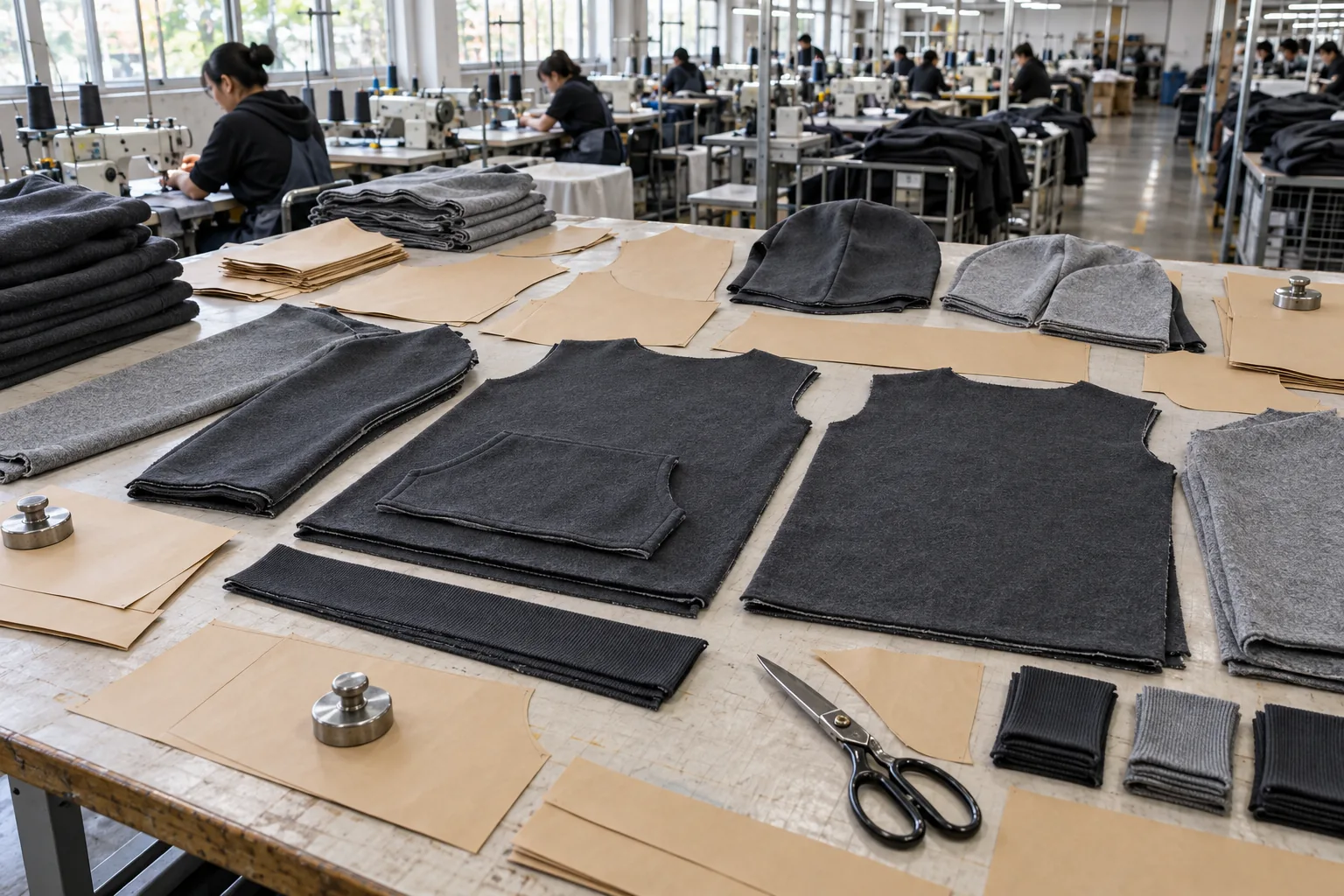
2. Match Product Experience, Not Generic “Apparel”
A factory that sews woven shirts all day may struggle with heavy fleece, drop-shoulder grading, or hood construction. Ask for recent examples of hoodies or sweatshirts similar to yours: French terry vs fleece, boxy vs regular, kangaroo vs patch pocket, heavy rib vs light rib.
Request notes on what they actually controlled—pattern, sewing, dyeing, print—versus what a partner handled. Photos alone do not prove process ownership.
If your line is broader than hoodies, also review custom streetwear manufacturing for category fit.
3. Clarify MOQ the Way Your Assortment Works
“Low MOQ” is only useful when you know the unit. Ask:
- Is the minimum per style, per color, or per fabric?
- Are there separate mill minimums for custom-dyed fleece or French terry?
- How do size runs affect the total (e.g. one color across S–XXL)?
- What changes if you add a second colorway on the same body?
StitchQuote’s typical sewing MOQ is about 50 pieces per style for many jersey and fleece programs (denim often higher). Confirm your color and size plan against that number before you lock a drop calendar. Details: low-MOQ clothing manufacturing and sampling and MOQ.
4. Demand a Clear Sample Path
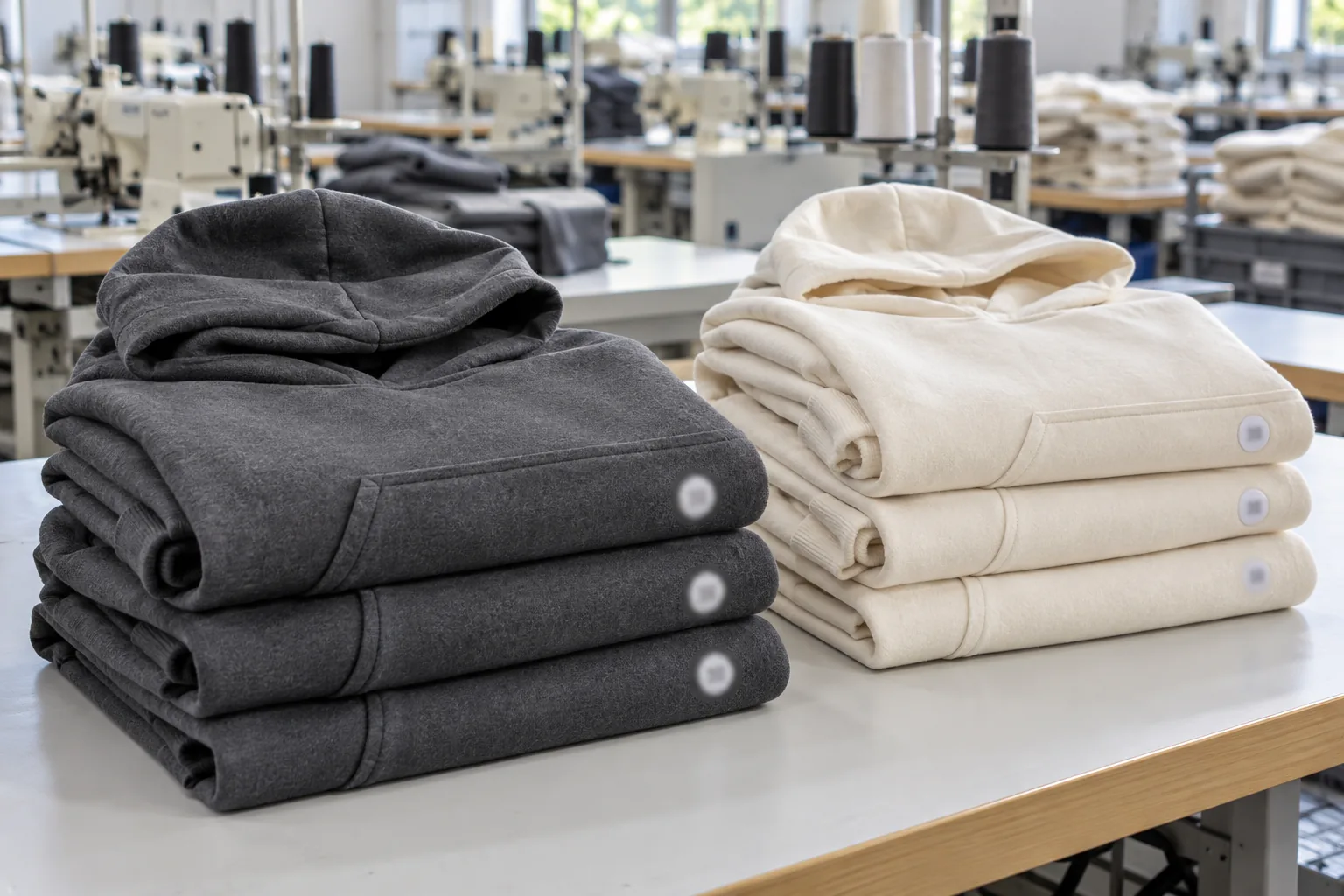
A serious hoodie manufacturer can describe sample types (proto, fit, size set, pre-production), what each round costs, and what you must approve before bulk. Ask:
- How many revision rounds are included?
- Who pays for fabric for samples?
- Will measurements be taken on washed or unwashed samples?
- Can decoration be tested on the approved fabric, not only on a different blank?
Approve fit and fabric handfeel before you negotiate bulk price as if the product were finished. Fit language helps: see the men’s hoodie fit guide.
5. Specify Fabric Weight and Construction Early
Write a GSM band and terry vs fleece in the first brief. “Heavy hoodie” without a number creates remakes. Pair your checklist with the hoodie fabric weight / GSM guide so both sides share the same language.
Also name rib composition, hood lining, drawcord type, and eyelets. Small trims delay bulk when left open.
6. Align Decoration With Fabric Reality
Screen print, DTG, puff, embroidery, and patches each stress fabric differently. Share artwork and placement with the RFQ. Ask which methods the factory runs in-house and which go to specialists. Related capability pages: puff print and embroidery.
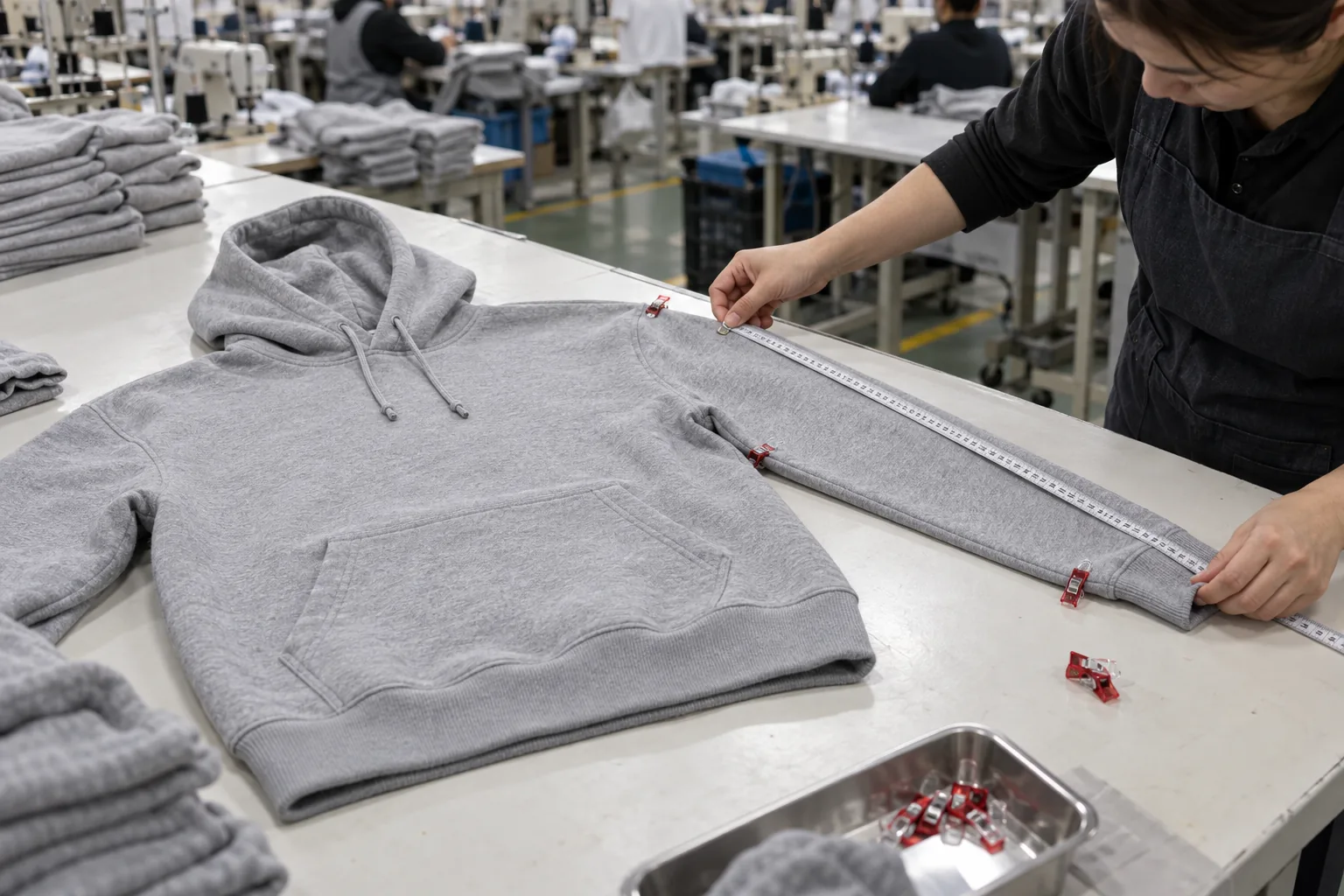
7. China OEM Diligence Checklist (Practical, Not Theatrical)
You do not need a travel documentary to start. You do need written clarity:
- Legal and contact identity: company name, address, and a consistent contact who answers tech questions.
- Process map: pattern → sample → bulk → QC → packing → ship terms.
- Lead times: sample calendar and bulk estimate with assumptions stated.
- QC method: what is checked (measurements, stitching, shade, decoration) and when.
- Payment and Incoterms: deposit, balance trigger, FOB vs other terms.
- References or repeatable work: similar products, not unrelated categories.
For a broader founder process, see how to find a cut-and-sew streetwear manufacturer.
8. Compare Quotes on the Same Spec Sheet
Send one brief to every shortlisted factory. Score replies on completeness, not only unit price. A lower number that omits labeling, packing, or wash testing is not cheaper. Use cost to manufacture a hoodie to understand common cost drivers before you negotiate.
Communication Cadence That Keeps Programs Moving
Good manufacturers answer technical questions with specifics: measurement methods, expected shrinkage bands, and which details are still open. Set a simple cadence—brief, quote clarification, sample comments, bulk PO—so neither side relies on chat fragments. Keep one shared file for the approved measurement chart and GSM target after each sample round.
When multiple people on your team comment, designate one decision owner for fit and one for artwork. Conflicting feedback is a common cause of extra sample fees.
Packing, Labels, and Handoff Details
Ask early about care labels, main labels, hangtags, polybags, and carton marks. These items rarely change unit fabric cost much, but they delay shipment when ordered late. Confirm whether the factory sources trims or expects you to supply branded components, and build lead time for custom woven labels into the calendar.
9. Red Flags
- Promises every fabric and decoration with no constraints.
- Refuses to state MOQ units or sample fees in writing.
- Quotes without asking about GSM, fit, or size run.
- Pushes bulk deposit before any approved sample on your fabric.
- Only communicates through marketplace chat with no tech-pack review.
When to Walk Away and When to Pilot
If a factory cannot explain hoodie construction details or MOQ units after two clear emails, move on. If answers are solid but you still want proof, run a paid sample on one hero style before a multi-style PO. A small pilot protects cash and reveals communication quality under real deadlines.
Document what “approved” means: measurement chart signed, fabric GSM confirmed on the sample lot, decoration strike-off accepted, and packing method agreed. Bulk should not restart those debates.
10. Decision Framework
Choose the manufacturer that:
- Understands your silhouette and fabric band,
- Offers an MOQ your first drop can actually fill,
- Documents sampling and approvals,
- Answers limitations honestly,
- Prices the same scope as competitors.
Location alone (China vs elsewhere) is secondary to process fit. StitchQuote positions as a China cut-and-sew OEM for global streetwear brands—not a USA domestic blank printer. If that model matches your brief, continue; if you need domestic speed for blanks only, shortlist accordingly.
FAQ
What MOQ should a startup expect for custom hoodies?
Many China cut-and-sew programs can work near 50 pieces per style when fabric is available. Custom dyeing or specialty fleece can raise mill minimums even when sewing MOQ stays low.
How many sample rounds are normal?
Plan for at least one fit sample and one pre-production sample when construction or decoration is new. Complex washes or multi-decoration styles may need more.
Do I need a full tech pack before the first email?
A short brief with sketches, reference photos, GSM target, quantity, and size run is enough to start. A fuller tech pack reduces sample risk before bulk.
Where do I send an RFQ to StitchQuote?
Use the contact / RFQ form or start from the hoodie manufacturer page with your GSM band, fit references, and order plan.
Building a menswear hoodie or fleece capsule? See our men’s streetwear manufacturer page. When you are ready to brief a factory on sampling, use how to request clothing samples from a factory so the first round gets useful feedback.
Next Step
Copy this checklist into your notes, fill one row per factory, and only advance candidates that clear MOQ, sample path, and fabric clarity. When you are ready for a China OEM conversation on hoodies or related streetwear, send your brief.
Request a manufacturing quote
Share your product type, quantity range, and destination. We usually reply within one business day.