Custom Streetwear, Casualwear & Denim Manufacturer•MOQ 50 pcs•Denim MOQ 100 pcs•7-Day Sample Available

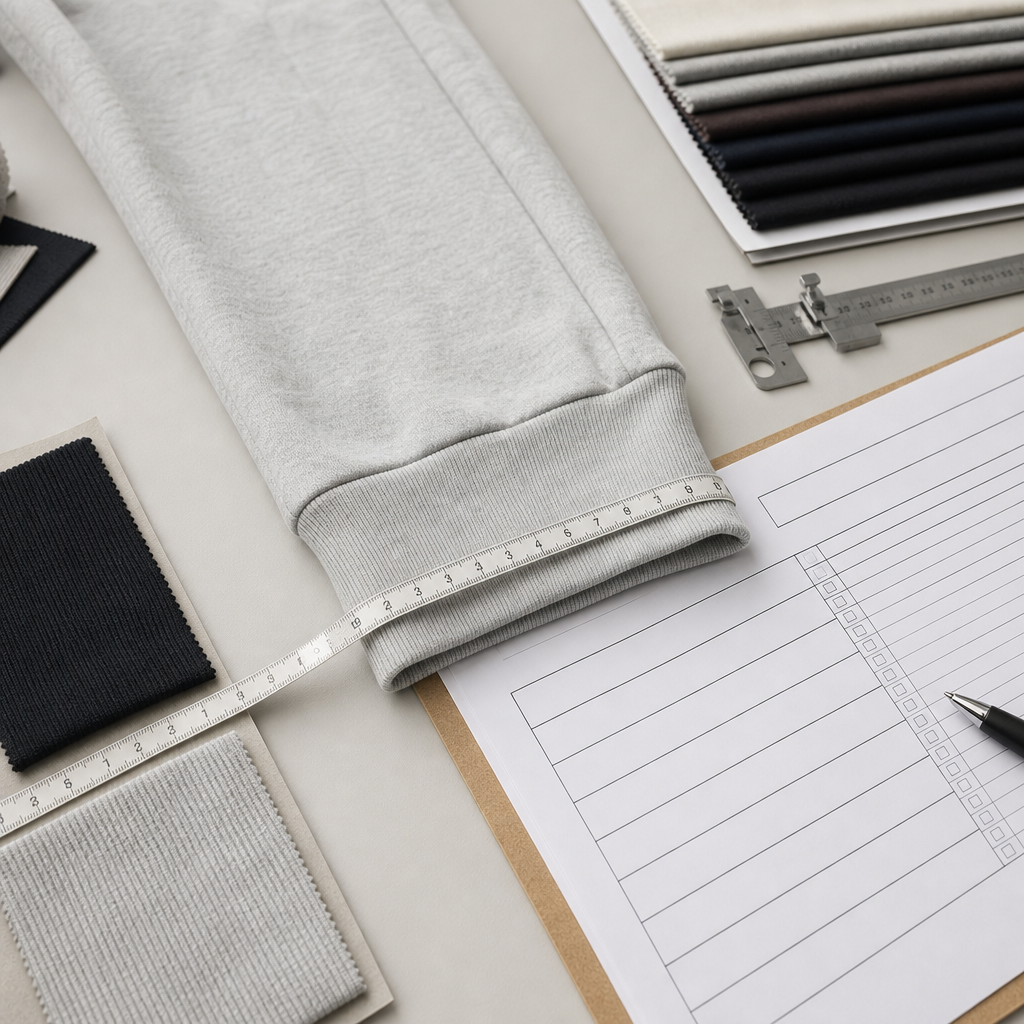
Jogger Cuff and Leg Opening Approval Checklist for Low MOQ Sweatpants Production
Approve jogger cuff construction before low MOQ sweatpants production by checking rib recovery, leg opening, cuff height, inseam balance, wash behavior, and grading.

Jogger cuff construction should be approved before low MOQ sweatpants production, not left as a small finishing detail. The cuff and leg opening control how the pants stack, how secure they feel at the ankle, how the silhouette photographs, and whether the product still looks clean after washing and wear.
For streetwear and casualwear buyers, a cuff problem is easy for customers to notice. A rib cuff can stretch out, twist, feel too tight, look too loose, or pull the lower leg into the wrong shape. This checklist gives buyers a practical approval framework before sampling, PP sample review, or small-batch bulk production.
For pocket shape, rise, and after-wash fit approval details, review how to approve sweatpants pocket shape and rise before low moq production before locking bulk comments.
For jogger programs where cuffs, leg opening, fabric recovery, and reorder consistency matter, review custom joggers manufacturer before finalizing the supplier brief.
Why Jogger Cuffs Change the Whole Fit
A jogger is not only a sweatpant with a tight ankle. The cuff changes the way fabric falls from knee to hem. It can make the lower leg look tapered, stacked, relaxed, athletic, or bulky. If the cuff is too tight, the pants may feel uncomfortable and ride up. If the cuff is too loose, the jogger can look unfinished or stretched out after a few wears.
If you are developing joggers with a custom streetwear manufacturer or casualwear manufacturer, approve the cuff together with the full fit. The waistband, rise, thigh, knee, inseam, leg opening, and cuff all work as one system.
Choose the Cuff Type First
Common jogger cuff options include rib cuffs, self-fabric cuffs, elasticized hems, open hems with drawcords, and hidden elastic openings. Each option creates a different product feel.
- Rib cuffs are common for fleece joggers and streetwear sets, but rib recovery and color matching must be checked.
- Self-fabric cuffs can look cleaner, but they may feel bulkier if the body fabric is heavy.
- Elasticized hems can work for sport or utility styles, but they need comfort testing around the ankle.
- Open hems may suit relaxed sweatpants, but they change the fit away from a classic jogger.
Do not choose the cuff type only from a reference photo. Ask how the lower leg should sit on body, whether the pants are meant to stack over sneakers, and whether the style is part of a matching set.
Check Rib Recovery and Handfeel
Rib recovery is one of the most important approval points. Stretch the cuff gently, let it relax, and check whether it returns to shape. Then review the same area after washing. Weak rib can look acceptable on a table and still fail after wear because the opening becomes loose or wavy.
Buyers should approve rib composition, weight, width, stretch direction, handfeel, color, and recovery. If the jogger is part of a hoodie set, review rib cuffs against the hoodie rib and body fabric. The guide on matching set fabric consistency explains why rib and body fabric should be reviewed together.
Define Leg Opening and Cuff Height
The leg opening should be written into the spec, not guessed from the sample. Measure the relaxed cuff opening, extended opening when relevant, cuff height, and the lower-leg width above the cuff. These measurements affect both comfort and silhouette.
A cuff can be technically well sewn but still wrong for the design if the opening is too narrow or too wide. For oversized fleece joggers, a very tight cuff can make the lower leg balloon. For slim joggers, a loose cuff can make the style look stretched or tired. The target measurement should match the fit direction and intended customer.
Review Inseam, Stacking, and Shoe Interaction
Cuff approval should include inseam review. If the inseam is too long, the fabric may stack heavily above the cuff. That can be intentional for some streetwear styles, but it should be approved on purpose. If the inseam is too short, the cuff may pull upward when the wearer sits or walks.
Review the sample on body if possible. Check how the cuff sits while standing, sitting, and walking. If the product is designed to be worn with sneakers, check whether the lower leg breaks cleanly over footwear or bunches in a way that makes the fit look uncontrolled.
Connect Cuffs to Waistband and Rise
The lower leg cannot be approved in isolation. Waistband tension, rise, hip room, thigh width, knee width, and inseam all affect where the cuff lands. A tight waistband can pull the pants higher. A low rise can change the inseam feel. A wide thigh with a narrow cuff can exaggerate taper.
Use the sweatpants waistband construction checklist together with cuff approval. The buyer should know whether the jogger fit is relaxed, tapered, stacked, athletic, or oversized before approving both waistband and cuff specs.
Wash Test Before Bulk Approval
Fleece, french terry, rib, and elastic can all change after washing. Wash the sample using the intended care method and check whether the cuff twists, shrinks, stretches, or changes handfeel. Also review whether the leg opening measurement remains within the agreed tolerance.
For small-batch production, write down the pre-wash and post-wash cuff measurements. The broader article on garment measurement tolerances can help buyers set realistic pass/fail ranges instead of expecting every cuff to match the sample perfectly.
Grade the Cuff Across Sizes
A medium sample can look correct while the smallest and largest sizes feel wrong. Cuff grading should be reviewed across the planned size range. Larger sizes may need more opening room, but too much extra width can make the cuff lose its jogger shape. Smaller sizes may need a narrower opening, but too tight can become uncomfortable.
For low MOQ orders, grading problems are costly because each size may have limited stock. Connect cuff grading to the broader low MOQ clothing manufacturing plan so the most important sizes receive enough review before bulk.
Sample Approval Checklist
Before approving jogger cuffs for production, confirm:
- cuff type, material, rib structure, and color;
- relaxed and extended leg opening;
- cuff height and lower-leg width above the cuff;
- stitching, seam bulk, and inside comfort;
- rib or elastic recovery after stretching;
- pre-wash and post-wash measurement changes;
- inseam and stacking on body;
- size grading notes for the full range;
- approved sample photos from flat and worn views.
These notes should be included in the sample record before sampling and MOQ decisions move into bulk production.
Practical StitchQuote Note
When StitchQuote reviews jogger projects, cuff approval is connected to the full pants fit. Waistband, rise, thigh, knee, inseam, leg opening, rib recovery, wash behavior, and grading are checked together. This avoids a common production problem: a jogger that passes individual measurements but does not sit correctly on body.
FAQ
What is the best cuff for joggers?
There is no single best cuff. Rib cuffs are common for fleece joggers, but self-fabric cuffs, elasticized hems, and open hems can work depending on the design. The right choice depends on fabric weight, fit direction, comfort, and intended styling.
How should a jogger cuff be measured?
Measure relaxed opening, extended opening if stretch matters, cuff height, and lower-leg width above the cuff. Also define exactly where each measurement is taken so the factory and buyer use the same method.
Why do jogger cuffs stretch out?
Cuffs can stretch out because the rib or elastic has weak recovery, the opening is too tight for wear, the rib quality is mismatched to the body fabric, or washing changes the material behavior.
Should cuff approval happen before or after washing?
Both are useful. Pre-wash measurements help review sample construction, while post-wash checks show whether the cuff keeps its shape and comfort after normal care.