Custom Streetwear, Casualwear & Denim Manufacturer•MOQ 50 pcs•Denim MOQ 100 pcs•7-Day Sample Available
Matching-Set Fit Balance: How Hoodie and Sweatpants Proportions Work Together
Matching set fit can fail even when the hoodie and sweatpants fit well alone, so buyers should approve proportion, grading, and set-level comments before bulk.

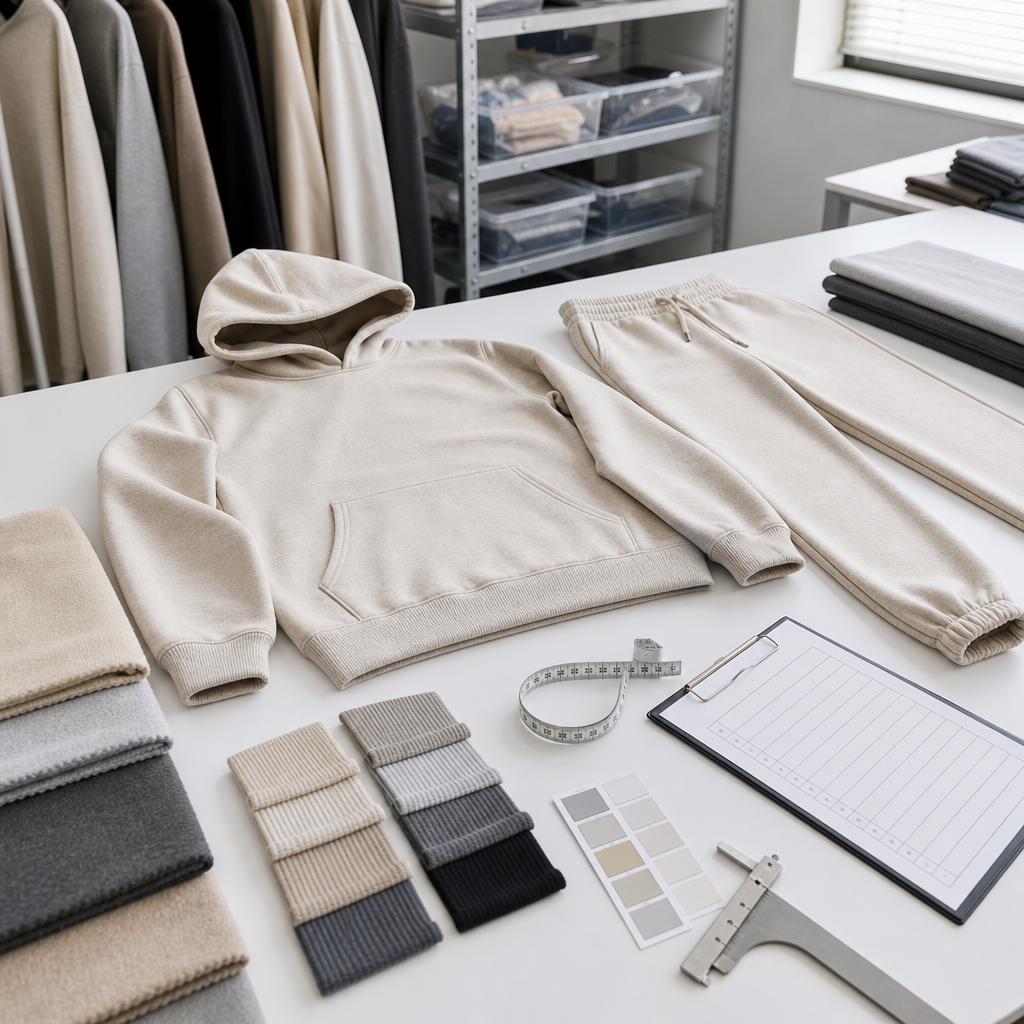
Matching set fit should be approved before low MOQ bulk because a hoodie and sweatpants can each look acceptable alone but feel unbalanced when worn together. The hoodie may cover too much of the waistband, the sweatpants rise may sit too high for the intended silhouette, or the leg volume may fight the top block instead of supporting it.
For a custom streetwear manufacturer, matching-set approval is not only a color or fabric question. It connects hoodie length, sweep, shoulder volume, waistband position, rise, hip ease, thigh volume, cuff opening, rib depth, grading, and the way the buyer expects customers to style the set.
Review the Set Together, Not as Two Separate Styles
Buyers often approve the hoodie sample first, then approve the sweatpants sample later. That workflow can miss set-level proportion problems. The hoodie body length may be right for a standalone product, but too long for a set if it hides the waistband and shortens the leg visually. A sweatpants rise may be comfortable alone, but too high when paired with an oversized top.
The existing matching set fabric consistency guide covers fabric, shade, and handfeel alignment. Fit balance is a different approval step: it asks whether the two garments share the same visual language and size logic after they are worn together.
Map Hoodie Length, Sweep, and Volume
Start with hoodie finished length, hem sweep, shoulder drop, sleeve volume, rib depth, and overall body width. A cropped hoodie, boxy hoodie, relaxed hoodie, and oversized hoodie each create a different relationship with the pants. If the hoodie is heavy or wide, the sweatpants may need enough rise and leg volume to avoid looking narrow underneath.
Use the hoodie fit block and grading guide when the issue is driven by shoulder, chest, body length, sleeve, or grade movement. The hoodie block should not be approved without seeing how it sits against the planned bottom.
Check Rise, Waistband Position, and Leg Volume
On the sweatpants, buyers should review front rise, back rise, waistband height, waistband tension, hip and seat ease, thigh width, knee shape, leg opening, and cuff depth. The pants may need a different visual balance depending on whether the set is intended to be oversized, regular, cropped, stacked, or mixed-volume.
The jogger fit, rise, seat, and inseam guide is useful when the bottom fit problem is concentrated around rise or leg proportion. For a matching set, those points should be checked against the hoodie, not only against a flat measurement table.
Use a Set-Level Fit Comment Sheet
A useful fit comment sheet should have one section for the hoodie, one for the sweatpants, and one for the set as worn together. Set-level comments can cover whether the hoodie should cover, touch, or sit above the waistband; whether the cuff should stack over footwear; whether the top and bottom should share the same ease level; and whether the look changes too much across sizes.
General comments such as make the set more balanced are hard for a factory to act on. The apparel sample comments guide helps convert set feedback into specific notes on length, rise, volume, rib depth, cuff opening, and approval status.
Coordinate Base Size and Grading
Matching set fit can drift when the hoodie and sweatpants are graded independently. A size M hoodie may pair well with size M sweatpants, but size XL may become too long on top or too narrow in the leg if the grade rules do not share the same fit intent. Buyers should review the base size first, then check whether the set still works across the planned size range.
For a low MOQ clothing manufacturer, this does not need an excessive approval process. It does need a shared rule for size pairing, grade priority, and which fit points matter most to the buyer.
Decide How Mix-and-Match Sizing Will Work
Some customers buy the same size in top and bottom. Others need different sizes because of height, waist, hip, or styling preference. If the brand plans to sell the hoodie and sweatpants separately, the buyer should check whether mixed sizing still looks intentional. A set that only works in one model size may create return risk later.
The broader streetwear matching set design guide can help align product concept, color, graphics, and styling direction. This fit approval step should turn that concept into measurements and sample comments the factory can repeat.
Approve the Set Before Bulk Release
Before bulk release, review the set on body or on a suitable form, in the intended size pairing, after any wash or finishing route. Check front, side, and back views. Confirm that hoodie length, waistband exposure, rise, hip ease, leg volume, cuff behavior, and rib recovery support the intended silhouette.
When sending a matching set through the StitchQuote inquiry page, include the intended fit direction, reference photos, size range, hoodie and sweatpants specs, fabric details, and any set-level comments. Clear fit notes help the production team quote, sample, and inspect the set as a coordinated product instead of two unrelated garments.
Questions Buyers Ask About Matching Set Fit
Can the hoodie and sweatpants be approved separately?
They can be checked separately, but final approval should include the set worn together. Separate approvals can miss proportion issues between hoodie length, waistband position, rise, leg volume, and cuff shape.
What causes a matching set to look unbalanced?
Common causes include hoodie length that hides the waistband, top volume that overpowers narrow pants, rise that changes the visual leg line, mismatched rib depth, or grading that changes the top-bottom relationship across sizes.
Should matching sets use the same fit level on top and bottom?
Not always. Some sets intentionally mix oversized tops with cleaner bottoms or regular tops with wider pants. The buyer should define the intended relationship and approve it on the physical sample.
What should block bulk approval?
A set should be corrected before bulk if the proportions only work in one view, the hoodie hides the intended waistband, the pants look too narrow or too heavy for the top, or the grade changes the set balance across key sizes.
Request a manufacturing quote
Share your product type, quantity range, and destination. We usually reply within one business day.
One comment
Comments are closed.
[…] a bloused shape; a straighter hem lets it hang more freely. If you are developing a set, review hoodie and sweatpants fit balance so the top’s length works with the waistband and […]